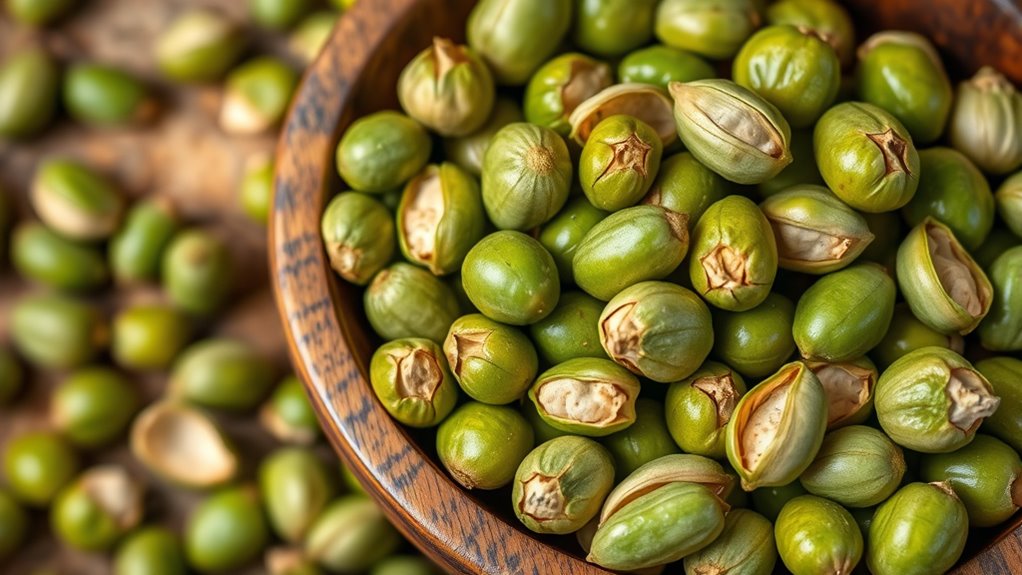
What Are Pepitas and Why Eat Them?
Many people struggle to find healthy snacks that are both tasty and nutritious. If you’re looking for a simple way to boost your diet, pepitas might just be what you need.
Pepitas are green pumpkin seed kernels that are packed with nutrients like magnesium, zinc, and antioxidants. You can enjoy them as a crunchy snack or add them to salads, yogurt, or baked goods for extra flavor and health benefits.
They support digestion, gut health, and heart health thanks to their healthy fats and minerals.
If you want to uncover more about how pepitas can boost your diet, keep exploring the many tasty ways to include them.
Key Takeaways
- Pepitas are green, flat pumpkin or squash seeds packed with nutrients like magnesium, zinc, and antioxidants. They’re a tasty and healthy snack option.
- They help support your digestive health by providing dietary fiber and encouraging the growth of good gut bacteria.
- Eating pepitas can also benefit your heart by lowering bad cholesterol levels and reducing inflammation in the body.
- Plus, they’re super versatile—they add crunch to salads, smoothies, baked goods, and more.
- Usually safe to eat, but it’s best to enjoy them in moderation, especially if you have allergies or are on medication.
What Are Pepitas and How Are They Different From Other Seeds?
Pepitas are the edible seeds of pumpkin or squash, known for their vibrant green color and smooth, flat shape. Their origins go back centuries to Central American cultures, where they were valued for both nutrition and culinary versatility.
Unlike other seeds like sunflower or sesame, pepitas are naturally green and don’t need shelling, making them easy to snack on or add to dishes. You’ll see them in salads, trail mixes, baked goods, and roasted snacks.
Their mild, nutty flavor makes them a versatile ingredient that works well in both sweet and savory recipes. Because they’re raw or roasted, pepitas can be added directly to meals or ground into powders for seasoning.
Their unique origins and adaptability in cooking set pepitas apart from other seeds, giving you a nutritious and tasty addition to your diet.
Why Are Pepitas a Nutritional Powerhouse? (Magnesium, Zinc, and Antioxidants)
Thanks to their nutrient-dense profile, pepitas stand out as a true superfood. They pack a powerful punch of magnesium, which helps with muscle relaxation, energy production, and bone health.
Zinc in pepitas supports your immune system, wound healing, and enzyme activity. Their high antioxidant content helps protect your cells from oxidative stress, reducing inflammation and lowering disease risk.
Because of their nutrient density, pepitas give you a concentrated dose of essential vitamins and minerals in just a small serving. These nutrients work together to promote overall health.
They’re a great snack or ingredient that can easily boost your intake of vital nutrients. Their rich mix of magnesium, zinc, and antioxidants makes them stand out among seeds and nuts.
Adding pepitas to your diet is an easy way to support your body’s defenses and keep you performing at your best. This combination truly makes pepitas a nutritional powerhouse.
How Do Pepitas Support Digestion and Gut Health?
Because they are rich in dietary fiber, pepitas play an essential role in supporting healthy digestion. The fiber helps regulate bowel movements and promotes regularity. It also serves as food for your gut microbiome, encouraging fermentation benefits that produce short-chain fatty acids—key for maintaining a healthy gut lining.
These acids strengthen your gut barrier and help reduce inflammation. Pepitas also contain healthy fats and antioxidants that soothe digestion and support overall gut health.
They promote fermentation benefits that improve nutrient absorption and feed your gut microbiome, encouraging beneficial bacteria growth.
Additionally, they support a healthy gut barrier, which can reduce inflammation and discomfort.
Are Pepitas Heart-Healthy? Here’s What the Science Says
The healthy fats and antioxidants in pepitas not only help with digestion but also support heart health. These nutrient-packed seeds are rich in magnesium, zinc, and good monounsaturated fats, all of which benefit your cardiovascular system.
Studies indicate that eating pepitas may help lower bad cholesterol and reduce inflammation, both of which are key to preventing heart disease. The antioxidants like vitamin E and carotenoids fight oxidative stress that can damage blood vessels.
Eating pepitas may lower bad cholesterol and fight oxidative stress to protect your heart.
Regularly including pepitas in your diet can improve how your arteries work and boost overall heart health. Since they’re easy to add to meals and packed with nutrients, pepitas are a smart choice for anyone looking to naturally support their heart.
While more research is ongoing, current evidence suggests that adding pepitas to your diet is a tasty and healthy way to protect your heart.
How to Pick Fresh Pepitas and Keep Them Fresh at Home
When you’re picking out pepitas, try to find seeds that look plump, firm, and have a bright, vibrant color. They should feel solid to the touch and not look dull or shriveled. Basically, the fresher they are, the crunchier and tastier they’ll be!
Once you’ve got your pepitas home, it’s best to store them properly to keep that crunch. Keep them in an airtight container and place it in a cool, dark spot like a pantry. If you want to keep them fresh for a longer time, you can even pop them in the fridge. With the right selection and storage, your pepitas will stay delicious and crunchy whenever you’re ready to snack on them!
Selecting Quality Seeds
Choosing high-quality pepitas starts with inspecting their appearance. Look for seeds that are plump, uniform in size, and free from cracks or discoloration, which are clear quality indicators.
When considering seed sourcing, opt for reputable suppliers or organic options if possible, as they often prioritize freshness and safety. Fresh pepitas should have a slightly glossy surface and a mild nutty aroma.
Avoid seeds that appear shriveled or dull, as these may be old or stale. To guarantee you’re selecting the best, check for minimal debris or broken shells.
Proper seed sourcing and paying attention to quality indicators help you pick pepitas that are fresh, flavorful, and nutritious.
Proper Storage Techniques
To keep pepitas fresh and flavorful at home, proper storage is really important. Choose the right containers, like airtight bags or vacuum-sealed bags, to keep out light and air.
Store pepitas in a cool, dry place with the right temperature and humidity to make them last longer. If you want to store them for a longer time, consider freezing—just make sure they’re in airtight containers to prevent freezer burn.
Avoid exposing pepitas to light, which can cause them to go rancid. Keep them in opaque containers or in a dark pantry for the best results.
Using proper storage techniques helps maintain their freshness, flavor, and nutrients, so your pepitas stay tasty longer. Check out the table below for a quick summary:
| Storage Method | Best Practice |
|---|---|
| Airtight Bags | Store in a cool, dark place for short-term storage |
| Vacuum Sealing | Extends shelf life and is great for long-term storage |
| Freezer Storage | Keep in airtight containers and avoid light exposure |
Roasted or Raw: Which Pepitas Are Better for Your Health?
Thinking about whether to go for roasted or raw pepitas? Well, you’ll find that there are some differences in both their taste and nutrition. Roasting can give them a richer flavor and a crunchier texture, which many people really enjoy. But keep in mind, roasting might also lower some of the vitamins and nutrients they contain.
On the other hand, raw pepitas keep all their natural vitamins and enzymes intact, so they’re often considered the healthier option. So, it really comes down to what matters most to you—whether you prefer the taste and texture of roasted or want to maximize your nutrient intake with raw pepitas. The choice is yours!
Nutritional Differences Between Forms
Many people wonder whether roasted or raw pepitas are healthier, but it really depends on what nutrients you’re focusing on. When comparing the two, you’ll notice some differences in their nutritional content. Raw pepitas keep more of their natural nutrients, like vitamin E and certain antioxidants, which can decrease a bit when you roast them.
Roasting can make pepitas taste better and may reduce some heat-sensitive nutrients. Raw ones preserve more delicate vitamins and antioxidants, but roasted pepitas tend to have a richer flavor. Both types are high in healthy fats, protein, and minerals, with only small differences.
In the end, choosing between roasted or raw pepitas depends on your health goals. Either way, they both provide valuable health benefits.
Taste and Texture Variations
Both roasted and raw pepitas offer unique taste and texture experiences that can influence your enjoyment and choice. Pepita varieties have different flavor profiles, with raw seeds providing a mild, nutty taste and roasted ones offering a richer, toasted flavor.
The texture differences are noticeable—raw pepitas are tender and slightly chewy, while roasted ones become crunchier and more brittle. These variations affect how you might use them in cooking.
Raw pepitas work well in salads and smoothies, keeping their delicate flavor intact. Roasted pepitas add a satisfying crunch to snacks, baked goods, and trail mixes.
Your preference depends on whether you want a milder flavor and softer texture or a bolder taste with a crispy bite. Both forms are nutritious options, but roasting can enhance flavor while slightly reducing some nutrients.
Easy Ways to Add Pepitas to Your Breakfast, Snacks, and Meals
Adding pepitas to your daily meals is simple and versatile. You can sprinkle them on yogurt, salads, or oatmeal for added crunch and nutrition.
Mix them into your pepita smoothies for a boost of healthy fats and flavor, blending them seamlessly into your morning routine.
For a savory snack, try making savory pepita granola, which combines the nutty taste of pepitas with herbs and spices.
Incorporate pepitas into baked goods like muffins or energy bars for extra texture. Toast them lightly to improve their flavor before adding to dishes or snack mixes.
You can also sprinkle them over avocado toast or stir into stir-fries for a nutritious crunch.
These simple methods make it easy to enjoy pepitas regularly, supporting your health and satisfying your taste buds with minimal effort.
Delicious Recipes Featuring Pepitas You’ll Love
You can enjoy pepitas in so many delicious ways, whether it’s a quick snack or a topping for your salads. They’re perfect for adding that satisfying crunch and a boost of nutrition to your meals.
Plus, they work really well in baked goods, making your favorite treats even more flavorful. It’s super easy to incorporate pepitas into your recipes, and once you do, you’ll see how they can give your dishes a tasty and wholesome upgrade.
Simple Snack Ideas
Looking for easy, tasty snacks that highlight the nutty flavor of pepitas? Try mixing pepitas into yogurt or oatmeal for a quick energy boost.
Toasted pepitas make a perfect crunchy topping for soups or salads, adding texture and flavor.
You can also create a simple trail mix by combining pepitas with dried fruit and dark chocolate chips.
For a savory snack, sprinkle pepitas over roasted vegetables or use them as a crunchy topping for avocado toast.
These ideas are straightforward and delicious, letting you enjoy the benefits of pepitas in everyday snacks.
With their versatility, pepitas effortlessly enhance simple recipes, making snack time both satisfying and nutritious.
Nutritious Salad Toppings
Pepitas are a fantastic way to boost the flavor and nutrition of your salads. They add a satisfying crunch and a subtle nutty taste that pairs well with many salad types, from leafy greens to grain bowls.
The benefits of pepitas include being rich in healthy fats, fiber, and antioxidants, all of which support your overall health. Sprinkling them on your salads improves texture and gives you a boost of plant-based protein, making your meal more filling.
You can add pepitas to spinach salads, quinoa bowls, or even fruit salads for some extra contrast. Their versatility makes them a popular choice for nutritious toppings.
Whether you like simple greens or more complex veggie mixes, pepitas can really elevate your salad experience while packing in essential nutrients.
Delicious Baked Goods
Incorporating pepitas into baked goods is a delicious way to add texture and a nutty flavor that complements many treats. They work well in both sweet and savory options, giving a satisfying crunch and flavor boost.
Sprinkle pepitas on pumpkin spice muffins or mix them into oatmeal cookies for extra crunch. You can also add pepitas to bread or savory quiches to balance richness with their nutty taste.
Their versatility lets you experiment with different recipes, taking your baking to the next level. Whether you’re making a spiced loaf or a crunchy salad topping, pepitas add a flavorful, memorable touch.
Are Pepitas Safe for Everyone? Allergies and Risks to Know
Are pepitas safe for everyone? Generally, yes, but it’s good to be aware of pepita allergies. Some people might have a sensitivity to pumpkin seeds, which can cause symptoms like itching, swelling, or trouble breathing.
Most people can enjoy pepitas safely, but be mindful of potential allergies and sensitivities.
If you’ve had allergic reactions to other nuts or seeds, it’s best to check with your doctor before adding pepitas to your diet. Also, consider how they might interact with any medications you’re taking.
Pepitas contain nutrients that could affect blood clotting or interact with blood thinners, so moderation is smart if you’re on medication. While rare, some folks might experience digestive discomfort after eating a lot, especially if they’re unprepared or have sensitive stomachs.
As with any new food, start small and see how your body responds. If you notice any bad reactions, stop eating them and talk to a healthcare professional. Overall, pepitas are safe for most people, but being aware of allergies and interactions helps you enjoy them safely.
Wrap-Up: Why Incorporating Pepitas Can Boost Your Diet
After considering potential allergies and interactions, it’s clear that adding pepitas to your diet can be a simple way to boost your overall nutrition. Their health benefits include supporting heart health, providing antioxidants, and enhancing digestion.
Incorporating pepitas into your meals is easy—you can sprinkle them on salads, blend into smoothies, or use as a crunchy topping for yogurt. Their versatility means you can enjoy them in many different dishes.
To get the most out of them, try using pepitas as a snack or in trail mixes for sustained energy. Roast them with spices for a flavorful addition to salads or bowls.
You can also add them to baked goods like muffins or bread for extra texture and nutrition. Adding pepitas to your diet is a simple way to improve your nutrition while exploring new recipes.
Frequently Asked Questions
Are Pepitas Suitable for Vegan and Vegetarian Diets?
Yes, pepitas are perfect for vegan and vegetarian diets. Their nutrition includes healthy fats, fiber, and minerals, making them a nutritious snack.
Plus, they’re a great source of vegan protein, helping you meet your daily protein needs without animal products. Incorporating pepitas into your meals boosts energy and supports overall health.
Their versatility lets you add them to salads, smoothies, or enjoy them on their own.
How Do Pepitas Compare to Other Seeds Like Sunflower or Pumpkin Seeds?
Pepitas stand out with their rich nutritional profile, offering healthy fats, magnesium, and antioxidants. This makes them a nutritious choice when compared to sunflower or pumpkin seeds.
Culinary uses vary—they add crunch to salads, blend into smoothies, or top oatmeal. While all three seeds are versatile, pepitas tend to have a milder flavor.
They’re often preferred because they’re easy to incorporate into both sweet and savory dishes.
Can Pepitas Help With Weight Management?
Imagine a handful of pepitas, their vibrant green shells hiding nutrient-dense treasures inside. These seeds can help with weight management because they’re low in calories but packed with fiber, healthy fats, and protein.
Their nutrient density helps you feel full longer, which can curb overeating. Incorporating pepitas into your diet boosts nutrition without adding extra calories.
They’re a great way to support your goals effortlessly while adding a satisfying crunch to your snacks or meals.
What Is the Best Way to Store Pepitas Long-Term?
To store pepitas long-term, keep them in an airtight container in a cool, dark place like a pantry or refrigerator. Proper storage helps preserve their nutritional value and prevent spoilage.
For even longer storage, consider freezing pepitas in a sealed bag or container. This method keeps them fresh, flavorful, and nutritious over time, so you can enjoy them whenever you want.
Are There Any Specific Health Conditions That Benefit From Eating Pepitas?
You can benefit from pepitas if you have digestive issues or inflammation, as they’re rich in nutrients like magnesium, zinc, and antioxidants. These nutrients support overall digestive health and help reduce inflammation.
Eating pepitas regularly may also improve gut function, boost immunity, and provide healthy fats that promote better digestion. Incorporate them into your diet as a snack or added to salads for an easy, nutritious boost.
Conclusion
Incorporating pepitas into your diet is a smart move. They provide magnesium, zinc, and antioxidants that boost your overall health.
Did you know that just a handful of pepitas can give you nearly 20% of your daily magnesium needs? It’s a simple way to support your well-being.
You can sprinkle them on salads or blend them into smoothies. These seeds are a tasty way to help your digestion, heart health, and energy levels.
Start adding pepitas today and enjoy their powerful benefits for your health.