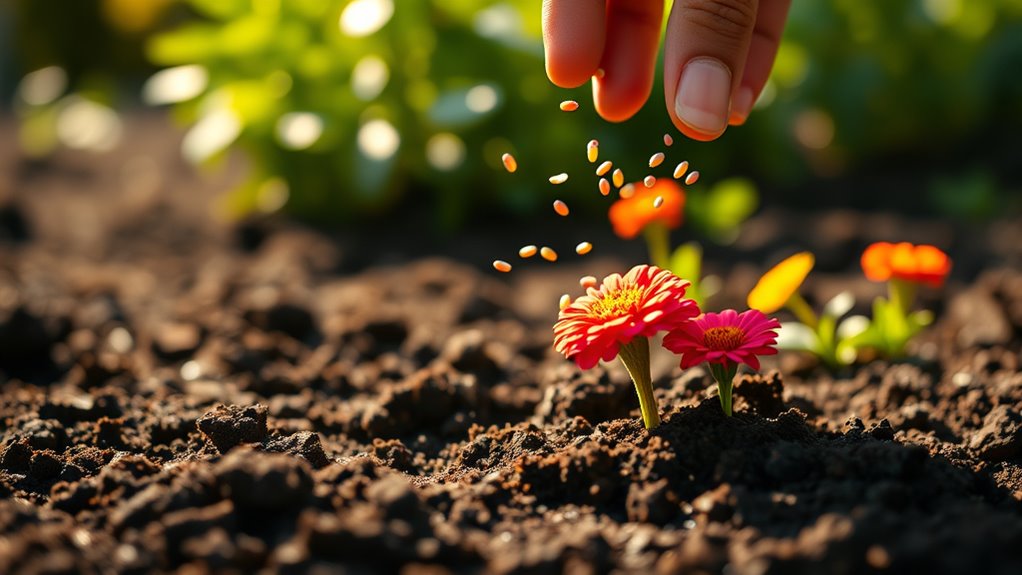
When to Plant Zinnia Seeds – A Quick How-To Guide
Many gardeners dream of vibrant, colorful blooms but often struggle with timing their zinnia seeds just right. If you’ve ever planted too early or too late, you’re not alone—getting the perfect start can be tricky.
Luckily, with a little guidance, you can enjoy stunning zinnias all season long.
Plant your zinnia seeds after the danger of frost has passed and soil temps reach 64°F to 70°F.
In colder climates, start seeds indoors 4-6 weeks before the last spring frost, then transplant outdoors once conditions warm up.
In warmer regions, sow seeds directly in the garden in spring.
Keep an eye on weather patterns and frost dates for best timing.
To learn more about optimizing your zinnia planting schedule, continue exploring!
Key Takeaways
- Wait until the last frost date has passed and soil temperatures reach 64°F to 70°F.
- Start seeds indoors 4-6 weeks before the last expected frost for an early start.
- Sow outdoor seeds after the danger of frost is gone and the soil is warm and well-drained.
- Use local climate data and USDA Zone information to figure out the best planting times.
- Make sure your plants get full sun and proper spacing for healthy growth and lots of blooms.
When Is the Best Time to Plant Zinnia Seeds in Your Garden?
The best time to plant zinnia seeds depends on your local climate, but generally, you should wait until the danger of frost has passed and the soil has warmed up. Zinnias love warm weather, so planting too early can stunt their growth or even kill seedlings.
Plant zinnia seeds after the last frost for vibrant, healthy blooms.
To figure out the right timing, keep an eye on local weather reports for the last frost date. When you’re ready to plant, sow seeds about ¼ inch deep and space them based on the variety’s needs.
Some zinnia varieties grow taller and need more space, while others stay compact. Starting seeds indoors 4-6 weeks before the last expected frost can give you a jump-start.
Once the weather warms up reliably, transplant your seedlings outdoors. Make sure to harden them off first so they don’t shock. Following these tips will help you enjoy vibrant zinnia blooms all season long.
How to Find Out Your Climate Zone for Growing Zinnias
Knowing your climate zone is key to growing healthy zinnias because it helps you figure out the best planting times and care routines. To find out your zone, check the USDA Plant Hardiness Zone Map, which sorts regions by their minimum winter temperatures.
This map helps you understand if zinnias will thrive in your area. You can visit the USDA website or look at local gardening resources to identify your zone. Just pinpoint your location on the map to find the specific zone number.
Use this info to pick zinnia varieties that suit your climate. Knowing your zone guides you in planning when to plant and which types to choose, keeping your garden bright and healthy all season long.
Getting this right minimizes guesswork and increases your chances of gardening success.
What Soil Temperature Is Ideal for Zinnia Germination?
Ever wondered what soil temperature is best for zinnia germination? The ideal range is between 64°F and 70°F (18°C–21°C). Keeping the soil moist but not waterlogged is key for success.
Different seed varieties might have slight preferences, so always check the seed packet for specific needs. Maintaining proper soil moisture and temperature helps ensure healthy sprouting.
Here’s a quick guide:
| Soil Temperature | Effect on Germination |
|---|---|
| Below 64°F | Germination slows or may not happen |
| 64°F – 70°F | Best for quick and healthy germination |
| Above 70°F | Can cause seed rot or weak sprouting |
| Variable temps | May lead to uneven germination |
Keeping soil temperatures steady will give your zinnias the best start.
Should You Start Zinnia Seeds Indoors or Sow Them Outdoors?
Deciding whether to start zinnia seeds indoors or sow them directly outdoors depends on your climate and growing season. If you have a short warm season or unpredictable weather, starting seeds indoors gives you a head start. But if your growing season is long and it warms up early, outdoor sowing works well.
Start zinnia seeds indoors in short seasons; sow outdoors if your climate is warm and season is long.
Think about these factors:
- Climate: Cooler regions benefit from starting seeds indoors to protect seedlings from late frosts.
- Timing: Indoor starting lets you control germination and grow seedlings before transplanting.
- Space and resources: Outdoor sowing is simpler if you have plenty of garden space and warm soil.
In general, starting indoors is best in cooler climates, while outdoor sowing is good for warmer areas. Both methods help you get an early start on your zinnia garden and keep blooms vibrant all season. Choose what works best for your local conditions for a successful planting.
When to Plant Zinnia Seeds in Spring for a Full Bloom
To enjoy a full, vibrant bloom of zinnias in summer, plant your seeds outdoors after the danger of frost has passed and soil temperatures are consistently warm. Sow the seeds about ¼ inch deep, gently pressing them into the soil to ensure good contact.
Planting too deep can make germination harder, so keep the seeds shallow. Wait until the soil warms to around 70°F for the best growth. Timing is everything for a lush display!
Consider companion planting with marigolds or basil. These plants can help keep pests away and boost your zinnias’ growth. It’s a simple trick to improve your garden’s health and appearance.
Space your seeds about 12 to 18 inches apart to give each plant enough airflow. Good spacing helps prevent disease and encourages healthy, vigorous blooms.
How to Prepare Your Garden Bed for Zinnias
Preparing your garden bed properly sets the foundation for healthy zinnias and vibrant blooms. Start by choosing a spot with full sun, which is perfect for these flowers. Loosen the soil to about 6-8 inches deep and remove weeds and debris to keep the area tidy.
Mix in some compost or organic matter to improve drainage and give your plants the nutrients they need. Follow the spacing guidelines—about 12-18 inches apart—so each zinnia has enough room to grow and thrive.
When planting, place seeds at a depth of ¼ to ½ inch and gently press them into the soil. To naturally keep pests at bay, consider companion planting with marigolds or basil.
Water your garden evenly, making sure the soil stays moist but not waterlogged. A well-prepared bed helps roots develop strong and healthy, making your zinnias more resistant to disease.
With these steps, you’ll set the stage for a lush, colorful zinnia display that will brighten up your garden all season long.
Tips to Extend Your Zinnia Blooming Season
Extending your zinnia blooming season is easier with a few simple strategies to keep your flowers vibrant for longer. Deadheading, or removing faded blooms, is key. Regularly snip off spent flowers to encourage new ones to grow and prevent the plant from wasting energy on seed production.
Another great tip is companion planting. Pairing zinnias with plants like marigolds or basil can boost their growth and overall health. These companions can repel pests and improve soil, helping your zinnias stay lively longer.
Don’t forget to water consistently, especially during hot weather. Keeping your plants hydrated prevents stress, which can cut their bloom period short. Also, make sure they get plenty of sunlight—zinnias love full sun and will bloom best with plenty of light.
Common Mistakes When Planting Zinnia Seeds and How to Avoid Them
Planting zinnia seeds might seem straightforward, but many gardeners make common mistakes that can hinder their success. One frequent error is planting seeds too deep or too shallow, which affects germination. Make sure to follow spacing guidelines so seedlings don’t compete for light and nutrients.
Ignoring light requirements can lead to weak, leggy plants. Zinnias need full sun to thrive. Overwatering or underwatering disrupts seedling development—aim for consistent watering without waterlogging the soil.
Improper fertilizer timing can stunt growth. Apply a balanced fertilizer at the right stage to promote healthy blooms. Be mindful of pest management since pests like aphids can quickly damage young plants if not controlled early.
To avoid these mistakes, pay attention to seed depth, watering habits, spacing, light, and fertilizer timing. Proper planning will help your zinnia garden develop strong, vibrant flowers that bloom beautifully all season.
How to Monitor Weather Conditions for Successful Zinnia Planting
Monitoring weather conditions is key to ensuring your zinnias thrive from the moment you sow the seeds. Keep an eye on weather forecasts to stay ahead of sudden temperature drops or unexpected frosts, which can damage young plants.
Understanding seasonal patterns helps you find the best planting window. Zinnias prefer warm, frost-free soil, so checking local climate data regularly is a good idea.
Knowing local seasonal patterns helps you plant zinnias at the perfect time for healthy, frost-free growth.
Pay attention to average last frost dates in spring and first frost dates in fall. Staying informed allows you to adjust your planting plans if unseasonal cold snaps or heatwaves occur.
Use weather apps or online resources specific to your region for real-time updates. This way, you can avoid planting too early or too late, giving your zinnias the best start.
When Can I Expect My Zinnias to Bloom? FAQs and Timing Tips
You can usually expect your zinnias to start blooming about 60 to 90 days after you plant them. Of course, this can vary a bit depending on your climate and how you’re growing them. Things like the quality of your soil, how much sunlight they get, and how often you water can all play a role in when they bloom.
Paying attention to these factors and making sure your zinnias have the right conditions will give them the best shot at blooming on schedule. So, a little care and patience go a long way!
Blooming Timeline Expectations
Zinnias usually bloom within 60 to 70 days after planting, but this can change depending on growing conditions and the variety you’re growing. Once they start flowering, you’ll see a vibrant display that can last for several weeks.
The length of the bloom period depends on factors like weather and how well you care for them, but generally, zinnias keep a steady splash of color going. You can expect bright, eye-catching flowers in shades like red, pink, orange, and yellow.
Throughout the season, you’ll get several waves of blooms, especially if you deadhead regularly. This means a continuous stream of flowers that can last until the first frost hits.
Factors Influencing Bloom Time
Several factors can influence when your zinnias bloom, so it’s helpful to understand what conditions encourage earlier or later flowering. Sunlight needs are key; zinnias do best in full sun, which helps them bloom faster.
Water requirements should be steady but not excessive, since too much moisture can delay flowering. Pest control is also important because pests can weaken your plants and slow down bloom development.
Use a balanced, low-nitrogen fertilizer to boost flowering. Proper spacing improves air circulation, reducing disease and supporting healthy blooms. Deadheading, or removing spent flowers, can extend your blooming period.
Seasonal changes affect bloom timing, so adjust your care accordingly. Companion planting can help by repelling pests and creating better growth conditions, leading to earlier and more abundant flowers.
Optimal Growing Conditions
Understanding the ideal conditions for growing zinnias helps you predict when they’ll bloom and plan your garden accordingly. Zinnias thrive in full sun, well-drained soil, and warm temperatures.
To promote healthy growth, water deeply but infrequently to prevent root rot. Keep pests like aphids and powdery mildew in check through regular pest management, ensuring your plants stay healthy.
Visualize a vibrant garden with bright sunlight for at least 6 hours daily, loamy soil that drains well, and consistent watering without over-saturating.
Frequently Asked Questions
Can Zinnias Grow in Shaded Areas of the Garden?
Zinnias generally don’t thrive in shaded areas because they have low shade tolerance. They need full sun to reach their full potential, so plant them where they’ll get at least six hours of direct sunlight daily.
While they can tolerate some light shade, too much will lead to fewer blooms and weaker plants. For vibrant, healthy zinnias, prioritize sunny spots in your garden.
How Often Should I Water Newly Planted Zinnia Seeds?
Did you know that proper watering can improve seed germination by up to 25%? When watering newly planted zinnia seeds, keep the soil consistently moist but not waterlogged.
Water lightly and frequently, about once a day or every other day, depending on your climate. This helps the seeds stay moist enough to germinate without drowning them.
Adjust your watering schedule based on rainfall and how dry the soil gets for the best results.
Are Zinnias Resistant to Pests and Diseases?
Yes, zinnias are quite resistant to pests and diseases, but you still need to practice good pest management and disease prevention. Keep your plants healthy by providing proper spacing, watering at the base, and removing any infected leaves.
Regularly inspect your zinnias for pests like aphids and spider mites, and address issues early. This proactive approach helps guarantee your zinnias stay vibrant and healthy throughout the season.
How Tall Do Zinnia Plants Typically Grow?
Zinnia plants typically grow between 1 to 4 feet tall, depending on the variety. Some dwarf zinnias stay under a foot, making them perfect for containers. Taller varieties can reach up to 4 feet, ideal for background plantings.
To help your zinnias reach their full height, give them full sun, well-drained soil, and regular watering. These conditions promote healthy growth and vibrant blooms.
With the right care, your zinnias will thrive and add a striking splash of color to your garden.
Can I Save Seeds From My Zinnias for Next Year?
You absolutely can save seeds from your zinnias for next year. For example, if you grow a popular variety like Zinnia ‘Lilliput,’ let the flowers fade and form seed heads.
Once they’re dry, carefully collect and store the seeds in a paper bag. This is a simple way to practice seed saving and guarantee you have your favorite zinnia varieties ready for the next growing season.
Conclusion
Now that you know the best times and tips for planting zinnia seeds, you’re ready to enjoy vibrant blooms all season long. Proper timing and care are key to your garden’s success.
Are you prepared to get your hands dirty and create a stunning zinnia display? With a little patience and attention, you’ll be rewarded with cheerful zinnia flowers that brighten your outdoor space.
Happy planting!