How Are Sunflower Seeds Harvested?
Harvesting sunflower seeds might seem straightforward, but many people struggle with knowing exactly when and how to do it right.
If you’ve ever wondered how those perfect sunflower seeds make their way from field to table, you’re not alone.
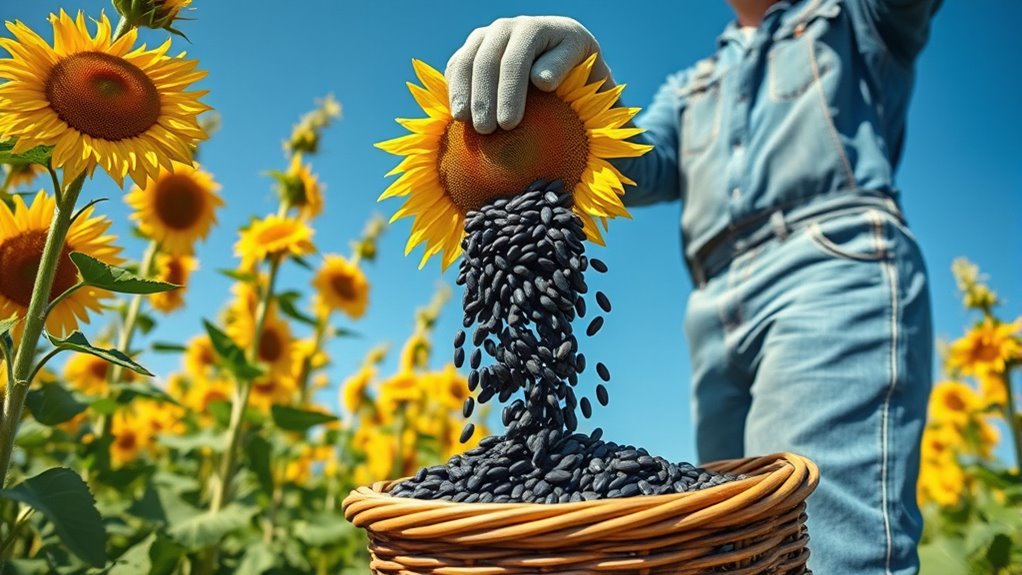
To harvest sunflower seeds, you watch for the back of the sunflower heads turning from yellow to brown, indicating maturity, usually when seed moisture is around 10-14%.
Farmers use specialized combines with sunflower headers to cut and thresh the heads efficiently, minimizing seed damage.
After harvesting, seeds are dried and cured to prevent spoilage and preserve quality.
If you want to learn more about the entire process, keep exploring these steps in detail.
Key Takeaways
- Sunflower heads are harvested when the back turns yellow or brown, showing they’re mature.
- Special combine harvesters with sunflower headers cut and thresh the heads to get the seeds.
- Seeds are separated from the chaff through threshing and then collected for drying.
- Proper drying to 10-14% moisture prevents spoilage and keeps the seed quality high.
- After cleaning and curing, seeds are stored in a cool, dry place for long-term preservation.
How Do Farmers Know When Sunflower Seeds Are Ready to Harvest?
Farmers know sunflower seeds are ready to harvest when the back of the sunflower heads turn yellow or brown, signaling maturity. This change in color is a key sign that the seeds inside have fully developed.
You should also check the moisture levels. Ideally, seeds should have a moisture content of around 10-14%. If the moisture is too high, the seeds won’t store well and may spoil.
On the other hand, if they’re too dry, they might crack or be difficult to harvest. Farmers often use a moisture meter or take a small sample to squeeze and feel the seed’s firmness.
When the seeds reach the right moisture level and the back of the head turns color, it’s a good sign that they’re ready for harvesting. Paying attention to these indicators helps ensure a successful harvest and prevents post-harvest losses.
What Equipment Do Farmers Use to Harvest Sunflower Seeds?
Harvesting sunflower seeds involves using specialized equipment designed to gather and separate the seeds from the sunflower heads efficiently. Typically, farmers use combines equipped with sunflower headers tailored to handle large, dense sunflower heads.
These headers cut the sunflower heads from the stalks while minimizing seed damage, making the harvesting process more effective. Once the heads are cut, the combine’s threshing mechanism separates the seeds from the surrounding chaff and plant material.
The efficiency of this equipment plays a vital role in maximizing yield and reducing losses. Modern combines also have adjustable settings to optimize performance based on seed moisture content and plant density.
Some farmers may use a separate seed cleaner or dryer after harvesting to ensure seeds are dry and free of debris. Overall, the right equipment and techniques greatly improve efficiency and help guarantee a successful harvest.
How Is the Sunflower Harvesting Process Carried Out Step-by-Step?
The sunflower harvesting process happens through a series of carefully coordinated steps to ensure the best seed quality and yield. First, you keep an eye on the sunflower growth, looking for signs that the seeds are mature. Usually, this is when the back of the head turns yellow or brown.
This timing can vary depending on the seed variety and growing conditions. Once the seeds are ready, you use specialized equipment like harvesters or combines to cut the sunflower heads, making sure to minimize seed loss.
After cutting, the heads are collected and moved to a processing area. Throughout the entire process, you stay attentive to the specific growth stage of your sunflower crop, since different varieties may mature at different times.
Proper timing and careful handling are key to preserving seed integrity. By following these steps, you maximize the quality of your harvest, setting everything up for effective seed extraction and the best possible yield.
How Do Farmers Extract Seeds From Sunflower Heads?
Farmers have a couple of different ways to get the seeds out of sunflower heads. Some do it by hand, carefully removing seeds one by one, while others use machines to do the job faster.
Mechanical harvesters can quickly strip seeds from the sunflower heads, which is great for saving time, especially on large farms. But when they do it by hand, farmers can be more selective, making sure only the best seeds are kept.
Hand vs. Mechanical Harvesting
In relation to extracting sunflower seeds from the heads, the approach varies greatly depending on whether you opt for hand or mechanical methods. Hand techniques involve carefully peeling back the sunflower head’s bracts and gently removing seeds, offering precision but requiring more time and labor.
Mechanical advantages come with using harvesters, which swiftly strip seeds from large fields, increasing efficiency and reducing labor costs. Consider these points:
- Hand techniques allow for selective harvesting
- Mechanical methods speed up the process considerably
- Hand harvesting suits small farms or delicate seed varieties
- Mechanical harvesters reduce physical effort
- Precision in seed extraction varies between methods
Choosing between hand and mechanical harvesting depends on your farm size, budget, and desired efficiency.
Seed Extraction Techniques
After harvesting sunflower heads, extracting the seeds efficiently becomes the next key step. You can use various extraction methods, such as mechanical threshing or manual decortication, to remove seeds from the heads.
Mechanical harvesters often employ tumblers or stripping machines that gently separate seeds while minimizing damage. This helps with seed preservation and makes the process faster.
Manual methods like hand-rubbing or using a comb are slower but useful for small-scale operations or delicate seeds. Proper extraction not only improves yield but also ensures the seeds stay intact and viable for storage or planting.
After extraction, it’s crucial to clean and dry the seeds thoroughly to prevent mold and preserve seed quality. Choosing the right method depends on your scale, equipment, and your goal of seed preservation.
Why Do Sunflower Seeds Need to Be Dried and Cured After Harvest?
Sunflower seeds need to be dried and cured after harvest to lower their moisture content, which helps prevent mold and spoilage. Proper drying keeps the seeds fresh and safe for storage, maintaining their quality.
You can dry the seeds in different ways, like air drying in a well-ventilated space or using mechanical dryers for quicker results. Curing helps distribute moisture reduction evenly and strengthens seed shells, boosting their longevity.
Here are some key reasons why drying and curing are so important:
- To prevent fungal growth and mold formation
- To keep the seeds’ nutritional value intact
- To improve storage stability
- To enhance seed flavor and texture
- To ensure the seeds are ready for processing or sale
How Do Modern Machines Improve Sunflower Harvesting Efficiency?
Modern harvesting machines greatly boost efficiency by automating and speeding up the process of collecting sunflower seeds. These machines, equipped with advanced harvesting technology, reduce the labor needed and minimize seed loss.
They can quickly cut and thresh sunflower heads in a single pass, increasing machine efficiency and productivity. Modern combines are fitted with specialized headers that gently lift sunflower heads without damaging the seeds, ensuring higher quality yields.
Sensors and GPS technology help optimize harvesting routes, reducing fuel consumption and downtime. Moreover, automated adjustments allow the equipment to adapt to varying field conditions, maintaining consistent performance.
These innovations enable farmers to harvest larger areas in less time, making sunflower harvesting more cost-effective. Overall, modern machines dramatically improve efficiency, allowing you to maximize seed recovery while reducing manual effort and operational costs.
This integration of harvesting technology transforms traditional sunflower harvesting into a faster, more efficient process.
What Are the Main Challenges in Harvesting Sunflower Seeds?
Harvesting sunflower seeds comes with a few challenges that can affect both how much you get and the quality of your crop. Weather surprises like heavy rain or drought can slow down harvesting or even damage the seeds.
Weather surprises like rain or drought can impact sunflower seed harvesting and quality.
Humid weather is another issue because it can cause mold, making the seeds less valuable. Pest control is important too; pests like sunflower moths and beetles can infest the seeds and reduce your crop’s worth.
Uneven ripening can make timing tricky, which might lead to seed loss or damage. Mechanical harvesters can sometimes cause seeds to shatter if you don’t time things right. You also need to keep an eye on your fields regularly to prevent spoilage or disease.
Managing these challenges early is key. Staying alert to weather changes, controlling pests effectively, and timing your harvest carefully will help you get the best yield and quality.
How Do Farmers Minimize Seed Loss During Harvest?
To minimize seed loss during harvest, farmers plan the timing and method of collection carefully. Picking the right time ensures seeds are mature but not overripe, which helps prevent shattering and seeds falling to the ground.
Harvest strategies also include using the proper equipment, like combine harvesters set at ideal speeds and clearance heights. Adjusting these settings according to crop conditions helps avoid damaging seeds or leaving them behind.
Farmers keep a close eye on the weather. Harvesting during dry weather reduces seed shattering caused by moisture. Gentle threshing and proper cleaning of machinery further cut down on seed loss.
Regular maintenance of equipment is key. It ensures smooth operation and reduces seed spillage. All these steps help maximize seed recovery, improve crop quality, and make sure farmers get the most out of their sunflower harvest.
How Are Sunflower Seeds Stored and Prepared After Harvest?
After sunflower seeds are harvested, proper storage and preparation are key to keeping their quality and preventing spoilage. Store seeds in a cool, dry place to avoid mold and insect problems.
Before storing, clean off plant debris and dry the seeds thoroughly to reduce moisture. This helps preserve their flavor and seed viability.
To keep your sunflower seeds fresh, use airtight containers to block out moisture. Store them in a cool, dark spot, and check regularly for signs of pests or spoilage.
Label your containers with harvest dates so you can track freshness. Make sure to dry the seeds to about 8-10% moisture content for the best results.
How Does Harvest Timing Affect the Quality of Sunflower Seeds?
The timing of when you harvest sunflower seeds directly influences their overall quality and market value. If you harvest too early, the seeds might not be fully mature, which can lead to lower seed quality and less oil content.
Waiting too long can cause seed loss from shattering or weather damage. Proper harvest timing ensures you get the best seed quality, with seeds reaching the ideal moisture content of around 10-12%.
Use the table below to help determine the right time:
| Indicator | What to Look For |
|---|---|
| Seed Color | Dark brown or black, firm seeds |
| Seed Firmness | Hard and resilient |
| Head Dryness | Heads are fully dry |
| Moisture Content | 10-12% moisture level |
Frequently Asked Questions
What Are the Best Weather Conditions for Sunflower Harvesting?
You should aim for warm, dry weather with consistent sunlight exposure and minimal temperature fluctuations during sunflower harvesting.
Ideal conditions include clear, sunny days with temperatures around 70-85°F, which help the seeds dry thoroughly. Avoid harvesting during high humidity or rain, as excess moisture can cause mold or spoilage.
Consistent weather guarantees the seeds mature evenly, making harvesting easier and ensuring the highest quality sunflower seeds.
How Do Farmers Determine the Optimal Moisture Content for Harvest?
You determine the ideal moisture content for harvest through moisture testing, which helps you decide the right timing. When the seeds reach the right dryness—usually around 8-10%—you’ll know it’s time to use your harvest equipment.
Regular testing makes sure you avoid harvesting too early, which could damage the seeds, or too late, which might lead to spoilage. Checking moisture levels often ensures your sunflower crop stays high quality.
Being precise with moisture evaluation helps you get the best yield and quality. This way, your sunflower harvest is both plentiful and profitable.
What Are Common Pests Affecting Sunflower Seed Harvests?
You should be aware that common pests affecting sunflower seed harvests include sunflower moths, beetles, and aphids. Effective pest management involves monitoring crops regularly and using control methods like biological agents or targeted insecticides.
Incorporating crop rotation helps reduce pest buildup and disrupt their life cycles, protecting your sunflowers. Staying vigilant and practicing integrated pest management guarantees healthy plants and a successful harvest, minimizing crop losses.
How Does Seed Variety Influence Harvesting Methods?
Seed variety influences harvesting methods because different seed characteristics need specific techniques. For example, oilseed sunflower varieties with larger, thicker seeds might require specialized equipment to prevent damage.
Smaller seed types can often be harvested with simpler methods. You need to adapt your techniques based on seed size, moisture content, and maturity.
Understanding these variations helps ensure efficient harvesting, reduces seed loss, and maintains seed quality for maximum yield and processing.
What Role Do Harvest Timing and Seed Maturity Play in Oil Quality?
Harvest timing and seed maturity directly impact your seed oil’s quality and flavor profile. If you harvest too early, the seeds might not have the ideal oil content, leading to lower-quality oil with a less appealing flavor.
Waiting too long can cause the seeds to over-ripen, which can lead to oil degradation. By harvesting at the right time when the seeds are at peak maturity, you ensure a high-quality seed oil with a rich, well-balanced flavor.
Conclusion
Think of harvesting sunflower seeds as tending a delicate garden where timing and care guide you. If you pick too early or too late, the beauty and bounty can fade like a sunset slipping beyond the horizon.
Understanding each step and paying close attention makes you the gardener of nature’s golden treasure. This way, you ensure the seeds you gather are vibrant and ripe, ready to grow into new life, just as the sun’s rays nurture the fields.
When the back of the sunflower head turns brown and the seeds start to loosen, it’s usually the right time to harvest. Using sharp tools or hands, you can cut or pull the heads carefully to avoid damaging the seeds.
After harvesting, drying the sunflower heads in a warm, dry spot allows the seeds to loosen easily. Once fully dry, you can extract the seeds by rubbing or shaking them out gently.
Finally, store the seeds in a cool, dry place, ready for planting or snacking. Proper harvesting ensures your sunflower seeds stay vibrant and healthy, helping you grow a flourishing garden next season.