Do You Plant Cilantro Seeds in 7 Simple Steps?
Many home gardeners want to grow fresh cilantro but feel overwhelmed by the planting process. You’re not alone—many people struggle with getting seeds to sprout and grow healthy.
Luckily, planting cilantro seeds can be simple if you follow seven straightforward steps.
Yes, planting cilantro seeds can be simple if you follow seven straightforward steps. Start by choosing a sunny spot with good airflow and well-draining soil enriched with compost.
Sow seeds about 1/4 inch deep, spacing them 1 to 2 inches apart. Keep the soil moist and provide 4-6 hours of sunlight daily.
Thin out seedlings as they grow for healthy plants. Proper care and timing lead to a bountiful harvest—keep going to learn more about each step.
Key Takeaways
- Select a sunny, well-draining spot with nutrient-rich soil for planting cilantro seeds.
- Sow seeds about 1/4 inch deep and space them 1-2 inches apart in early spring or fall.
- Water regularly to keep the soil moist but not waterlogged, which helps the seeds germinate best.
- As the seedlings grow, thin them out to prevent overcrowding and give each plant room to develop.
- When the leaves are mature, harvest by cutting carefully to encourage ongoing growth.
Getting Your Garden Ready for Cilantro
Before planting cilantro seeds, you need to prepare your garden to guarantee healthy growth. Start by planning your garden layout carefully. Cilantro thrives in a spot with good airflow and partial sun, so choose an area that isn’t too crowded or shaded.
Think about companion planting—pair cilantro with plants like tomatoes, carrots, or spinach. These neighbors can boost growth and help repel pests naturally. Avoid planting cilantro near plants like fennel or potatoes, which can hinder its development.
Pair cilantro with tomatoes, carrots, or spinach to enhance growth and naturally repel pests. Avoid fennel and potatoes.
Clear the area of weeds and debris to prevent competition for nutrients and water. Loosen the soil to improve drainage and root expansion. Use organic compost to enrich the soil, providing essential nutrients.
A well-thought-out garden layout combined with strategic companion planting sets the foundation for healthy cilantro plants and a successful harvest. Proper preparation guarantees your cilantro grows strong and vibrant from the start.
Choosing the Best Soil and Spot to Grow Cilantro
Choosing the right soil and spot for your cilantro is key to guaranteeing healthy growth. Cilantro thrives in well-draining soil with good organic matter. Opt for soil types like loamy or sandy soil that retain moisture but don’t stay too wet. Avoid heavy clay soils, which can cause waterlogging and root rot.
The location you choose should meet its sunlight requirements—cilantro needs at least 4 to 6 hours of direct sunlight daily. Pick a spot that gets morning sun and some afternoon shade if your climate is hot. Confirm the site has good airflow to prevent disease.
Clear away weeds or debris, and enrich the soil with compost or organic matter to boost nutrients. Remember, cilantro prefers consistent moisture, so maintain even watering. By selecting a suitable spot with the right soil types and sufficient sunlight, you set the foundation for strong, healthy cilantro plants.
When and How to Sow Cilantro Seeds for Best Results
Timing is key when sowing cilantro seeds to get a good harvest. Plant them in early spring or fall when temperatures are between 50°F and 85°F, which are ideal for germination.
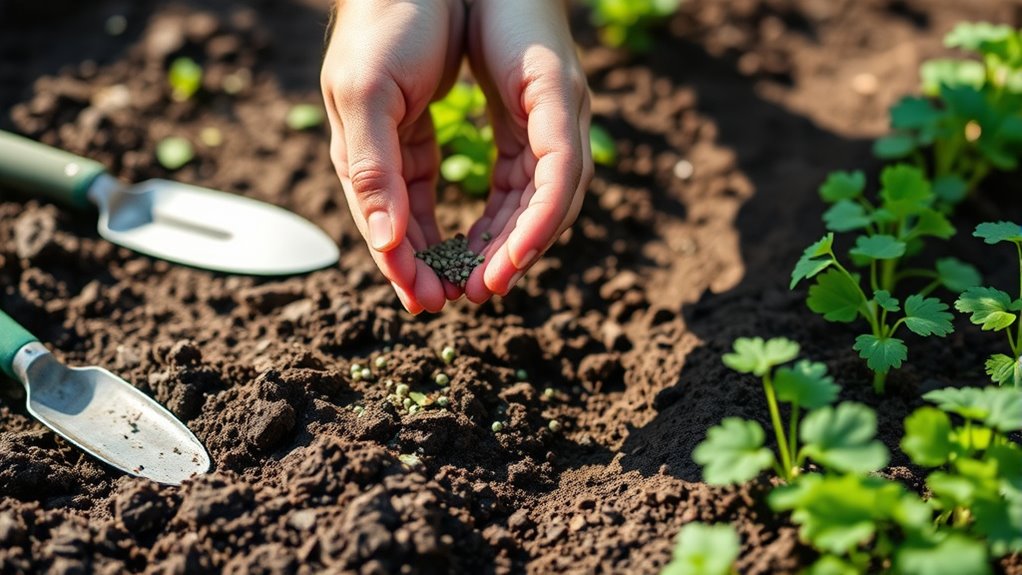
For the best results, sow the seeds about 1/4 inch deep in well-draining soil. This ensures they get enough moisture and warmth to sprout properly.
Don’t plant too deep, or it might slow down germination. Also, avoid planting too shallow, as the seeds could dry out.
Space the seeds 1 to 2 inches apart to give them room to grow. Cover them lightly with soil and water gently to keep the soil moist but not soaked.
Cilantro seeds usually sprout within 7 to 14 days when conditions are right. Proper timing and depth lay the foundation for healthy, tasty cilantro plants.
Watering and Caring for Your Cilantro Plants
Watering your cilantro plants consistently is key for healthy growth. They do best when kept evenly moist but not waterlogged. Regular watering helps prevent wilting and promotes lush foliage.
Besides watering, providing the right amount of light is essential. Cilantro prefers full sun or partial shade for optimal growth. Make sure they get at least 4-6 hours of direct sunlight daily.
When it comes to fertilizer, a balanced, all-purpose option works well. Just avoid overfeeding, which can cause leggy plants. Use organic compost for natural nutrients if you prefer.
| Light Requirements | Fertilizer Options |
|---|---|
| Full sun or partial shade | Balanced, all-purpose fertilizer |
| Guarantee at least 4-6 hours of direct sunlight | Use sparingly to prevent overgrowth |
| Maintain consistent light exposure | Apply every few weeks for sustained nutrients |
| Monitor for shade or overexposure | Use organic compost for natural nutrients |
Keep an eye on soil moisture and adjust your watering as needed. This helps your cilantro thrive without overdoing it.
Thinning and Transplanting Cilantro for Stronger Growth
Once your cilantro seedlings have sprouted and grown a few inches tall, thinning and transplanting are key to healthy growth. Giving each plant enough space helps them develop strong roots and leafy foliage without overcrowding.
Thin out the weaker seedlings, leaving the healthiest ones about 6 to 8 inches apart. This boosts air circulation and cuts down on disease risks. When transplanting, gently loosen the soil around the seedlings, being careful not to damage the roots.
Move the plants to their permanent spot, keeping the same spacing you used during thinning. Transplanting promotes better growth, leading to larger, more flavorful leaves. It also prevents competition for nutrients, water, and light.
Troubleshooting Common Cilantro Growing Problems
If your cilantro seeds aren’t sprouting like they should, first take a look at the soil. Is it too cold or maybe too wet? Both can keep those seeds from germinating. Sometimes, using fresh seeds can make a big difference, so consider swapping them out if yours are old.
Keep an eye out for pests like aphids or any signs of mold or other diseases. They can really harm your plants if you don’t catch them early. Regularly inspecting your cilantro and taking action as soon as you see trouble will help keep your plants healthy and thriving.
Addressing Poor Germination Rates
Poor germination rates can be really frustrating, but understanding the common causes can help you troubleshoot more easily. Low seed quality or temperature fluctuations often make sprouting tricky.
To get better results, choose fresh, high-quality seeds and plant them in well-draining soil. Keep the soil moist and maintain steady temperatures between 55-75°F, avoiding sudden changes.
Use the table below to identify key issues:
| Issue | Solution |
|---|---|
| Low seed quality | Use fresh, reputable seed sources |
| Temperature swings | Keep soil temperature stable with proper cover |
| Improper planting depth | Plant seeds 1/4 to 1/2 inch deep |
| Poor soil drainage | Amend soil with organic matter |
| Insufficient moisture | Water evenly, avoid over- or under-watering |
Addressing these factors will improve your chances of successful cilantro germination.
Managing Pests and Diseases
While healthy cilantro plants are generally resilient, pests and diseases can quickly undermine your efforts if not managed promptly. To prevent issues, focus on disease prevention through good soil health and maintaining plant diversity.
Incorporate companion planting with herbs like basil or marigolds to naturally deter pests. Encourage beneficial insects such as ladybugs and parasitic wasps, which prey on harmful pests.
Use organic pest control methods like neem oil or insecticidal soap as natural remedies to manage infestations. Practice crop rotation to reduce the risk of soil-borne diseases.
Regularly inspect your plants for signs of trouble and act quickly. By combining these strategies, you’ll foster a healthy, resilient cilantro crop and reduce reliance on chemicals.
Harvesting and Storing Your Cilantro for Fresh Use
Once your cilantro has matured and the leaves are lush and vibrant, it’s time to harvest. Use sharp scissors or pruning shears for clean cuts. Cut the stems just above the soil line, being careful not to damage the plant.
To keep your cilantro fresh, proper storage methods are key. Here’s a quick guide:
| Storage Method | Description | Best for |
|---|---|---|
| Refrigeration | Wrap in a damp paper towel and place in a plastic bag | Short-term use (up to a week) |
| Freezing | Chop and store in airtight containers or ice cube trays | Long-term storage |
| Drying | Hang upside down in a well-ventilated area | Preserving flavor |
Pick the method that works best for you. Proper harvesting and storage will keep your cilantro fresh and flavorful, so you can enjoy it at its best.
Frequently Asked Questions
Can Cilantro Seeds Be Planted Indoors Successfully?
Yes, you can successfully plant cilantro seeds indoors through seed starting and indoor gardening.
Choose a pot with drainage, fill it with well-draining soil, and plant the seeds about a quarter-inch deep. Keep the soil moist and place the pot in a sunny spot or under grow lights.
With proper care, you’ll enjoy fresh cilantro year-round. Indoor gardening makes growing herbs easy and rewarding.
How Long Does It Take for Cilantro Seeds to Germinate?
Cilantro seeds usually germinate in about 7 to 10 days if you keep the right conditions. The ideal temperature for germination is between 50-85°F.
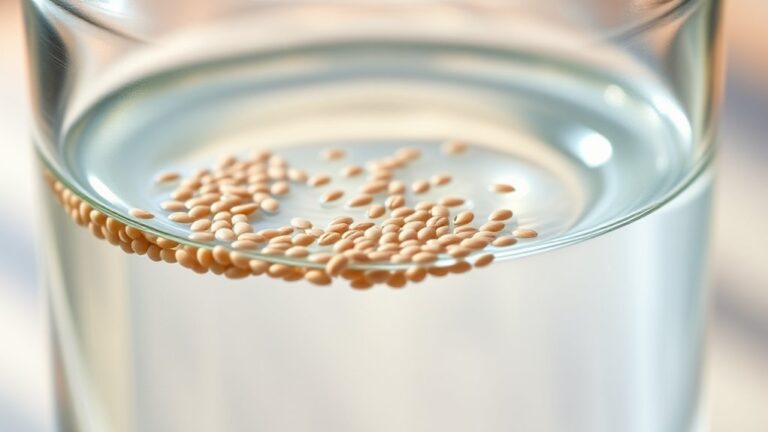
To give your seeds a boost, soak them for 8-12 hours before planting. This helps soften the seed coat and speeds up sprouting.
Keep the soil moist and warm, and you’ll see sprouts emerge pretty quickly. Remember, proper soaking and temperature control are key to a successful cilantro crop!
What Pests Commonly Affect Cilantro Plants?
You should watch out for pests like aphids, which suck sap and weaken your cilantro. To control aphids, try natural methods like insecticidal soap or introducing beneficial insects.
Fungal diseases, such as powdery mildew, can also affect your plants, especially in humid conditions. To prevent these issues, ensure good air circulation and avoid overhead watering.
Regularly inspect your cilantro to catch pests early and keep it healthy.
Can Cilantro Grow Year-Round in All Climates?
Cilantro’s climate adaptability varies, so it doesn’t grow year-round everywhere. In cooler climates, you can enjoy cilantro most of the year, but in hot or humid areas, it may bolt quickly.
For successful cilantro growth, provide well-drained soil, partial shade in extreme heat, and consistent moisture.
If you’re in a challenging climate, consider starting cilantro indoors or during cooler seasons to extend its growing period.
Are There Organic Methods to Enhance Cilantro Seed Germination?
Yes, you can boost cilantro seed germination naturally with organic methods. Start by soaking the seeds in water for 12-24 hours to soften the seed coat and help them sprout more easily.
Prepare your soil using compost or organic matter to keep it loose and well-draining. Keep the soil moist but not waterlogged, and plant the seeds about 1/4 inch deep.
These organic techniques support healthy germination and encourage vigorous cilantro growth naturally.
Conclusion
By following these seven simple steps, you’ll turn your garden into a cilantro paradise that rivals the lushest jungles. With patience and care, your cilantro plants will thrive and burst with flavor, transforming your culinary creations.
Remember, planting cilantro is like planting a little piece of green magic. Don’t be discouraged by any setbacks. Before you know it, you’ll be harvesting fresh, fragrant cilantro that makes every dish extraordinary.
Growing cilantro from seeds is easy and rewarding. Just give it the right start, and you’ll enjoy a steady supply of this flavorful herb. Happy gardening!