What Health Benefits Are Good From Chia Seeds?
Many people struggle with finding simple ways to boost their health and energy daily. If you’re looking for a natural, easy addition to your diet, chia seeds might be just what you need.
Chia seeds are a superfood that offers many health benefits you’ll love. They’re rich in omega-3s, fiber, and antioxidants, supporting heart and digestive health.
They help manage weight by promoting fullness and stabilizing blood sugar. Plus, they boost your energy with sustained stamina and improve overall nutrient absorption.
Just a small amount can make a big difference in your daily wellness.
Keep exploring to uncover even more ways chia seeds can improve your health.
Key Takeaways
- Rich in omega-3 fatty acids that support heart health and reduce inflammation.
- High dietary fiber promotes digestive regularity and helps with weight management.
- Antioxidants in chia seeds help protect cells and strengthen blood vessels.
- They can help stabilize blood sugar levels and provide sustained energy throughout the day.
- Chia seeds support overall nutrition with essential nutrients like protein, vitamins, and minerals.
What Are Chia Seeds and Why Are They a Superfood?
Chia seeds are tiny black or white seeds from the Salvia hispanica plant, native to Central America. Their history goes back centuries, when ancient civilizations like the Aztecs and Mayans considered them a vital food source and energy booster.
Today, they’re celebrated as a superfood because of their impressive nutritional profile and versatility. You’ll find different varieties, mainly distinguished by color—black or white—but they taste similar and offer the same health benefits.
Celebrated as a superfood for their nutrition and versatility, chia seeds come in black or white, offering identical health benefits.
These seeds are easy to add to your diet, whether in smoothies, yogurt, or baked goods. Their small size makes them convenient, but they’re packed with nutrients. Chia seeds are a natural powerhouse, loaded with fiber, omega-3 fatty acids, and antioxidants.
Their long history and variety show why they’ve remained popular as a superfood. They support overall health and well-being in a simple, natural way.
What Nutrients Do Chia Seeds Pack?
You’ll notice that chia seeds are loaded with essential nutrients. They’re especially rich in omega-3 fatty acids, which are great for supporting your heart health. Plus, they’re high in dietary fiber, so they help keep you feeling full and can aid your digestion too.
Adding these little seeds to your meals is an easy way to boost your intake of important nutrients without much hassle.
Rich in Omega-3s
Because they are packed with essential nutrients, chia seeds are an excellent source of Omega-3 fatty acids, which are key for maintaining heart health and reducing inflammation.
As one of the best Omega-3 sources out there, they support your cardiovascular system by lowering bad cholesterol levels and improving blood flow.
Adding chia seeds to your diet can help you feel more energized and resilient. Imagine the benefits of:
- Protecting your heart from disease
- Reducing joint pain and swelling
- Boosting your overall well-being
High in Dietary Fiber
Since dietary fiber is essential for digestive health, incorporating chia seeds into your diet can greatly boost your fiber intake. Chia seeds are excellent fiber sources, helping to promote regularity and prevent constipation.
The high fiber content supports your digestive health by adding bulk to your stool and aiding in nutrient absorption. When you include chia seeds in your meals, you’re not only increasing your fiber consumption but also supporting a healthy gut microbiome.
This can lead to improved overall digestion and reduced inflammation. Because they’re easy to add to smoothies, yogurt, or oatmeal, chia seeds make a convenient way to meet your daily fiber needs.
Embracing chia as a fiber source benefits your digestive system and contributes to long-term health.
How Do Chia Seeds Improve Digestive and Heart Health?
Chia seeds are great for your digestion because they help keep things moving smoothly. They promote regularity and can even help ease any discomfort you might feel. It’s like giving your gut a little boost to stay happy and healthy.
Plus, chia seeds are fantastic for your heart health too. They can improve how your heart functions and help lower your cholesterol levels. Just adding a spoonful to your meals can make a pretty noticeable difference in how you feel overall.
Enhances Digestive Regularity
If you want to improve your digestive health, incorporating chia seeds into your diet can be highly effective. Their high fiber content helps keep your digestive system running smoothly by promoting regularity.
Chia seeds are rich in soluble fiber, which absorbs water and forms a gel that softens stool, easing bowel movements. They also support your gut flora by nourishing beneficial bacteria, which boosts overall digestion.
Here are three reasons why chia seeds boost digestive regularity:
- They contain digestive enzymes that break down food more efficiently.
- Their fiber promotes consistent bowel movements, preventing constipation.
- They foster healthy gut flora, which improves nutrient absorption and reduces bloating.
Adding chia seeds to your meals can transform your digestive health and keep things moving smoothly.
Boosts Heart Function
Incorporating chia seeds into your diet can greatly improve heart health by providing a rich source of omega-3 fatty acids, fiber, and antioxidants. These nutrients work together to support your cardiovascular benefits, helping to reduce inflammation and strengthen blood vessels.
The omega-3s in chia seeds are known to lower blood pressure and promote healthy blood flow, which is essential for a strong heart. Plus, the high fiber content helps prevent blood clots and keeps your heartbeat regular.
Regularly eating chia seeds can contribute to a resilient cardiovascular system, lowering your risk of heart disease. By including them in your meals, you’re giving your heart the nutrients it needs to function efficiently and stay healthy in the long run.
Reduces Cholesterol Levels
Consuming chia seeds regularly can greatly lower your cholesterol levels, which is essential for maintaining both digestive and heart health. By supporting cholesterol management, chia seeds help prevent plaque buildup in arteries, reducing your risk of heart disease. When you include them in your diet, you’re taking proactive steps toward a healthier heart.
Imagine feeling energized, confident, and protected from heart-related issues. Here are three reasons why chia seeds boost your heart health:
- They’re high in soluble fiber, which binds to cholesterol and helps eliminate it.
- Rich in omega-3 fatty acids, they promote healthier blood flow.
- Their antioxidant compounds reduce inflammation, supporting overall cardiovascular health.
Incorporating chia seeds into your daily routine can make a big difference in your cholesterol management and long-term well-being.
Can Chia Seeds Help You Lose Weight?
Wondering whether chia seeds can help with your weight loss efforts? The good news is, they can be a helpful part of your weight management plan.
Chia seeds are packed with fiber, which helps you feel full longer and cuts down on hunger throughout the day. This can help prevent overeating and keep your calorie intake in check.
Chia seeds’ fiber keeps you full longer, reducing hunger and preventing overeating.
When you add chia seeds to smoothies, puddings, or salads, they add bulk without extra calories. Plus, their high protein content boosts feelings of fullness and helps preserve muscle during weight loss.
Another cool thing is that chia seeds absorb water and expand in your stomach, giving you a sensation of fullness that can curb cravings.
While no single food can guarantee weight loss, including chia seeds in your diet can support your goals. Just remember to pair them with healthy habits like regular exercise and balanced meals for the best results.
How Do Chia Seeds Boost Your Energy Levels?
Ever feel sluggish during the day? Chia seeds can give you that much-needed energy boost and improve your stamina. These tiny seeds are packed with fiber, omega-3 fatty acids, and protein, which work together to provide sustained energy.
When you consume chia seeds, they absorb liquid and expand in your stomach, helping you feel full longer and prevent crashes.
Here are three ways chia seeds boost your energy levels:
- They stabilize blood sugar levels, avoiding energy dips.
- They deliver slow-releasing carbs for consistent stamina improvement.
- They supply essential nutrients that support overall vitality.
Adding chia seeds to your diet makes a noticeable difference in how energized you feel throughout the day. They’re a simple, natural way to maintain focus, fight fatigue, and keep your energy levels steady without crashes.
Try incorporating them into smoothies, yogurt, or oatmeal for a quick, effective energy lift.
How Do Chia Seeds Support Hydration and Balance Electrolytes?
Chia seeds are pretty amazing when it comes to hydration because they have a hydrophilic nature. Basically, they can soak up water really quickly, which helps keep you hydrated. So, when you eat them, they’re working to add moisture to your body and support your fluid levels.
Plus, they play a role in maintaining your electrolyte balance by holding onto fluids in your system. That’s especially helpful if you’re active or out in the heat, because it helps your body stay balanced and functioning smoothly. Overall, chia seeds are a smart snack if you want to stay hydrated and keep your electrolytes in check!
Hydrophilic Nature Promotes Hydration
Because of their hydrophilic nature, chia seeds can absorb and hold large amounts of water, which directly supports hydration. When you include chia seeds in your diet, you experience increased hydration benefits, helping you feel more energized and focused.
This makes them perfect for adding to recipes that naturally boost your fluid intake. As the seeds swell, they release a gel-like substance that keeps you hydrated longer and helps maintain electrolyte balance.
Imagine feeling refreshed during hot days or intense workouts because your body is well-hydrated. Incorporating chia seeds into your meals guarantees your body retains moisture and stays balanced.
It makes hydration effortless and delicious. These seeds truly turn simple recipes into powerful hydration tools.
Electrolyte Balance Enhancement
As chia seeds swell and release their gel-like substance, they not only keep you hydrated longer but also help maintain your body’s electrolyte balance. The gel contains minerals like magnesium, potassium, and calcium, which are key for electrolyte regulation.
These minerals support proper nerve function, muscle contractions, and fluid balance, making chia seeds a great addition to your hydration routine. When you include them in your diet, they help replenish electrolytes lost through sweat or dehydration.
This reduces the risk of imbalance and helps your body stay properly hydrated and functioning well during physical activity or hot weather. Regularly adding chia seeds to your diet is a simple way to boost hydration and keep your electrolyte levels in check.
Absorbs Water Quickly
When you soak chia seeds in liquid, they quickly absorb water and swell into a gel-like texture. This rapid absorption helps keep you hydrated longer and boosts nutrient retention, so your body gets more from each seed.
As they expand, chia seeds form a natural barrier that slows digestion, helping you stay energized and hydrated throughout the day.
Here are three powerful benefits:
- Feel more energized and less tired during the day.
- Prevent dehydration during intense physical activity.
- Maintain electrolyte balance by supporting fluid regulation.
Can Chia Seeds Help Manage Blood Sugar?
Have you ever wondered if chia seeds can help regulate blood sugar levels? Research suggests they may improve insulin sensitivity, which is essential for managing blood sugar.
The high fiber content in chia seeds slows down carbohydrate absorption, preventing sudden spikes in blood sugar after meals. This helps keep your levels stable, especially for people with insulin resistance or type 2 diabetes.
Plus, the gel-like consistency that chia seeds form in liquids can create a feeling of fullness. This can reduce overeating and help control blood sugar fluctuations throughout the day.
Some studies indicate that adding chia seeds to your diet could support better blood sugar management over time. While they’re not a cure, they may be a simple, natural way to boost your overall blood sugar control and improve metabolic health.
Just remember to pair them with a balanced diet and regular exercise for the best results.
How Can You Easily Add Chia Seeds to Your Daily Diet?
Adding chia seeds to your daily diet is simple and versatile. You can easily mix them into your favorite meals and snacks.
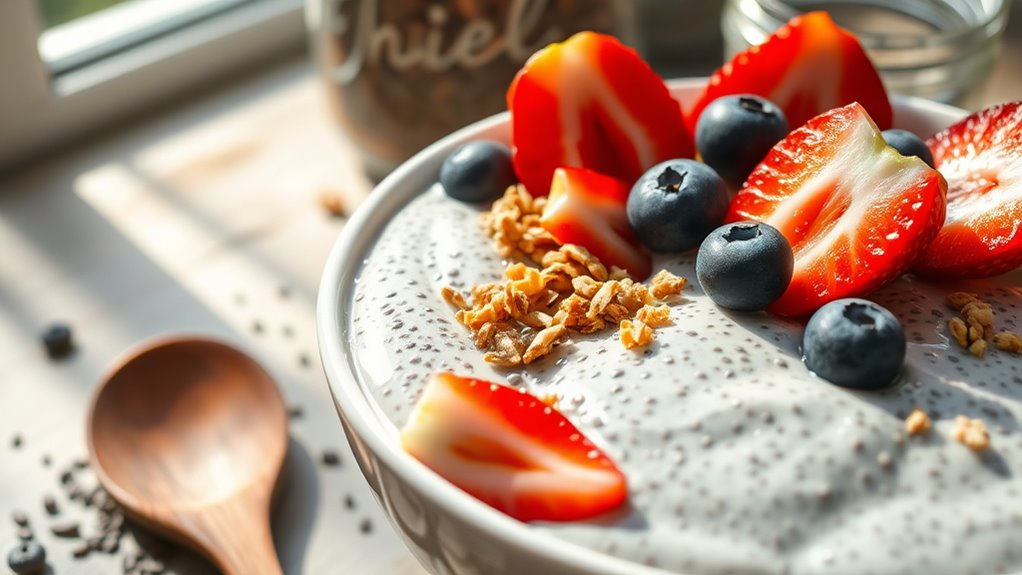
Start your day with a chia seed smoothie, blending fruit, milk, and a spoonful of chia seeds for extra fiber and omega-3s. It’s a quick, energizing breakfast.
Prepare chia seed puddings the night before—just mix seeds with milk and let them set. It’s a tasty way to enjoy a healthy treat in the morning.
Use chia seed toppings on yogurt, oatmeal, or salads to boost nutrition and add a nice crunch. They’re perfect for enhancing your meals.
For quick snacks, try chia seed energy bars or sprinkle them over salads. They’re a simple way to get health benefits without changing your routine.
These small seeds are easy to add and fit seamlessly into your daily life.
Here are three emotional ways to include chia seeds daily:
- Feel energized every morning with a delicious chia seed smoothie.
- Savor guilt-free chia seed snacks that satisfy your sweet tooth.
- Enjoy the satisfaction of nourishing your body with chia seed toppings on your favorite meals.
Are There Any Risks or Side Effects of Eating Chia Seeds?
Are there any risks or side effects associated with eating chia seeds? While chia seeds are generally safe, some people might have allergies. This can cause symptoms like itching, swelling, or trouble breathing.
Chia seeds may cause allergies with symptoms like itching, swelling, or breathing difficulties.
Chia seed interactions are rare but could happen if you’re on blood-thinning medications. The seeds can have a mild anticoagulant effect, so it’s best to be cautious.
To avoid issues, stick to about one to two tablespoons daily. Eating too much might cause digestive problems or constipation.
It’s also important to soak chia seeds before eating. Dry seeds can expand in your throat or stomach, which could be a choking hazard.
Overall, chia seeds are safe for most people. But if you have allergies or health concerns, check with your healthcare provider first.
FAQs About Chia Seeds and Their Health Benefits
Curious about how chia seeds can boost your health and fit into your diet? Many people wonder about their benefits and how to add them to meals. The history of chia seeds dates back to ancient civilizations like the Mayans and Aztecs, who valued their energy-boosting properties.
Today, chia seed recipes are simple and versatile, making it easy to include this superfood in your daily routine. Here are three common FAQs:
1. Are chia seeds good for weight loss?
Yes, their high fiber content helps you feel full longer, which can cut down on cravings.
2. Can chia seeds improve digestion?
Absolutely. The soluble fiber in chia seeds promotes healthy digestion and regularity.
3. Are there any health risks?
When eaten in moderation, chia seeds are safe. But eating too much may cause digestive discomfort.
Knowing the history of chia seeds and how to use them in recipes helps you unlock their full health benefits.
Frequently Asked Questions
Are There Any Age Restrictions for Consuming Chia Seeds?
You can generally enjoy chia seeds at any age, but it’s important to consider your child’s age and health. Their nutritional profile supports healthy growth, but young children should eat them in small amounts and soak them to prevent choking.
For safe consumption, adults and seniors should introduce chia seeds gradually into their diet. Always check with a healthcare professional if you’re unsure, especially for children or those with digestive issues.
Can Chia Seeds Interfere With Medication?
Chia seed interactions can potentially interfere with medication, especially blood thinners or blood pressure drugs. They may slow down how your body absorbs medication if you eat a lot of chia seeds or consume them too close to when you take your medicine.
To avoid any issues, it’s best to take chia seeds at a different time than your medication. Always check with your healthcare provider to be sure.
This way, you can make sure chia seeds don’t reduce your medication’s effectiveness or cause unwanted side effects.
How Much Chia Seeds Should I Eat Daily?
You should aim for a daily serving of about 1 to 2 tablespoons of chia seeds. This amount offers great nutritional benefits like fiber, omega-3 fatty acids, and protein.
Adding this to your diet can boost your overall health. Just remember to soak them before eating or toss them into smoothies, yogurt, or oatmeal.
Stick to this serving size to enjoy the benefits without overdoing it.
Are Organic Chia Seeds More Beneficial Than Non-Organic?
Organic chia seeds are generally more beneficial than non-organic ones because they’re grown through organic farming, avoiding synthetic pesticides and fertilizers. Did you know that 70% of consumers prefer organic options for better health?
Choosing organic seed sourcing guarantees you get higher purity and nutrient content, supporting your wellness goals. By opting for organic chia seeds, you’re also encouraging sustainable farming practices that protect the environment.
Do Chia Seeds Cause Allergies or Allergic Reactions?
Chia seed allergies are rare, but some people might still have allergic reactions. If you’ve had food allergies before, it’s best to be cautious.
Symptoms can include itching, swelling, trouble breathing, or skin rashes. If you notice any of these after eating chia seeds, stop eating them right away and see a healthcare professional.
It’s a good idea to start with small amounts so you can see how your body reacts. Always listen to your body and seek help if needed.
Conclusion
Incorporating chia seeds into your diet is like having a secret weapon for better health. They’re packed with nutrients, easy to add, and offer a bunch of benefits.
Whether you’re looking to boost energy, improve digestion, or manage blood sugar, these tiny seeds can be a game-changer. They’re also high in fiber, omega-3 fatty acids, and antioxidants.
Just remember, even in this modern age, a balanced diet and a touch of medieval patience are key to revealing their full potential. Start small and enjoy the journey to a healthier you with the health benefits from chia seeds.