How Long for Grass Seed to Grow?
Are you eager to see a lush, green lawn but frustrated by how long grass seed takes to grow? You’re not alone—many people struggle with waiting for that perfect patch of grass to sprout. Patience is key, but knowing what to expect can make the process a lot easier.
Grass seed usually takes between 7 and 21 days to sprout, depending on the type and conditions. Warmer, moist soil speeds up germination, while cooler or inconsistent moisture delays it.
Proper soil prep and selecting the right grass for your climate help guarantee faster growth.
Keep an eye out for tiny shoots and even emergence. If you want to know more about optimizing growth and overcoming challenges, stay tuned for helpful tips.
Key Takeaways
- Grass seed usually germinates within 5 to 21 days, depending on the type and growing conditions.
- For cool-season grasses, soil temperature should be between 50°F and 65°F. Warm-season grasses prefer 65°F to 70°F for best growth.
- Consistent moisture and good soil prep play a big role in how quickly and successfully the seeds sprout.
- Cool-season grasses take about 7 to 21 days to establish, while warm-season grasses can sprout in 7 to 14 days.
- After germination, proper care like watering and fertilizing helps the grass grow healthy and strong over the long run.
How Long Does It Take for Grass Seed to Sprout?
Wondering how quickly your grass seed will sprout? The germination process starts once your seed breaks dormancy, which can take some time depending on the seed type. Seed dormancy is a natural pause where seeds won’t sprout until conditions are right, making sure they don’t grow in unsuitable environments.
Once dormancy ends, the germination process begins, and you’ll start seeing tiny shoots emerge. Usually, grass seed sprouting takes anywhere from 5 to 21 days. Things like soil temperature, moisture, and seed quality all influence this timeline.
Grass seeds typically sprout within 5 to 21 days, depending on soil conditions and seed quality.
Warmer, moist conditions speed up germination, while cooler or dry environments slow it down. Keep the soil consistently moist and maintain ideal temperatures to encourage quick sprouting. Remember, patience is key—every seed has its own schedule.
Understanding the germination process helps you know when to expect those first green shoots.
What Factors Affect Grass Seed Germination Time?
Sure! Here’s a more conversational version of the text:
So, a lot of things can affect how fast your grass seed starts to sprout. For starters, soil temperature is a big deal. If it’s too cold or too hot, your seeds might take longer to grow—or they might not sprout at all. The quality of your seed also plays a role. Cheaper or older seeds often have lower chances of germinating successfully.
And don’t forget about watering! Keeping the soil moist with consistent watering is really important. Without enough moisture, seeds can struggle to grow, so making sure they stay healthy and hydrated helps them sprout faster.
Soil Temperature Requirements
The temperature of the soil is key to how quickly grass seed germinates because different grass types thrive at specific thermal ranges.
Soil temperature directly impacts germination rates; if it’s too cold or too hot, seeds might take longer to sprout or might not sprout at all.
For most cool-season grasses, ideal soil temperatures are between 50°F and 65°F, which helps them germinate faster. Warm-season grasses prefer soil temperatures from 65°F to 70°F to grow quickly.
When soil stays outside these ranges, germination can be delayed or uneven. Keeping an eye on soil temperature helps you pick the best time to plant.
Maintaining the right soil warmth ensures quicker germination and results in a healthier, more even lawn in less time.
Seed Quality Variability
While ideal soil temperature sets the stage for germination, the quality of the grass seed itself influences how quickly it sprouts. Factors like seed origin and sourcing determine the genetic quality and adaptability, affecting germination speed.
Proper seed storage guarantees viability and prevents premature deterioration. Seed treatment and coating can boost moisture retention and protect against pests, helping the grass grow faster.
When choosing seed types, opt for high-viability options from reputable distributors. Pay attention to seed packaging that indicates freshness for better results.
Finally, selecting seed based on viability and purity directly impacts germination time. Considering these aspects improves your chances of faster, more uniform grass growth.
Watering and Moisture Levels
Watering and maintaining proper moisture levels are essential for speeding up grass seed germination. If seed moisture is inconsistent, germination will slow or stop altogether.
You should establish a regular watering schedule that keeps the soil consistently moist but not waterlogged. Usually, this means lightly watering once or twice daily, especially during hot or dry weather, to ensure the seed gets enough moisture to sprout.
Avoid overwatering, as it can lead to fungal diseases or seed rot. Keep an eye on soil moisture levels and adjust your watering schedule as needed.
Proper seed moisture encourages quicker germination and healthy root growth. Remember, consistent moisture is key to creating the best conditions for your grass seed to grow strong and fast.
How to Prepare Your Soil for Faster Grass Growth
First things first, you’ll want to test your soil to see what nutrients it’s got and what the pH level is. This way, you’ll know exactly what amendments to add to give your grass the best start. Once you know what’s needed, mix in some compost or other soil conditioners to boost its quality.
Next, clear out any debris, rocks, or old grass that might be lying around. It’s also a good idea to level the land so the surface is even – that helps your grass seeds grow uniformly and keeps water from pooling. Getting your soil prepped properly makes a big difference, ensuring your grass seeds take root quickly and grow strong and healthy.
Test and Improve Soil
Before planting grass seed, testing and improving your soil is key to ensuring healthy, fast growth. Start with a soil test to check nutrient levels, pH, and organic matter. This helps you see what adjustments are needed for the best conditions.
To improve your soil, consider these steps:
- Adjust pH levels to match what grass needs.
- Add organic matter to increase nutrients.
- Aerate the soil to reduce compaction and boost microbial activity.
- Improve drainage to prevent waterlogging and help roots grow strong.
Fixing these issues creates a better environment for grass seed to take hold quickly. Proper soil prep makes sure your lawn gets the nutrients and conditions it needs for faster, healthier growth.
Clear and Level Land
To give your grass the best chance to grow quickly, you need to clear and level your land thoroughly. Proper soil preparation starts with removing debris, rocks, and weeds that could block growth.
Land grading is essential to make sure the surface is even. This helps prevent water runoff or pooling that can drown seeds or lead to uneven growth.
Use a rake or landscaping tool to smooth out high spots and fill in low areas with soil. This step helps keep moisture and nutrients evenly distributed.
When your land is clear and level, the soil warms evenly and holds moisture better. This speeds up germination and helps your grass grow strong and healthy.
Taking the time to do thorough land grading and soil prep creates a solid foundation for fast, healthy grass growth.
How Weather Conditions Impact Grass Seed Development
Weather conditions play an essential role in determining how quickly grass seed germinates and establishes. Your success depends on understanding how weather patterns and seasonal changes influence growth.
- Consistent soil moisture from adequate precipitation helps seeds sprout quickly.
- Stable temperature fluctuations guarantee germination without stress.
- Humidity levels affect evaporation rates, impacting soil moisture retention.
- Wind conditions can dry out soil or spread seeds unevenly, while frost effects can damage young sprouts.
Monitoring these factors allows you to time planting for prime conditions. High rainfall and moderate temperatures promote faster growth, while extreme weather like droughts or frosts delays development.
Keep an eye on weather forecasts to avoid planting during harsh conditions. By understanding how weather patterns and variables like soil moisture, temperature, humidity, and wind interact, you give your grass seed the best chance to thrive and establish quickly.
Types of Grass and Their Growth Timelines
Different types of grass grow at different speeds depending on what kind they are. For example, cool-season grasses like Kentucky bluegrass usually take several weeks to fully establish. On the other hand, warm-season grasses like Bermuda grass tend to fill in more quickly during the warmer months.
Then there are hybrid grasses, which are kind of a mix of both. They often grow faster and are more adaptable to different conditions, making them a popular choice if you’re looking for something that’s easier to maintain.
Cool-Season Grass Varieties
Cool-season grasses thrive in regions with mild summers and cool winters, making them perfect for lawns in many temperate areas. These grasses grow actively during spring and fall when temperatures are between 60-75°F.
To get the best results, you should seed in early fall or spring. Germination usually takes 7-21 days, depending on the type of grass.
These grasses grow fastest during cooler months, which helps them establish quickly. During the growing season, regular watering, mowing, and fertilizing are essential for maintenance.
Warm-Season Grass Growth
Warm-season grasses grow best during the hot summer months when soil temperatures hit 80-95°F. They thrive in warm climates and are known for their drought tolerance and pest resistance.
Typically, these grasses germinate within 7-14 days and fully establish in 60-90 days, depending on the type. Here’s a quick look at their growth timelines:
| Grass Type | Germination Time | Maturity Time |
|---|---|---|
| Bermuda Grass | 7-14 days | 60-90 days |
| Zoysia | 14-21 days | 90-120 days |
| St. Augustine | 14-21 days | 90-120 days |
| Bahia | 7-14 days | 60-90 days |
| Centipede | 7-14 days | 60-90 days |
These grasses are perfect for warm areas that need low maintenance and are resistant to pests.
Hybrid Grass Development
Hybrid grass blends the best qualities of multiple grass types to create resilient lawns with optimized growth timelines. These hybrid varieties are engineered for durability, quick establishment, and better turf management.
When choosing hybrid grasses, think about a few key points:
- Growth Speed – Hybrid varieties often establish faster than traditional types, so you won’t have to wait as long.
- Drought Tolerance – Many hybrids are designed to handle dry conditions, making turf care easier.
- Disease Resistance – Hybrid grasses usually resist common lawn diseases, reducing maintenance.
- Adaptability – They do well in various climates, offering versatility for different regions.
How to Water Your Lawn for Rapid Germination
To promote quick germination, water your lawn consistently and at the right times. Proper watering helps seeds sprout healthily and builds strong roots.
Focus on keeping the soil evenly moist without overwatering, which can cause runoff or disease. Use light, frequent watering sessions to maintain consistent moisture.
Early mornings are best for watering because it reduces evaporation and gives the grass time to dry before evening. During lawn care, check soil moisture with your finger or a moisture meter and adjust as needed.
Don’t let the soil dry out completely, but avoid drowning the seeds either. Gentle, regular watering encourages faster germination and healthier grass.
Common Challenges That Delay Grass Growth
Many factors can slow down grass growth, and figuring out what’s causing the problem is key to fixing it. Common issues include:
Understanding causes of slow grass growth is essential for a healthy, lush lawn.
- Poor pest management. Pests like grubs or insects can damage roots and stop grass from growing. Regular checkups and proper pest control are really important.
- Nutrient imbalance. If your soil is missing essential nutrients or has too much of some elements, grass can struggle to grow. Doing soil tests and adjusting your fertilizer helps a lot.
- Inadequate watering. Overwatering can drown roots, while underwatering stresses the grass and makes it more vulnerable. Find the right balance for healthy growth.
- Compacted soil. Heavy foot traffic or poor soil structure can limit root expansion and delay growth. Aerating your lawn improves airflow and nutrient absorption.
Signs to Look for When Your Grass Is Sprouting
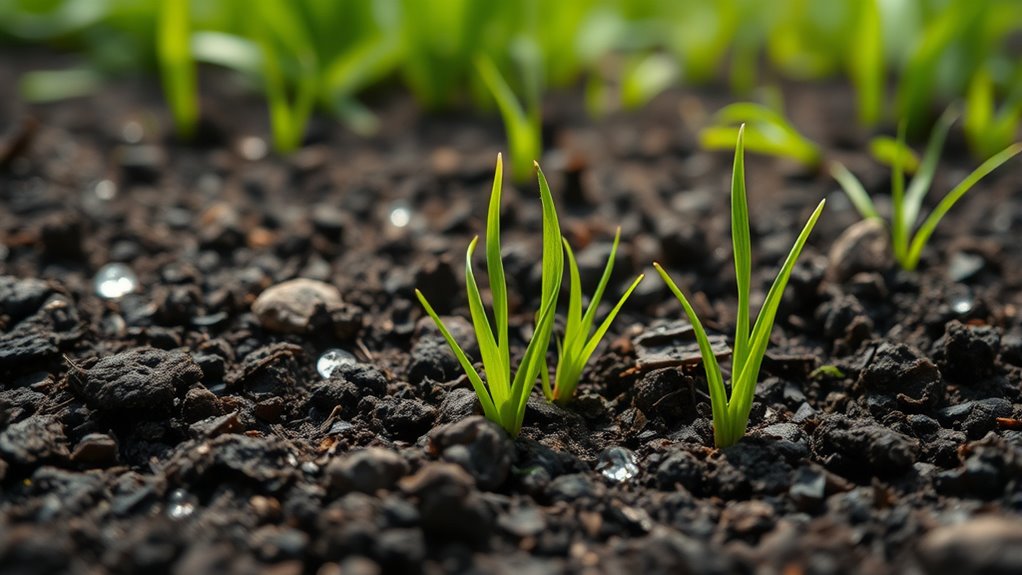
Watching for the right signs during your grass’s sprouting phase can help you see if your lawn is on track or needs a bit of tweaking. Look for tiny green shoots poking through the soil surface—it’s a good sign that germination has started.
Seedling emergence usually happens within the expected timeframe for your grass type, typically a week or two after planting. When you spot these small shoots, it means the seeds are successfully sprouting.
Keep an eye out for even emergence across your lawn. This shows the seeds were spread well and the soil contact is good. If the seedlings are uneven or take longer than expected, check your moisture levels and soil conditions.
Noticing these early signs helps you gauge progress and decide if any adjustments are needed. Recognizing them means you can stay proactive and give your grass the best start possible.
Tips to Speed Up Grass Seed Germination
Getting your grass to sprout faster starts with creating ideal conditions for germination. First, choose seed with a good seed coating because it helps protect against pests and keeps moisture in. Next, make sure your seed gets proper light exposure—most grass seeds need sunlight to start growing, so avoid planting in complete shade.
Here are four tips to speed up the process:
- Keep soil moist—consistent watering helps activate the seed’s growth.
- Maintain proper soil temperature—aim for 55-65°F, since warmth encourages quicker sprouting.
- Use a seed starter fertilizer—a light application provides essential nutrients.
- Cover lightly with soil or mulch—this protects the seed, keeps moisture in, and improves seed-to-soil contact.
How to Establish a Healthy, Long-Lasting Lawn
Once your grass has fully germinated and started to grow, the next step is building a healthy, long-lasting lawn. Regular maintenance is key to keeping your grass strong and resilient.
After germination, focus on regular maintenance to ensure a healthy, resilient, and long-lasting lawn.
Mowing at the right height helps encourage strong root growth, and watering deeply promotes deep soil moisture. Fertilizer provides the essential nutrients your lawn needs to develop properly.
If the soil gets compacted, aerating it allows roots to access air and nutrients more easily. Keep an eye out for weeds and pests, and tackle problems early to prevent damage.
Soil nutrients are really important for a lush lawn. Consider doing a soil test to see if you need to add any amendments. Consistency is everything—stick to a routine of watering, mowing, fertilizing, and aerating.
With proper care, your lawn will grow stronger, stay greener longer, and handle weather and foot traffic better.
Frequently Asked Questions
What Is the Average Time for Grass Seed to Fully Establish?
You can expect grass seed to fully establish in about 2 to 3 weeks, but factors like soil temperature, moisture, and seed type can change that timeline.
To speed things up, make sure to prepare your soil by loosening it, removing weeds, and ensuring good drainage.
Consistent watering and proper fertilization also help your grass seed develop strong roots, leading to a lush, healthy lawn.
How Do Different Grass Seed Brands Compare in Growth Speed?
Ever wonder which brand gives you faster results? Different seed varieties and brand performance can vary a lot.
Some brands boast quicker germination, especially those with premium seed varieties designed for rapid growth. You’ll notice that reputable brands often deliver more consistent and faster results.
But always check reviews and seed type to match your climate and needs. Choosing the right brand can help you get a lush lawn sooner, making your effort worth it.
Can Grass Seed Grow in Shaded Areas Effectively?
Grass seed can grow effectively in shaded areas if you pick the right seed with good shade tolerance. Not all grass types do well in low-light conditions, so choosing a variety made for shade is important.
This helps ensure better germination and healthy growth. Keep the soil moist and avoid heavy foot traffic to give your shaded lawn the best chance to thrive, even in less sunny spots.
What Are Common Pests That Affect New Grass Growth?
Like the Trojan Horse’s hidden threats, pests can quietly sabotage your new grass.
Common pests include grubs, chinch bugs, and armyworms. To protect your lawn, identify these pests early through pest identification and apply prevention methods.
These include healthy soil practices, proper watering, and targeted treatments.
Staying vigilant helps guarantee your grass grows strong, resilient, and free from pests that could undermine its future lushness.
How Long Should I Wait Before Mowing New Grass?
You should wait until your new grass reaches about 3 inches in height before mowing.
Use proper mowing techniques by setting your mower to a higher setting initially. Avoid cutting more than one-third of the grass height at a time.
This helps strengthen the roots and promotes healthy growth. Once your grass is established, you can gradually lower the height for a clean, healthy lawn, but always mow gently.
Conclusion
On average, grass seed takes about 7 to 21 days to sprout, but this can vary depending on your conditions. Some fast-growing grass types can even sprout in just 5 days!
Preparing your soil properly and choosing the right grass for your climate can help you see results sooner. Keep an eye on the weather and any challenges that come up.
By doing these things, you’ll be well on your way to a lush, healthy lawn. Remember, the key to quick grass seed growth is patience and good preparation.