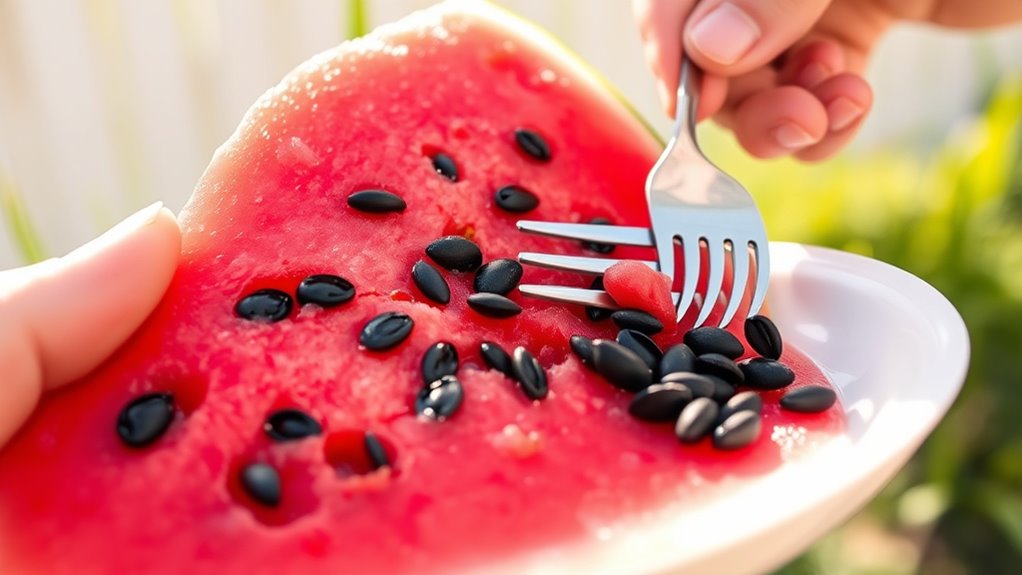
How to Safely Eat Watermelon Seeds – A Complete Guide
If you’ve ever been excited to enjoy watermelon seeds but hesitated because you’re unsure if it’s safe or how to do it right, you’re not alone. Many people struggle with knowing the best way to enjoy these seeds without any worry.
You can safely enjoy watermelon seeds by choosing high-quality, fresh seeds and preparing them properly. Clean and dry the seeds thoroughly, then roast or eat them raw with moderation.
Chewing seeds well helps digestion, but avoid swallowing large pieces to prevent choking.
Be mindful of portion sizes to avoid discomfort. If you want to learn more about maximizing flavor, nutritional benefits, and safety tips, keep exploring how to include watermelon seeds in your diet safely.
Key Takeaways
- Make sure the seeds are cleaned thoroughly and dried before eating to avoid any contamination.
- Roast or prepare the seeds in moderation to boost flavor and lower choking risks.
- Chew the seeds well or soak them to help with digestion and activate enzymes.
- Avoid swallowing seeds whole to prevent choking hazards.
- Enjoy them in moderation, like one or two tablespoons a day, to prevent any digestive discomfort.
Are Watermelon Seeds Safe to Eat?
Watermelon seeds are generally safe to eat, and many people enjoy snacking on them without any issues. Different seed varieties, such as raw, roasted, or sprouted, don’t pose health risks when eaten in moderation.
Some myths say eating watermelon seeds can cause health problems like digestive issues or even grow into a watermelon inside your stomach. But those myths are false. Your body can’t digest the hard seed coat, so seeds usually pass through your system intact.
In fact, watermelon seeds contain nutrients like magnesium, zinc, and healthy fats. As long as you’re not allergic or eating them in excessive amounts, they’re safe to enjoy.
Just be mindful of how you prepare them, and avoid seeds that are moldy or contaminated. Overall, enjoying watermelon seeds as part of your snack is both safe and nutritious.
How to Prepare Watermelon Seeds for Eating
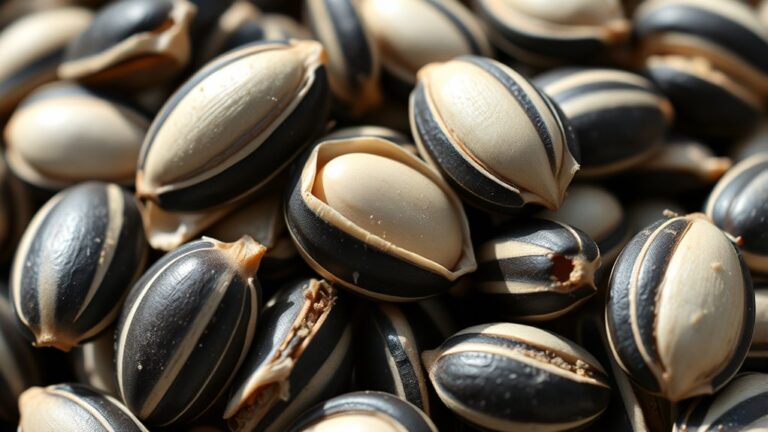
To enjoy watermelon seeds safely and deliciously, you need to prepare them properly before eating. First, identify the watermelon seed varieties you have, as some are better suited for eating than others. Fresh, mature seeds are ideal, but if you have a mix, look for the plump, tan or white seeds.
Before consuming, clean the seeds thoroughly to remove any pulp or residue, then dry them completely. Proper seed storage is essential; keep them in an airtight container in a cool, dry place to prevent mold or spoilage.
If you’re planning to eat the seeds raw, make sure they’re completely dried and stored correctly to avoid bacteria growth. For longer-term storage, consider freezing them after drying, which helps maintain freshness.
Preparing watermelon seeds carefully guarantees they’re safe and ready for your preferred method of consumption, whether raw or later roasted and seasoned.
How to Roast and Season Watermelon Seeds
Roasting and seasoning watermelon seeds is an easy way to boost their flavor and turn them into a crunchy snack. To get started, preheat your oven to 350°F (175°C). Spread the cleaned seeds evenly on a baking sheet.
You can roast the seeds by baking for 15-20 minutes or pan-roasting on medium heat for a crispier texture. Remember to stir occasionally so they roast evenly.
Once they’re roasted, it’s time to add your favorite seasonings. Toss the warm seeds with options like sea salt, chili powder, garlic powder, or even cinnamon to enhance their flavor. The warmth helps the spices stick better.
Here’s a quick look at some popular seasoning choices:
| Seasoning Option | Description | Best Use |
|---|---|---|
| Sea Salt | Classic, savory | Simple, everyday snack |
| Chili Powder | Spicy, smoky | For a kick of heat |
| Cinnamon | Sweet, warm | Dessert-style snacks |
| Garlic Powder | Savory, pungent | Adds depth |
| Lemon Zest | Fresh, zesty | Bright flavor boost |
What Are the Nutritional Benefits of Watermelon Seeds?
Watermelon seeds are actually packed with some pretty awesome nutrients. For starters, they’re a great source of magnesium, which is super important for muscle function and giving you that energy boost you need throughout the day.
Plus, they’re rich in healthy fats that can really help support your heart health. So, adding a handful of these seeds to your snacks or salads can give you a boost of valuable nutrients in a tasty way!
Rich Source of Magnesium
Watermelon seeds are a surprising source of magnesium, an essential mineral that plays a big role in your overall health. Magnesium helps support muscle and nerve function, boosts your immune system, and helps regulate blood sugar levels.
When you eat watermelon seeds, you’re tapping into one of the best magnesium sources found in nature. Adding these seeds to your diet can help you meet your daily magnesium needs.
This mineral is critical for keeping your energy up and preventing deficiencies. Unlike many other magnesium sources, watermelon seeds are easy to include in snacks or meals.
High in Healthy Fats
Since watermelon seeds are packed with nutrients, it’s worth highlighting their healthy fat content. These fats add to their nutritional value and offer some pretty good health benefits.
Eating watermelon seeds gives you monounsaturated fats that support heart health. They also contain omega-3 and omega-6 fatty acids that are good for brain function.
Plus, they have fat-soluble vitamins like E, which act as antioxidants to protect your cells. And because these fats help you feel full longer, they can assist with weight management.
What Are the Risks of Eating Watermelon Seeds, and How to Avoid Them?
Eating watermelon seeds might seem harmless, but they can sometimes lead to digestive discomfort or even pose a choking risk if you’re not careful. So, it’s a good idea to be cautious when munching on them.
To stay safe, you can chew the seeds thoroughly before swallowing, or better yet, go for roasted or sprouted seeds—they’re usually easier on your stomach. Just remember to be mindful while eating seeds, and you’ll enjoy your watermelon without any worries!
Potential Digestive Discomfort
While swallowing a few watermelon seeds usually isn’t a problem, eating large amounts can cause digestive discomfort. Your body needs enough digestive enzymes to break down the seeds properly.
Eating unsoaked or raw seeds may make digestion harder. To avoid discomfort, try these tips:
- Limit seed intake to small amounts at a time.
- Soak seeds to help activate digestive enzymes.
- Chew seeds thoroughly to make digestion easier.
- Don’t eat seeds on an empty stomach, as it can increase discomfort.
Risk of Choking
Although watermelon seeds are generally safe to swallow, there’s a risk of choking if you’re not careful when eating them. Choking can happen if seeds are swallowed quickly or in big amounts without chewing properly.
To prevent this, take your time and chew the seeds well before swallowing. Eating slowly, not talking or laughing while eating, and avoiding forcing large amounts down all help reduce the risk.
If you’re sharing seeds, remind others to be cautious too. Paying attention to your eating pace and practicing safe habits makes the experience safer and more enjoyable.
Being mindful during seed eating is key to avoiding choking and having a fun, worry-free snack.
How Much Watermelon Seeds Should You Eat?
Wondering how much watermelon seed consumption is safe? The key is moderation to keep your diet balanced.
A typical serving is about one to two tablespoons daily. This amount provides essential nutrients without going overboard.
To stay on the safe side, follow these tips:
- Stick to one to two tablespoons per day to avoid extra calories.
- Add seeds gradually and see how your body reacts.
- Mix seed intake with other healthy, nutrient-rich foods.
- Keep portions in check if you’re watching your calorie or fat intake.
Tips for Incorporating Watermelon Seeds Into Your Diet
Looking for easy ways to add watermelon seeds to your diet? You can try simple, tasty snacks like roasted seeds or mix them into trail mixes for a bit of crunch. It’s pretty straightforward—just rinse and dry the seeds before roasting, or toss them into your smoothies after grinding. With a little creativity, sneaking watermelon seeds into your meals becomes both fun and effortless!
Creative Snack Ideas
Looking for tasty ways to include watermelon seeds in your snacks? Try these creative ideas to boost your diet. First, sprinkle roasted seeds on yogurt or salads for some crunch and extra nutrition.
Second, mix them into trail mix with nuts and dried fruit for a satisfying snack. Third, blend ground watermelon seeds into smoothies or energy balls to add protein.
Fourth, experiment with snack pairings like seed-topped granola bars or popcorn for a fun twist. These options make watermelon seeds a versatile ingredient, so you can enjoy their health benefits while enhancing flavor.
Get creative and discover new favorite combinations that keep your snacks exciting and nutritious.
Easy Preparation Tips
Incorporating watermelon seeds into your diet is simple with a few easy preparation tips. First, consider seed storage—keep your seeds in an airtight container in a cool, dry place to maintain freshness.
When choosing seed varieties, opt for raw, unsalted watermelon seeds for the healthiest option. You can roast them for extra flavor or grind them into a powder to sprinkle on salads and yogurt.
To prepare, rinse the seeds thoroughly and let them dry completely before cooking or snacking. If you’re planting, choose quality seed varieties suited for your climate and store extra seeds for future use.
These steps make adding watermelon seeds to your meals easy, safe, and enjoyable while maximizing their nutritional benefits.
Common Mistakes When Eating Watermelon Seeds
One common mistake when eating watermelon seeds is trying to swallow them whole without chewing. This can cause digestive discomfort or make the seed’s texture and flavor confusing.
To avoid this, watch out for a few pitfalls. First, ignoring seed texture—swallowing seeds whole might lead to choking or discomfort, since the outside is hard and hard to digest.
Second, don’t overlook the seed flavor. Not tasting the seed means missing out on its subtle nutty or mild taste.
Third, rushing through eating seeds can cause choking or you might accidentally swallow large pieces, which isn’t safe.
Finally, avoid eating unwashed or unroasted seeds. Dirt or a bland flavor can spoil your experience and reduce enjoyment.
Being aware of these mistakes helps you enjoy watermelon seeds safely. It also lets you appreciate their unique texture and flavor while staying comfortable.
FAQs About Watermelon Seeds and Safety
Are watermelon seeds safe to eat? Yes, in most cases, they’re perfectly safe. Many health myths suggest otherwise, but eating seeds in moderation won’t harm you.
In fact, watermelon seeds contain nutrients like magnesium, zinc, and healthy fats. The safety depends on seed varieties—some are roasted or sprouted for better digestibility, while others are raw.
Always choose high-quality seeds from reputable sources to avoid contamination. If you’re worried about choking or digestion, start with small amounts and chew thoroughly.
People with allergies to certain seeds should be cautious, but watermelon seeds rarely cause reactions. Remember, moderation is key, and eating seeds won’t turn you into a watermelon sprout!
Always verify the seed variety and preparation method to guarantee safety. If you experience any discomfort or allergic reactions, see a healthcare professional promptly.
Final Tips for Enjoying Watermelon Seeds Safely
To enjoy watermelon seeds safely, it’s important to pay attention to how you prepare and eat them. First, choose seed varieties that are suitable for eating, like roasted or sprouted seeds, to reduce any potential health risks.
Second, practice moderation—don’t eat large amounts at once, as this can cause digestive discomfort.
Third, make sure seeds are properly cleaned and cooked to eliminate bacteria or contaminants.
Fourth, listen to your body. If you notice any adverse reactions, cut back on seed intake or talk to a healthcare professional.
By selecting the right seed varieties and eating in moderation, you can enjoy watermelon seeds without worries.
Choose the right seeds and eat in moderation to safely enjoy watermelon seeds.
Remember, moderation helps prevent digestive issues, and proper preparation keeps things safe.
Following these tips lets you savor watermelon seeds as a healthy, tasty snack while minimizing risks.
Frequently Asked Questions
Can Watermelon Seeds Cause Allergies or Allergic Reactions?
Watermelon seed allergies are rare, but they can cause allergic reactions in some people. If you’re allergic, you might experience symptoms like itching, swelling, or difficulty breathing.
To stay safe, watch for allergic reactions after eating watermelon seeds, especially if you have food allergies. If you notice any signs of an allergic reaction, seek medical help immediately.
Always talk to a healthcare professional if you’re unsure about your allergies.
Are There Any Age Restrictions for Eating Watermelon Seeds?
You can generally eat watermelon seeds at any age, but young children should be cautious due to choking risks. Eating seeds offers health benefits and nutritional value, like magnesium, zinc, and healthy fats.
If you’re an adult, you’ll likely enjoy the nutrients without issues. However, always supervise children, and if you have any health concerns, consult a healthcare professional to verify it’s safe for your age group.
How Do Watermelon Seeds Affect Digestion and Gut Health?
Watermelon seeds dramatically boost your digestion and gut health! Their high fiber content works like a superpower, sweeping through your digestive system and preventing constipation like a superhero clearing the way.
These seeds promote digestive benefits by supporting healthy gut bacteria and easing digestion. Eating them regularly can help maintain a smooth, happy stomach, making your gut feel as good as new—like a fresh start every day!
Can Watermelon Seeds Be Used in Recipes Other Than Snacking?
Yes, you can use watermelon seeds in recipes beyond just snacking. Try adding them to salads, smoothies, or baked goods for some crunch and extra nutrition.
Watermelon seeds can also be ground into flour for baking or roasted as a tasty snack. Their versatility makes them great for both sweet and savory dishes.
They add a nutty flavor that enhances your meals and snacks. Experimenting with watermelon seed recipes can bring unique texture and health benefits to your cooking.
Are There Differences Between Fresh and Dried Watermelon Seeds?
Fresh watermelon seeds are soft and contain more water, offering benefits like better flavor and nutrients. Dried seeds are crunchier, making them great for roasting or adding to trail mixes for dried uses.
You’ll find dried seeds more shelf-stable and easier to store, while fresh seeds are best enjoyed soon after extraction. Both forms have their own advantages, so pick based on your preferred texture and recipe.
Conclusion
Eating watermelon seeds is like adding a hidden treasure to your snack list if you prepare and consume them properly. Just follow the tips in this guide, enjoy their nutritional benefits, and avoid common mistakes.
With a little care, you can safely indulge in these seeds and discover a new, tasty way to boost your health. So, go ahead, crack open that watermelon, and savor the seeds as a delightful surprise waiting to be revealed.
Remember, eating watermelon seeds can be safe and healthy when done right. Enjoy them thoughtfully, and you’ll get to experience their benefits without any worries.