How to Eat Pomegranate Seeds: A Step-by-Step Guide
Many people love the vibrant flavor and health benefits of pomegranate seeds but get overwhelmed by how tricky they can be to prepare. If you’ve ever struggled with messy juicing or uneven seeds, you’re not alone.
Thankfully, there’s a simple way to enjoy them without the hassle.
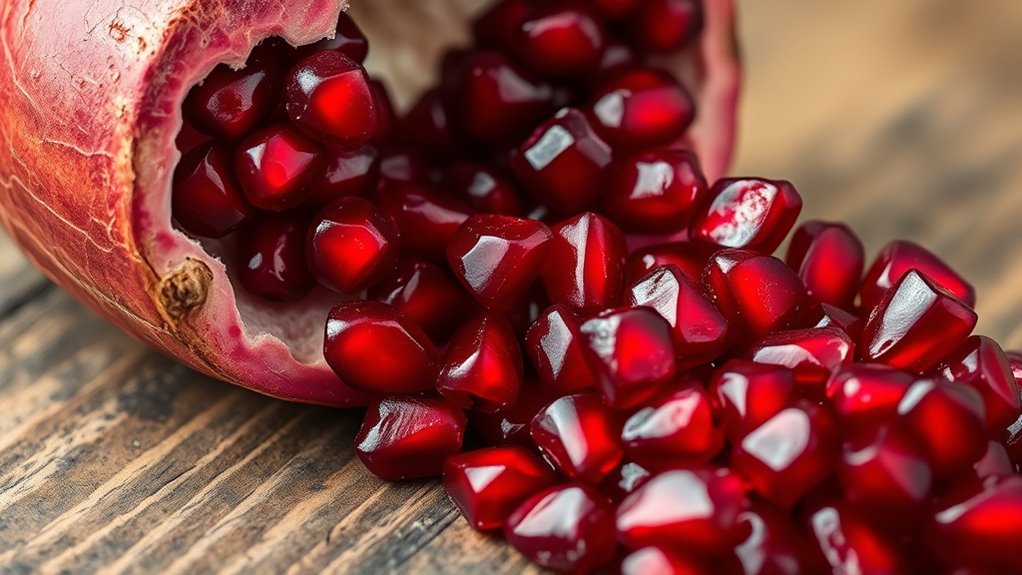
To eat pomegranate seeds, start by cutting off the crown and scoring the skin into sections without cutting all the way through. Gently pry it open over a bowl to catch seeds and reduce mess.
Remove the seeds carefully, using water if needed, and enjoy them raw by scooping out seeds or adding them to salads and yogurt.
For more tips on preparing, storing, and enhancing flavor, keep exploring how to make the most of your pomegranate seeds.
Key Takeaways
- Cut off the crown, score the skin into sections, then gently pry open the pomegranate to access the seeds.
- Submerge the fruit in water and break it apart underwater to reduce mess and loosen the seeds.
- Scoop out seeds directly or sprinkle with salt or lemon for added flavor before eating raw.
- Incorporate seeds into salads, yogurt, smoothies, or use them in creative recipes for added flavor.
- Store pomegranates properly, check for spoilage, and taste the seeds before consuming for the best experience.
Preparing Pomegranate Seeds for Eating
To prepare pomegranate seeds for eating, start by cutting off the crown at the top of the fruit with a sharp knife. This makes it easier to access the interior. Pomegranate varieties differ in size, shape, and seed color, so pick one that matches your taste—some are sweeter, while others are more tart.
Once you’ve removed the crown, gently score the skin into sections without slicing all the way through. This helps when opening the fruit later. Pomegranate seeds are packed with benefits, including antioxidants, vitamins, and fiber, making them a nutritious addition to your diet.
By preparing the fruit properly, you preserve these seed benefits and avoid unnecessary mess. The right pomegranate variety can enhance your eating experience, whether you prefer it sweeter or tangier.
Properly prepping the fruit ensures you get the most out of its juicy seeds, maximizing both taste and health benefits.
Easiest Way to Cut and Open a Pomegranate
Once you’ve picked your pomegranate and prepared it for eating, the next step is to cut and open it with as little mess and effort as possible. The secret is to use simple cutting techniques and safe slicing methods.
Start by scoring the fruit around the crown with a sharp knife, making shallow cuts that don’t go into the seeds. Then, gently pry open the pomegranate along the scored line.
Score around the crown with a sharp knife, then gently pry open along the scored line.
To keep juice splatter to a minimum, hold the fruit over a bowl or sink. Use a gentle rocking motion with your knife to make clean cuts, avoiding deep cuts that could crush the seeds.
Once it’s open, you can easily access the inside for seed removal or further prep. These safe slicing methods help prevent juice from squirting and make the process much less messy.
With a little practice, you’ll find it’s the easiest way to open a pomegranate efficiently and safely.
Mess-Free Tips to Remove Pomegranate Seeds
Removing pomegranate seeds without making a mess can be pretty simple when you know the right techniques. The trick is to use mess-free methods and hacks that keep the juice contained.
Start by filling a large bowl with water. Submerging the pomegranate helps loosen the seeds and keeps juice splatter to a minimum. Use your hands or a spoon to gently break apart the fruit underwater, letting the seeds sink while the peel and membrane float.
Afterward, strain the seeds for easy cleanup. Here are some tips to master mess-free removal: Use a bowl of water to reduce juice splatter. Turn the pomegranate upside down before cracking to direct seeds downward. Gently tap or score the fruit to loosen the seeds without squeezing. Work over a baking sheet or large plate to catch any stray seeds.
These simple hacks will make seed removal less messy and way more efficient.
Best Ways to Eat Pomegranate Seeds Raw
Ever wonder the best way to enjoy pomegranate seeds in their raw form? The simplest method is to scoop them directly from the fruit or bowl. Eating seeds raw keeps all their health benefits intact, like antioxidants, vitamins, and fiber.
To make it more enjoyable, try sprinkling a little salt or squeezing fresh lemon juice over the seeds for added flavor. You can also toss raw pomegranate seeds into salads, yogurt, or oatmeal to improve taste and boost nutrition.
Chewing the seeds releases their juice, giving you a burst of sweetness and tang while delivering essential nutrients. Since raw seeds keep their natural enzymes, they’re great for digestion and overall health.
Creative Recipes Using Pomegranate Seeds
Pomegranate seeds aren’t just for snacking—they can also add a vibrant burst of flavor and texture to a variety of creative recipes. You can enhance your dishes by incorporating these jewel-like seeds into different culinary creations.
For example, toss pomegranate seeds into a fresh pomegranate salad for a tangy crunch or layer them in a pomegranate parfait for added sweetness and color. They’re perfect in spicy pomegranate salsa, bringing a juicy burst to grilled meats or tacos.
Blend pomegranate seeds into a revitalizing pomegranate smoothie or drizzle a warm pomegranate glaze over roasted vegetables or meats. You can also make a tangy pomegranate chutney to serve alongside cheese or charcuterie.
For breakfast, stir pomegranate seeds into pomegranate yogurt or use them to brighten up a simple pomegranate dressing. These recipes show how versatile and delicious pomegranate seeds can be in both sweet and savory dishes.
How to Extract Pomegranate Juice From Seeds
To extract juice from pomegranate seeds efficiently, start by cutting the fruit in half and gently scooping out the seeds into a bowl. Proper seed preparation is key to making the process easier and avoiding a mess.
Use a spoon or your fingers to loosen the seeds without crushing them too much, which can release bitter flavors. Once the seeds are collected, place them in a clean cloth or cheesecloth.
Apply gentle pressure and squeeze to extract the juice, or use a citrus press or blender for faster results. If you choose a blender, pulse briefly to break the seeds, then strain the mixture through a fine sieve to separate the juice from the pulp.
Remember, the secret to good juice extraction is applying even pressure without over-processing. This helps keep the fresh, tangy flavor of the pomegranate intact.
This method ensures you get maximum juice with minimal waste.
Storing Pomegranate Seeds to Keep Them Fresh
Storing pomegranate seeds properly keeps them fresh and flavorful for several days. Focus on fresh storage and controlling moisture.
Keep the seeds in an airtight container to prevent exposure to air, which can cause spoilage. Use a clean, dry container to avoid introducing moisture that can lead to mold.
For the best freshness, store the seeds in the refrigerator’s crisper drawer, where humidity helps maintain their texture. If you want to keep them longer, freezing is a good option.
Spread the seeds on a baking sheet to freeze individually before transferring them to a sealed bag. Always label the container with the date so you know how long they’ve been stored.
Proper storage preserves the seeds’ flavor and texture and prevents spoilage caused by excess moisture or air exposure.
Common Mistakes When Eating Pomegranate Seeds
One common mistake people make when eating pomegranate seeds is trying to consume too many at once, which can overwhelm your palate and cause discomfort. Many believe pomegranate seeds are difficult to eat because of myths that exaggerate their messiness or difficulty.
Understanding proper pomegranate etiquette can help you avoid these issues. For example, rushing through the seeds without preparing them can lead to a mess or missing out on the flavor.
Another mistake is ignoring the seeds’ texture; some expect them to be seedless, which isn’t realistic. This can lead to frustration or discarding good seeds unnecessarily.
Some also think they need to chew the seeds thoroughly, but it’s better to swallow them to enjoy their full flavor without the tough texture.
Being mindful of these common mistakes will help you enjoy pomegranate seeds more efficiently and in line with traditional eating etiquette.
How to Fix Bitter or Hard Pomegranate Seeds
If your pomegranate seeds taste bitter or are too hard to enjoy, there are simple steps you can take to improve their flavor and texture. Bitterness often comes from underripe seeds or seeds that haven’t fully ripened.
Hard seeds might also be a sign they were harvested too early, which affects their juiciness and tenderness. To fix this, try these tips:
Choose ripe pomegranates with deep color and slightly soft flesh. Soaking seeds in cold water for a few minutes before eating can help mellow out bitterness. Gently removing bitter membranes from the seeds can also make a big difference.
You can also use a sweetening agent like honey or sprinkle a little sugar to counteract bitterness. These simple tricks help you pick better ripeness and make your pomegranate seeds more enjoyable.
Troubleshooting: Pomegranate Seeds That Won’t Taste Right
When pomegranate seeds don’t taste right, it’s often due to factors like poor ripeness, storage issues, or contamination. Overripe seeds can develop a dull or fermented flavor, making them less enjoyable.
If your seeds taste noticeably different from what you expect, it could be because of uneven ripening or improper storage. Pomegranates kept too long or stored in warm conditions may produce overripe seeds with a sour or off taste.
Always check for signs of spoilage, such as a sour smell or mold. To troubleshoot, taste a small amount before serving. If the seeds seem off, discard them and try fresh ones.
Properly storing pomegranates in a cool, dry place can help prevent overripe seeds and keep their natural flavor intact. Remember, freshness is key to enjoying the sweet, tart taste of ripe pomegranate seeds.
Frequently Asked Questions
Are Pomegranate Seeds Safe for Children to Eat?
Yes, pomegranate seeds are safe for children to eat when given in moderation. They provide great nutrition, including antioxidants, vitamins, and fiber that support your child’s health.
Make sure your child chews the seeds well to avoid choking, especially with younger kids. Always supervise their eating, and check with a pediatrician if your child has allergies or health concerns.
When eaten safely, pomegranate seeds make a tasty and nutritious snack for kids.
Can Pomegranate Seeds Cause Allergies?
You might be surprised, but pomegranate seeds can cause allergies, leading to allergic reactions in some people.
While rare, pomegranate allergies do happen and can trigger symptoms like itching, swelling, or difficulty breathing.
If you notice any signs of allergic reactions after eating pomegranate seeds, stop eating them and see a healthcare professional.
Being cautious helps prevent unexpected issues related to pomegranate allergies.
How Many Pomegranate Seeds Should I Eat Daily?
You should aim for about a half-cup of pomegranate seeds daily, roughly 100 grams, to enjoy their benefits. This amount gives you antioxidants, vitamins, and fiber that support heart health and boost immunity.
While pomegranate benefits are numerous, moderation is key. Stick to this daily amount to maximize health benefits without overdoing it, especially if you’re watching your sugar intake or have allergies.
Do Pomegranate Seeds Have Any Health Risks?
Pomegranate seeds are generally safe and offer lots of benefits, like antioxidants and vitamins.
But if you have digestive issues, eating too many might cause discomfort such as bloating or diarrhea.
It’s best to enjoy them in moderation. If you notice any negative effects, try cutting back on your intake.
While the benefits are great, listening to your body can help you avoid any potential stomach problems.
Can I Freeze Pomegranate Seeds for Later Use?
Yes, you can freeze pomegranate seeds for later use. To do this, spread the seeds on a baking sheet to prevent clumping, then transfer them to an airtight container or freezer bag.
This method helps keep their freshness and flavor intact. Keep in mind, freezing might change the texture a bit, but overall, it’s a handy way to enjoy pomegranate seeds long-term.
Conclusion
Just like Persephone’s journey into the pomegranate’s depths, exploring these seeds reveals hidden delights and lessons. With the right techniques, you’ll savor their sweetness without the mess and find endless ways to enjoy them.
Remember, mastering the art of eating pomegranate seeds opens a world of flavor and health benefits. So, welcome the process, and let each seed be a reminder that patience and care yield the sweetest rewards.