7 Simple Steps to Germinate Peach Seeds
Many gardening enthusiasts dream of growing their own delicious peaches at home, but starting from seed can feel overwhelming. You’re not alone—many people struggle with getting peach seeds to sprout successfully.
Luckily, with a little patience and the right steps, you can turn those seeds into thriving trees.
To germinate peach seeds, start by harvesting healthy, plump seeds, removing any pulp. Cold stratify them in the fridge for 8-12 weeks to mimic winter conditions.
Plant the seeds 1-2 inches deep in well-draining soil, watering gently to keep the soil moist.
Keep seedlings in a warm, sunny spot and protect from pests.
Watch for signs of healthy growth, and when strong enough, transplant outdoors for best results.
More tips await as you continue.
Key Takeaways
- Clean peach seeds thoroughly to remove pulp and prevent mold before planting.
- Cold stratify seeds in a damp medium inside the refrigerator for 8-12 weeks.
- Plant seeds 1-2 inches deep in well-draining soil, with the pointed end down.
- Keep the soil consistently moist and make sure they get plenty of sunlight for germination.
- Protect your seedlings from pests and extreme weather. Transplant them when they’re strong enough.
When Is the Best Time to Plant Peach Seeds?
The best time to plant peach seeds depends on your climate, but early fall is usually ideal. Planting then gives the seeds time to experience natural cold stratification, which is important for germination.
To figure out the right timing, consider your area’s weather patterns and frost dates. In regions with mild winters, late fall planting can work well, while colder areas might need to wait until early spring.
When choosing seeds, pick healthy, mature peaches. Make sure the seeds are fully ripened before harvesting. Good seed selection boosts your chances of successful germination and healthy growth.
How to Prepare Peach Seeds for Germination
Sure! Here’s a more conversational version of the text:
If you want to get your peach seeds ready for germination, the first thing you should do is gently clean off any leftover pulp from the seed. It’s important to make sure it’s clean so nothing gets moldy or causes issues later on.
Once that’s done, you’ll need to give the seed a cold stratification. Basically, that means exposing it to cold temperatures to mimic winter conditions. This step helps break the seed’s dormancy and gets it ready to sprout. Doing this properly really boosts your chances of seeing a healthy sprout when you plant it.
Cleaning and Removing Pulp
Before you plant your peach seed, make sure to clean off any remaining pulp. This is important because pulp can harbor mold and bacteria that prevent germination.
Gently rinse the seed under cool water, using your fingers or a soft brush to remove all fruit residue. Be careful not to damage the seed while cleaning.
Removing the pulp helps prevent mold growth and promotes healthy seed development. It also gets rid of leftover sugars and organic material that could cause decay or fungus.
Once the seed is thoroughly cleaned, pat it dry with a paper towel. Making sure it’s pulp-free will give your seed a better chance to sprout successfully and grow strong.
Cold Stratification Process
Since peach seeds naturally need a cold period to break dormancy, you’ll want to simulate winter conditions with cold stratification. This process exposes seeds to cold temperatures, signaling them to germinate successfully.
To do this, place the cleaned seeds in a damp medium like moist sand or peat moss. Seal them in a plastic bag and store in the refrigerator for 8 to 12 weeks.
During this time, the cold mimics winter, encouraging germination when you plant the seeds. Keep them moist but not waterlogged, and check periodically to make sure they stay cool and damp.
This stratification step is crucial for ensuring your peach seeds are ready to sprout when planted.
Stratify Peach Seeds for Better Germination
Stratifying peach seeds mimics their natural winter dormancy, which helps break seed coat dormancy and promotes better germination rates. This process increases seed viability by signaling to the seed that it’s time to grow.
Proper stratification guarantees the seed’s embryo stays healthy and ready for sprouting. There are several techniques you can try, like placing seeds in moist sand or peat moss inside a sealed plastic bag, then refrigerating them.
Keep the seeds at about 35-45°F (2-7°C) for 8 to 12 weeks. During this time, the cold treatment softens the seed coat and triggers biochemical changes necessary for germination.
Remember, successful germination depends a lot on effective stratification. By following these steps, you give your peach seeds the best chance to break dormancy and sprout vigorously, leading to healthy young trees.
Proper stratification is key to maximizing seed viability and ensuring successful germination.
Step-by-Step: How to Plant Peach Seeds
Once your peach seeds have gone through proper stratification, it’s time to plant them. Start by choosing healthy seeds—look for plump, firm ones without cracks or damage.
Prepare a well-draining soil mix by blending equal parts garden soil, compost, and perlite or sand for good aeration. Fill your container or nursery bed with this mix.
Plant each seed about 1 to 2 inches deep, with the pointed end facing down. Gently cover the seeds with soil and lightly water to settle the soil around them.
Keep the soil moist but not waterlogged during germination. Place your container in a warm, sunny spot or under grow lights.
Monitor moisture levels and temperature, as these influence germination success. With good seed selection and the right soil, you’re setting the stage for healthy peach seedlings to sprout and grow.
Caring for Peach Seedlings for Healthy Growth
To make sure your peach seedlings grow strong, it’s important to water them just right. Keep the soil consistently moist, but be careful not to overwater—waterlogged soil can do more harm than good.
Also, don’t forget about sunlight! Your seedlings need plenty of light each day—about six hours of direct sunshine is ideal. This helps them grow healthy and sturdy.
Paying attention to these little details can really help your seedlings thrive and turn into beautiful, healthy trees.
Proper Watering Techniques
Proper watering is essential for healthy peach seedling growth, ensuring the young plants develop strong roots and vibrant foliage. To do this, focus on three key aspects:
- Use high-quality water with balanced properties to prevent mineral buildup or contamination.
- Keep moisture levels consistent—avoid letting the soil dry out or become overly saturated.
- Water deeply enough to reach the root zone, which encourages strong root development.
- Check soil moisture regularly, using your finger or a moisture meter, to make sure conditions are just right.
Adequate Sunlight Exposure
Making sure your peach seedlings get enough sunlight is key to their healthy growth. Proper sunlight helps them develop strong and vibrant.
Aim for at least 6 hours of direct sunlight each day. Just watch out for too much, which can scorch those young leaves. Keep an eye on your seedlings to see if they’re thriving or showing signs of stress.
Here’s a quick guide on sunlight’s emotional impact:
| Sunlight Duration | Light Intensity | Growth Result |
|---|---|---|
| Insufficient | Low | Weak, spindly |
| Ideal | Bright, direct | Vibrant, sturdy |
| Excessive | Harsh | Burned, damaged |
Giving your peach seedlings balanced sunlight will help them grow into healthy, strong trees.
Common Germination Problems and How to Fix Them
Germinating peach seeds can sometimes be tricky, and understanding common problems can help you troubleshoot effectively. One major issue is seed rot, which happens when seeds sit in overly moist soil, encouraging fungal growth. Pest infestations can also damage developing seeds or seedlings, leading to poor growth or death. To avoid these issues:
Germinating peach seeds requires proper drainage, sterilized soil, and pest control for successful growth.
- Make sure your soil drains well and isn’t too wet to prevent seed rot.
- Use sterilized containers and fresh soil to reduce the risk of fungi and bacteria.
- Watch out for pests like ants or beetles; if you see them, remove them quickly and consider natural repellents.
- Keep humidity and temperature levels proper to promote healthy germination and prevent mold.
When and How to Transplant Peach Seedlings Outdoors
Once your peach seedlings have sprouted and grown a few inches tall, it’s time to plan for their move outdoors. The right transplant timing is key; wait until the danger of frost has passed and the soil warms up.
Usually, this is late spring or early summer, depending on your climate. Before transplanting, harden off your seedlings by gradually exposing them to outdoor conditions over a week.
During seedling care, make sure they’re well-watered but not waterlogged, and protect them from strong winds and pests. Choose a sunny, well-drained spot with plenty of space for growth.
When transplanting, carefully dig around each seedling, keeping as much soil intact around the roots as possible. Gently place them in their new holes, fill with soil, and water thoroughly.
Proper transplant timing and careful seedling care will give your peach trees the best start to thrive outdoors.
Frequently Asked Questions
Can I Grow a Peach Tree From a Seed Inside My House?
Yes, you can grow a peach tree from a seed indoors, but it takes patience and proper seed preparation. Start by cleaning and stratifying the seed to break dormancy.
Use indoor gardening techniques, like placing the seed in a pot with well-draining soil and providing plenty of sunlight. Keep the soil moist and maintain a warm environment.
While it’s a slow process, growing a peach tree indoors is doable with the right care. Just be patient and consistent, and you’ll eventually see results.
How Long Does It Take for Peach Seeds to Sprout?
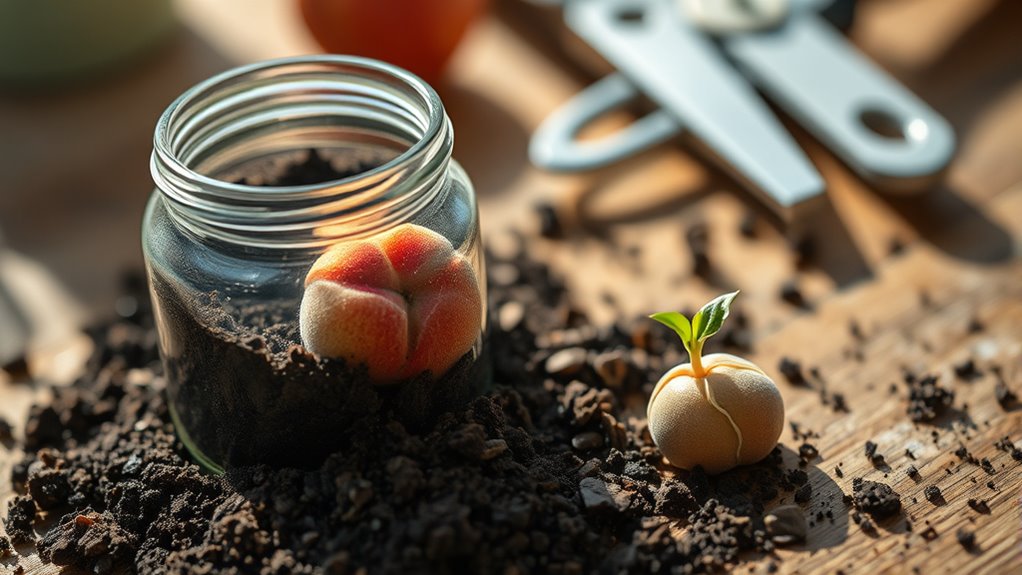
Peach seeds usually take about 2 to 8 weeks to sprout, depending on factors like seed viability and germination conditions. You’ll see the seed coat cracking and a tiny sprout emerging during this time.
To give your seed the best chance, keep it moist, warm, and in well-draining soil. Patience is key because some seeds might take a little longer.
With proper care, you’ll eventually see that tiny sprout grow into a healthy plant. Just stay consistent, and you’ll be rewarded with your own peach seedling.
Do Peach Seeds Need Special Soil for Germination?
Peach seeds don’t need special soil for germination, but they do best in well-draining, sandy, or loamy soil types.
Before planting, soak your seed in water to soften the shell. This helps it penetrate better and reduces the risk of rotting.
Can I Germinate Peach Seeds From Store-Bought Fruit?
Yes, you can germinate peach seeds from store-bought fruit. Just pick healthy seeds from a ripe peach, ideally one suited for your climate.
Remove the seed carefully, clean off any fruit residue, and follow proper stratification steps. Keep in mind that the type of peach you choose can affect how the tree turns out.
How Do I Prevent Pests From Damaging Young Peach Seedlings?
To prevent pests from damaging your young peach seedlings, start by keeping the area clean and free of debris. This makes it less inviting for pests to settle in.
Encourage natural predators like ladybugs or lacewings to help control pest populations. They’re a great, chemical-free way to keep pests in check.
If necessary, use organic pesticides that are safe for young plants. Just avoid harmful chemicals to protect your seedlings’ health.
Regularly inspect your seedlings for signs of pests. The sooner you spot an issue, the easier it is to remove infested parts and keep your plants healthy.
Conclusion
Now that you know the simple, step-by-step secrets to germinating peach seeds, you’re ready to start your own orchard. With patience, proper preparation, and a little perseverance, you’ll soon see seedlings sprout and grow.
Seize the season, nurture your nature, and watch your woodland wonder turn into a beautiful, winding orchard — where peaches promise a plentiful, flavorful future. Happy planting and happy harvesting!