Can You Eat Pumpkin Seeds in the Shell?
Are you tired of tossing out pumpkin seeds because you’re unsure if you can eat them in the shell? You’re not alone—many people struggle with whether to enjoy these crunchy snacks whole or remove the shells first.
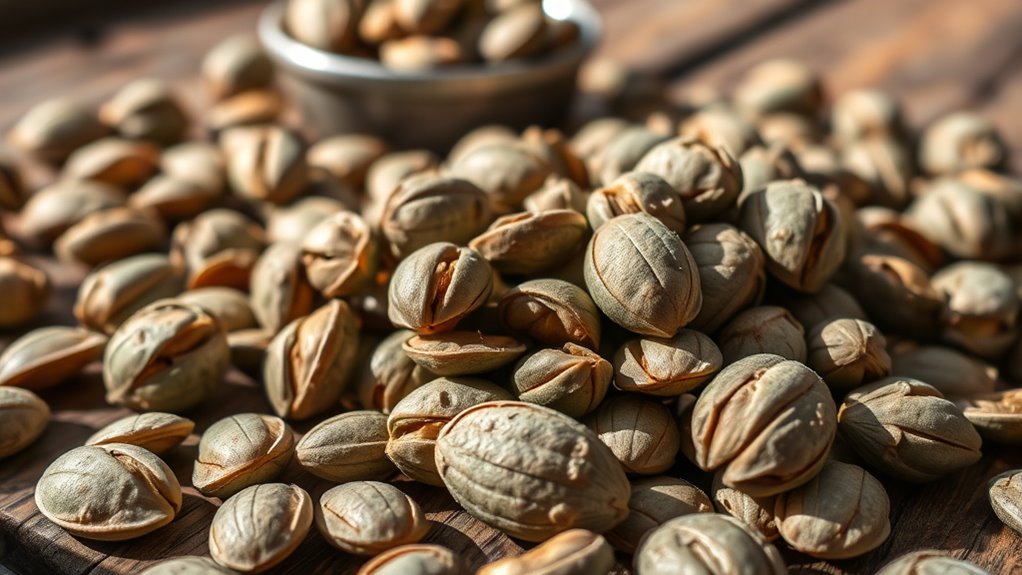
Yes, you can eat pumpkin seeds in the shell, but proper preparation is important for safety and flavor. Make sure to clean the shells thoroughly and roast them to soften the tough exterior, making them easier to chew and digest.
Eating seeds in the shell boosts fiber and adds crunch to your snack, but moderation is key to avoid digestive discomfort.
If you want to learn the best tips on enjoying pumpkin seeds in shells, keep exploring the details below.
Key Takeaways
- Yes, pumpkin seed shells are edible and contain fiber, antioxidants, and nutrients, but they should be properly cleaned and roasted.
- Proper preparation makes shells easier to chew and digest, which helps reduce potential dental or digestive issues.
- Eating seeds in the shell increases fiber intake and adds crunchiness to snacks, boosting their nutritional benefits.
- Just keep in mind that large amounts or tough shells might cause digestive discomfort or dental damage, so moderation is key.
- Raw seeds keep more nutrients, but roasting improves flavor and texture, whether you keep the shells on or take them off.
Is It Safe to Eat Pumpkin Seeds in the Shell?
Many people wonder whether it’s safe to eat pumpkin seeds straight from the shell. The short answer is yes, but there are important considerations about shell consumption and seed safety.
Pumpkin seeds in their shells are edible and can be nutritious, but not everyone finds the shells pleasant to eat because of their tough texture. If you decide to eat the shells, make sure they are clean and free of dirt or contaminants.
Proper roasting can make the shells easier to chew and digest, which can improve seed safety. However, some shells might have traces of pesticides or dirt, so it’s important to wash them thoroughly.
Keep in mind that eating large amounts of shells could cause digestive discomfort or blockages, especially if they aren’t well-chewed. Overall, pumpkin seed shells are safe to eat in moderation.
Just be sure to assess your comfort level and clean them properly before adding them to your diet.
What Are the Benefits of Eating Pumpkin Seeds With the Shell?
Eating pumpkin seeds with the shell can boost their nutritional value because the shells contain fiber, antioxidants, and extra nutrients that are good for your health. The added fiber helps with digestion and keeps you feeling full longer.
Antioxidants in the shell protect your cells from damage, fight free radicals, and help reduce inflammation. They also support your immune health. Plus, the shells have minerals like magnesium and zinc that are important for overall wellness.
Incorporating pumpkin seeds with shells into your diet can raise their nutritional profile and add variety to your meals. You can enjoy them as a crunchy topping for salads, granola, or trail mix.
Are There Risks or Drawbacks to Eating Pumpkin Seed Shells?
Eating pumpkin seed shells might lead to some digestive discomfort or difficulty, especially if you’re sensitive to rough textures. The hard shells can be tough on your teeth, and if you swallow them improperly, they could cause irritation or even minor damage. Plus, eating the shells might interfere with how your body absorbs certain nutrients from the seeds, so it’s something to keep in mind.
Digestive Difficulties Possible
While pumpkin seed shells are edible, eating them can sometimes cause digestive troubles. The tough shells may make it harder for your digestive enzymes to break down the seeds properly.
This can lead to stomach discomfort or bloating, especially if you eat a lot of shells at once. Here’s a quick table to explain how shells affect digestion:
| Effect of Shells on Digestion | Explanation |
|---|---|
| Stomach discomfort | Rough shells irritate the stomach lining |
| Digestive enzymes | Hard to break down the shells effectively |
| Bloating | Gas builds up from incomplete digestion |
| Constipation | The high fiber content can slow things down |
If you have a sensitive stomach, it’s best to eat shells in moderation or remove them before eating to avoid these issues.
Hard Shells May Cause Damage
Although pumpkin seed shells are edible, eating too many can pose health risks. The thickness of the shell varies depending on the seed variety, which affects how tough and hard to chew it is.
Thicker shells are more likely to cause damage if you bite down hard or swallow without chewing properly. Some seed varieties have very hard shells, increasing the risk of dental damage or discomfort, especially if you have sensitive teeth.
Eating large amounts of shells might also lead to digestive issues like blockages or irritation. Small amounts of shells probably won’t cause harm, but it’s wise to be cautious and consider the seed variety’s shell thickness before eating pumpkin seeds in the shell.
Nutrient Absorption Impact
Consuming pumpkin seed shells may affect how well your body absorbs nutrients from the seeds. The tough shell can make it harder for your digestive system to break down and access the nutrients inside.
While pumpkin seeds are packed with healthy fats, protein, and minerals, eating the shells might reduce how efficiently your body absorbs these nutrients. The indigestible exterior could pass through largely intact, preventing your body from getting the full nutritional benefit.
Trying to digest the shells could also cause discomfort or gastrointestinal issues, especially if you have a sensitive stomach. For the best nutrient absorption, it’s usually better to remove the shells before eating pumpkin seeds. This way, you get the most health benefits without risking digestion problems.
How Do You Prepare Pumpkin Seeds in the Shell for Snacking?
Preparing pumpkin seeds in the shell for snacking is simple and satisfying. First, clean the seeds thoroughly to remove any pulp, then make sure they are dry.
You can choose to keep the shells on or remove them, depending on how crunchy or easy-to-eat you want your seeds. If you prefer them crunchier, remove the shells after roasting.
For flavor, toss the seeds with your favorite spices—salt, cinnamon, paprika, or chili powder—before roasting. This adds a delicious twist to your snack.
| Shell Preparation | Seasoning Options | Roasting Time |
|---|---|---|
| Keep shells on | Salt and pepper | 15-20 minutes at 350°F |
| Remove shells | Cinnamon and sugar | 10-15 minutes at 375°F |
| Partially crack | Chili powder and lime | 12-18 minutes at 350°F |
This table shows different ways to prepare your pumpkin seeds, letting you customize flavor and texture to your liking.
Can Eating the Shell Boost Your Fiber Intake?
Eating pumpkin seed shells can greatly boost your fiber intake because they are rich in dietary fiber, which helps with healthy digestion and blood sugar regulation. Adding these shells to your diet offers a natural way to increase fiber without relying on processed foods.
Incorporating shells into your meals can improve digestion by promoting regular bowel movements and reducing constipation. Just keep in mind, you may need to prepare them by grinding or chewing thoroughly to avoid discomfort.
Here are some benefits of eating the shells:
- Adds bulk to stool, aiding digestion
- Supports weight management by increasing satiety
- Helps control blood sugar levels
- Promotes a healthy gut microbiome
- Naturally increases your fiber intake
Including pumpkin seed shells in your diet can be a simple and effective way to enhance your fiber sources and boost digestive health.
Which Pumpkin Seeds Are Best for Eating in the Shell?
When you’re trying to decide which pumpkin seeds are best to eat in the shell, it really comes down to your personal taste and what you’re looking for health-wise. Do you prefer the crunch and flavor of roasted seeds, or do you like the more natural, milder taste of raw ones? It’s all about what makes your snacking enjoyable.
Organic seeds can be a good choice if you’re aiming to cut down on pesticides, but they can also be a bit more expensive. On the other hand, conventional seeds are usually easier on your wallet. So, think about what’s most important to you—whether it’s flavor, health benefits, or saving some money—and pick the seeds that fit your needs best.
Raw vs. Roasted Seeds
Have you ever wondered whether raw or roasted pumpkin seeds are better for snacking in the shell? The choice depends on what you care about most.
Raw seeds keep their natural enzymes and nutrients, making them a healthier option if you’re after maximum nutrition. Roasted seeds, on the other hand, develop a richer flavor and crunch, perfect for snacking and cooking.
Keep in mind:
- Raw seeds retain more vitamins and antioxidants
- Roasting enhances flavor and texture
- Raw seeds are less processed
- Roasted seeds can be seasoned for extra taste
- Both can be eaten in the shell, but roasting might make shell removal easier
In the end, both are good choices. Your preference for flavor or nutrition will help you decide which is best for you.
Organic vs. Conventional
Choosing between organic and conventional pumpkin seeds often comes down to personal priorities. Organic cultivation avoids synthetic pesticides and fertilizers, which may appeal if you prefer fewer chemicals and environmentally friendly practices. Organic seeds are often grown using sustainable methods, potentially offering a cleaner, more natural snack.
Conventional farming, on the other hand, typically involves the use of synthetic chemicals to boost yield and protect crops. These seeds tend to be more affordable and widely available. When eating pumpkin seeds in the shell, consider your health preferences and environmental values.
Both organic and conventional seeds can be nutritious, but organic options might reduce exposure to residues from pesticides. Ultimately, the best choice depends on your priorities for health, sustainability, and budget.
How Does Shelling Affect the Flavor and Texture?
Removing the shells from pumpkin seeds really changes their flavor and texture. Without the shell, the seeds taste more nutty and roasted, making their natural flavor stand out more.
The shells can add a bit of bitterness and a crunchy crunch that influences the overall experience. So, shelling can either boost or mellow the seed’s flavor depending on your preference.
When it comes to texture, shelled seeds are smoother and crunchier, while in-shell seeds have a tough exterior that adds resistance when you bite into them.
Shells also create a chewy layer that affects how the seeds feel in your mouth. Removing the shells makes the seeds more tender and uniform in texture.
Plus, shelling helps the seeds absorb seasonings better, allowing for more flavorful additions.
Tips for Safely and Enjoyably Eating Pumpkin Seeds in the Shell
Eating pumpkin seeds with their shells can be enjoyable, but it’s important to do so safely to avoid discomfort or choking hazards. To make it safer, start by taking small bites and chewing thoroughly so you don’t choke.
For added flavor and fun, try experimenting with different seasonings—toss the seeds in spices like cinnamon, paprika, or garlic salt before eating. Serving suggestions include pairing pumpkin seeds with fresh fruits or nuts for a snack that’s both tasty and nutritious.
Keep in mind that eating seeds in the shell can be messy, so using a small bowl or napkin can help catch any shells that break off. If you’re new to eating pumpkin seeds this way, start with a handful to see how your body reacts.
Should You Roast or Eat Raw Pumpkin Seeds in the Shell?
When you’re trying to decide whether to eat pumpkin seeds raw or roasted, it really comes down to what you prefer in terms of flavor and texture. Raw seeds keep their natural, earthy taste and have that nice, chewy texture. On the other hand, roasting them can bring out a richer, nuttier flavor and give that satisfying crunch we often love in snacks.
Now, if you’re all about getting the most nutrients, raw seeds are the way to go because they retain more of their natural vitamins and minerals. But if you’re looking for a tastier, crunchier treat, roasting can really elevate the flavor—even if it might slightly reduce some of those nutritional benefits.
Nutritional Benefits of Raw
Choosing to enjoy pumpkin seeds raw preserves their full nutritional profile because heat can diminish some of their beneficial compounds. Raw pumpkin seeds keep more nutrients intact, helping you get the most out of their vitamins and minerals.
Eating them raw ensures you get the full spectrum of health benefits, including antioxidants, magnesium, zinc, and healthy fats. These nutrients support immune health, nerve and muscle function, and brain health.
Raw seeds hold onto more vitamins like vitamin E and B-complex, which can be sensitive to heat. Plus, they provide higher levels of antioxidants that boost your immune system.
They’re also an excellent source of magnesium, essential for muscle and nerve function. Consuming raw helps preserve the healthy fats vital for brain health and overall wellness.
Flavor and Texture of Roasted
Roasting pumpkin seeds brings out a richer, more complex flavor and changes their texture, making them crunchier and more satisfying to snack on. The process enhances the natural nutty taste and lets you add roasted seasonings like salt, spices, or herbs for extra flavor.
The crispy texture makes them a great snack, especially when you’re craving something savory. Roasting also mellows the sometimes bitter shell, making it more enjoyable to eat in-shell.
In terms of flavor pairing, roasted seeds go well with sweet or spicy accents like cinnamon or chili powder. Overall, roasting transforms pumpkin seeds from plain to flavorful, adding a delightful crunch and aroma that raw seeds just can’t match.
Common Questions About Eating Pumpkin Seeds in the Shell
Many people wonder whether eating pumpkin seeds in their shell is safe or beneficial. The answer depends on the pumpkin seed varieties and your shelling techniques. Some varieties have thinner shells that are easier to chew, while others have tougher shells that may be more challenging.
Eating seeds in the shell can boost fiber intake but requires proper shelling to avoid choking or digestive issues. Here are some tips to keep in mind:
- Choose seed varieties with softer shells for easier consumption.
- Use effective shelling techniques, like cracking gently with your fingers or teeth.
- Be cautious of sharp shell fragments to prevent mouth injuries.
- Think about roasting the seeds with shells for added flavor and easier shell removal.
- Bear in mind that eating seeds in the shell may increase your fiber intake but also adds crunchiness.
Ultimately, if you prefer convenience, shelling techniques or choosing seed varieties without tough shells can make eating pumpkin seeds in the shell safer and more enjoyable.
Frequently Asked Questions
Are Pumpkin Seed Shells Digestible for Everyone?
Pumpkin seed shells are generally digestible for most people, offering potential health benefits like fiber for digestion and antioxidants. However, some folks might have trouble digesting the shells, especially if they have sensitive stomachs or digestive issues.
To enjoy these benefits safely, make sure to chew the shells thoroughly or choose shelled seeds. Always pay attention to how your body reacts, and if you feel uncomfortable after eating pumpkin seed shells, it’s a good idea to talk to a healthcare professional.
Can Eating the Shell Cause Choking Hazards?
Eating pumpkin seed shells can pose choking risks if you’re not careful. The shells are hard and may get lodged in your throat, especially if you don’t chew thoroughly.
To stay safe, it’s best to crack open the shells completely before eating the seeds. If you prefer eating them with shells, do so slowly and chew well.
This will help minimize choking hazards and keep your snack safe and enjoyable.
How Long Can You Store Pumpkin Seeds in the Shell?
Think of pumpkin seeds in their shells as tiny treasures waiting to be uncovered. You can store them for about 4 to 6 months if you keep them in a cool, dry place with airtight conditions. This helps preserve their freshness.
Proper storage conditions prevent spoilage and keep the seeds crisp. For longer storage, consider refrigeration or freezing. Just make sure they’re sealed well to protect their flavor and freshness.
Are There Allergen Concerns With Pumpkin Seed Shells?
Yes, there can be allergen concerns with pumpkin seed shells. Some people might experience allergy symptoms after shell processing because the shells can carry residual pesticides or contaminants that trigger reactions.
If you’re sensitive or prone to allergies, it’s safer to remove the shells before eating. Always wash and inspect pumpkin seeds thoroughly.
And if you’re unsure about shell-related allergen risks, it’s a good idea to consult with a healthcare professional.
Do Shell-Eaten Pumpkin Seeds Have a Different Nutritional Profile?
Shell-eaten pumpkin seeds have a slightly different nutritional profile, mainly because the shells contain dietary fiber. This adds to your fiber intake and can help with digestion.
You’ll find more fiber in whole, shell-on seeds, which also promote fullness. The seeds inside, however, stay consistent in protein, healthy fats, and minerals.
Conclusion
Next time you crack open a pumpkin, imagine holding a treasure chest of crunchy, nutty shells waiting to be savored. Those shells, with their rugged texture and earthy flavor, invite you to enjoy a satisfying snack that’s both wholesome and flavorful.
By embracing the shells, you add a hearty crunch to your day, turning simple seeds into a delightful, fiber-rich treat.
So, go ahead—unwrap the shell and let its rustic charm enhance your snacking experience. Can you eat pumpkin seeds in the shell? Absolutely!