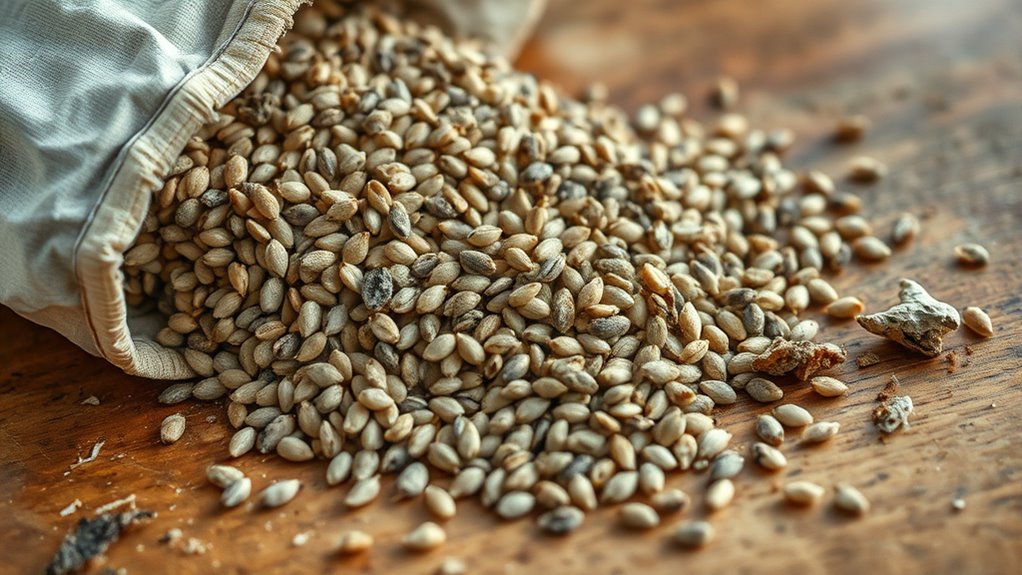
How Does Grass Seed Go Bad in Storage?
Are you tired of planting grass seed only to find it doesn’t sprout? You’re not alone—many people struggle with keeping their grass seed fresh and viable over time. Proper storage is key to ensuring your seeds stay healthy and ready to grow when you need them.
Grass seed goes bad in storage mainly due to exposure to moisture, temperature fluctuations, pests, and light. Excess moisture causes mold and reduces germination, while inconsistent temperatures can lead to seed deterioration.
Pests and insects damage seeds by creating holes or contamination, and light accelerates nutrient breakdown. Poor airflow traps moisture, speeding spoilage.
If you want to keep your seed fresh longer, it’s essential to follow best storage practices.
Keep exploring for helpful tips to extend the life of your grass seed and ensure a lush, healthy lawn.
Key Takeaways
- Excess moisture causes mold, fungi, and bacteria to grow, which can spoil the seed.
- Fluctuating or high temperatures speed up seed deterioration and make it less viable.
- Light exposure damages seed nutrients and shortens their shelf life.
- Pests can physically harm seeds and introduce contamination.
- Poor storage conditions like humidity or dirt can make seeds brittle, moldy, and less likely to germinate.
How Moisture Causes Grass Seed to Spoil During Storage
Moisture is one of the main factors that can cause grass seed to spoil during storage. When moisture levels are too high, it creates an environment where mold, fungi, and bacteria thrive, damaging the seed’s viability.
To prevent this, you need effective moisture control by keeping the storage area dry and using moisture-proof containers. Proper storage techniques include sealing seed in airtight containers or bags to block humidity from getting in.
Seal grass seed in airtight containers to prevent moisture and preserve seed quality.
Avoid storing grass seed in damp or humid places like basements or sheds, as these increase the risk of moisture buildup. Make sure the storage environment stays cool and consistently dry because fluctuations can cause condensation inside containers.
Regularly checking your stored seed helps you spot any signs of moisture or spoilage early. By practicing good moisture control and proper storage methods, you can greatly extend the seed’s lifespan and keep it in good condition until you’re ready to plant.
Why Temperature Fluctuations Can Damage Your Stored Seed
Temperature fluctuations can really mess with your stored seeds. Even if you don’t see it happening, these changes in temperature can cause moisture to build up inside the seed containers. And you know what that means? That extra moisture can speed up the deterioration process and make your seeds less viable over time.
Moisture Accumulation Risks
When temperature fluctuates a lot, it can cause moisture to build up inside your stored grass seed, which can lead to damage. This moisture comes from sources like humidity and condensation caused by temperature changes.
If you don’t control the environment well, humidity can rise inside your storage container. This creates a perfect spot for mold and bacteria to grow.
To prevent this, managing humidity is really important. Using airtight containers or desiccants helps keep moisture out and keeps the environment stable.
Regularly checking your storage conditions is a good idea so you catch any moisture buildup early. Remember, even small temperature changes can cause condensation.
Keeping your storage area cool, dry, and consistent is key to preserving your grass seed’s quality.
Seed Viability Decline
Even small temperature fluctuations inside your storage area can significantly reduce your grass seed’s viability over time. These changes cause the seed’s internal moisture levels to shift, leading to deterioration and shorter seed lifespan.
Frequent temperature swings can also trigger metabolic processes that weaken seed quality, making it less likely to germinate when you plant it. To keep your seed viable, focus on storage methods that keep the environment stable.
Keep your seed in a cool, consistent temperature, ideally between 32°F and 41°F, and avoid areas prone to temperature fluctuations. Proper storage helps slow down seed aging, so your grass seed stays viable season after season.
Consistent conditions are key to maximizing seed longevity and ensuring a healthy lawn.
How Pests and Insects Harm Grass Seed in Storage
Pests and insects can quickly cause trouble for stored grass seed, often going unnoticed until there’s serious damage. They get into containers or bags, feeding on the seeds and leaving droppings or webbing behind.
To prevent this, focus on pest prevention and insect control. Regular seed inspections are key—catch signs of pests early before they spread.
Look for clues like tiny holes in seed bags or containers, sticky webbing or insect trails around storage areas, and strange musty smells that could mean pests are active.
Keeping storage areas clean, dry, and tightly sealed is essential. Remove any old or infested seed batches right away.
The Importance of Good Air Circulation and Humidity Control
Maintaining good air circulation and controlling humidity are crucial for preserving grass seed quality during storage. Proper airflow management prevents moisture buildup, which can lead to mold and seed spoilage.
Make sure your storage area is well-ventilated, and avoid stacking seeds too tightly so air can circulate freely around the containers. Humidity control is equally important; high humidity levels encourage seed deterioration and fungal growth.
Use a dehumidifier or silica gel packs to keep the environment dry and stable. Keep the storage space cool and dry, as fluctuating temperatures combined with humidity can speed up seed degradation.
Regularly check stored seeds for signs of excess moisture or mold. By managing airflow and humidity effectively, you extend the shelf life of your grass seed and keep it viable for planting when needed.
Proper storage practices are key to preventing seed deterioration over time.
How Light Exposure Deteriorates Grass Seed
Proper storage conditions extend the life of grass seed, but exposure to light can still cause deterioration over time. Light sensitivity speeds up seed aging, especially if stored for a long period. When grass seed is exposed to light, it triggers breakdowns of important nutrients and lowers germination chances. This can happen even if the seed is kept in a cool, dry place, ultimately reducing how long it stays good.
Think of your seed as a delicate gemstone that loses its sparkle under bright light. Or a fragile photograph fading with each exposure. Or a fresh herb wilting when left in direct sunlight. These examples show how light damages the seed’s ability to grow.
Over time, repeated light exposure causes chemical changes that make the seed less likely to sprout when planted. To keep your seed in top shape, store it in a dark, opaque container. This minimizes light exposure and helps ensure it remains viable for as long as possible.
Best Packaging Practices to Keep Grass Seed Fresh
Want to keep your grass seed fresh and ready to plant? The key is storing it in an airtight container. This helps keep out moisture and air, which can spoil the seeds or reduce their viability. Think of it as giving your seeds a little protective shield!
Next, find a cool, dry spot for your container—away from direct sunlight. Sunlight can actually break down the seeds over time, making them less likely to sprout when you’re ready to plant. So, a shaded shelf or a closet works perfectly.
Airtight Container Benefits
Using an airtight container is one of the best ways to keep grass seed fresh and viable. It protects the seed from moisture, pests, and air exposure, all of which can cause spoilage.
When choosing a container, think about options like plastic jars, metal tins, or vacuum-sealed bags. Each one effectively seals out humidity and keeps your seeds safe.
These containers help extend storage time by maintaining a stable environment. They prevent the seed from losing its ability to germinate over time.
Picture sealing in these benefits:
- Freshness, like locking in valuable seeds in a treasure chest
- Purity, keeping out dirt and pests
- Longevity, preserving seed viability for as long as needed
Cool, Dry Storage
Storing grass seed in a cool, dry place is key to keeping it fresh and ready to germinate. Cool storage slows down deterioration caused by heat, which can damage or weaken the seed’s viability.
Make sure the storage area is free from humidity because moisture can lead to mold and spoilage. Use airtight containers to protect your seed from moisture and temperature changes.
Keep the storage space well-ventilated and away from heat or humidity sources like basements, sheds, or garages. Dry conditions prevent the seed from absorbing excess moisture, which can cause it to rot or sprout early.
Properly stored grass seed in a cool, dry environment stays viable longer and ensures better germination when you’re ready to plant.
Avoid Sunlight Exposure
Sunlight can quickly degrade grass seed quality, so keeping it out of direct exposure is crucial for maintaining freshness. Sunlight damage speeds up seed deterioration and lowers germination rates.
To protect your seed, consider these packaging practices:
- Use airtight, opaque containers that block out light completely.
- Store seeds in a cool, dark spot away from windows or direct sunlight.
- Avoid transparent bags that let in UV rays, choosing sealed, non-transparent packaging.
These steps help guarantee seed protection by preventing sunlight damage, which can compromise seed viability. Proper packaging creates a barrier against light exposure, keeping your grass seed fresh and ready for planting when needed.
Signs Your Grass Seed Has Gone Bad
If your grass seed has gone bad, you’ll probably notice some clear signs that it’s no longer viable. One of the first clues is a shortened seed lifespan, especially if storage wasn’t ideal. Old seeds may fail to sprout or produce weak, patchy grass.
Check for discoloration; bad seeds often turn dull or moldy, which indicates spoilage. If you notice a musty smell or mold growth, it’s a sign they’ve deteriorated. Seeds that are brittle, shriveled, or stick together also suggest they’ve lost their essential qualities.
A simple germination test can help confirm if your seeds are still good. Remember, proper storage—keeping seeds cool, dry, and airtight—can help extend their lifespan. If your seeds show any of these signs, it’s best to discard them and get fresh seed for better results.
Tips for Properly Storing Grass Seed for Long-Term Use
To keep your grass seed viable for the long term, you need to prioritize proper storage practices. First, choose high-quality seed to guarantee freshness and durability. Store your seeds in airtight containers to prevent moisture from seeping in.
Next, keep the container in a cool, dark place like a basement or cellar—avoid sunlight and heat, which speed up deterioration. Third, label your containers with the purchase date to track how long they’ve been stored and prevent using old seed.
Store seeds in a cool, dark place and label with the purchase date to maintain freshness and prevent spoilage.
Visualize the seed stored behind a sealed lid, positioned in a cool corner, shielded from light and humidity. This process helps preserve germination rates and prevents mold or pests. Proper storage not only extends seed viability but also ensures you’re ready when planting season arrives.
Following these tips minimizes the risk of seed spoilage, giving your grass seed the best chance to grow healthy, lush lawns year after year.
Common Mistakes That Lead to Seed Spoilage
One mistake people often make is storing seeds in places that aren’t dry and cool enough. When seeds are kept in humid or damp conditions, it creates the perfect environment for mold to grow and for the seeds to spoil. Nobody wants their seeds to go bad before they even get a chance to sprout!
Another thing to watch out for is using old or contaminated seeds. These can be more prone to poor germination and can end up wasting your time and effort. It’s always best to start with fresh, healthy seeds for the best results.
Improper Storage Conditions
Storing grass seed in unsuitable conditions can quickly lead to spoilage and reduce its viability. Poor storage choices shorten seed lifespan and make successful germination harder.
Imagine leaving your seed in a hot attic, a damp basement, or an unsealed container. These mistakes create an environment where heat speeds up seed deterioration, humidity promotes mold, and air exposure causes oxidation.
To keep your seed in good shape, use airtight containers stored in a cool, dry place. Avoid extreme temperatures and fluctuating conditions. Proper storage helps extend seed life and keeps it viable when you’re ready to plant.
Being mindful of these factors ensures your seed investment gives you the best results possible.
Exposure to Moisture
Moisture is one of the biggest enemies of grass seed because it can quickly cause mold, rot, and loss of viability. Be careful about moisture sources like humid air, leaks, or damp storage surfaces that can introduce unwanted moisture.
If your storage area isn’t well-ventilated or has high humidity levels, the seed can absorb this moisture and spoil. To prevent this, control humidity using dehumidifiers or air conditioning, and keep the environment dry and ventilated.
Always make sure your seed is completely dry before storing it. Avoid storing it in areas prone to dampness. Proper humidity control is key to maintaining seed quality and preventing costly spoilage.
Using Old or Contaminated Seed
Using old or contaminated seed is a common mistake that can really hurt your chances of growing a healthy, lush lawn. Over time, seed loses its viability, especially if storage isn’t ideal.
When you plant old seed, you risk low germination rates, which can lead to patchy, uneven growth. Contaminated seed might carry diseases or pests, spreading problems across your yard.
To avoid this, test your seed and check its quality before planting. Proper storage is key—keep seeds in a cool, dry place to preserve their longevity. You might also treat seeds to fight off contamination.
Ignoring these steps means planting seed that’s past its prime, which makes it harder to grow a vibrant lawn. Using fresh, tested seed increases germination chances and helps you achieve a healthier, denser grass cover.
Final Tips for Maintaining Fresh Grass Seed
To keep your grass seed fresh and viable, it’s important to follow some simple but effective maintenance tips. Proper storage is key to extending the seed’s lifespan.
First, always store your seed in a cool, dry place away from direct sunlight, which can cause moisture buildup and mold. Use airtight containers to prevent air and humidity from damaging the seed.
Label your containers clearly and keep track of storage dates so you use the seed while it’s still good. Regularly check your stored seed for signs of moisture or mold, and discard any compromised batches.
Maintaining a consistent temperature and avoiding sudden fluctuations helps preserve seed quality. By following these storage tips, you’ll maximize seed longevity and keep your grass seed viable for planting whenever you need it.
Proper care now saves you time and effort later, leading to healthier, greener lawns.
Frequently Asked Questions
Can Expired Grass Seed Still Be Planted Successfully?
Expired grass seed may still be planted, but success isn’t guaranteed. You should perform seed viability testing to see if the seed can sprout.
If viability is low, consider techniques like overseeding or mixing with fresh seed to improve your chances.
Keep in mind that older seed often leads to weaker growth, so adjusting your planting methods can help you get a lush lawn.
How Long Can Grass Seed Be Stored Before It Goes Bad?
Think of grass seed as fine wine; it ages but only so long before losing its sparkle. Typically, you can store grass seed for 1 to 2 years if you keep it in cool, dry, airtight conditions.
To be sure it’s still good, perform seed viability tests before planting. Proper storage helps extend the life of your seed, keeping it lively and ready to grow when you need it.
Does the Type of Grass Seed Affect Its Storage Life?
Yes, the type of grass seed affects its storage life. Different grass seed varieties, like Bermuda or Kentucky Bluegrass, have unique storage needs.
You should consider factors like temperature, humidity, and container quality, as these can impact how long the seeds stay viable.
Proper storage can make some seeds last longer than others. Always check the seed’s expiration date and keep it in a cool, dry place to ensure it stays viable.
Can Homemade Storage Containers Prevent Grass Seed Spoilage?
Homemade storage containers can help prevent grass seed spoilage if you focus on seed preservation techniques like controlling moisture.
Using airtight containers is key to keeping humidity out, and storing them in a cool, dry place is just as important.
While homemade options might not have all the fancy features of commercial containers, they can still work well if you make sure they’re sealed tightly and protected from temperature changes.
This helps keep your seed viable over time and prevents spoilage.
What Are the Signs of Mold or Bacterial Growth on Stored Seed?
Mold or bacterial growth on stored seed can look like a suspicious stain—look for fuzzy, discolored patches or a slimy texture.
Signs of mold include gray, green, or black spots, while bacterial growth often has a foul smell or damp, slimy surfaces.
If you notice these signs, it’s best to discard the seed to prevent contamination and ensure healthy future growth.
Conclusion
Think of your grass seed as a delicate treasure chest, holding the promise of lush lawns. When you neglect its storage—allowing moisture, pests, or light to seep in—you’re letting that treasure decay, lost to time and neglect.
Moisture is one of the biggest enemies. If your seed gets damp, it can sprout prematurely or rot. Pests like insects can also invade stored seed, ruining your investment. Light exposure can cause the seeds to weaken over time.
Proper storage is key to keeping your grass seed vibrant and ready to sprout. Use airtight containers and keep them in a cool, dry place. This helps prevent moisture and pests from damaging your seed.
Guard your grass seed well, and you’ll be rewarded with a lush, green lawn. Proper storage ensures your grass seed remains viable, so you can transform your yard into a vibrant paradise.