7 Easy Steps to Plant Wildflower Seeds
Many garden enthusiasts dream of creating a vibrant wildflower meadow, but figuring out where to start can be overwhelming. You’re not alone—planting wildflower seeds might seem tricky at first, but with the right steps, it’s totally doable.
To plant wildflower seeds easily, start by testing and improving your soil pH and fertility with compost and amendments. Choose native, well-suited species for your climate and sow the seeds early spring or fall, spreading them evenly and lightly covering with soil.
Water gently to keep the soil moist, monitoring moisture levels regularly. Control weeds and maintain your meadow with mulching and deadheading. If you keep these steps in mind, you’ll create a thriving wildflower landscape that lasts.
Key Takeaways
- Choose native wildflower seeds that match your local climate and soil conditions. This makes it easier for them to thrive naturally.
- Prepare your soil by testing the pH, removing weeds, and adding compost or organic matter. Healthy soil gives your wildflowers a strong start.
- Plant the seeds in early spring or fall. Spread them evenly and lightly cover with soil so they can settle in comfortably.
- Water gently to keep the soil moist. Adjust how often you water during hot or dry weather to prevent drying out.
- Keep weeds under control, add mulch, and watch your wildflowers grow. This helps ensure healthy development and long-term success.
Getting Your Soil Ready for Wildflowers
Before planting wildflowers, you need to prepare your soil to guarantee the seeds can thrive. Start by testing the soil pH, since wildflowers generally prefer a slightly acidic to neutral range of about 6.0 to 7.0. Adjust the pH if needed by adding lime to raise it or sulfur to lower it.
Next, focus on achieving a healthy nutrient balance. Remove weeds and debris to reduce competition, and loosen the soil to improve drainage and aeration. Incorporate organic matter like compost to enrich the soil and make nutrients more available.
Remove weeds, loosen soil, and add compost for healthy, nutrient-rich wildflower growth.
Avoid over-fertilizing because too many nutrients can actually hinder wildflower growth. Ensuring the soil has the right pH and nutrient balance creates an ideal environment for seeds to germinate and develop strong roots.
Getting the soil ready properly sets the stage for a vibrant wildflower meadow that blooms beautifully and supports local pollinators.
Choosing the Best Wildflower Seeds for Your Area
Choosing the right wildflower seeds for your area is key to creating a thriving and beautiful meadow. It’s best to pick native species that suit your local climate. Native plants are adapted to your environment, so they need less water and maintenance.
Start by researching which native species grow well in your region’s soil and climate conditions. Then, check seed packets for info about the plant’s preferred environment and when it blooms.
It’s a good idea to choose a diverse mix of seeds. This helps promote healthy ecosystems and attracts pollinators. Lastly, avoid invasive species that could disrupt local habitats or outcompete native plants.
When and How to Sow Wildflower Seeds
You want to plant wildflower seeds at the right time, usually in early spring or fall, to give them the best chance to grow. It’s all about timing, so keep an eye on the season and weather conditions.
Before you start sowing, make sure to prepare the soil. Remove any weeds that might compete with your wildflowers, and loosen up the soil so the seeds can settle in nicely. This step helps ensure good seed-to-soil contact, which is super important for germination.
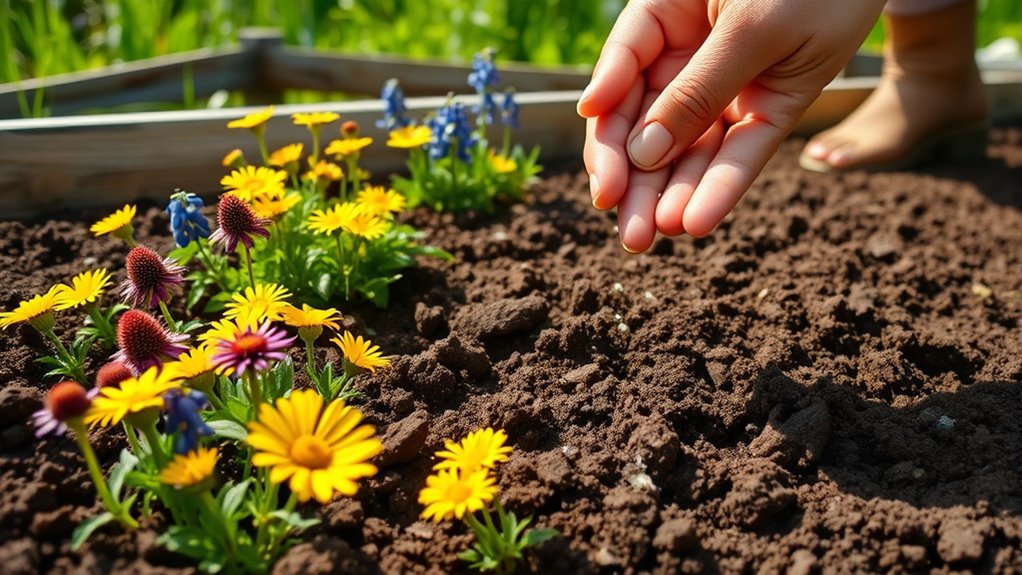
When it’s time to plant, spread the seeds evenly across your chosen area. Then, lightly cover them with a bit of soil—just enough to hide the seeds but not so deep that they struggle to sprout. Following these simple steps will give your wildflowers the best start and help your garden burst with color!
Best Planting Seasons
The best time to plant wildflower seeds depends a lot on your climate and the types of wildflowers you want to grow. Usually, planting at the right season helps ensure strong growth and beautiful spring blooms.
Spring is generally ideal for most areas, especially when seasonal changes favor seed germination. Fall is also great for wildflowers that need cold stratification, helping seeds get established before winter.
Try to plant just before the last frost date for spring blooms, so seeds aren’t exposed to extreme cold or heat. Remember to adjust your planting time based on your local temperature patterns and rainfall to boost germination success.
Preparing the Soil
Preparing the soil properly sets the foundation for successful wildflower growth. First, test your soil’s pH; wildflowers thrive in a pH between 6.0 and 7.0. Adjust with lime or sulfur as needed.
Next, check nutrient levels and enrich poor soil with compost or organic matter to boost fertility. Loosen the soil to a depth of about 2–3 inches, removing weeds and debris.
Use the table below to guide your preparations:
| Step | Action | Purpose |
|---|---|---|
| Soil testing | Check pH and nutrients | Find out what adjustments are needed |
| pH adjustment | Add lime or sulfur | Reach the ideal pH |
| Fertilizer addition | Mix in compost | Improve nutrient levels |
| Tilling | Loosen soil | Help seeds contact soil and grow |
| Debris removal | Clear weeds and rocks | Prevent competition for nutrients |
Proper Sowing Techniques
Timing is key for successful wildflower planting. Sow seeds during the right season to ensure they grow well.
When you’re ready, follow these proper sowing techniques:
- Seed depth: Lightly sprinkle seeds on the soil surface or press them just below, about 1/8 to 1/4 inch deep.
- Spacing techniques: Keep seeds 6 to 12 inches apart so they have room to grow and air can circulate.
- Even distribution: Use your hand or a seed spreader to spread seeds evenly across the area, avoiding clumps.
- Water gently: After sowing, lightly water the area to settle the soil around the seeds and improve germination.
Following these steps will help maximize germination and support healthy wildflower growth.
How to Water and Care for Your Wildflower Seeds
Water your wildflower seeds gently but thoroughly to keep the soil consistently moist, especially during the first few weeks. Proper watering supports seedling care and helps seeds establish strong roots. Check moisture levels regularly; your soil should feel damp but not waterlogged.
If it dries out, roots can struggle to grow and germination may slow. Use a spray bottle or gentle watering can to avoid disturbing the soil or washing away seeds. As seedlings emerge, continue to water consistently to prevent them from drying out.
Avoid overwatering, which can lead to fungal issues or rot. Keep an eye on weather conditions; if rain is scarce, supplement natural rainfall with additional watering. Maintaining steady moisture levels encourages healthy seedling growth and reduces stress.
With proper watering habits, your wildflower seeds will develop into vibrant plants thriving in your garden or landscape.
Controlling Weeds and Promoting Seed Germination
Once your wildflower seeds are planted and sprouting, controlling weeds is key to healthy growth. Good weed management stops invasive plants from competing for nutrients, water, and sunlight.
To help seeds germinate and keep weeds at bay, try these steps:
- Apply a seed cover, like a light layer of soil or mulch, to protect seeds from birds and cut down on weed intrusion.
- Carefully hand weed during early growth, removing unwanted plants without disturbing your wildflowers.
- Use organic mulch around seedlings to block weeds and keep the soil moist.
- Keep soil disturbance to a minimum; less tilling helps prevent weed seeds from activating and helps your wildflowers develop strong roots.
Maintaining and Supporting Your Wildflower Meadow
To keep your wildflower meadow thriving, you need to actively support its ongoing health and growth. One key aspect is providing pollinator support by planting a variety of flowers that attract bees, butterflies, and other beneficial insects. This encourages a balanced ecosystem and boosts pollination.
Seasonal maintenance is also essential. In spring, remove any dead plant material to prevent disease and promote new growth. During summer, make sure your meadow gets enough water during dry spells, but avoid overwatering.
In fall, leave seed heads intact to provide food for wildlife and help reseed naturally. Regularly check for invasive plants that could outcompete native wildflowers and remove them promptly. Mulching can help retain moisture and suppress weeds.
Troubleshooting Common Wildflower Planting Problems
If your wildflowers aren’t growing as well as you’d like, it could be due to some common issues like poor soil conditions or watering problems. Sometimes, the soil might not be draining properly, or it might lack the organic matter needed to support healthy growth. Adding compost or organic matter can really help improve the soil and give your wildflowers a better foundation.
Also, make sure you’re watering consistently, but be careful not to overdo it. Too much water can lead to root rot, while too little can stress the plants. Finding that happy middle ground will help your wildflowers stay healthy and vibrant. Tackling these simple issues can make a big difference in helping your wildflowers thrive!
Poor Soil Conditions
Poor soil conditions can hinder wildflower growth, so it’s important to assess and improve your soil before planting. Native plants tend to adapt better to existing soil, but you might still need to improve it to encourage healthy growth.
Start by testing your soil for nutrient deficiencies to see what’s lacking. Then, add organic matter like compost to improve fertility and structure. This helps create a better environment for the wildflowers to thrive.
Next, consider erosion control methods such as mulching or planting ground cover. These steps help prevent soil loss and keep your planting site stable.
Finally, tailor your soil amendments to match the needs of native plants. This way, they can grow strong without relying heavily on chemical fertilizers. Improving your soil not only benefits wildflowers but also supports the long-term health and resilience of your landscape.
Inadequate Watering Practices
Even with improved soil, inadequate watering can sabotage your wildflower efforts. Proper moisture retention is essential for seedling survival, especially during the first few weeks.
If you don’t water enough, seedlings may dry out and die. Overwatering, however, can lead to root rot and poor growth. To find the right balance, monitor soil moisture regularly.
Use the table below to help identify watering issues:
| Issue | Solution |
|---|---|
| Seedlings drying out | Water deeply and consistently, keep soil moist but not soaked |
| Soil remains dry | Water more often, especially during hot weather |
| Overwatering | Reduce watering and ensure proper drainage |
| Poor seedling survival | Check moisture retention and adjust your watering schedule |
Getting watering right boosts seedling survival and promotes healthy wildflowers.
Frequently Asked Questions
Can Wildflowers Grow in Shady or Low-Light Areas?
Wildflowers can grow in shady or low-light areas, but you’ll need to choose species that are suited for less sun.
These wildflowers have specific light needs that help them thrive without direct sunlight. Look for varieties like foamflower or bloodroot that do well in shade.
How Long Does It Take for Wildflower Seeds to Bloom?
Think of wildflower seeds as tiny time capsules patiently waiting to bloom. Usually, your seeds will sprout in 7 to 14 days during ideal conditions.
From seed germination to full bloom, it often takes about 60 to 90 days, depending on the wildflower variety and environmental factors. Keep nurturing your garden, and soon you’ll see your wildflowers transform from dormant seeds into a vibrant display of nature’s artistry.
Are There Native Wildflower Species Suitable for My Region?
Yes, there are native wildflower species suited for your region. You should research plants that thrive in your specific regional climate, including soil type and rainfall patterns.
Local extension offices or native plant societies can provide tailored recommendations. By choosing native species, you’ll guarantee better growth and support local ecosystems.
Always select plants that naturally occur in your area to create a resilient, beautiful wildflower garden that’s well-adapted to your environment.
Do Wildflowers Require Fertilizer or Special Nutrients?
You don’t need to break your back with fertilizer or special nutrients for wildflowers. They’re hardy and thrive in native soil, so just focus on soil preparation and seed selection.
Clear the area of weeds, loosen the soil, and pick seeds that are suited for your region.
Wildflowers are experts at thriving with minimal fuss, so after planting, let nature take its course.
In no time, you’ll have a colorful, low-maintenance garden that’s easy to enjoy.
How Do I Protect Wildflowers From Pests and Wildlife?
To protect your wildflowers from pests and wildlife, start with natural pest control. Use repellents like neem oil or add beneficial insects to your garden.
You can also set up wildlife deterrents, such as fencing or scare devices, to keep larger animals away. Regularly check your garden for signs of pests or damage.
If you notice issues, address them quickly to keep your wildflowers healthy. This proactive approach helps ensure your wildflowers thrive without being disturbed by unwanted visitors.
Conclusion
So, you’ve followed all the steps to plant your wildflower meadow, but weeds still seem to thrive, and your flowers are playing hide and seek. It’s almost poetic, isn’t it? Nature’s little reminder that even in cultivation, chaos has its place.
Welcome the imperfections and remember that sometimes the most wild and resilient blooms are the ones that surprise us the most. That’s the true beauty of wildflowers—untamed and unpredictable.
In the end, planting wildflower seeds isn’t about perfection. It’s about embracing the natural chaos and celebrating those unexpected, beautiful surprises. After all, wildflowers thrive because they’re wild.