Ideal Soaking Time: How Long Do You Need to Soak Chia Seeds?
Many people struggle with getting chia seeds just right—they want the benefits but are unsure about how long to soak them.
You’re not alone; figuring out the perfect soaking time can feel tricky.
To get the best results, soak chia seeds for about 15 to 30 minutes. During this time, they absorb water and form a gel-like coating, making them easier to digest and revealing nutrients like fiber and omega-3s.
If you soak them longer, they turn into a thicker pudding, but over-soaking can make them slimy and less appealing.
Keep in mind, the ideal soak depends on your preferred texture—more tips on perfecting your chia prep are just ahead.
Key Takeaways
- Soak chia seeds for 15-30 minutes to get a gel-like texture that’s perfect for most uses.
- If you soak them longer, like 2-4 hours or overnight, you’ll get a thicker, pudding-like consistency.
- Shorter soaking keeps the seeds chewy and separate, making it great for quick additions to recipes.
- To speed up absorption, use warm liquid if you want the seeds to soak faster.
- You’ll know they’re properly soaked when you see a gel coating around the seeds and a viscous, uniform texture.
How Do Chia Seeds Absorb Water and Why Is Soaking Important?
Chia seeds have a remarkable ability to absorb water quickly, thanks to their unique outer shell called the mucilage. When you add them to liquid, the absorption process starts almost immediately.
The mucilage, a gel-like substance, swells as it interacts with water, creating a thick coating around each seed. This helps the seeds expand and makes nutrients more accessible to your body.
The mucilage swells, forming a coating that helps the seeds expand and unlock their nutrients for your body.
The importance of soaking chia seeds lies in this process—it ensures the seeds hydrate thoroughly and prevents them from becoming hard and hard to digest if eaten dry. Proper soaking also helps release their full nutritional potential, including omega-3 fatty acids, fiber, and antioxidants.
Without enough soaking, you might experience discomfort or difficulty digesting the seeds. Understanding how chia seed absorption works highlights why soaking is a key step for safety and getting the most health benefits.
What Is the Ideal Soaking Time for Chia Seeds?
So, how long should you soak chia seeds? Generally, about 15 to 30 minutes does the trick to get that nice, gel-like texture. But honestly, it can depend on things like the size of your seeds and what kind of texture you prefer.
If you soak them for longer, say several hours or even overnight, they’ll become much thicker and almost jelly-like. On the other hand, a shorter soak keeps the seeds more separate and chewy. Keep an eye out for that gel coating around the seeds—that’s a good sign they’ve soaked enough!
Optimal Soaking Duration
Determining the ideal soaking time for chia seeds depends on how you plan to use them. Generally, letting them sit for at least 15 to 30 minutes allows them to absorb liquid fully and develop their gel-like texture.
This soaking duration maximizes benefits, making the seeds easier to digest and boosting their nutritional profile. Proper soaking helps release more omega-3s, fiber, and antioxidants, enhancing their health benefits.
If you want a thicker, pudding-like consistency, soaking for 30 minutes to an hour works best. Shorter times might be enough if you’re adding dry seeds directly to recipes, but longer soaking ensures maximum hydration and nutrients.
Adjust the soaking time based on your preferred texture and use, but sticking to this range usually gives the best results.
Factors Influencing Time
Several factors can influence the ideal soaking time for chia seeds, including their size, freshness, and the temperature of the liquid used. The soaking temperature affects how quickly seeds absorb liquid—warmer temperatures generally speed up soaking, while cooler temps slow it down.
Seed freshness also plays a role; fresher seeds tend to absorb liquid more efficiently, reducing soaking time. Furthermore, smaller seeds hydrate faster than larger ones, impacting the duration needed for the best gel formation.
To guarantee proper soaking, consider these points:
- Soaking temperature: warmer liquid accelerates absorption
- Seed freshness: fresher seeds hydrate quicker
- Seed size: smaller seeds soak faster
- Desired consistency: thicker gel may require longer soaking
Adjust your soaking time accordingly for perfect results.
Signs of Proper Soaking
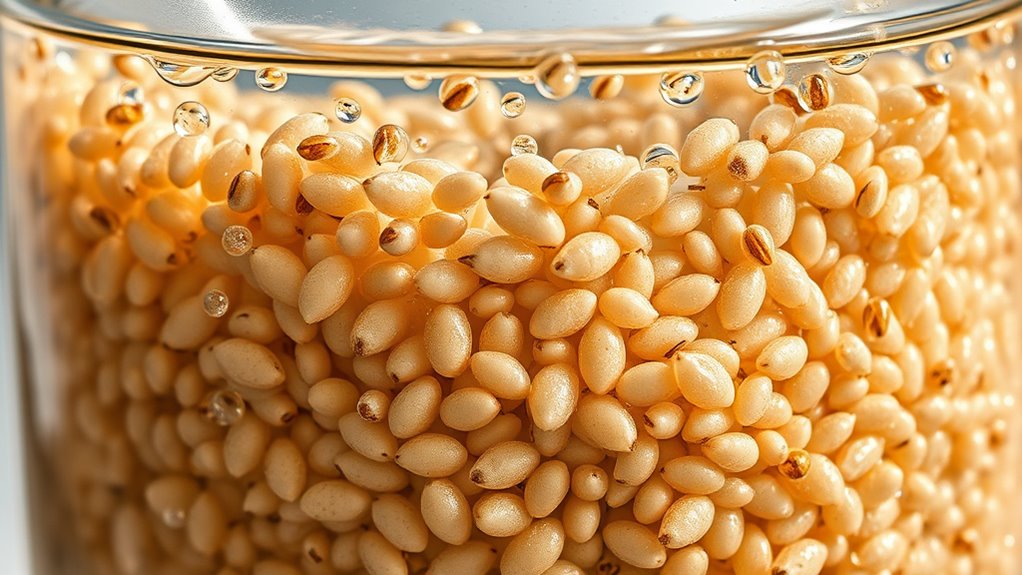
When chia seeds have soaked properly, they develop a thick, gel-like coating that shows they’ve absorbed enough liquid. This visual cue is a key sign of proper soaking, highlighting the benefits and confirming the seed’s ability to absorb.
The seeds should swell and create a uniform, viscous texture that’s easy to stir or blend into recipes. If they stay dry or only partially swell, they haven’t soaked long enough.
Properly soaked chia seeds should feel tender yet firm, not slimy or overly mushy. Recognizing these signs helps ensure you get the full nutritional and digestive benefits.
Getting the right soak time guarantees the chia seeds’ best properties, making them easier to digest and maximizing their health benefits.
How Soaking Changes the Texture of Chia Seeds
When you soak chia seeds, you’ll see how much their texture changes—it gets way softer. Basically, a gel-like coating forms around each seed, making them feel smooth and pudding-like. It’s pretty cool because this change makes them easier to swallow and perfect for tossing into smoothies or desserts.
Texture Softens Significantly
As chia seeds soak, their texture changes quite a bit, becoming much softer and more gel-like. This transformation is a key part of soaking, really changing how you experience their consistency.
Proper soaking helps the seeds soften evenly and thoroughly. You’ll notice the seeds swell as they soak up liquid, getting bigger and plumper.
The surface turns tender and smooth, and the seeds lose their initial crunch. A gel-like coating forms around each seed, giving it a pudding-like texture.
This softening makes chia seeds easier to add to smoothies, oatmeal, or yogurt. The longer you soak, the more this texture develops, resulting in a smooth, creamy mouthfeel.
Mastering the soaking process ensures you get the right texture for your recipes every time.
Gelatinous Coating Forms
Soaking chia seeds causes a gelatinous coating to form around each seed, dramatically changing how they feel. This gel-like layer makes them easier to digest and helps when adding them to recipes.
As the seeds soak, they soak up liquid and swell, creating a slimy but smooth exterior. The thickness of this coating depends on how long you soak them and how you do it.
For the best consistency, stir the seeds into liquids thoroughly and give them enough time to develop the gel. This coating not only improves the texture but also boosts their nutritional benefits.
It’s a versatile addition to smoothies, puddings, and breakfast bowls.
Does Soaking Make Nutrients More Available?
Soaking chia seeds can make their nutrients easier for your body to absorb. When you soak them, it starts breaking down the seed’s outer shell, which helps unlock important nutrients like omega-3s, fiber, and minerals.
This process boosts bioavailability, meaning your body can use these nutrients more effectively. It also supports better digestion and overall nutrient uptake.
To get the most out of soaked chia seeds, try reducing antinutrients that block mineral absorption. Soaking softens the seeds, making them easier to digest.
This can help reduce bloating and promote smoother digestion. Plus, it improves how nutrients pass through your gut lining, boosting their efficiency.
How Long Can You Soak Chia Seeds Before They Over-Soak?
So, you’re probably wondering how long you can soak chia seeds before they get too soggy. Well, if you leave them soaking for too long, they can turn slimy or even develop a sour smell—that’s usually a sign they’ve over-soaked.
Generally, soaking chia seeds for about 20 minutes to a few hours is perfect. That way, you get all the benefits without messing with the texture too much.
Signs of Over-Soaking
When chia seeds are left in liquid for too long, they can start to over-soak, which leads to undesirable textures and potential spoilage. You might notice a slimy, overly gelled surface and a very thick consistency.
If it’s over-soaked, there could be a sour smell, indicating fermentation or spoilage. The texture also changes—seeds become mushy or rubbery, making them less appealing to eat.
Watch for these signs: excessive sliminess and a thick gel, an unpleasant sour odor, seeds turning mushy or rubbery, or visible mold and discoloration.
These signs suggest your chia seeds have been over-soaked and might no longer offer the desired texture or nutritional benefits.
Optimal Soaking Duration
To enjoy the benefits of chia seeds without risking over-soaking, it’s best to limit your soaking time to about 15 to 30 minutes for most purposes. This allows the seeds to absorb enough liquid and unlock their benefits like fiber and omega-3s.
But be careful not to over-soak, as it can make the seeds slimy and less appealing. If you prefer, you can blend chia seeds directly into smoothies or use them dry in baking—no waiting needed.
A soak longer than 30 minutes can lead to over-soaking, which affects the texture and nutrients. For most uses, sticking to 15 to 30 minutes gives you the right balance of benefits and texture.
Best Ways to Soak Chia Seeds for Smoothies and Puddings
Soaking chia seeds properly improves their texture and digestibility, making them perfect for smoothies and puddings. To get that ideal smoothie consistency and pudding thickness, try these methods:
Mix 3-4 tablespoons of chia seeds with 1 cup of liquid, like almond milk or coconut water, and stir well. Let it sit for at least 30 minutes, or overnight if you want a more gel-like texture.
For smoother smoothies, blend the soaked chia seeds with fruits and liquids to spread the seeds evenly. For puddings, let the mixture soak until it thickens to your preferred consistency, usually 2-4 hours.
These techniques help the seeds absorb enough liquid, creating a creamy texture for both smoothies and puddings, while also making them easier to digest.
Quick Tips for Soaking Chia Seeds When You’re Short on Time
If you’re pressed for time but still want the benefits of soaked chia seeds, there are quick methods to prepare them without waiting hours. One effective way is to use warm water or milk—just mix equal parts of your liquid and chia seeds, then stir well.
Quickly enjoy soaked chia seeds by mixing equal parts with warm water or milk and stirring well.
Let the mixture sit for 10-15 minutes, giving it a quick stir halfway through to prevent clumping. This speeds up hydration, so the seeds are ready much faster.
Another quick trick is to soak chia seeds in hot water, which makes them absorb liquid faster. Just remember to stir often to avoid lumps.
You can also blend soaked chia seeds into smoothies. The seeds hydrate quickly in the liquid, giving the illusion of pre-soaking.
These methods are perfect when you’re in a rush but still want to enjoy the nutritional perks of chia seeds without any hassle.
Signs Your Chia Seeds Are Fully Soaked
When chia seeds are fully soaked, you’ll notice they develop a gel-like coating around each seed, giving the mixture a thick, pudding-like consistency. This means they’re ready to enjoy and show off their full nutritional benefits. Fully soaked seeds won’t look dry or hard anymore; they’ll be plump and swollen.
You can also check if they’re ready by feeling the texture. If the mixture has thickened evenly and the seeds are all coated, that’s a good sign they’re done. Look for these signs to get the most out of your chia seeds.
The mixture should feel smooth and gel-like all over. Seeds will be swollen and translucent, and the consistency will resemble pudding or thick gel. Plus, the chia seeds should have absorbed most of the liquid.
Knowing these signs helps you perfect your soak time and makes it easier to create versatile recipes. From smoothies to overnight oats, you’ll get the most nutritional benefits when your chia seeds are just right.
Troubleshooting Clumping and Gelatinous Textures
Clumping and an overly gelatinous texture can happen if chia seeds soak up too much liquid or aren’t mixed evenly. The main causes include uneven stirring, soaking too long, or not enough liquid.
To fix this, stir your mixture thoroughly to break up any clumps. Adjust the soaking time—use less if it’s too thick, or add more liquid if it’s too dry. If it’s still gelatinous, try adding a splash of water or milk and stir well.
Using a whisk or fork can help distribute the seeds evenly and prevent clumping. For a smoother texture, blend the mixture briefly. Here’s a quick overview:
| Clumping Causes | Texture Solutions |
|---|---|
| Uneven stirring | Stir vigorously or blend |
| Excessive soaking | Shorten soaking time |
| Insufficient liquid | Add more liquid gradually |
| Seeds settling at bottom | Stir periodically during soak |
| Over-soaking | Reduce soaking duration |
These tips will help you get a consistent, enjoyable chia seed texture every time.
How to Store and Reuse Soaked Chia Seeds in Your Kitchen
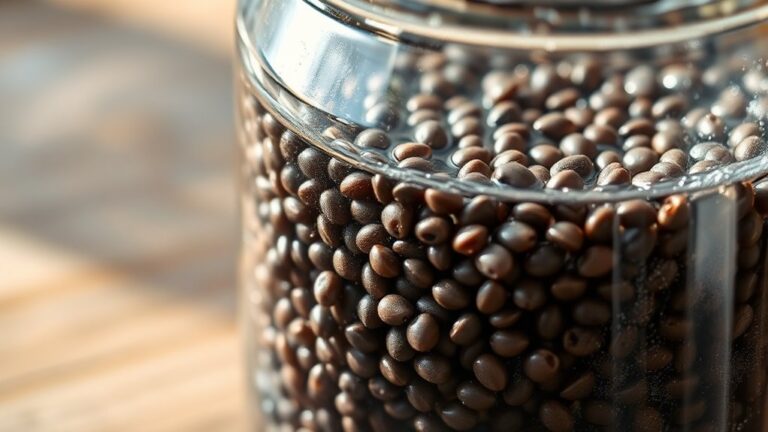
Properly storing soaked chia seeds keeps them fresh and ready for your recipes. Use airtight containers and keep them in the fridge to extend their shelf life. This helps prevent spoilage and preserves their texture and flavor.
Store soaked chia seeds in airtight containers in the fridge to keep them fresh and flavorful.
When storing, consider using glass jars or BPA-free plastic containers with tight-fitting lids. Label them with the soaking date so you can easily track freshness. Also, keep them away from direct sunlight and heat sources.
It’s a good idea to keep the seeds submerged in their soaking liquid for extra freshness. Reusing soaked chia seeds is simple—you can add them to smoothies, oatmeal, or baked goods.
If you have extra, drain off any excess liquid and store the seeds separately. Proper storage keeps your soaked chia seeds versatile and ready to boost your meals creatively and efficiently.
Frequently Asked Questions
Can I Soak Chia Seeds Overnight for Maximum Benefits?
Yes, soaking chia seeds overnight maximizes their nutritional benefits and promotes better digestive health. When you soak them for several hours or overnight, the seeds absorb water, releasing nutrients and making them easier to digest.
This process also improves their fiber content, which supports your gut. So, if you want to enjoy the full range of chia seeds’ health benefits, soaking them overnight is a great choice.
Do Different Liquids Affect Chia Seed Soaking Times?
Yes, different liquids affect chia seed soaking times. Thicker liquids like coconut milk or almond milk, which are more viscous, usually need longer soaking to absorb nutrients properly.
Thinner liquids like water absorb quickly, so the seeds hydrate faster. You should adjust soaking time based on how thick or thin the liquid is to get the best results.
This way, you ensure maximum hydration and nutrient uptake, helping you enjoy all the benefits of your chia seeds.
How Does Temperature Influence the Soaking Process?
Temperature effects can dramatically speed up or slow down your chia seed soaking process. Think of it as turning a dial from glacier chill to scorching heat.
Warmer water speeds up absorption, making seeds swell instantly, while colder water takes ages. For best results, use warm water to get a quick, gel-like consistency.
Just avoid boiling, which can damage nutrients. Adjust the temperature based on how quickly you want your seeds soaked, and you’ll get perfect results every time.
Are There Specific Types of Chia Seeds That Soak Faster?
Some chia seed varieties, like black and white seeds, soak at similar rates. However, organic or hulled chia seeds may hydrate faster because of how they’re processed.
Your soaking techniques also matter. Stirring occasionally or using warm water can help speed up the process.
Can Soaked Chia Seeds Be Refrigerated for Later Use?
Think of soaking chia seeds like storing a vintage wine. Refrigeration keeps them fresh.
You can definitely refrigerate soaked chia seeds for later use. This helps preserve their nutritional benefits and keeps them tasting great.
Just transfer the soaked seeds to an airtight container and store them in the fridge for up to 5 days.
Follow proper storage tips to maintain their texture and nutritional value, making them ready for your next nutritious meal.
Conclusion
Now that you know how long to soak chia seeds for the ideal texture and nutrition, think about all the delicious recipes waiting to be tried.
But here’s a question—what happens if you soak them a little longer? Will they turn too mushy or unlock even more health benefits?
Stay curious and experiment with different soaking times. Your perfect chia seed experience is just a soak away.
Are you ready to discover the secret to perfect chia every time?