7 Simple Steps to Plant Tomato Seeds From Fresh Tomatoes
Many garden enthusiasts dream of growing their own tomatoes but often feel overwhelmed by the process. You’re not alone—starting from seed can seem tricky, but with a little guidance, you can grow thriving plants right at home.
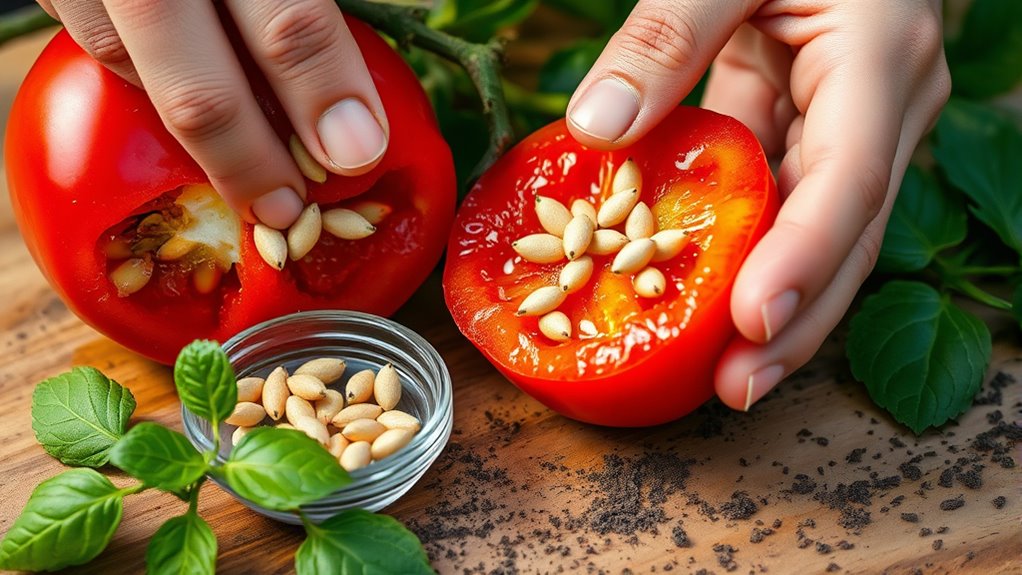
To plant tomato seeds from fresh tomatoes, start by choosing ripe, healthy fruits and extract the seeds with surrounding gel.
Ferment the seeds for 2-3 days to remove gel and improve germination, then rinse and dry them thoroughly.
Sow the seeds indoors 6-8 weeks before your last frost date in moist, well-draining soil, providing plenty of light.
As you care for young plants, you’ll learn more tips along the way to grow thriving tomatoes.
Key Takeaways
- Select fully ripe, healthy tomatoes and extract seeds with the surrounding gel.
- Ferment seeds for 2-3 days to remove pulp and the gel coating.
- Rinse seeds thoroughly and spread them on a paper towel to dry completely.
- Start seeds indoors 6-8 weeks before the last frost date in a warm, bright spot.
- Transplant seedlings outdoors once the risk of frost has passed and the plants are strong.
Why Grow Tomatoes From Fresh Seeds?
Have you ever wondered why starting tomatoes from fresh seeds is the best option? When you plant fresh seeds, you get to control the entire growing process, making sure your plants are healthy from the start.
Growing tomatoes from seeds also gives you a chance to choose from a variety of flavors. You can pick unique or heirloom strains that you can’t find in stores.
Growing tomatoes from seeds lets you discover unique and heirloom flavors unavailable in stores.
Plus, fresh seeds tend to produce stronger, more vigorous plants. This can lead to better yields and healthier tomatoes overall.
Growing your own tomatoes also benefits your health. Homegrown ones often have higher levels of nutrients and antioxidants compared to store-bought versions.
And by choosing your own seeds, you can avoid the chemicals and preservatives commonly found in commercially grown produce.
All in all, starting from fresh seeds lets you enjoy a wider range of flavors while maximizing the health benefits of your homegrown tomatoes.
How to Choose the Best Tomato for Seed Saving
Choosing the best tomato for seed saving is key to growing healthy, productive plants year after year. Focus on heirloom varieties, which usually produce open-pollinated seeds that grow true to type. These tend to have a rich genetic diversity, making your garden more resilient and adaptable.
Look for tomatoes with strong disease resistance, especially to common issues like blight or fusarium wilt. This helps ensure your seeds come from robust plants. Choose fruits that are fully ripe, firm, and undamaged, as they carry the healthiest seeds.
Avoid hybrid tomatoes because their seeds might not produce plants like the parent. By selecting heirloom varieties with proven disease resistance, you’ll improve your chances of growing strong, flavorful tomatoes season after season.
How to Extract and Prepare Tomato Seeds for Planting
To extract tomato seeds, start by removing the ripe, undamaged fruit from the plant. Cut the tomato in half and scoop out the seeds along with the surrounding gel into a container.
To clean the seeds, let the mixture ferment for 2-3 days. This helps break down the gel coating and removes any leftover pulp or disease spores. Be sure to stir the mixture daily during fermentation.
Ferment for 2-3 days, stirring daily to break down gel coating and remove pulp or spores.
Once it’s bubbly and frothy, pour the contents through a fine strainer and rinse the seeds thoroughly with water. Spread the cleaned seeds on a paper towel or a screen to dry completely in a cool, dry place.
When the seeds are dry, store them in an airtight container, ideally in a cool, dark spot. Proper storage will keep your tomato seeds viable for planting next season.
When and How to Start Tomato Seeds Indoors?
You’ll want to start your tomato seeds indoors roughly six to eight weeks before the last expected frost date. It’s a good idea to keep an eye on the weather forecast so you can plan accordingly. When you’re ready, set up a warm, bright spot—tomatoes love plenty of light to thrive.
Make sure to water your seeds properly, keeping the soil moist but not soggy. This helps promote healthy growth and strong seedlings. Getting the timing right and creating a cozy, well-lit environment are really important to give your tomato plants the best start possible.
Ideal Starting Time
Timing is key when starting tomato seeds indoors to ensure healthy growth and a good harvest. For spring planting, plan to start your seeds 6–8 weeks before the last expected frost date.
This gives your seedlings plenty of time to develop strong roots before you transplant them outside. Keep in mind that seed viability decreases over time, so use fresh seeds for the best results.
Starting too early can cause seedlings to become leggy and weak, while starting too late shortens your growing season. Check your local frost dates and plan accordingly.
Getting the timing right guarantees your plants are strong and ready to thrive when it’s time to move them outdoors. Proper timing sets the stage for a bountiful tomato harvest.
Proper Indoor Setup
Starting tomato seeds indoors requires creating an ideal environment that promotes healthy germination and strong seedling growth. Place your seedling containers in a warm, well-lit area with plenty of indoor lighting, like grow lights or a sunny windowsill.
Make sure your containers have proper drainage to prevent waterlogging. Keep the soil consistently moist but not soaked, and maintain steady warmth around 70-75°F.
Position the containers where they’ll get at least 12-16 hours of light daily, mimicking natural sunlight. Use reflective surfaces to maximize light exposure and avoid drafty spots.
Regularly check temperature and moisture levels to support steady growth. A good indoor setup helps your tomato seeds thrive before transplanting outdoors, leading to healthier, stronger plants.
Transplanting Tomato Seedlings Into Your Garden
Carefully prepare your garden bed to ensure it’s well-drained and gets plenty of sunlight. Once your seedlings are sturdy and have grown their second set of true leaves, it’s time to transplant.
Timing is key—wait until the risk of frost is gone and nighttime temperatures stay above 55°F. Before planting, gently loosen the seedlings from their containers, being careful not to damage the roots.
When transplanting, space your seedlings about 18-24 inches apart to promote healthy growth and good airflow. Dig holes slightly larger than the root balls and plant each seedling at the same depth it was growing in the container.
Firm the soil around the roots and water thoroughly to help the plants settle in. Proper spacing and timing will help your tomato plants establish well and thrive throughout the season.
How to Care for Young Tomato Plants: Watering, Fertilizing, and Support
To keep your young tomato plants healthy and productive, focus on consistent watering, proper fertilization, and providing support as they grow. Water deeply when the top inch of soil feels dry to prevent stress and encourage strong roots.
Use a balanced fertilizer rich in nitrogen, phosphorus, and potassium every few weeks to promote healthy growth. Support your plants early on with stakes or cages to prevent bending or breaking.
Good soil health is key. Rotate crops each year and add organic matter to maintain nutrients and manage pests naturally. Keep an eye out for pests and diseases, and remove affected leaves right away.
Use physical barriers or organic treatments for pest control to keep your soil healthy. Here’s a simple visual guide to help you prioritize these practices:
| Watering | Fertilizing | Support |
|---|---|---|
| Deep weekly | Biweekly with balanced fertilizer | Stakes or cages early |
| Check soil moisture | Use organic compost | Ties for stability |
| Avoid overwatering | Avoid excessive fertilizer | Remove dead plant parts |
Troubleshooting Common Tomato Seed Starting Problems
Are you noticing issues with your tomato seedlings? Common problems include low germination rates, seedling diseases, or weak, spindly growth. To boost germination, keep your seeds moist but not soggy, and maintain a consistent warm temperature around 70-75°F.
If seedling diseases like damping-off appear, improve air circulation and avoid overwatering. Sterilize containers and use fresh, high-quality seed-starting mix to prevent pathogens.
If your seedlings are stretching and becoming leggy, they probably aren’t getting enough light. Move them to a brighter spot or use grow lights. Watch out for seedling diseases that cause rot or mold—remove affected plants immediately to prevent spreading.
Regularly check for pests and keep your growing area clean. Addressing these issues quickly helps improve germination rates and ensures your seedlings develop strong, healthy roots.
Frequently Asked Questions
Can I Plant Tomato Seeds Directly in the Garden?
Yes, you can plant tomato seeds directly in the garden, but preparing the soil helps ensure success. Pick a sunny spot and enrich the soil with compost to give your plants a good start.
Make sure the soil drains well so your tomato seeds don’t sit in water. You can also plant basil or marigolds nearby to help keep pests away.
Water your seeds consistently and keep the soil moist. If the weather is cool, starting seeds indoors might give your plants a better chance to thrive from the beginning.
How Long Does It Take for Tomato Seeds to Sprout?
Tomato seeds usually sprout within 5 to 10 days, depending on germination and sprouting conditions.
To help them sprout faster, keep the soil consistently moist, warm (around 70-85°F), and in a sunny spot.
You can speed things up by providing good drainage and warmth.
Check moisture levels regularly and make sure the environment isn’t too cold or dry for the best sprouting results.
What Are Common Pests That Target Young Tomato Plants?
Pests like aphids, whiteflies, and cutworms often attack young tomato plants. Keep an eye out for telltale trails, tiny insects, or damaged leaves.
You can control pests naturally by introducing beneficial insects like ladybugs, applying neem oil, or sprinkling diatomaceous earth. These methods help keep pests at bay without chemicals.
Regular pest checks are key. Catching problems early helps your tomato plants stay healthy and productive.
Do Heirloom Tomatoes Produce Better Seeds for Planting?
Heirloom tomatoes do produce better seeds for planting because their seeds are true to the parent plant, maintaining the original flavor and characteristics. By saving seeds from heirloom varieties, you can grow plants that reliably reflect the qualities you love.
Unlike hybrid tomatoes, heirloom seed saving helps preserve unique flavors and traits. This makes your garden more diverse and resilient over time.
How Can I Prevent Diseases in My Tomato Seedlings?
To prevent diseases in your tomato seedlings, focus on proper seedling care and disease prevention techniques. Keep your seedlings in well-ventilated, sunny areas and avoid overcrowding, which can increase humidity and mold risk.
Water at the base of the plants to prevent leaf diseases, and use sterile soil or seed-starting mix to reduce the chance of infections. Regularly check your seedlings for pests or signs of illness, and remove any affected plants right away.
These simple steps will help ensure your seedlings stay healthy and disease-free, giving your tomatoes the best start for a thriving harvest.
Conclusion
Now that you’ve mastered the art of tomato seed planting, remember: patience is key. Unless you love the excitement of chasing after sprouting seedlings, give your seeds time to grow.
With a little care and a dash of luck, your garden will soon have juicy, homegrown tomatoes. So go ahead, nurture those tiny seeds like your reputation depends on it.
Because, in the grand scheme of things, a tomato plant might just be your greatest achievement—if you don’t forget to water it. Growing tomatoes from seed is rewarding, so enjoy the journey!