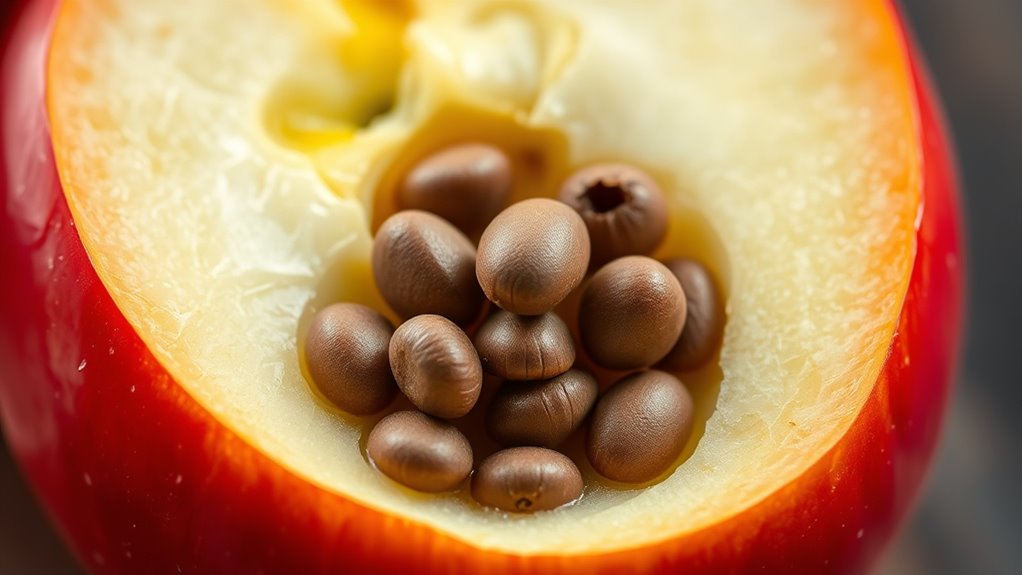
Are Apple Seeds Poisonous?
Are you someone who loves snacking on apples but worries about the seeds? You’re not alone—many people struggle with understanding if those tiny seeds are actually dangerous. It’s a common concern that can make enjoying your favorite fruit a little stressful.
Apple seeds contain amygdalin, which can release cyanide when chewed or crushed, making them potentially poisonous in large amounts.
However, small quantities from ordinary consumption are usually safe because your body can detoxify minor cyanide exposure. Swallowing seeds whole generally prevents cyanide release.
Keep in mind that chewing many seeds increases risk. If you’re curious about how much is safe and what signs to watch for, you’ll find out more below.
Key Takeaways
- Apple seeds contain amygdalin, which can release cyanide when chewed or crushed during digestion.
- Small amounts of crushed seeds usually don’t cause harm because the body can detoxify cyanide fairly well.
- Swallowing seeds whole generally prevents cyanide from being released, so accidental ingestion is usually safe.
- Eating large amounts of crushed seeds might be risky and could lead to cyanide poisoning, especially if done intentionally.
- Signs of cyanide poisoning include dizziness, nausea, and trouble breathing. If you suspect poisoning, get medical help right away.
Do Apple Seeds Contain Poisonous Cyanide?
Do apple seeds really contain poisonous cyanide? Many people wonder about apple seed toxicity and whether biting into a seed could be dangerous.
The truth is, apple seeds do contain small amounts of amygdalin, which can release cyanide when broken down during digestion. However, the cyanide myths often exaggerate the danger.
The amount of cyanide released from a typical apple seed is minimal, and you’d need to chew and swallow dozens of seeds at once to reach a harmful dose. Your body can usually detoxify small amounts of cyanide without issue.
Minimal cyanide is released from apple seeds; you’d need to chew dozens to pose a real health risk.
So, while apple seed toxicity is real in theory, accidental ingestion of a few seeds isn’t usually a cause for concern. The risk only becomes significant if you intentionally chew and swallow a lot of seeds.
Are Apple Seeds Cyanide Poisonous?
Apple seeds contain a compound called amygdalin, which can release cyanide when broken down during digestion. Despite this, eating a few seeds isn’t likely to cause harm because your body has safety mechanisms to handle small amounts.
Many myths say apple seeds are highly toxic, but in reality, small quantities are harmless for most people. Your digestive system can process minor amounts without any issues.
Here’s a quick look at seed safety:
| Seed Quantity | Potential Effect | Risk Level |
|---|---|---|
| 1-2 seeds | Minimal, unlikely | Very low |
| 10+ seeds | Possible concern | Low to moderate |
| Large amounts | Risk of toxicity | Higher risk |
How Do Apple Seeds Release Cyanide?
When you chew or crush apple seeds, there are enzymes inside that kickstart a chemical reaction, which ends up producing cyanide. So, basically, the seed’s structure contains these compounds called amygdalin, and when the seed gets damaged—like when you bite into it—they start to break down.
And once that happens, cyanide is released pretty quickly. That’s why eating a few seeds probably isn’t a big deal, but swallowing a large amount of them could be potentially toxic.
Cyanide Formation Process
Cyanide formation in apple seeds happens when the seed’s internal compounds break down during digestion or if the seed gets damaged. This involves cyanide chemistry where amygdalin is converted into hydrogen cyanide, or HCN.
When you chew or crush apple seeds, you expose the seed’s cells to digestion, releasing enzymes that start this conversion. The more you break the seed’s structure, the more cyanide could potentially form.
Here’s how it works:
- Crushing or chewing releases amygdalin.
- Enzymes activate during seed digestion.
- Amygdalin breaks down into cyanide and other compounds.
- Cyanide is then released into your digestive system but in small amounts.
Seed Crushing Effect
Crushing or chewing apple seeds breaks their protective outer shell, exposing the internal tissues to enzymes and digestive processes. This process, called seed extraction, lets enzymes access the seed’s internal compounds, including amygdalin.
Different crushing methods, like grinding with a mortar and pestle or biting into the seed, can vary in how effective they are. When the seed is cracked open, the amygdalin inside can be released and turned into cyanide through enzymatic reactions in your digestive system.
However, simply swallowing whole seeds usually prevents this because the tough shell stays intact, limiting enzyme access. Overall, the seed crushing effect plays a key role in how much cyanide is released from apple seeds during digestion.
How Does the Body Process Cyanide From Apple Seeds?
When you swallow apple seeds, your body begins to break down the compounds inside them that can release cyanide. It’s not something to worry about in small amounts, because your body has a way of handling it. The liver plays a key role here, working to detoxify the cyanide and turn it into less harmful substances that your body can safely get rid of.
Cyanide Release Mechanism
Once ingested, the small amount of cyanide released from apple seeds is processed by your body through a series of metabolic steps. When you swallow seeds, enzymes in your digestive system release cyanide from amygdalin, a compound in the seed. Your body then:
- Converts cyanide into a less harmful compound called thiocyanate.
- Uses enzymes like rhodanese to help with this detox process.
- Excretes thiocyanate through urine.
- Limits cyanide toxicity even with seed consumption, as only tiny amounts are released during digestion.
While cyanide toxicity can be dangerous in large doses, your body handles small quantities from apple seeds quite well. This makes seed eating generally safe.
This process shows why accidental seed ingestion rarely causes harm.
Body’s Detoxification Process
Your body has a pretty efficient way of neutralizing small amounts of cyanide from apple seeds. It mainly relies on your liver, which plays a key role in processing toxins. When cyanide gets into your system, your liver quickly turns it into thiocyanate, a less harmful substance your body can get rid of.
| Step | Process | Outcome |
|---|---|---|
| 1 | Cyanide absorption | Enters bloodstream |
| 2 | Liver metabolizes | Converts cyanide to thiocyanate |
| 3 | Circulation | Thiocyanate circulates freely |
| 4 | Elimination | Kidneys expel thiocyanate |
This process helps prevent a buildup of cyanide, so your body can handle small exposures from apple seeds safely.
Safety Thresholds and Risks
While your body can handle small amounts of cyanide from apple seeds, understanding the safety thresholds is important to gauge potential risks. Your body processes cyanide through detox pathways, but too much intake can become dangerous.
The average apple seed has about 0.6 mg of cyanide, and swallowing a few usually isn’t harmful. However, chewing multiple seeds releases more cyanide, which increases the risk.
The lethal dose for an adult is estimated at around 50 to 200 mg of cyanide. To stay safe, avoid consuming large quantities of seeds or crushing them intentionally.
Knowing these thresholds helps you make informed decisions and avoid crossing the poison threshold.
Which Factors Affect How Toxic Apple Seeds Are?
Several factors influence how toxic apple seeds can be if ingested. The seed variety plays an essential role; some apple types have seeds with higher cyanogenic compound levels, making them slightly more toxic.
Seed variety affects apple seed toxicity due to varying cyanogenic compound levels.
Furthermore, your consumption methods matter. Chewing seeds releases more cyanide compared to swallowing them whole, which might pass through your digestive system intact.
If you tend to swallow seeds without chewing, the risk diminishes because fewer toxins are released. The quantity of seeds consumed also impacts toxicity—eating a few seeds is less dangerous than ingesting large amounts regularly.
In addition, your body’s ability to detoxify cyanide varies from person to person, influencing how dangerous apple seeds are for you specifically.
How Many Apple Seeds Are Safe to Eat?
Ever wonder how many apple seeds you can eat without worrying? Well, it’s good to know that those seeds do contain cyanide, which can be toxic in large amounts. But don’t worry too much—small quantities are generally not a problem.
That said, eating a lot of seeds at once isn’t a great idea because it could increase your risk of getting sick from the cyanide. So, just like anything, moderation is key. Knowing these safe limits can help you enjoy your apples without any unnecessary worries!
Apple Seeds Contain Cyanide
Apple seeds contain small amounts of cyanide compounds called amygdalin, which can release toxic hydrogen cyanide when chewed or crushed. While this might sound scary, eating a few seeds usually won’t hurt you. Still, it’s good to know the risks.
A typical apple has about 5-8 seeds. It takes roughly 150-200 crushed seeds to reach a lethal dose. Swallowing seeds whole generally stops the cyanide from being released.
Apple seeds do have some benefits. They offer fiber, antioxidants, and trace nutrients, so they’re not just harmful. But it’s best to avoid crushing large amounts intentionally.
Accidentally swallowing a few seeds isn’t dangerous. Just remember, moderation is key for safety.
Safe Quantity Limits
While small amounts of crushed apple seeds are unlikely to cause harm, eating a limited number can significantly reduce health risks. Generally, enjoying a few seeds from an apple is considered safe, especially if you’re following typical dietary habits.
Experts suggest that consuming up to about 200 apple seeds, or roughly 10-15 seeds, is unlikely to lead to cyanide poisoning in most people. To stay safe, avoid intentionally eating large quantities of seeds and stick to normal eating patterns.
Remember, the cyanide compounds in the seed are only released when the seeds are crushed or chewed thoroughly. As a rule of thumb, moderation is key.
If you’re worried or have health conditions, it’s best to talk to a healthcare professional for personalized advice. Following these tips lets you enjoy apples safely without unnecessary health risks.
Risks of Excess Consumption
Although small amounts of crushed apple seeds are generally safe, eating large quantities can pose health risks because of the cyanide compounds they contain. To understand these risks, consider these points:
- Consuming more than a few dozen seeds might lead to cyanide buildup in your body.
- The toxicity of apple seeds varies depending on seed size and your individual sensitivity.
- Chewing the seeds releases cyanide, which increases the risk of poisoning.
- The amount needed to cause harm is much higher than what you’d typically get from a regular apple.
While accidental ingestion of a few seeds usually isn’t dangerous, it’s best to limit your seed intake for safe eating and to avoid health issues. Always be cautious with large amounts of apple seeds to prevent cyanide poisoning.
Can Apple Seeds Poison Children or Pets?
Have you ever wondered if apple seeds could be harmful to children or pets? The answer is generally no in small amounts. Apple seeds contain amygdalin, which can release cyanide when chewed or crushed.
However, accidental ingestion of a few seeds usually isn’t dangerous. Still, it’s important to think about children’s safety and pet health.
Here’s a quick look at potential risks:
| Situation | Seeds Consumed | Risk Level |
|---|---|---|
| Child eats a handful | Multiple seeds | Slight risk, unlikely harm |
| Pet swallows a few seeds | Small quantity | Very low risk, monitor |
| Child or pet chews seeds | Seeds crushed | Possible cyanide release |
While small amounts occasionally aren’t dangerous, larger or repeated ingestion can be risky. Always watch children and pets when around fruit to keep them safe.
How Can You Recognize Cyanide Poisoning Symptoms?
Recognizing cyanide poisoning symptoms quickly can make all the difference in getting prompt treatment. Spotting these signs early is crucial because the effects can escalate fast.
If you suspect cyanide exposure, keep an eye out for these symptoms:
- Rapid breathing or shortness of breath
- Confusion, dizziness, or loss of consciousness
- Nausea, vomiting, or stomach pain
- Chest tightness or weakness
These signs show how cyanide interferes with your body’s ability to use oxygen. The effects can be serious and may lead to unconsciousness or even death if not treated right away.
Being alert to these symptoms means you can seek urgent medical help and prevent serious health problems. Remember, quick action and recognizing the signs are key to managing cyanide poisoning effectively.
Should You Avoid Eating Apple Seeds Entirely?
Many people wonder if eating apple seeds is safe, especially after hearing about potential risks like cyanide poisoning. The truth is, apple seed benefits do exist, but they’re limited when it comes to safe consumption.
Small amounts of crushed or chewed seeds release trace amounts of cyanide, but you’d usually need to eat a large quantity to feel any harmful effects. For most people, eating a few apple seeds now and then isn’t dangerous.
Your body can naturally detoxify small doses of cyanide, so occasional consumption is generally safe. Still, intentionally swallowing lots of seeds isn’t a good idea because it could pose health risks.
If you love apples, it’s perfectly fine to remove the seeds or swallow them whole without chewing. This helps limit cyanide release and keeps things safe.
What Precautions Should You Take When Eating Apples?
What precautions should you take when eating apples to secure safety and maximize benefits? First, be aware of different apple varieties, as some may have thinner skins or higher pesticide residues. When handling seeds, avoid crushing or chewing them excessively since small amounts of amygdalin could release trace amounts of cyanide.
Always wash apples thoroughly to remove dirt and pesticides before eating. If you plan to eat apple seeds, do so in moderation, and consider removing them if you’re concerned about seed handling or potential toxins.
Always wash apples thoroughly and eat seeds in moderation to ensure safe, healthy enjoyment.
Here are four key precautions:
- Choose organic or thoroughly washed apples to reduce pesticide exposure.
- Limit seed consumption, especially if you have underlying health issues.
- Avoid crushing or biting seeds to prevent releasing toxins.
- Be mindful of apple varieties with thin skins or high pesticide use, which may require extra caution.
Following these steps helps ensure safe, enjoyable apple eating while minimizing risks.
Frequently Asked Questions
Are There Any Health Benefits to Eating Apple Seeds?
Eating apple seeds doesn’t offer significant health benefits and actually poses health risks due to trace amounts of cyanogenic compounds they contain. While apple seeds have some small amounts of fiber and nutrients, the potential release of cyanide can be harmful if you eat a lot of them.
It’s best to avoid intentionally eating apple seeds to prevent health risks. Enjoy the fruit without the core to get the most health benefits safely.
How Does Apple Seed Poisoning Compare to Other Fruit Seed Poisonings?
You might be surprised, but apple seed poisoning is actually pretty mild compared to other fruit seed toxicities.
Many fruit seeds contain cyanogenic compounds that release cyanide when chewed. However, apple seeds usually need to be consumed in large amounts to cause harm.
Unlike bitter almonds or apricot pits, which can be very toxic, apple seeds are generally low risk. This makes accidental poisoning rare and usually less serious.
Can Apple Seeds Cause Allergic Reactions Besides Cyanide Poisoning?
Apple seed allergies are rare, but some people with sensitivities might experience allergic reactions like itching, swelling, or difficulty breathing.
Besides cyanide sensitivity, which is unlikely from typical seed ingestion, these allergic responses are caused by proteins in the seeds.
If you have known food allergies or cyanide sensitivity, it’s best to avoid eating large quantities of apple seeds.
Always consult a healthcare professional for personalized advice.
What Are the Legal Regulations on Selling Apple Seeds?
You should know that seed sale regulations and apple seed safety are important considerations. Legally, selling apple seeds often isn’t heavily regulated because they’re generally considered safe for planting or novelty use.
However, some regions may have restrictions, especially if seeds are marketed for consumption. Always check local rules, and promote responsible use to stay compliant.
Following seed sale regulations helps protect consumers and ensures apple seed safety for everyone involved.
Are There Differences in Seed Toxicity Among Apple Varieties?
Yes, seed toxicity varies among apple varieties. Some apples have seeds with higher levels of amygdalin, which releases cyanide when chewed or crushed.
You might notice that certain apples, like tart or wild types, have slightly more toxic seeds than sweeter, cultivated varieties.
But in most cases, swallowing a few seeds accidentally isn’t harmful. Still, it’s best to avoid intentionally eating large amounts to stay safe.
Conclusion
Think of apple seeds as tiny, hidden treasures—each holding a potential secret. While they contain cyanide compounds, your body’s defenses usually keep you safe if you eat a few.
But just like unearthing a treasure chest, it’s wise to handle with care. Enjoy apples mindfully, savoring their sweetness without digging too deep into the seeds’ mysteries.
Are apple seeds poisonous? They contain compounds that can be harmful in large quantities, but eating a few generally isn’t dangerous.
So, while apple seeds aren’t something to fear, it’s best to consume apples thoughtfully. After all, life’s pleasures are best appreciated with respect and moderation.