Do You Know How to Grow Lemons From Seeds in 10 Steps?
Many gardening enthusiasts dream of growing their own fresh lemons at home but feel overwhelmed by where to start. You’re not alone—growing lemons from seeds can seem tricky, but with a little guidance, it’s actually quite simple and rewarding.
Growing lemons from seeds is straightforward and enjoyable. First, select healthy, ripe seeds from organic lemons, soak them in warm water for 24 hours, and prepare well-draining, slightly acidic soil.
Plant the seeds about half an inch deep, keep the soil moist, and place the container in a warm, bright spot.
Make sure to maintain proper humidity, fertilize regularly, and protect your young seedlings from pests.
If you follow these steps closely, you’ll be on your way to nurturing a thriving lemon tree right at home.
Key Takeaways
- Select healthy, ripe lemon seeds and soak them in warm water for 24 hours before planting.
- Use well-draining, slightly acidic soil and plant seeds about half an inch deep.
- Keep seedlings warm, humid, and in bright, indirect light during germination.
- Water consistently to keep the soil moist but not soggy, and fertilize every 4-6 weeks.
- Transplant seedlings once they have 2-3 true leaves, and gradually introduce them to outdoor conditions.
How to Select the Best Lemon Seeds for Planting
When selecting lemon seeds for planting, it’s important to choose high-quality, healthy seeds to give yourself the best chance of success. Start by considering the seed variety—look for seeds from mature, ripe lemons, ideally organic, to ensure strong genetics.
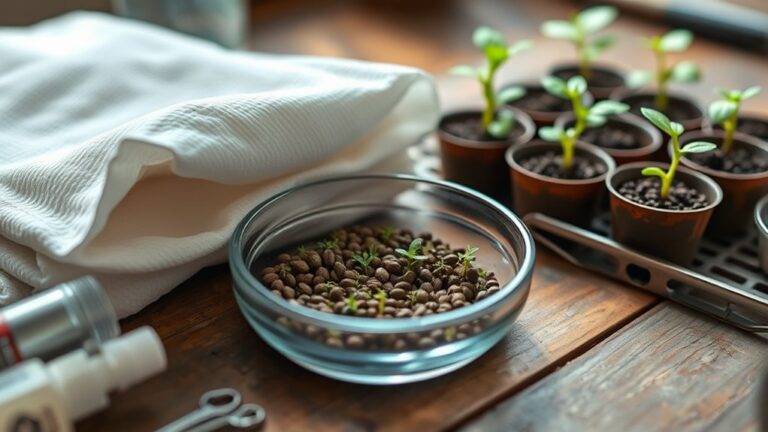
Healthy seeds are firm, plump, and free from mold or damage. To boost germination chances, try soaking the seeds in warm water for 24 hours to soften the seed coat and help them sprout faster.
Choose seeds with a shiny, smooth surface, as these tend to be more viable. Avoid seeds that are shriveled, discolored, or soft. Proper seed selection and preparation can significantly improve your odds of growing healthy lemon plants.
Prepare Your Soil or Growing Medium for Lemon Seeds
To give your lemon seeds the best start, pick a soil that drains well. You don’t want water sitting around the roots because that can cause problems. It’s also a good idea to check the pH level—aim for something slightly acidic to neutral, around 6.0 to 7.0. That way, your seeds will have the right environment to grow strong.
You can also boost your soil with some nutrients like compost or a balanced fertilizer. This will give your seedlings the extra support they need to develop healthy roots and leaves. Just keep these tips in mind, and your lemon seeds will be on their way to sprouting happily!
Choose Well-Draining Soil
Choosing the right soil is essential for healthy lemon seed growth because it guarantees proper drainage and prevents water from pooling around the roots.
You should select soil types that promote good drainage, such as sandy or loamy soils. Avoid heavy clay soils that tend to hold too much water.
To improve drainage, consider mixing organic matter or coarse sand into your soil. This helps excess water flow away quickly, preventing root rot and encouraging healthy roots.
Well-draining soil maintains consistent moisture levels without becoming waterlogged. When preparing your planting medium, aim for a good balance of nutrients and drainage capacity.
Getting the soil right and using proper drainage techniques will give your lemon seeds a strong foundation to thrive.
Adjust pH Levels Properly
Ensuring the correct pH level in your soil or growing medium is key for lemon seed development. It affects nutrient availability and overall plant health.
Start by testing your soil to see if it’s too acidic or alkaline. Most lemon plants grow best in a slightly acidic range of 5.5 to 6.5.
If your pH test shows it’s off, you can use soil amendments like lime to raise the pH or sulfur to lower it. Adjust gradually and retest after each change to avoid overcorrecting.
Proper pH balance helps nutrients dissolve properly, making sure your lemon seeds get what they need to grow strong.
Regular testing and timely amendments create an ideal environment for healthy seedling development.
Enrich Soil With Nutrients
Enriching your soil with essential nutrients lays the foundation for healthy lemon seed growth. You’ll want reliable nutrient sources like compost, aged manure, or organic fertilizers, which provide key elements like nitrogen, phosphorus, and potassium.
Mix in soil amendments to boost fertility and improve structure, making sure your soil drains well and gets enough air. These helps create a perfect environment for your seeds to germinate and grow strong.
It’s also a good idea to regularly test your soil to keep track of nutrient levels. Add more amendments if needed, but be careful not to overdo it, as too much fertilizer can damage young roots.
Plant Lemon Seeds Properly: A Step-by-Step Guide
To plant lemon seeds properly, start by preparing a suitable container filled with well-draining soil. Use a lightweight mix designed for seedlings, which helps healthy root growth.
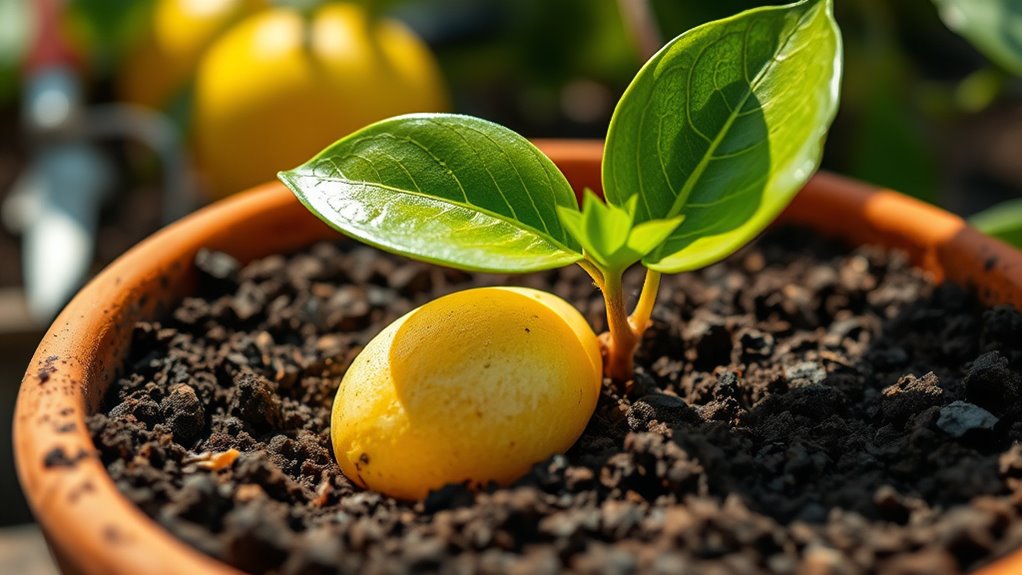
Before planting, gently extract the seed from the lemon, rinse off any pulp, and let it dry for a few hours. When you’re ready, plant the seed about half an inch deep, covering it lightly with soil.
Keep the soil moist but not waterlogged to encourage germination. Different seedling varieties may have different tips, so start with fresh seeds for better success.
Place the container in a warm, bright spot to give the seed the warmth it needs to sprout. Patience is key—germination can take anywhere from a few weeks to a month.
Keep the soil consistently moist and avoid disturbing the seedling during this delicate stage. Proper planting sets a strong foundation for healthy lemon plants to grow.
Water and Light Your Lemon Seedlings Correctly
To help your lemon seedlings grow strong, it’s all about getting their watering just right. Keep the soil moist, but be careful not to let it get soggy—that’s a surefire way to cause problems.
And don’t forget about the sunlight! They need plenty of bright, indirect light to thrive. Just be sure not to expose them to harsh, direct rays all day, as that can stress them out.
When you strike the right balance between water and light, your seedlings will stay healthy and grow happily.
Optimal Watering Techniques
Are you watering your lemon seedlings just right? Proper watering is key to healthy growth. You should use drainage methods that prevent water from pooling at the bottom of your containers, like making sure there are proper holes and drainage layers.
Overwatering can lead to root rot, so let the top inch of soil dry out before watering again. Humidity control is also important; keeping humidity at moderate levels prevents drying out or excess moisture.
Use a spray bottle to mist seedlings if the air is dry, and avoid over-wetting the soil. Water early in the day so any excess moisture can evaporate.
Ideal Light Conditions
Making sure your lemon seedlings get the right amount of light is key for healthy growth. They need plenty of sunlight, ideally around 8-12 hours each day.
If you’re growing them indoors, good lighting is a must. Place your seedlings near a south-facing window to maximize natural light.
If natural light is limited, consider using grow lights designed for indoor plants. Keep the lights at a proper distance to avoid leaf scorch or too little light.
Consistent, adequate light helps develop strong stems and vibrant leaves, which will support better fruit production later on.
Preventing Overexposure
While providing enough light is important, overexposure can harm your lemon seedlings just as much as too little light. Too much direct sun can cause leaf scorch, dehydration, or stunted growth.
To prevent overexposure, start by placing your seedlings in bright, indirect light and gradually increase their sun exposure over time. Use a sheer curtain or shade cloth during the hottest part of the day to protect them from intense sunlight.
Monitor your seedlings closely. If the leaves turn yellow or curl, reduce their sun exposure immediately. Proper watering also helps because dry soil can make seedlings more vulnerable to sun damage.
Balancing light and water ensures healthy growth and helps prevent the risks associated with overexposure.
Keep Your Lemon Seedlings Warm and Humid for Best Growth
To promote healthy growth, keep your lemon seedlings warm and humid, especially in the early stages. Proper humidity helps prevent drying out and encourages strong root development.
Use a clear plastic cover or mini greenhouse to trap moisture and create a humid environment. Place your seedlings near warmth sources like a heating pad or a sunny window for consistent warmth.
Avoid sudden temperature changes, which can stress the young plants. Keep the soil moist but not waterlogged, and check regularly to maintain the right humidity.
If your space is dry, lightly mist the seedlings or use a humidifier to add moisture. Creating a warm, humid environment gives your lemon seedlings the best chance to thrive and grow into healthy trees.
When and How to Transplant Lemon Seedlings Outdoors or Into Larger Pots
You should transplant your lemon seedlings once they’ve grown a few strong leaves and seem sturdy enough to handle the move. It’s really important to get the timing right—wait until the weather is consistently warm, or when your seedlings are ready to go into a bigger pot or outdoors.
When it’s time to transplant, be gentle with those roots. Loosen them carefully without causing any damage. And remember, plant them at the same depth they were in their previous container—this helps ensure they stay healthy and continue to grow strong.
Timing for Transplanting
Timing is essential when transplanting lemon seedlings, as doing so too early or too late can stress the plants or hinder their growth. Proper timing ensures your seedlings develop strong roots and healthy foliage.
Wait until your seedlings have at least 2-3 sets of true leaves and look vigorous before moving them outdoors or into larger pots. Keep an eye on weather conditions and avoid transplanting during frost or extreme heat.
During seedling care, verify the soil is warm, well-draining, and slightly acidic. Monitor weather forecasts for ideal conditions and watch for healthy, sturdy seedlings.
Transplant at the right moment to give your lemon trees the best start.
Proper Transplantation Techniques
Knowing the right moment and method to transplant lemon seedlings is key to their survival and growth. Proper techniques depend on transplant timing, usually when the seedling has a strong root system and feels sturdy enough to handle change.
Carefully remove the seedling from its current container, making sure not to damage the roots. Gently loosen the root ball if it’s compacted to encourage healthy root development.
When transplanting outdoors, pick a warm, sheltered spot with well-draining soil. For larger pots, ensure they have drainage holes and use quality soil. Position the seedling at the same depth it was growing before, then water thoroughly afterward.
Proper timing and careful handling support healthy root growth, which leads to a thriving lemon tree.
Fertilize and Care for Your Growing Lemon Tree
Proper fertilization is crucial for your lemon tree’s healthy growth and abundant fruit production. Use a balanced fertilizer every 4-6 weeks during the growing season, adjusting as needed based on your tree’s response.
Make sure the soil stays moist but not waterlogged. Regularly inspect your tree for pests, and practice effective pest management to prevent damage.
Proper pruning techniques are also important; remove dead or crossing branches to improve airflow and light exposure, which encourages strong growth.
To keep your lemon tree thriving, remember these key points:
- Apply fertilizer consistently and follow the package instructions
- Use pruning techniques to shape the tree and promote healthy growth
- Monitor for pests regularly and manage infestations promptly
Troubleshoot Common Lemon Seedling Problems
When caring for lemon seedlings, it’s common to face some issues that can slow down their growth. Seedling diseases like damping-off can cause the seedlings to rot at the soil line, so make sure you have good drainage and avoid overwatering.
Pests like aphids or fungus gnats may attack your young plants. Use gentle pest control methods such as neem oil or insecticidal soap to keep them at bay.
Nutrient deficiencies, like a lack of nitrogen or iron, can cause yellowing leaves or poor growth. Fix this by providing a balanced fertilizer to give your seedlings the nutrients they need.
Environmental stressors like too much sun, wind, or inconsistent watering can stunt your seedlings’ development. Protect your young plants from harsh conditions, keep watering steady, and maintain stable temperatures.
Regularly check your seedlings for signs of trouble. Acting quickly to manage pests, diseases, or nutrient gaps will help them stay healthy.
Staying attentive and adjusting your care as needed will give your lemon seedlings the best chance to thrive and grow into healthy trees.
Encourage Flowering and Fruit Production in Your Lemon Tree
After guaranteeing your lemon seedlings are healthy and free from pests or diseases, you can focus on encouraging them to produce flowers and fruit. To promote flowering, make sure they get at least 6-8 hours of sunlight daily and keep the watering consistent.
Fertilize with a balanced citrus-specific fertilizer to provide the essential nutrients for blooming and fruiting. Pruning is also important; remove dead or weak branches to improve air circulation and stimulate new growth.
Use fruiting strategies like thinning out overly crowded branches to allow better light penetration and airflow. This encourages more flowers and fruit. Keep an eye on your tree’s health and avoid overwatering, which can hinder flowering.
Regularly check for pests that might damage blossoms or young fruit. By applying these flowering techniques and fruiting strategies, you’ll help maximize your lemon tree’s potential for abundant blossoms and juicy harvests.
Keep Your Lemon Tree Healthy and Productive Year-Round
To keep your lemon tree healthy and productive year-round, establish consistent care routines that support its growth through all seasons. Regular watering is key, but be careful not to overdo it to avoid root rot.
Fertilize with a balanced citrus fertilizer to provide essential nutrients. Adjust watering and fertilizing based on the weather—more during the growing season, less during dormancy.
Pest management is important. Regularly check your tree for pests like aphids or scale insects, and treat infestations quickly with insecticidal soap or neem oil.
Prune dead or crowded branches to improve air circulation and sunlight. This helps reduce disease risk and keeps your tree healthy.
Protect your lemon tree from extreme weather, such as frost, with covers or heaters if necessary. Consistent seasonal care and pest control will help your tree stay healthy, flourish, and produce plenty of fruit year-round.
Frequently Asked Questions
How Long Does It Take for Lemon Seeds to Produce Fruit?
It takes about 3 to 6 years for lemon seeds to produce fruit, depending on growing conditions. After germination, your lemon tree needs proper care, sunlight, and patience.
Consistent watering and fertilizing help support healthy growth, which eventually leads to fruiting. Keep in mind, some lemon varieties might take longer, but with dedication, you’ll enjoy fresh lemons from your seed-grown tree in a few years.
Can Lemon Seeds Grow Into True-To-Parent Fruit?
Growing lemon seeds into true-to-parent fruit is unlikely because of genetic variability, even if seed viability is high.
For example, you might plant seeds from a beautiful, sweet lemon, but the resulting tree could produce sour or different-tasting fruit.
This happens because each seed carries genetic variability, which means the fruit may not match the parent lemon’s qualities.
To guarantee true-to-parent fruit, grafting is the best option.
What Are the Common Pests Attacking Young Lemon Trees?
You’ll often face pests like aphids, scale insects, and citrus leaf miners attacking young lemon trees. Identifying these pests early is key so you can take action quickly.
Use organic treatments like neem oil, insecticidal soap, or even introduce natural predators like ladybugs. Regularly inspect your trees, especially new growth, to catch problems early.
Keep your garden clean to prevent pest infestations and help ensure healthy lemon development. Staying proactive makes all the difference in protecting your young trees.
How Do I Prevent Lemon Seedling Diseases?
Think of your lemon seedling as a fragile new star in your garden sky. To prevent diseases, you need to give it proper care—like ensuring well-draining soil, consistent watering, and good air circulation.
Keep an eye out for pests and mold, and remove any affected leaves. Using organic fungicides and avoiding overwatering can also help prevent disease.
Your attentive care nurtures this star’s growth, keeping it healthy and vibrant against the darkness of disease.
Is It Necessary to Graft Lemon Trees for Better Fruit Quality?
Grafting lemon trees isn’t necessary, but it can really improve fruit quality. Using methods like whip and tongue or cleft grafting helps you combine a healthy rootstock with a high-quality scion.
This process ensures better fruit size, flavor, and disease resistance. If you want consistent, premium lemons, grafting is definitely worth considering.
Otherwise, growing lemon trees from seed can still give you edible fruit, but the quality might vary.
Conclusion
So, after all this effort—picking the perfect seed, nurturing it through warmth, light, and love—you might just find yourself with a lemon tree. Irony, isn’t it? You started with a tiny seed and now you’re patiently waiting for fruit, as if nature has all the time in the world.
But hey, the journey’s worth it, even if the lemons take their sweet time. Who knew growing citrus could be such a test of patience?
In the end, growing lemons from seeds can be a rewarding experience. It’s a slow process, but with dedication, you’ll eventually have your own lemon tree.