Role of Sesame Seeds in a Healthy Diet
Many people struggle to find small, simple ways to boost their health every day. If you’re looking for an easy addition to your diet that packs a punch, sesame seeds are a great choice.
Sesame seeds are a nutritious addition to your diet, providing healthy fats, fiber, and essential minerals like calcium and magnesium that support your bones, heart, and immune system.
They help lower cholesterol, fight inflammation, and promote healthy skin and hair. You can enjoy them in many ways, from salads to baked goods.
Incorporating different types like black or white seeds can boost your health even more—discover how to get the most from these tiny powerhouses.
Key Takeaways
- Sesame seeds are packed with nutrients, offering healthy fats, protein, fiber, and essential minerals that support your overall health.
- They help promote heart health by improving cholesterol levels and reducing inflammation thanks to omega-6 fatty acids and antioxidants.
- Their rich mineral content, including zinc, magnesium, and selenium, boosts your immune system and protects your cells from oxidative stress.
- Sesame seeds also enhance skin and hair health with essential fatty acids and antioxidants that fight aging and dryness.
- Adding sesame seeds to your meals is a tasty and versatile way to boost your nutrition and maintain a balanced diet.
Nutritional Benefits of Sesame Seeds
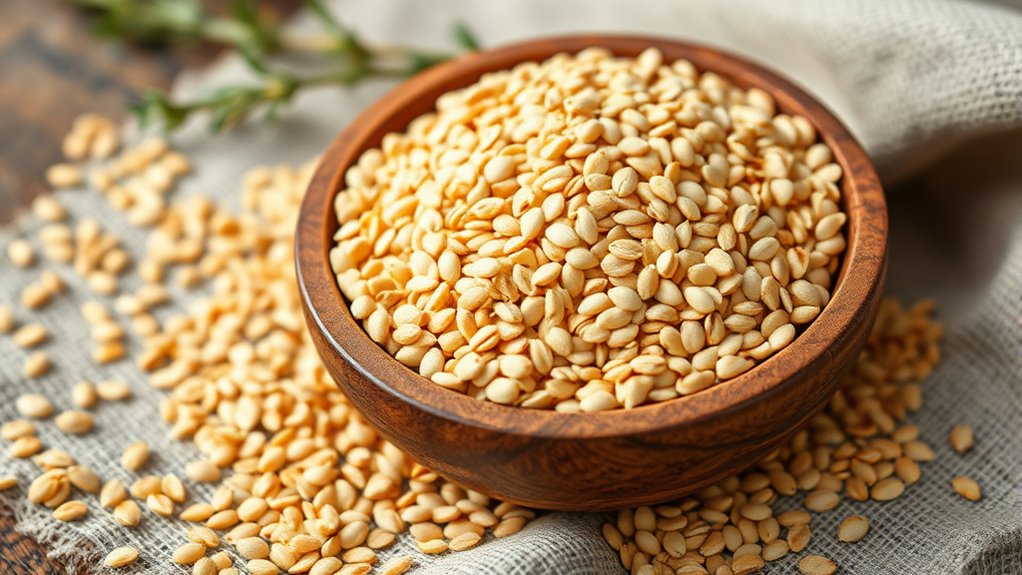
Sesame seeds are a small but mighty addition to your diet, packed with essential nutrients that support overall health. With various sesame varieties, you can enjoy different flavors and textures, making them versatile for many dishes.
These tiny seeds are rich in healthy fats, protein, fiber, and important minerals like calcium, magnesium, and iron. Incorporating sesame seeds into your meals boosts bone strength, improves digestion, and promotes heart health.
Rich in healthy fats, protein, fiber, and essential minerals, sesame seeds boost bone, digestion, and heart health effortlessly.
Their role in various culinary traditions worldwide highlights their nutritional value, from Middle Eastern tahini to Asian sesame oil. Eating sesame seeds regularly provides antioxidants that combat inflammation and oxidative stress.
Whether sprinkled on salads, added to baked goods, or used as an oil, these seeds elevate your diet both nutritionally and flavor-wise. Their compact size makes it easy to incorporate them into daily routines, ensuring you reap their many health benefits effortlessly.
Are Sesame Seeds Safe? Potential Allergies and Precautions
Are sesame seeds safe for everyone to consume? For most people, they are a healthy addition to your diet. However, some individuals may experience allergy symptoms, such as hives, swelling, or difficulty breathing.
If you have a history of nut or seed allergies, it’s wise to introduce sesame seeds gradually and monitor your body’s response. Cross contamination is also a concern, especially if seeds are processed in facilities that handle nuts or other allergens.
Always check labels carefully and buy from reputable sources to reduce this risk. Keep in mind that sesame seed allergies can be severe, so seek medical advice if you suspect an allergy.
Pregnant women and those with compromised immune systems should exercise extra caution. While sesame seeds are nutritious, understanding potential allergies and avoiding cross contamination helps guarantee they’re a safe part of your healthy diet.
Different Types of Sesame Seeds: Black, White, and Golden – Uses and Benefits
There are actually a few different types of sesame seeds—black, white, and golden—and each one has its own unique flavor and nutritional perks. It’s pretty interesting to see how they each bring something special to the table, whether you’re cooking or just looking to boost your health.
Black sesame seeds tend to have a richer, nuttier flavor and are often used in Asian dishes and desserts. They’re packed with antioxidants and calcium, making them great for bone health and overall wellness. White sesame seeds are more common and have a milder taste, perfect for sprinkling on salads, bread, or sushi. They’re also a good source of healthy fats and protein. Golden sesame seeds sit somewhere in the middle—they look beautiful and add a nice flavor to baked goods and garnishes.
Getting to know these differences can really help you pick the right sesame seeds for your recipes and nutritional goals. Whether you want something with a bold flavor or a more subtle taste, there’s a sesame seed variety that fits. Plus, knowing their benefits makes it easier to include them regularly in your diet for a tasty and healthy boost.
Nutritional Profile Variations
The nutritional profiles of sesame seeds vary quite a bit depending on their type, offering different benefits for your diet. Black, white, and golden sesame seeds each have unique nutritional features influenced by how they are processed.
For example, black sesame seeds tend to have higher levels of antioxidants and calcium, which are great for supporting bone health. White sesame seeds usually have a milder flavor and slightly different nutrients, like healthy fats and fiber.
Golden sesame seeds are often a blend or processed version, which can change their nutrient density. These differences show how processing impacts how nutrients are retained and how available they are to your body.
Culinary Uses Differences
Each type of sesame seed brings its own unique flavor and texture to dishes, influencing how you can incorporate them into your cooking. Sesame seed varieties like black, white, and golden seeds each have distinct culinary uses.
White sesame seeds, with their mild, nutty flavor, are perfect for baking or garnishing salads. Black sesame seeds add a richer, more robust taste, making them ideal for Asian dishes and desserts.
Golden sesame seeds, often toasted, bring a warm, toasty flavor suitable for both savory and sweet recipes. Your culinary techniques can vary based on the seed type—such as roasting, grinding, or sprinkling—allowing you to improve flavor, texture, and visual appeal in diverse dishes.
Experimenting with these sesame seed varieties helps you create more flavorful and visually appealing meals.
Health Benefits Comparison
Building on the culinary distinctions among sesame seed varieties, understanding their health benefits can help you make more informed choices for your diet. Sesame varieties like black, white, and golden seeds each offer unique health comparisons.
Black sesame seeds are rich in antioxidants, calcium, and iron, supporting bone health and immune function. White sesame seeds are milder and contain healthy fats that promote heart health. Golden sesame seeds, often considered a variety of white seeds, have similar benefits but are prized for their flavor and aroma.
While all sesame varieties provide fiber and protein, black seeds tend to have higher antioxidant levels. Choosing different types based on their health benefits allows you to explore your nutrient intake and maximize your diet’s nutritional value.
How Sesame Seeds Support Heart Health
Want to give your heart a little extra love? Including sesame seeds in your diet is a great way to do that! They’re packed with healthy fats that are good for your cardiovascular health. Plus, they contain nutrients that help keep your blood vessels happy and reduce inflammation in your body.
And here’s the best part: sesame seeds can actually help lower your cholesterol levels, which is super important for protecting your heart in the long run. So, toss some into your salads, yogurt, or smoothies — your heart will thank you!
Rich in Healthy Fats
Sesame seeds are packed with healthy fats that support heart health. They provide your body with essential nutrients that promote overall well-being.
These seeds contain omega-6 fatty acids, which are important for maintaining cell structure and regulating inflammation. Eating sesame seeds regularly can help improve your cholesterol levels by increasing HDL (good) cholesterol and lowering LDL (bad) cholesterol.
Including them in your diet is an easy way to boost your healthy fat intake without relying on processed oils. Just remember, moderation is key. Adding sesame seeds to salads, yogurt, or snacks can really help you stick to a heart-healthy diet.
Contains Heart-Boosting Nutrients
Because they are packed with heart-healthy nutrients, sesame seeds can really support your cardiovascular health. These tiny seeds provide essential nutrients like magnesium, fiber, and healthy fats that benefit your heart.
The benefits of sesame seeds go beyond basic nutrition. They help keep blood vessels healthy and reduce inflammation. Adding sesame seeds to your diet can boost blood circulation and lower your risk of heart problems.
Here’s a quick look at some key nutrients:
| Nutrients | Benefits for Heart Health | Food Sources |
|---|---|---|
| Magnesium | Regulates blood pressure | Nuts, seeds |
| Fiber | Lowers cholesterol | Whole grains |
| Healthy fats | Reduce inflammation | Sesame seeds |
| Antioxidants | Prevent cell damage | Sesame seeds |
| Phytosterols | Support cholesterol balance | Nuts, seeds |
Reduces Cholesterol Levels
Cholesterol levels are key to keeping your heart healthy, and sesame seeds can help with that. They have lignans and phytosterols that help manage cholesterol by blocking its absorption in your intestines.
Adding sesame seeds regularly to your meals may lower LDL (bad cholesterol) and boost HDL (good cholesterol), which can lower your risk of heart problems. The healthy fats in sesame seeds also support better lipid levels.
Boosting Immunity With Sesame Seeds
Adding sesame seeds to your diet can give your immune system a notable boost, thanks to their rich nutrient profile. These tiny seeds contain essential minerals like zinc, magnesium, and selenium, which help support immune function and fight off infections.
Sesame seeds also have impressive antioxidant properties that protect your cells from damage caused by free radicals. Eating them regularly can strengthen your immune defenses by reducing oxidative stress and inflammation.
Their high content of phytochemicals, such as sesamin and sesamol, further enhances their ability to boost immunity. You can sprinkle sesame seeds on salads, yogurt, or stir-fries for an easy, nutritious upgrade.
Incorporating these seeds into your daily meals ensures you’re giving your body vital nutrients that promote a resilient immune system. With consistent intake, sesame seeds can be a simple yet powerful addition to your health routine, helping you stay stronger and healthier.
How Sesame Seeds Promote Healthy Skin and Hair
Building on how sesame seeds strengthen your immune system, their benefits also extend to your skin and hair health. The rich essential fatty acids in sesame seeds boost skin hydration, making your skin look plump and youthful. Their antioxidant properties fight free radicals, helping to prevent age-related lines and wrinkles.
Sesame seeds promote scalp health and nourish your hair, reducing dryness and breakage. Their anti-inflammatory effects soothe irritated skin and scalp, supporting natural remedies for skin conditions.
The table below shows these benefits visually:
| Skin Benefits | Hair Benefits |
|---|---|
| Skin hydration | Hair nourishment |
| Anti-inflammatory effects | Scalp health |
| Age-defying benefits | Natural remedies |
Adding sesame seeds to your diet is an easy way to enjoy these benefits and achieve healthier, more vibrant skin and hair.
Easy Ways to Add Sesame Seeds to Your Daily Meals
Incorporating sesame seeds into your daily meals is simple and versatile. You can sprinkle them on salads for added crunch and nuttiness or mix them into homemade dressings to boost flavor and nutrition.
When baking bread or muffins, toss in sesame seeds for a subtle, toasted taste. Snack bars and energy bites often feature sesame seeds to improve texture and provide healthy fats.
Add them to smoothie bowls for a nutty finish or sprinkle over breakfast cereals for extra crunch and nutrients. Stir fry dishes benefit from a handful of sesame seeds, which add flavor and visual appeal.
You can also incorporate sesame seeds into your morning routine by mixing them into yogurt or oatmeal. Their mild, nutty flavor complements many ingredients and dishes, making it easy to include sesame seeds effortlessly into your daily diet.
With these simple tips, you’ll enjoy the health benefits of sesame seeds every day.
How Much Sesame Seeds Should You Eat?
Consuming about one to two tablespoons of sesame seeds daily is usually enough to enjoy their health benefits without going overboard. This amount gives you a good balance, making sure you get essential nutrients without extra calories.
One to two tablespoons of sesame seeds daily provide essential nutrients without excess calories.
The right daily intake can vary based on your overall diet, but sticking to one or two tablespoons helps you avoid too much fat or calories. Keep in mind, sesame seeds are calorie-dense, so moderation is important.
If you sprinkle them on salads, yogurt, or stir-fries, a single tablespoon can easily fit into your daily routine. Remember, the goal is to include sesame seeds as part of a balanced diet, not to rely solely on them for nutrition.
Adjust your intake based on your dietary needs and preferences, but generally, one to two tablespoons per day works well for most people. This way, you get the health benefits without overdoing it.
Scientific Evidence Behind Sesame Seeds’ Health Benefits
Research increasingly supports the health benefits of sesame seeds, providing scientific evidence that backs up their traditional uses. Studies show that sesame seeds contain powerful antioxidant properties, which help fight oxidative stress and protect our cells. They also have anti-inflammatory effects, potentially lowering the risk of chronic diseases.
These properties make sesame seeds great for supporting heart health, boosting immune function, and reducing inflammation-related conditions. Overall, the evidence shows sesame seeds are a nutritious addition to a healthy diet.
| Benefit | Evidence |
|---|---|
| Antioxidant properties | Neutralize free radicals and protect cells |
| Anti-inflammatory effects | Reduce inflammation and support joints |
| Heart health | Lower blood pressure and improve cholesterol levels |
Tips for Buying and Storing Sesame Seeds for Maximum Nutrition
Are you getting the most nutritional value from your sesame seeds? Start with smart buying tips: choose fresh, whole seeds that look plump and shiny. Avoid those with a dull appearance or broken shells.
Opt for organic if possible, as it reduces exposure to pesticides. When buying, check the expiration dates and buy smaller quantities to ensure freshness.
Proper storage methods are key to maintaining nutrition. Keep sesame seeds in airtight containers, away from light, heat, and moisture—preferably in a cool, dark pantry or refrigerator.
If stored correctly, seeds stay fresh longer and keep their healthy fats and nutrients. Avoid storing them near strong-smelling foods because seeds can absorb odors.
Regularly check your sesame seeds and discard any that develop a rancid smell or mold. Following these simple tips helps maximize their health benefits and keeps them fresh longer.
Frequently Asked Questions
Can Sesame Seeds Help With Weight Loss?
Yes, sesame seeds can help with weight loss. Their benefits include being rich in healthy fats, fiber, and protein, which can help you feel full and eat less overall.
Even though they have calories, their nutrient density means you get more nutrition with fewer calories, helping you stay satisfied longer. Just be mindful of portion sizes, as their calorie content can add up.
Are There Any Side Effects of Consuming Sesame Seeds Regularly?
Consuming sesame seeds regularly can cause allergic reactions in some people, leading to symptoms like itching, swelling, or difficulty breathing.
Eating too many might also cause digestive issues such as bloating or constipation.
If you notice any adverse effects, it’s best to cut back on your intake and talk to a healthcare professional.
Moderation is key to enjoying sesame seeds safely without risking these side effects.
Do Sesame Seeds Contain Any Harmful Substances or Contaminants?
You might worry about harmful substances, but sesame seeds generally have low toxicity levels.
However, contamination from pesticides, dirt, or mold can be a concern if the seeds aren’t properly sourced or processed.
Always choose high-quality, organic sesame seeds, and wash or roast them before eating.
This helps reduce potential contaminants, so you can enjoy their health benefits safely without fearing harmful substances or contaminants.
How Do Sesame Seeds Compare to Other Superfoods Nutritionally?
Compared to other superfoods, sesame seeds are packed with nutrients, providing healthy fats, protein, and fiber. They’re a great all-around choice for boosting your intake of essential nutrients.
They also stand out for their antioxidant properties, which help protect your cells from damage. While some superfoods excel in specific nutrients, sesame seeds offer a balanced mix that makes them versatile in any diet.
Their unique combination of nutrient density and antioxidants supports overall health, rivaling many other superfoods. Plus, they’re easy to add to a variety of dishes, making them a convenient superfood option.
Can Sesame Seeds Be Included in a Gluten-Free Diet?
Absolutely, you can include sesame seeds in a gluten-free diet—they’re a versatile ingredient and a true gluten alternative. Think of sesame benefits as a tiny powerhouse packed with healthy fats, protein, and fiber.
Adding sesame seeds to your meals can enrich flavor and nutrition without worry. Their natural gluten-free status makes them a perfect addition, helping you enjoy diverse, wholesome options while sticking to your diet.
Conclusion
Incorporating sesame seeds into your diet is like adding a tiny treasure chest of health to your daily routine. Their rich nutrients and versatile uses can help boost your immunity, support heart health, and elevate your meals effortlessly.
Just remember to enjoy them in moderation and choose quality seeds for maximum benefits. Think of sesame seeds as small but mighty allies, quietly working behind the scenes to keep your health flourishing like a well-tended garden.
Incorporating sesame seeds into your diet is a simple way to enhance your overall health and wellbeing.