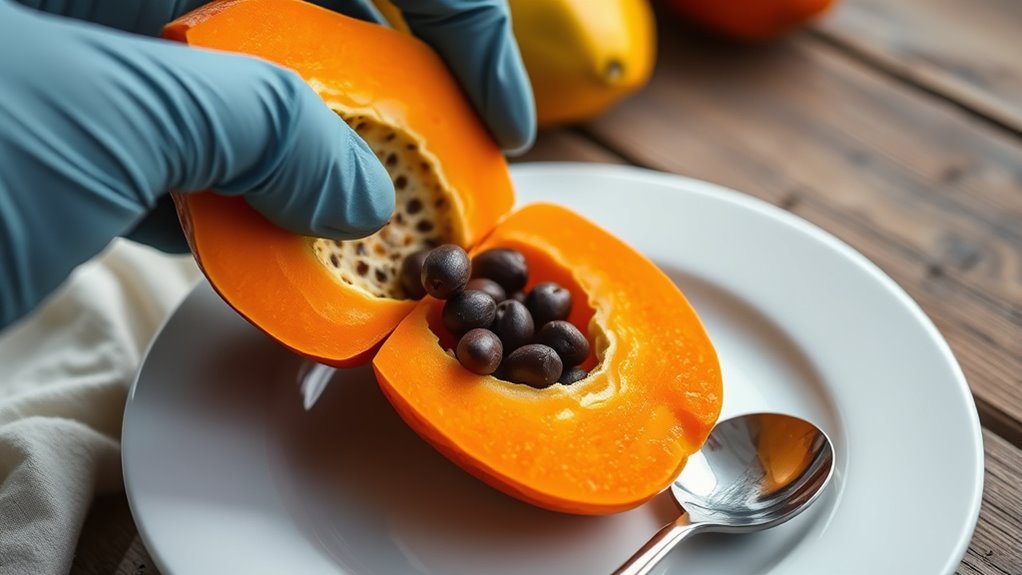
How to Eat Pawpaw Seeds – A Step-by-Step Guide
Many people love pawpaw for its delicious, tropical flavor, but figuring out how to enjoy every part of the fruit can be tricky.
If you’re worried about how to handle those tough seeds, you’re not alone—lots of folks wonder if they should toss them or find a way to eat them safely.
To eat pawpaw seeds safely, start by choosing ripe fruits that feel soft and emit a sweet aroma.
Carefully remove the seeds, rinse off the pulp, and dry them. You can roast the seeds for a crunchy snack or boil them for a milder flavor.
Be sure to remove the outer shell thoroughly to avoid choking.
If you keep exploring, you’ll uncover tips on preparation, safety, and creative ways to enjoy pawpaw seeds.
Key Takeaways
- Carefully remove seeds from the ripe pawpaw fruit, avoiding damage, and rinse thoroughly under cool water.
- Dry the seeds completely to prevent mold, then store them in an airtight container if you’re not using them right away.
- Choose how you want to prepare the seeds: roast them for a crunchy snack or boil and mash for a softer texture.
- Start with small amounts to see how your body reacts and check for any allergic reactions before eating larger portions.
- You can add the prepared seeds to smoothies, salads, or baked goods for extra nutrition and flavor.
How to Identify Ripe Pawpaw Fruits for Harvest
To harvest pawpaw fruits at their peak flavor, you need to learn how to identify when they’re ripe. The key is understanding the harvest timing and signs of fruit ripeness.
Typically, pawpaws are ready to pick when they feel soft to the touch, similar to a ripe avocado. The skin color varies from green to yellowish or brown, depending on the variety, but color alone isn’t enough.
Instead, focus on the fruit’s firmness and aroma. Ripe pawpaws emit a sweet, fruity smell that signals they’re ready to harvest. You might also notice some slight give when gently pressed, indicating ripeness.
Keep an eye on the fruit’s size; it should be fully developed but not overripe or shriveled. Knowing these subtle cues will help you time your harvest perfectly, ensuring you pick pawpaws at their peak flavor and ideal ripeness.
Cleaning and Preparing Pawpaw Seeds for Eating
Start by removing the seeds from the pawpaw fruit carefully, making sure you don’t damage them. Once extracted, it’s crucial to clean the seeds thoroughly to remove any fruit residue. Proper cleaning helps preserve seed storage and maintains seed flavor. Next, follow these steps:
Carefully remove and thoroughly clean pawpaw seeds to preserve their flavor and ensure proper storage.
- Rinse the seeds under cool running water to wash away pulp and sap.
- Use a soft brush if needed to scrub off stubborn bits of fruit.
- Pat the seeds dry with a clean towel to prevent mold during storage.
- Store the cleaned seeds in an airtight container in a cool, dry place if you’re saving them for future planting or consumption.
Cleaning your pawpaw seeds properly guarantees they stay fresh and flavorful. Avoid leaving fruit residue on the seeds, as it can affect seed storage and diminish seed flavor over time. Preparing seeds with care is key to enjoying their full taste and potential.
What Are the Best Methods to Prepare Pawpaw Seeds?
Once your pawpaw seeds are cleaned and dried, the best way to prepare them depends on how you want to enjoy their flavor and potential benefits. If you’re into cooking, you can grind the seeds into a powder for smoothies or baking, adding nutrition and a unique taste.
For a more straightforward approach, try crushing or chopping the seeds to sprinkle over salads or yogurt. Seasonal availability affects when you gather fresh seeds, but dried seeds are available all year round.
Here’s a quick guide to popular methods:
| Method | Description |
|---|---|
| Grinding into Powder | Great for baking or blending into drinks |
| Crushing or Chopping | Perfect for salads, yogurt, or toppings |
| Soaking and Fermenting | Improves flavor and cuts bitterness |
| Roasting | Adds crunch and a nutty flavor (we’ll talk more later) |
These methods give you different ways to enjoy pawpaw seeds and explore your culinary creativity.
How to Roast Pawpaw Seeds for a Nutty Snack
Roasting pawpaw seeds transforms their texture and flavor, creating a crunchy, nutty snack you’ll enjoy. To get that perfect nutty flavor, follow these roasting tips:
- Preheat your oven to 350°F (175°C).
- Rinse and dry the seeds thoroughly, making sure to remove any leftover pulp.
- Spread the seeds evenly on a baking sheet, avoiding overlap for even roasting.
- Roast for 15-20 minutes, stirring occasionally so they cook evenly.
Keep an eye on the seeds—they should turn golden brown and give off a fragrant aroma. This process boosts their nutty flavor and crispiness. Let the seeds cool before tasting. You can enjoy them as a snack on their own or sprinkle over salads for some extra crunch.
Using proper roasting techniques ensures you get the best flavor and texture from pawpaw seeds, making them a satisfying and healthy treat.
Boiling and Roasting Pawpaw Seeds: Which Tastes Better?
Have you ever wondered which method—boiling or roasting—brings out the best flavor and texture in pawpaw seeds? The answer depends on your taste preference and the cooking techniques you prefer.
Boiling tends to create a softer texture and a milder flavor, making the seeds less bitter and easier to chew. It’s a simple method that retains moisture, which can improve the natural nutty taste.
Boiling yields softer seeds with milder flavor and enhanced nutty taste.
Roasting, on the other hand, produces a crunchier texture and a richer, more intense flavor. The high heat caramelizes the natural sugars, giving the seeds a toasted aroma and deeper flavor comparison.
If you enjoy a more robust, roasted flavor with added crunch, roasting might be your go-to. However, if you’re after a subtler, softer seed, boiling is the better choice.
Ultimately, both cooking techniques have their merits, so it’s worth trying both to see which tastes better to you.
Are Raw or Dried Pawpaw Seeds Safe to Eat?
You might be curious about whether raw or dried pawpaw seeds are safe to eat. They do have some pretty impressive nutritional benefits, like healthy fats and various nutrients that can be good for you. But at the same time, it’s important to be aware that they also contain certain compounds that could be toxic if you eat too many.
Nutritional Content of Seeds
Pawpaw seeds are often overlooked for their nutritional value, but they contain a variety of compounds worth considering. They’re rich in nutrients that can benefit your health if prepared properly.
Regarding seed storage, keeping them dry and cool helps preserve their nutrients. Dried seeds retain more concentrated nutrients, making them great for culinary uses like grinding into powders or adding to smoothies.
Here’s what you’ll find in pawpaw seeds:
- Healthy fats that support energy and cell function
- Protein helping with muscle repair and growth
- Fiber promoting good digestion
- Phytochemicals that may have antioxidant properties
While raw or dried seeds can be nutritious, always think about how you plan to safely include them in your diet.
Potential Toxicity Risks
Although raw and dried pawpaw seeds offer nutritional benefits, they can also pose potential toxicity risks if not prepared properly. Eating large amounts of raw seeds might cause symptoms like nausea, vomiting, stomach pain, and diarrhea.
These symptoms happen because pawpaw seeds contain compounds that can be harmful in high doses. To stay safe, it’s important to properly dry, cook, or process the seeds to lower toxin levels.
Moderation is key—avoiding excessive intake helps prevent adverse effects. If you’re new to eating pawpaw seeds, start with small amounts and see how your body reacts.
Proper preparation reduces toxicity risks, making the seeds safer to include in your diet without compromising your health.
Creative Ways to Incorporate Pawpaw Seeds Into Recipes
Get creative by incorporating pawpaw seeds into a variety of recipes to add both texture and nutritional benefits. You can grind the seeds into a powder and use them in different dishes.
For example, mix the ground seeds into a pasta salad for a crunchy surprise or blend them into a smoothie bowl for added fiber. Incorporate crushed seeds into homemade energy bars to boost their nutritional value.
Add finely chopped seeds to a spice blend for seasoning meats or vegetables. You can also stir the seeds into salad dressing or layer them into a breakfast parfait for a unique crunch.
These versatile options let you enjoy pawpaw seeds in everyday meals. Just confirm the seeds are properly processed before adding them for the best flavor and texture.
Health Benefits of Eating Pawpaw Seeds
Eating pawpaw seeds is a great way to give your body a nutrient-packed boost. They’re rich in vitamins and minerals that can support your overall health and help keep you feeling your best.
Plus, these seeds are loaded with powerful antioxidants. That means they can help fight off free radicals, which are the bad guys that can cause damage to your cells. They also have anti-inflammatory properties, so they might help reduce swelling and discomfort.
Incorporating pawpaw seeds into your diet is a natural way to boost your well-being. Just remember to consume them in moderation and prepare them properly for the best benefits!
Nutrient-Rich Composition
Pawpaw seeds are packed with an impressive array of nutrients that contribute to their health benefits. Their nutrient-rich composition supports overall well-being by enhancing nutrient absorption and maximizing dietary benefits. You’ll find:
- Healthy fats that improve heart health
- Protein that aids muscle repair and growth
- Fiber for better digestion and gut health
- Essential vitamins and minerals like magnesium and zinc
These nutrients work together, making pawpaw seeds a powerful addition to your diet. Consuming them can boost your body’s ability to absorb crucial nutrients from other foods, enhancing your overall health. Their unique nutrient profile not only offers direct health benefits but also supports your body’s efficiency in utilizing other nutrients, making every bite more beneficial.
Antioxidant Properties
Because pawpaw seeds are rich in antioxidants, they help protect your body from oxidative stress and free radical damage. These effects support your immune system and may lower the risk of chronic diseases.
Eating pawpaw seeds offers health benefits like fighting inflammation and supporting cellular health. Here’s a quick look at their key antioxidant compounds:
| Antioxidant Compound | Health Benefit | Food Source |
|---|---|---|
| Carotenoids | Support eye health and immunity | Pawpaw seeds |
| Phenolic acids | Help reduce inflammation | Pawpaw seeds |
| Flavonoids | Promote heart health | Pawpaw seeds |
| Vitamin C | Boost your immune system | Pawpaw seeds |
Including these seeds in your diet can boost your antioxidant intake and improve overall health.
Tips and Precautions for Eating Pawpaw Seeds Safely
To enjoy pawpaw seeds safely, you should be aware of some important tips and precautions. First, start with small quantities to test your seed digestion, as eating large amounts might cause stomach discomfort.
Begin with small amounts to safely test your digestion and avoid stomach discomfort.
Second, be mindful of potential allergies. If you notice itching, swelling, or difficulty breathing, stop immediately and seek medical advice. Third, always remove the outer shell thoroughly to reduce any risk of choking or digestive issues.
Fourth, avoid eating raw seeds frequently—moderation is key to prevent any toxicity concerns. It’s important to remember that pawpaw seeds contain compounds that can be toxic if eaten in excess.
Also, if you’re pregnant, nursing, or on medication, it’s best to consult a healthcare professional. Seed allergies or sensitivities could be more pronounced in these situations.
Staying cautious helps you enjoy the nutritional benefits safely and prevents adverse reactions related to seed digestion or allergies.
Troubleshooting Common Issues When Preparing Pawpaw Seeds
When preparing pawpaw seeds, you might run into common issues that can make safe and effective consumption tricky. One such problem is improper seed storage, which can lead to mold or spoilage. To avoid this, keep seeds in a cool, dry place and use airtight containers.
If your seeds are too dry or brittle, they might not sprout well. In that case, try soaking the seeds in water for 24-48 hours before planting. If seeds still don’t sprout, check to make sure they are fresh and haven’t been stored too long.
Sometimes, seeds need a little help to germinate. Scarification, which involves gently scratching the seed surface, can improve germination chances. Also, uneven sprouting could mean that moisture or temperature levels aren’t consistent. Adjust your storage environment as needed.
Frequently Asked Questions
Are There Any Side Effects From Eating Pawpaw Seeds Regularly?
Eating pawpaw seeds regularly can pose risks due to potential toxicity, which might cause digestive issues or more serious health problems if you eat too many.
While there are health benefits like antioxidants and vitamins, it’s important to limit how much you consume.
Overdoing it can lead to unwanted side effects, so moderation is really key.
Always check with a healthcare professional if you’re unsure about how much to eat or if you notice any symptoms.
How Long Do Pawpaw Seeds Stay Fresh After Harvesting?
Pawpaw seeds stay fresh for about one to two weeks after harvesting if you store them properly. Keep them in an airtight container in the refrigerator to extend their freshness and prevent spoilage.
If you want to keep them longer, consider drying or freezing them. Otherwise, don’t be surprised if your once-vibrant seeds turn into sad, shriveled leftovers faster than you’d like. Nature’s way of reminding you to act quickly.
Can Pawpaw Seeds Be Stored for Long-Term Use?
Yes, you can store pawpaw seeds for the long term if you follow the right techniques.
Keep the seeds in a cool, dry place or refrigerate them to preserve their nutrients and viability.
Use airtight containers to prevent moisture and mold from getting in.
Proper seed storage extends their lifespan, so you can plant or experiment with them later.
This helps maintain their nutritional value and robustness for future growth.
Are There Differences in Taste Between Seeds From Different Pawpaw Varieties?
Yes, seed flavor varies between pawpaw varieties. You might notice differences in taste, from mildly sweet to more robust or even slightly tangy, depending on the variety.
These flavor differences come from genetic differences. Sampling seeds from different types helps you find the flavor profile you prefer.
Exploring various pawpaw seeds lets you enjoy a wider range of their unique flavors, making your tasting experience more interesting.
Can Children Safely Eat Pawpaw Seeds?
Sure, children can eat pawpaw seeds—if you’re ready to become a cautious chef overnight. But honestly, for child safety, it’s better to avoid giving them raw seeds.
Seeds need proper preparation, like drying or roasting, to reduce potential toxicity. So unless you enjoy playing seed-preparer, it’s smarter to keep pawpaw seeds out of little hands.
Focus on the delicious fruit instead and keep your kids safe.
Conclusion
Eating pawpaw seeds can be a tasty and nutritious treat when prepared correctly. Did you know that pawpaw seeds contain compounds believed to have medicinal properties? Just remember to clean, cook, or roast them properly to enjoy their benefits safely.
By following these simple steps, you’ll unlock a unique snack with potential health perks. So go ahead—try incorporating pawpaw seeds into your diet and discover this natural, flavorful addition. Eating pawpaw seeds the right way makes all the difference!