10 Simple Steps to Successfully Plant Basil Seeds
Starting your own basil garden can be really rewarding, but many people struggle with getting the seeds to sprout and grow healthy plants. If you’ve ever felt frustrated by failed attempts or unsure where to start, you’re not alone.
Growing basil from seeds isn’t complicated—it just takes a few simple steps.
To successfully plant basil seeds, start by choosing a deep container and a sunny spot with good drainage. Prepare nutrient-rich, well-draining soil with the right pH. Sow seeds lightly covered and keep the soil moist at around 70°F.
Once seedlings appear, thin them out and guarantee plenty of light and airflow. Fertilize as needed and watch for pests.
If you follow these steps, you’ll grow healthy basil—keep exploring for detailed tips and tricks.
Key Takeaways
- Choose a sunny spot or use grow lights, making sure your basil gets at least 6 hours of direct sunlight each day.
- Prepare well-draining, nutrient-rich soil with a pH between 6.0 and 7.0 before you sow your seeds.
- Sow the seeds about 1/4 inch deep, press them gently into the soil, and keep everything consistently moist to help them germinate.
- Once the true leaves show up, thin out the seedlings so they’re 4 to 6 inches apart for healthy growth.
- Make sure there’s good airflow around your plants and avoid overwatering to prevent diseases and keep your basil strong.
Why Grow Basil From Seeds?
Growing basil from seeds is a cost-effective way to enjoy fresh herbs right in your own garden. It offers numerous health benefits, such as antioxidants and anti-inflammatory properties, making it a nutritious addition to your meals.
Basil’s culinary uses are versatile—you can use it in salads, pesto, or as a garnish. Propagation methods like seed starting allow you to grow healthy plants from scratch, giving you control over quality.
Basil is versatile in the kitchen—perfect for salads, pesto, and garnishes, while seed starting ensures healthy, quality plants.
When selecting seeds, choose organic or heirloom varieties for better flavor and resilience. Basil also pairs well with other plants in companion planting, helping repel pests naturally.
Growing challenges include ensuring proper drainage and adequate sunlight, especially in indoor gardening setups. Harvesting involves snipping leaves regularly to promote bushier growth.
Choosing the Best Containers and Spot in Your Garden
When you’re picking out containers for your basil, make sure they’re big enough—at least 6 inches deep—to give your plant enough room to grow. No one wants a cramped basil plant!
As for where to put it, find a spot in your garden that gets plenty of sunlight and drains well. Basil loves the sun, and good drainage keeps it from getting waterlogged. Getting these things right will give your basil the best start and help it thrive.
Ideal Container Sizes
Selecting the right container size is key for healthy basil growth. For seedlings, pick containers at least 4 inches deep to help roots develop and prevent overcrowding.
Container materials matter too—clay, plastic, or biodegradable options all work well. Just make sure they have drainage holes to avoid waterlogging.
A wider container gives roots more space to spread out, which promotes stronger plants. Avoid small pots that restrict growth or very large ones that hold too much moisture.
When planting, match the seedling depth to the seed’s original depth. This helps it establish quickly. Proper sizing and material choices create the best environment for your basil to thrive.
Optimal Garden Locations
To give your basil the best chance to thrive, find the right spot in your garden or on your patio that provides plenty of sunlight, good airflow, and some protection from harsh weather. Aim for a location with at least 6 hours of direct sunlight each day.
Think about basil companion planting—plant it near tomatoes, peppers, or oregano. This can help improve growth and keep pests away. When arranging your garden, place containers or beds where airflow isn’t blocked to prevent diseases.
Avoid low-lying areas that tend to hold excess moisture or are prone to wind. Position your basil where it’s protected from strong winds and heavy rain. A well-chosen spot helps your basil grow healthy, makes good use of space, and supports it from seedling to harvest.
Sunlight and Drainage
Ensuring your basil gets plenty of sunlight and has good drainage is key for healthy growth. Pick containers with drainage holes so water doesn’t pool and cause root rot.
You can improve drainage by layering gravel or small stones at the bottom of your pots. Place your basil somewhere with at least six hours of direct sunlight daily, like a south-facing window or balcony.
Good sunlight helps your basil photosynthesize, leading to lush, tasty leaves. Avoid shaded spots or containers that hold excess moisture.
Check the soil regularly to keep it moist but not waterlogged. With the right sunlight and drainage, your basil will thrive and produce vibrant herbs for your kitchen.
Preparing the Soil for Growing Basil From Seeds
Start by loosening the soil to create a well-draining, fertile bed for your basil seeds. A good soil mix is key, so mix in organic matter like compost or aged manure to boost nutrients and drainage.
Basil prefers soil that’s rich in nutrients but not too heavy or compacted, so avoid dense clay or overly sandy soil. Break up large clumps and clear out rocks or debris to help roots spread easily.
Check the pH level—aim for slightly acidic to neutral, around 6.0 to 7.0. Adding organic matter not only increases fertility but also helps retain moisture without waterlogging.
Aim for a soil pH of 6.0 to 7.0 for optimal basil growth, balancing fertility and moisture retention.
If your soil tends to drain quickly, consider mixing in peat moss or coconut coir to improve water retention. Properly prepared soil creates the perfect foundation for healthy germination and strong basil growth.
The Best Way to Sow Basil Seeds
Once your soil is properly prepared, sow the basil seeds evenly across the surface. Use fresh seeds for the best chance of success and avoid overcrowding the area.
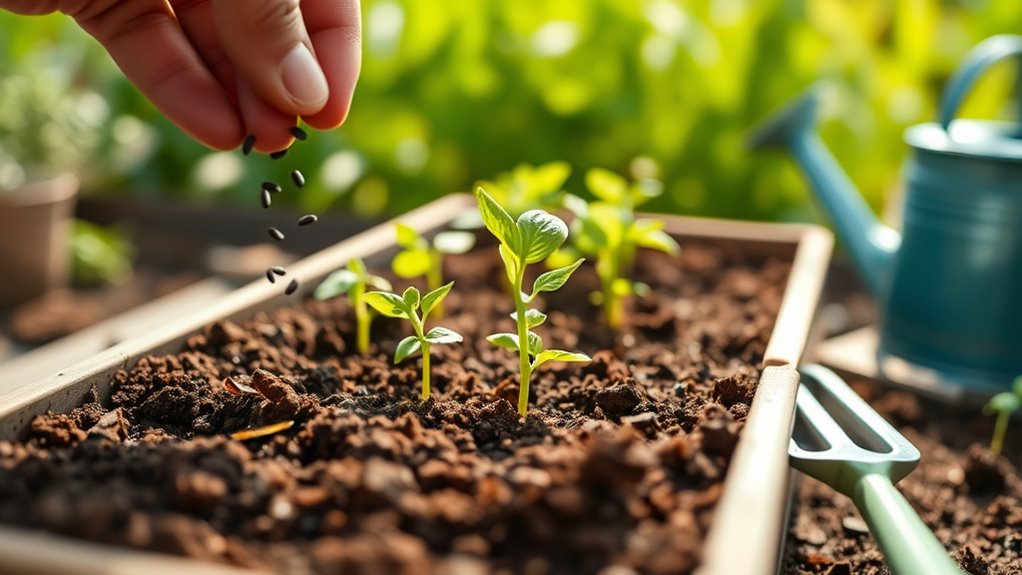
Gently press each seed into the soil, but don’t bury them too deep—about 1/4 inch is ideal. Lightly cover the seeds with a thin layer of soil or fine compost to protect them from drying out.
For better germination, keep the soil consistently moist and warm, around 70°F (21°C). Spray water gently to avoid displacing the seeds and help maintain moisture.
Covering the planting area with plastic wrap or a clear lid creates a mini greenhouse effect. This helps retain humidity and encourages sprouting.
Keep an eye on your seeds daily, making sure they stay moist and warm. Proper sowing techniques and attention to seed viability are key for healthy basil seedlings.
How to Care for Basil Seedlings After Germination
After your basil seeds have sprouted, it’s important to give them the right care to help them grow strong. Use a diluted, balanced fertilizer once they develop their first true leaves to provide essential nutrients without overwhelming the young plants.
Once basil seedlings develop their first true leaves, feed with a diluted, balanced fertilizer to support healthy growth.
Keep the soil moist but not waterlogged, and ensure good air circulation to prevent diseases. As your seedlings grow, keep a close eye on their size and overall health.
Timing for transplanting is key. Wait until the seedlings have at least two sets of true leaves and are sturdy enough to handle moving.
Before planting outside, harden them off gradually by exposing them to outdoor conditions over a few days. This step helps prepare the plants for outdoor life.
Proper care during this stage will help your basil develop a strong root system and be ready to thrive once planted in your garden.
Ensuring Adequate Light and Temperature for Basil Growth
If you want your basil to really flourish, make sure it gets plenty of bright, direct sunlight—aim for at least six hours a day. It’s amazing how much a little sunshine can do for those lush, green leaves!
Also, keep an eye on the temperature. Basil loves it warm, so try to keep it between 70 and 85°F. That way, your plant stays happy and healthy without getting stressed out. And don’t forget about good ventilation; it helps prevent excess humidity and keeps your basil vibrant and strong.
Optimal Light Conditions
Basil thrives when it gets plenty of bright, direct light, which is crucial for healthy growth and vibrant flavor. Providing the right light intensity and duration helps your basil grow strong.
Aim for at least 6 hours of direct sunlight each day. If natural light is limited, consider using grow lights to supplement. Adjust the light exposure based on your space’s conditions to prevent leggy plants.
Here’s a quick guide:
| Light Intensity | Light Duration | Notes |
|---|---|---|
| Bright, direct | 6-8 hours | Outdoors or with grow lights |
| Moderate | 4-6 hours | Indoors near windows |
| Low | Less than 4 hours | Not suitable for basil |
Balancing these factors ensures your basil gets the energy it needs for healthy growth and a robust flavor.
Ideal Temperature Range
Maintaining the right temperature is key to helping basil thrive alongside adequate light. Basil seeds germinate best within a specific temperature range, typically between 65°F and 75°F. Too much fluctuation can hinder seed germination and stunt plant growth.
To ensure ideal conditions, keep your indoor environment steady and avoid drafts or sudden temperature drops. Using a heating mat can help maintain consistent warmth during germination.
Check daily to make sure temperatures don’t fall below 60°F or go above 80°F, as these extremes can stress the plants.
Proper Ventilation and Airflow
Guaranteeing proper ventilation and airflow is key to creating a healthy environment for basil to grow. Good air circulation helps prevent mold and fungal issues, keeping your seedlings healthy.
To maximize growth, place your basil in a spot with good airflow and avoid stagnant air. Use a small fan or open windows to encourage steady airflow without drying out the plants.
Proper airflow also helps control humidity and temperature, making sure your basil gets the right conditions. Here’s a simple guide:
| Airflow Tip | Why It Matters | How to Achieve It |
|---|---|---|
| Use a fan | Prevents mold and fungal growth | Keep it on low, aimed away from seedlings |
| Open windows | Promotes fresh air exchange | Open during the day for a few hours |
| Avoid crowding | Ensures seedling airflow | Space plants adequately |
When and How to Thin Out Basil Seedlings
As your basil seedlings grow, it’s important to thin them out so each plant has enough space to thrive. Proper spacing helps prevent overcrowding and reduces competition for nutrients and airflow.
You should thin seedlings once they develop their first true leaves and are about 2-3 inches tall. Use gentle techniques to remove weaker or crowded seedlings, leaving the healthiest ones intact.
This approach promotes strong growth and helps prevent disease. Here are some key steps to follow:
- Identify the strongest seedlings based on health and vigor.
- Use scissors or pinch off weaker seedlings at soil level, avoiding root disturbance.
- Keep about 4-6 inches of space between remaining plants for healthy development.
Thinning helps you create a balanced, healthy basil bed and sets the stage for lush, flavorful herbs.
How to Fertilize Basil for Healthy Growth
Fertilizing basil correctly is key to keeping it healthy and growing vigorously. Start with organic fertilizers, which naturally supply essential nutrients and boost soil health.
Proper fertilization keeps basil healthy and thriving, starting with natural, organic nutrients for vibrant growth.
You can use liquid nutrients like diluted fish emulsion or seaweed extract every couple of weeks for a quick nutrient boost. Compost tea is another great organic option that adds beneficial microbes and nutrients to the soil.
For a more sustained feeding, consider slow-release fertilizers that release nutrients gradually, so you don’t have to fertilize as often. Foliar feeding, which involves spraying a diluted liquid fertilizer directly onto the leaves, can quickly fix nutrient deficiencies and promote lush foliage.
Keep an eye out for signs like yellowing leaves or stunted growth, and adjust your fertilization plan as needed. Proper feeding helps your basil stay healthy, flavorful, and productive all season long.
Common Basil Growing Issues and How to Fix Them
Growing basil is pretty rewarding, but sometimes you might run into pests or diseases. The good news is, just keeping an eye on your plants and watering them properly can go a long way in preventing these issues.
One common problem is overwatering, which can lead to root rot. So, make sure your soil drains well, and try not to water too often—your basil will thank you! Also, don’t forget about sunlight. Basil loves at least six hours of direct sunlight each day, so find a spot where it can soak up the rays. If it doesn’t get enough light, its growth might slow down or become limp.
Pests and Diseases
Pests and diseases can quickly turn a healthy basil plant into a struggling one if not caught early. Keep an eye out for discolored leaves or holes to catch problems early.
To protect your basil, focus on good pest management and disease prevention. Regular inspections are key to catching issues before they spread.
Here are three simple tips: Use organic controls like neem oil or insecticidal soap to keep pests away. Make sure your plants have good air circulation to reduce humidity, which helps prevent fungal problems. And if you see infected leaves, remove and destroy them right away to stop the disease from spreading.
Overwatering Problems
While catching pests and diseases early is important, overwatering can quietly harm your basil plant by causing root rot and other problems. Too much soil moisture keeps the roots waterlogged, stopping oxygen from reaching them.
This often makes young plants wilt, even if the soil feels moist. To avoid this, check the soil moisture regularly and only water when the top inch feels dry. Using pots with drainage holes or adding gravel underneath the soil can help prevent standing water.
Good drainage encourages healthy roots and reduces the risk of root rot. Be careful not to overwater, as it weakens your basil’s foundation and slows growth. Keep an eye on soil moisture levels to create the best conditions for your basil to thrive.
Insufficient Light
Insufficient light is a common problem that can hinder your basil’s growth and overall health. Without enough light, your basil may become leggy, pale, or fail to develop strong leaves.
To meet the light needs, make sure your indoor lighting is sufficient. Here are three simple ways to fix this:
Place your basil near a south-facing window to get the most natural sunlight. You can also use grow lights made for indoor plants, keeping them on for 12-16 hours each day.
Finally, rotate your basil regularly so all sides get even light exposure. These small changes can make a big difference in keeping your basil healthy and thriving.
Tips for Maintaining and Harvesting Your Basil Plants
To keep your basil plants healthy and productive, stay attentive to their growth needs and harvest the leaves regularly. Proper pruning encourages bushier growth and prevents the plant from becoming leggy.
When harvesting, snip just above a set of leaves to promote new growth. This helps keep the plant full and vibrant.
Also, try companion planting by growing basil near tomatoes or peppers. It naturally repels pests and enhances the flavor of your basil.
| Pruning Techniques | Companion Planting |
|---|---|
| Encourage bushiness | Deters pests like aphids and mosquitoes |
| Prevent legginess | Boosts overall plant health |
| Regular harvest | Improves leaf flavor and vitality |
Frequently Asked Questions
How Long Does It Take for Basil Seeds to Germinate?
Basil seeds usually germinate within 5 to 10 days when kept at an ideal temperature of around 70-75°F.
To get the best results, keep the soil consistently moist and warm. If conditions are right, tiny sprouts will appear quickly.
Make sure to monitor the temperature closely because cooler or hotter conditions can slow down germination and affect your basil’s growth.
Can Basil Seeds Be Grown Indoors Year-Round?
Imagine a tiny green flame, flickering indoors. Yes, you can grow basil seeds year-round inside. With the right indoor gardening setup, you create a warm, bright environment that helps your seedlings thrive and grow continuously.
Keep your basil in a sunny spot or under grow lights. Water it consistently and keep an eye on the humidity. This way, the flame stays alive, and your basil stays healthy no matter the season outside.
What Are Common Pests That Target Basil Seedlings?
Common pests that target basil seedlings include aphids, spider mites, and whiteflies. To keep them at bay, regularly inspect your plants and remove any visible pests.
You can also treat infestations safely using organic solutions like neem oil or insecticidal soap. Good airflow and avoiding overwatering help prevent pests and keep your basil healthy and thriving without harmful chemicals.
How Often Should I Water Basil Seedlings?
You should water basil seedlings every 2-3 days, making sure the soil stays consistently moist but not waterlogged.
In warmer weather or when the air is dry, you might need to water more often. Proper care means keeping an eye on soil moisture and adjusting as needed.
Be careful not to overwater, as this can cause root rot. Also, ensure good drainage for healthy seedling growth.
Can Basil Seeds Be Saved From My Mature Plants for Next Season?
Like a seasoned alchemist, you can save basil seeds from your mature plants for next season. Focus on seed saving by selecting healthy, robust plants, letting the flowers fully mature. Then harvest seeds once they turn brown and dry.
Store your seeds in a cool, dry place. This method guarantees you maintain quality for future planting, making your basil garden sustainable and full of flavor.
Conclusion
By following these simple steps, you’ll smoothly sow, sprout, and succeed with your basil bounty.
Cultivate confidence by caring carefully, correcting common concerns promptly, and creating conducive conditions consistently.
With patience, passion, and proper preparation, your basil will flourish, filling your space with fragrant foliage and flavorful feasts.
So, seize the sowing season, stay steadfast, and enjoy the satisfying success of your splendid, savory basil!