10 Simple Steps to Grow Tomato Plants From Seeds
Growing your own tomatoes from seeds can feel overwhelming, especially if you’re new to gardening or worried about starting off on the right foot. You’re not alone—many people struggle with getting their tomato plants to thrive.
Luckily, with a few simple steps, you can enjoy fresh, homegrown tomatoes all season long.
To grow tomato plants from seeds, start by choosing healthy, disease-resistant varieties that suit your space. Prepare your containers with well-draining soil enriched with compost and plant seeds about ¼ inch deep, keeping moisture consistent.
Provide plenty of sunlight and warmth, then transplant seedlings outdoors when conditions are right. Support your plants with stakes and monitor for pests and diseases.
When ripe, harvest carefully for delicious homegrown tomatoes. And don’t forget—there are plenty of tips to help you along the way.
Key Takeaways
- Select high-quality, disease-resistant tomato seeds that suit your space and goals.
- Prepare well-draining, nutrient-enriched containers or soil with proper sunlight.
- Sow seeds ¼ inch deep in moist soil, then keep them consistently watered and warm.
- Transplant seedlings outdoors once the soil is warm, and support plants with stakes or cages.
- Harvest ripe tomatoes carefully and enjoy them fresh or preserved in various dishes.
Choosing the Right Tomato Seeds for Your Garden
Choosing the right tomato seeds is key to a successful garden. Since different varieties do well in various climates and conditions, it’s important to pick wisely.
If you love unique flavors and traditional qualities, heirloom varieties are a great choice. But don’t forget to look for seeds with strong disease resistance to avoid common problems like blight.
Your selection depends on your space and goals. Some tomatoes grow compactly and are perfect for containers, while others give larger yields.
Make sure to buy seeds from reputable sources to ensure quality and true-to-type plants. Also, check germination rates because higher rates mean better chances of sprouting successfully.
Getting Your Growing Space Ready for Tomatoes
Before planting your tomato seeds, it’s important to prepare your growing space to give your plants the best start. Start with compost preparation to enrich your soil or potting mix, making sure it’s nutrient-rich and well-draining.
When selecting containers, choose ones with drainage holes to prevent waterlogging. Also, make sure they are big enough for healthy tomato growth. Plan your garden layout to maximize sunlight exposure—tomatoes need at least six hours of direct sun daily.
Incorporate pest prevention measures, such as installing barriers or using organic repellents, to protect your plants from common pests. Temperature regulation is also key; keep your space warm and stable, ideally between 70-85°F, especially if you’re growing indoors or in cooler climates.
How to Plant Tomato Seeds Correctly
To plant tomato seeds correctly, start by filling your planting containers with moist, well-draining soil or potting mix. Gently press the soil down, but don’t pack it tightly.
Sow the seeds about ¼ inch deep, which is the ideal seedling depth for most tomato varieties. Use your finger or a pencil to make small holes, then place one or two seeds into each hole.
Cover them lightly with soil, making sure they’re not buried too deep. Keep the soil consistently moist but not soaked, as excess water can cause seeds to rot.
Label your containers if planting multiple varieties. Place them in a warm, bright spot to encourage germination.
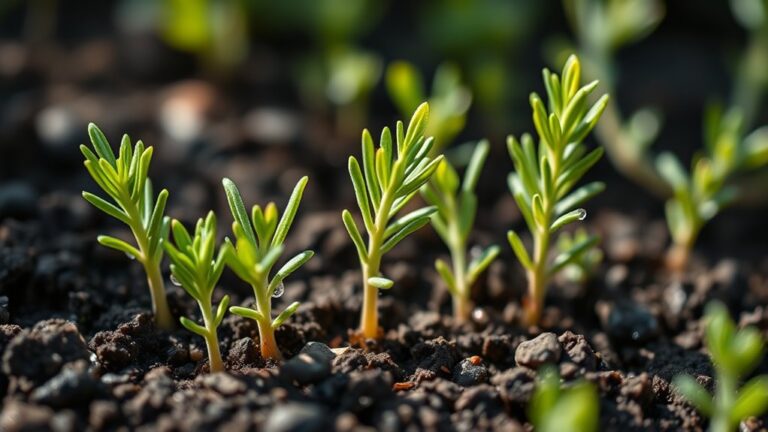
Once the seeds sprout and seedlings develop their first true leaves, you can consider transplanting them into larger pots or your garden.
Proper planting technique will give your tomato seeds the best start for healthy growth.
Selecting Soil and Watering Tips for Tomato Seedlings
Selecting the right soil and watering your tomato seedlings carefully is essential for healthy growth. Choose a well-draining soil with a good mix of organic matter, like compost or peat moss, to give your plants the nutrients they need.
Avoid heavy, clay soils that hold too much water, which can lead to root rot. Aim for a soil that retains moisture but doesn’t become waterlogged.
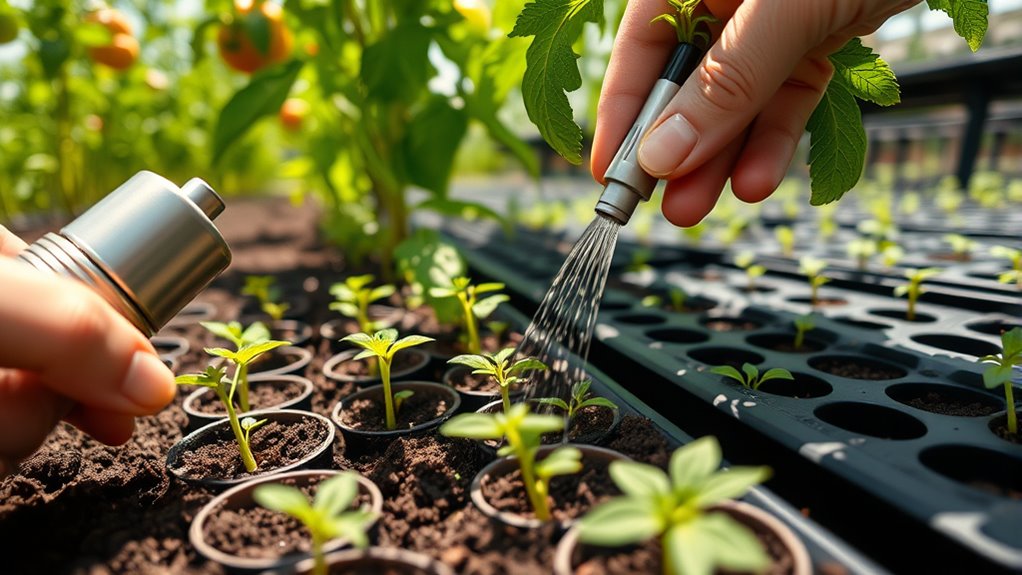
When it comes to watering, keep the soil consistently moist but not soaked. Check your seedlings daily and water when the top inch of soil feels dry.
Overwatering can drown the roots, while underwatering stresses the plants. Use a gentle spray or watering can to avoid disturbing your seedlings.
Making Sure Your Tomatoes Get Enough Light and Warmth
Making certain your tomato plants receive enough light and warmth is key for healthy growth and good fruit production. Proper sunlight and warm temperatures help create strong seedlings and plenty of yields.
Aim to give your plants at least 6-8 hours of direct sunlight each day if they’re outside. If you’re growing indoors, use supplemental lighting to make up for any natural light gaps.
Keep temperatures around 70-85°F during all growth stages. Adjust as needed based on the season to keep your plants comfortable and thriving.
If the temperature drops, consider using heaters or heat mats to keep seedlings warm. This helps prevent stunted growth and keeps your plants healthy.
Rotate your seedlings regularly so they get even light exposure on all sides. This prevents leaning or leggy growth and promotes even development.
Depending on the growth stage, you can adjust the light duration. Seedlings need longer periods of light initially, then gradually reduce as they mature.
Caring for Tomato Seedlings and Preventing Common Problems
Once your tomato seedlings are growing strong and getting the right amount of light and warmth, it’s important to monitor their health regularly. Proper seedling care involves maintaining a consistent watering schedule to prevent overwatering or drought stress.
Keep an eye on environmental factors like airflow and humidity to reduce the risk of diseases. Make sure they get enough light exposure for healthy growth. Watch for common issues such as nutrient deficiencies, which can cause discoloration or stunted growth. Applying balanced fertilizer helps prevent these problems.
To boost disease resistance, keep seedlings clean and avoid overcrowding. This can help prevent pests and disease spread. Pest prevention is key—inspect regularly for insects and use natural deterrents. Be gentle when handling seedlings to avoid transplant stress and root damage.
Regularly monitoring their growth allows you to catch problems early. This way, your seedlings will develop into healthy, strong plants ready for transplanting.
When and How to Transplant Tomato Seedlings Outdoors
Timing is key when transplanting tomato seedlings outdoors. Doing it too early can expose them to cold stress, while waiting too long might cause root crowding or stunted growth. To ensure success, keep these factors in mind:
Transplant timing: Wait until soil temperatures reach around 60°F (15°C) and the weather stays warm and consistent.
Seedling health: Only transplant healthy, strong seedlings with well-developed roots for better chances of thriving outdoors.
Container selection: Gently remove seedlings from their containers, being careful not to damage the roots.
Hardening process: Gradually expose your seedlings to outdoor conditions over about a week to reduce transplant shock.
Spacing guidelines: Space your plants 18-24 inches apart to allow for proper growth and good air circulation.
Proper watering and following these tips can help minimize shock, support healthy roots, and encourage vigorous growth. Timing your transplant just right makes all the difference for happy, productive tomato plants.
How to Fertilize and Support Your Tomato Plants
After successfully transplanting your tomato seedlings outdoors, giving them the right nutrients and support helps them grow strong and healthy. Fertilizers like balanced, high-phosphorus, and organic options provide essential nutrients. Apply fertilizer every two to three weeks, especially during flowering and fruiting.
Support structures are key to keeping plants upright and preventing damage. Use stakes, cages, or trellises based on your space and how big your plants are. These supports make sure your tomatoes stay healthy and productive.
| Support Structures | Fertilizer Types | Tips |
|---|---|---|
| Stakes | Balanced | Tie main stems loosely |
| Cages | Organic | Check regularly for stability |
| Trellises | High-phosphorus | Remove dead leaves |
| Tomato cages | Slow-release | Mulch around the base |
| Wire frames | Liquid feeds | Water before fertilizing |
Choosing the right support and fertilizer guarantees healthy growth and a bountiful harvest.
Monitoring Pests and Diseases in Your Tomato Garden
Regularly monitoring your tomato plants is key to catching pests and diseases early before they cause serious damage. Staying vigilant helps you spot issues like infestations or symptoms of disease in time to act.
Focus on identifying common pests such as aphids, whiteflies, or tomato hornworms. Also, look out for signs of disease like spots, mold, or discoloration on leaves and stems.
Using organic treatments can help manage pests without harming beneficial insects or soil health. Incorpor are also effective for keeping pests at bay naturally.
Companion planting is another great strategy. Certain plants can deter pests and create a natural barrier around your tomatoes. It’s a simple way to boost your garden’s defenses.
Finally, maintaining healthy soil is crucial. Rich, well-balanced soil helps your plants resist diseases and stay strong against pest attacks. Regular care makes a big difference.
Harvesting and Enjoying Your Homegrown Tomatoes
When your tomatoes are just right and ripen on the vine, it’s best to pick them gently. This helps keep their flavor and texture at their best. Once you’ve got them, there are so many tasty ways to enjoy your harvest. You can toss them into salads, pile them on sandwiches, or just slice them up and add a little salt for a simple treat.
And don’t be afraid to get a little creative! Try different recipes or pairings to really make the most of your homegrown tomatoes. After all, all that effort you put into growing them deserves to be celebrated in delicious ways.
Proper Harvesting Techniques
To guarantee you enjoy the best flavor and quality from your homegrown tomatoes, it’s essential to harvest them at the right time. The ideal harvesting time is when tomatoes are fully colored and slightly soft to the touch.
Use the best harvesting tools, like pruning shears or scissors, to prevent damage. Look for these signs to know it’s time to pick: fully ripe color, slight softness when gently pressed, easy detachment from the vine, no green or unripe areas, and a strong fragrance.
Handle tomatoes carefully to avoid bruising. Harvest in the early morning or late afternoon to reduce stress on the fruit. Proper timing and technique guarantee your tomatoes stay flavorful and fresh longer.
Delicious Ways to Enjoy
Once you’ve harvested your ripe tomatoes, the next step is to enjoy their fresh, vibrant flavor in a variety of delicious ways. You can start with classic tomato salads or make a zesty fresh salsa to serve with chips or tacos.
Use your tomatoes in pasta sauces or experiment with canning tips to preserve their flavor for later. Bruschetta ideas and stuffed tomatoes make great appetizers, while adding sliced tomatoes as pizza toppings improves homemade pies.
For a sweet and tangy twist, try tomato chutney or incorporate them into Mediterranean dishes like ratatouille. These versatile tomatoes can also be the star ingredient in hearty dishes or simple side dishes, ensuring you savor their flavor in many delightful forms.
Frequently Asked Questions
How Long Does It Take for Tomato Seeds to Sprout?
Tomato seeds usually sprout in 5 to 10 days, but this can vary based on conditions.
To get good germination, keep the soil moist and at a temperature of about 70-85°F.
If it gets colder than that, sprouting might slow down or stop.
Providing the right warmth and moisture helps your seeds sprout faster and grow healthy seedlings.
Can I Grow Tomatoes Indoors Year-Round?
Growing tomatoes indoors year-round is like bringing a little bit of sunshine inside your home. With the right setup, you can make it happen.
Just make sure your plants get enough light—use grow lights or place them near a sunny window. Keeping temperatures steady is also key.
If you take good care of them, you’ll be able to enjoy fresh tomatoes no matter what season it is. Indoor gardening makes this possible, giving you a continuous harvest right in your living space.
What Are Common Signs of Overwatering Tomato Seedlings?
You’ll notice overwatering tomato seedlings when they start to droop and their leaves turn yellow. These are signs that there’s too much moisture around the roots.
Damp soil can cause problems like root rot and fungal issues, which can really harm your plants. You might also see stunted growth because the roots can’t absorb nutrients properly.
If you notice these signs, cut back on watering and let the soil dry out a bit. This will help prevent further damage and encourage healthy growth.
How Do I Prevent Tomato Plants From Blight?
Battling blight starts with simple prevention steps. Try to avoid watering from above and make sure there’s good air circulation to cut down on humidity and dampness, which can cause blight.
Remove infected leaves as soon as you see them and practice crop rotation to stop soil-borne spores from spreading around your garden. Using resistant tomato varieties can also make a big difference.
What’s the Best Way to Save Seeds From Ripe Tomatoes?
To save seeds from ripe tomatoes, start by scooping out the seeds and surrounding pulp into a container.
Use the fermentation method by letting it sit for a few days. This helps remove the gel coating and any disease spores.
Rinse the seeds thoroughly, then dry them completely in a cool, airy spot.
Store your dried seeds in a labeled, airtight container for future planting, making sure they stay viable.
Conclusion
Growing your own tomatoes might seem simple, but it’s really a dance of patience and attention.
While you nurture tiny seeds into lush plants, remember—every sunlit afternoon and careful watering is your reward.
It’s like raising a child: demanding yet incredibly rewarding. So, stay attentive, welcome the little setbacks, and celebrate each ripe tomato.
In the end, your garden becomes a tribute to your effort, a delicious reminder that patience and care truly pay off.
Growing your own tomatoes from seeds is a journey worth every bit of effort.