What Defines Nuts as Seeds?
Are you often confused about what exactly makes a nut a seed? You’re not alone — many people struggle to understand the difference, especially since nuts are so popular in snacks and recipes.
Knowing what defines nuts as seeds can help you make smarter choices about your diet and where your food comes from.
Nuts are considered seeds because they are hard-shelled, mature fruits that develop from a single ovary and contain a single seed inside.
Unlike other seeds, nuts have tough shells that don’t open naturally, offering protection during plant reproduction. They play a role in seed dispersal and are rich in healthy fats and nutrients, making them distinct from other seeds.
If you’re curious, you’ll uncover more about what makes nuts unique seeds.
Key Takeaways
- True nuts develop from a single flower with one seed and have hard, indehiscent shells that don’t open naturally at maturity.
- Many culinary “nuts,” like almonds and walnuts, are actually seeds or drupes, not true botanical nuts.
- Nuts are classified as hard-shelled fruits from a single ovary that protect the seed inside.
- Peanuts are legumes, while almonds are seeds of drupes, which shows how different their botanical classifications are.
- The tough shells and nutrient-rich kernels are structural features that help identify nuts as seeds in plant reproduction.
Are All Seeds Considered Nuts?
Are all seeds considered nuts? Not quite. While many people use “nut” to describe seeds like almonds or walnuts, botanical classifications tell a different story. Nut varieties are a specific group of seed classifications with hard shells that don’t open naturally when mature.
True nuts, such as chestnuts and acorns, develop from a single flower and contain only one seed inside. However, many “nuts” in the culinary world, like peanuts and pine nuts, aren’t true nuts botanically—they’re legumes or seeds from other plant parts.
So, understanding seed classifications helps clarify what’s genuinely a nut. Not all seeds are nuts, and recognizing the differences can deepen your knowledge of plant biology and culinary uses.
What Are Nuts in Botanical Terms?
In botanical terms, nuts are a specific category of hard-shelled fruits that develop from a single ovary of a flowering plant. They are a distinct type of seed with a tough outer shell that protects the seed inside.
When you learn about nut types, you’ll find that they include true nuts like acorns and chestnuts, which don’t open at maturity, and some seed examples like walnuts and hazelnuts, which are technically drupes but commonly called nuts.
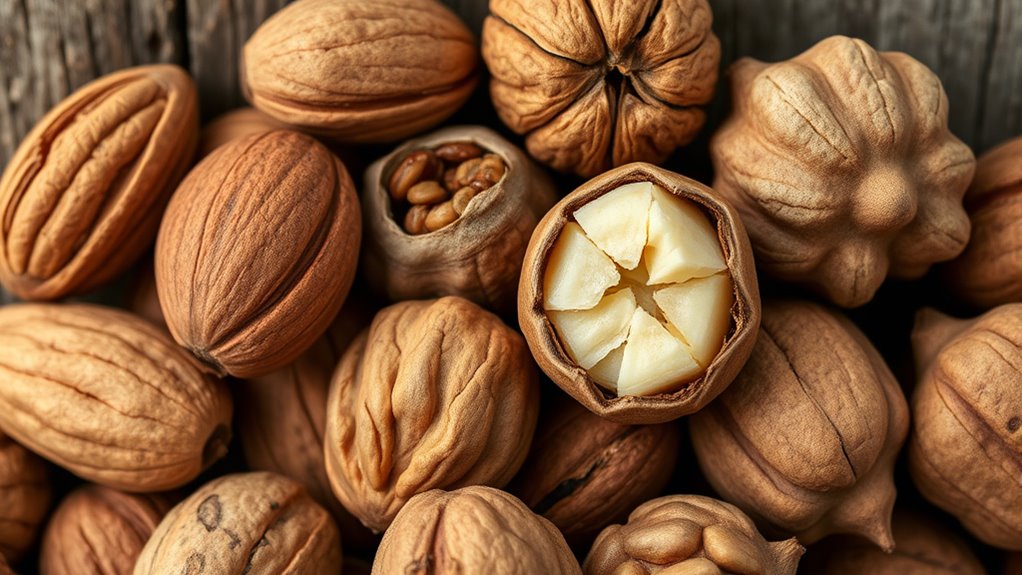
These seeds are characterized by their sturdy shells and high nutrient content, making them important in plant reproduction. Visualize a small, hard shell encasing a dense seed, ready to grow into a new plant.
Think of the various nut types as nature’s little capsules of potential, each specially adapted. This botanical definition helps clarify what sets nuts apart from other seeds, emphasizing their structure and reproductive role.
How Do Nuts Develop During Plant Reproduction?
When a plant reproduces, it all starts with the flower’s ovary developing into a fruit. Inside that fruit, the seed begins to grow and go through different stages. It starts off as a tiny embryo and gradually matures into a fully developed nut.
Understanding these steps really helps explain how nuts grow during plant reproduction. It’s pretty fascinating to see how everything unfolds from a small embryo into the crunchy nut we see and enjoy!
Fruit Formation Process
During plant reproduction, nuts start developing after pollination, when pollen grains from the male flowers reach the female ovules. This kickstarts the formation of the fruit that surrounds the seed, with different types of fruit showing variations.
Think of it like a symphony of growth, involving various structures and signals. The shape, size, and texture of the fruit all play a role in seed diversity and how they get spread around.
As the nut matures, it hardens and thickens to protect the seed inside, preparing it for dispersal. Visualize a small, tender flower turning into a tough shell, swelling with nutrients along the way.
The outer layer becomes woody or leathery, and inside, the seed gradually develops its potential for future growth.
Seed Development Stages
As the nut starts to develop after pollination, the seed inside begins forming through different stages. First, the fertilized ovule turns into a tiny embryo, surrounded by stored nutrients.
During seed maturation, the seed’s tissue hardens, getting ready for germination when the conditions are just right. You’ll notice that seed diversity affects how nuts develop; some have tough shells, others softer rinds.
As the seed fully matures, it goes into dormancy to conserve energy until the environment signals it to grow. When conditions are favorable, the seed wakes up from dormancy and begins germination, leading to a new plant.
These stages show how complex seed development is, which is key to understanding how nuts function as seeds in plant reproduction.
What Structural Features Make Nuts Unique as Seeds?
You’ll see that nuts have this really tough, hard shell around them. It’s like a natural armor that keeps the seed safe from getting damaged or eaten by predators. That shell is pretty much what makes nuts stand out from other types of seeds.
And it’s not just about the shell. The way their seeds are built is pretty cool, too. The structure ensures that the embryo inside stays well-protected and ready to sprout when the time is right. So, all in all, those features really help nuts do their thing in nature.
Hard Shell Protection
Nuts are known for their tough, hard shells that act as a crucial protective barrier for the seed inside. This shell keeps the seed safe from predators, environmental damage, and moisture loss, helping it stay viable until it’s time to sprout.
The shell’s rigidity makes it tough for animals to crack open, giving the seed extra security. Imagine holding a nut with its thick, textured exterior, feeling the ridges and grooves that add strength and durability.
Think of the shell as a sturdy weight, strong enough to withstand pressure and rough conditions. This tough barrier keeps the seed safe during its dormant period in nature, making nuts resilient protectors.
Distinct Seed Structure
Nuts have a distinctive internal structure that sets them apart from other seeds. Their unique seed classifications feature a hard, woody shell encasing a nutrient-rich kernel, making them stand out. This structure provides durability, guaranteeing the seed’s protection and longevity.
The seed’s interior is often dense and compact, packed with oils and proteins essential for growth. These characteristics make nuts more than just food—they showcase nature’s clever seed design.
| Unique Feature | Emotional Impact |
|---|---|
| Hard Shell | Shields the seed, symbolizing resilience and strength |
| Dense Kernel | Packed with nourishment, representing vitality |
| Protective Layers | Guarantees survival, evoking endurance and hope |
How Do Nuts Differ Nutritionally From Other Seeds?
While nuts and other seeds share many nutritional qualities, they also have distinct differences that impact their health benefits. Nuts generally contain higher healthy fats, protein, and calories compared to many seeds, making them great for sustained energy.
Seeds like chia, flax, or sunflower tend to be richer in specific nutrients such as fiber, omega-3 fatty acids, and antioxidants. These differences influence their health benefits; for example, nuts support heart health through monounsaturated fats, while seeds boost brain function with plant-based omega-3s.
Imagine biting into a crunchy almond and feeling its rich oils, or savoring a spoonful of chia seeds swelling with liquid. Consider the tiny flaxseed, packed with fiber, or sunflower seeds offering a satisfying crunch.
These differences shape how each offers unique health benefits, making both valuable additions to your diet.
Why Are Some Seeds Classified as Nuts, and Others Not?
The classification of seeds as nuts often depends on a mix of botanical, culinary, and cultural factors rather than strict scientific definitions. You’ll find that nut varieties like almonds and cashews are technically seeds, but they’re considered nuts because of how we use them and their cultural importance.
Culinary classifications focus on flavor, texture, and how these seeds are eaten, which can be quite different from their botanical origins. For example, true botanical nuts like acorns develop inside a hard shell and are part of specific plant reproductive processes.
Many so-called nuts are actually seed types from different plants. Nutrient profiles also matter—nuts are usually high in fats and proteins, making them popular in diets. Ultimately, these classifications blend botanical facts with how we perceive and use these seeds, shaping what we call a seed a nut.
What Is the Role of Nuts in the Plant’s Life Cycle?
Nuts play an essential role in a plant’s reproductive cycle by protecting and dispersing the seed inside. They are key in seed dispersal strategies, helping the seed reach a good place to grow.
Your plant relies on animals, wind, or gravity to carry nuts away from the parent tree. This reduces competition and helps the seed develop in a better spot.
Imagine squirrels scurrying with nuts, hiding them underground. Or birds pecking at shells and dispersing seeds through droppings.
Nuts falling from branches onto the forest floor or wind drifting lightweight shells to new locations also help spread seeds.
These actions show how nuts help with seed dispersal and plant propagation. They play a vital role in keeping ecosystems healthy.
How Do Botanical Definitions Affect the Way We Use Nuts in Cooking?
Botanical classifications really shape how we choose and use nuts in our cooking. It’s interesting because some nuts we think of as nuts aren’t technically nuts at all—they might actually be seeds or other plant parts. Knowing this can change how we look at their flavor, texture, and even their nutritional benefits.
When you understand the difference between true botanical nuts and seeds, it helps you make smarter choices in the kitchen. For example, you might realize that a walnut is technically a seed, which can influence how you prepare or pair it in recipes. This knowledge also opens up new possibilities for experimenting with different ingredients and flavors, making your cooking more creative and informed.
Botanical Classifications and Usage
Understanding how botanists classify seeds helps you grasp why some foods labeled as nuts aren’t technically nuts. This knowledge influences how you incorporate them into recipes.
The nut classification depends on botanical features like seed development and plant family, not just culinary uses. For example, peanuts are legumes, not true nuts, while almonds are seeds of drupes.
Knowing these differences helps you choose the right ingredients for your dishes. Visualize a hard shell encasing a seed, ready to be cracked open, or the fleshy fruit surrounding a true nut like a chestnut.
Imagine a tree bearing multiple nut types, each with its own unique features. Seeds inside a drupe, such as almonds, are also important to recognize.
These botanical details guide you in selecting authentic culinary nuts and knowing their best uses.
Culinary Implications of Definitions
Knowing the botanical classifications of seeds directly influences how you use them in cooking. When you understand whether a nut is technically a seed, it shapes your culinary uses and expectations.
For example, true seeds like sunflower or pumpkin seeds have neutral flavor profiles, making them versatile for snacks, baking, or garnishes. In contrast, nuts like almonds or walnuts, classified as seeds within a fruit, often have richer, more complex flavor profiles perfect for baking, salads, or spreads.
Recognizing these distinctions helps you select the right ingredient for your dish’s flavor and texture. It also informs how you process them—whether roasting, soaking, or grinding—to improve their culinary appeal.
Can All Seeds Be Called Nuts From a Biological Perspective?
While many people casually refer to seeds as nuts, not all seeds qualify as true nuts from a biological standpoint. Seed classification relies on botanical terminology that distinguishes true nuts from other seed types. True nuts are hard-shelled fruits that develop from a single ovary and contain a single seed.
Many so-called nuts, like almonds or peanuts, are technically seeds or legumes, not true nuts. To visualize this, think of a hard shell protecting a single seed inside. Some fruits don’t split open when mature, and some seeds are encased within a tough, woody exterior.
Plants that produce edible seeds but aren’t classified as true nuts also fit into this category. Understanding seed classification helps clarify why some foods labeled as nuts aren’t true nuts biologically. Botanical terminology provides a precise framework to distinguish these seed types from actual nuts, emphasizing the importance of scientific accuracy over culinary labels.
What Common Myths About Nuts and Seeds Should You Know?
Many people assume that all nuts and seeds are equally nutritious and healthy, but there are some common misconceptions that can cause confusion.
For example, some believe nuts are high in sugar, but most actually contain healthy fats and fiber instead. Similarly, seeds are often thought of as just fillers, but they’re packed with protein, vitamins, and minerals.
Some folks think nuts and seeds are calorie bombs, but eating them in moderation makes them a nutritious snack. It’s also a myth that all nuts are allergenic—this isn’t true for every variety.
Another misconception is that nuts and seeds always need roasting or processing to be healthy. Raw options can actually retain more nutrients. And many people overlook that seeds aren’t just for planting—they’re nutrient-dense foods too.
Understanding these myths helps you see the true value of nuts and seeds and how they can fit into a balanced diet.
Frequently Asked Questions
Are There Any Edible Nuts That Are Not Technically Seeds?
Yes, some edible nuts aren’t technically seeds. For example, peanuts grow underground and are classified as legumes, not true seeds based on seed classification.
Likewise, certain nut varieties like coconuts are technically fruits, yet we treat them as nuts because of their edible seed-like qualities. Understanding seed classification helps you distinguish between true botanical nuts and other edible items often called nuts, like almonds or cashews, which are seeds of their respective fruits.
How Do Culinary Classifications of Nuts Differ From Botanical Definitions?
Culinary terminology often groups nuts with seeds, fruits, or legumes based on taste, texture, and usage, creating a lush, familiar landscape.
Botanical accuracy, however, strictly classifies nuts as hard-shelled seeds from specific plants. You might savor almonds as nuts in the kitchen, but botanically, they’re seeds of drupes.
This contrast shapes your understanding of ingredients, blending practical enjoyment with scientific precision, guiding your choices in both cooking and botanical study.
Can Any Seed Be Processed to Become a Nut?
No, you can’t process any seed type into a nut. Nut varieties have specific botanical features, like hard shells and edible seed kernels, that other seeds don’t have.
While some seeds, like almonds, are technically nuts, many are different types of seeds that need different processing methods.
You need the right seed with the proper structure to be called a nut, so not all seeds can be turned into nuts.
What Are the Environmental Impacts of Harvesting Nuts Versus Other Seeds?
You’ll find that harvesting nuts often involves eco-friendly methods like ground collection or selective picking, which help maintain ecological balance.
In contrast, some seed harvesting can be more disruptive, involving heavy machinery or deforestation.
By choosing sustainable harvesting methods, you help reduce habitat destruction, conserve biodiversity, and promote environmental health.
This careful approach minimizes negative impacts, ensuring that nut harvesting supports ecological stability rather than harming it.
How Does Seed Dispersal Influence the Development of Nuts?
Seed dispersal dramatically influences nut development, shaping how they evolve and survive. Imagine nuts launching themselves across landscapes like tiny rockets, thanks to dispersal methods like animals, wind, or water.
These forces push nut evolution, encouraging traits that attract animals or help them withstand tough conditions. Without good dispersal, nuts wouldn’t reach new grounds, risking their survival.
Conclusion
Think of nuts and seeds as different chapters in nature’s book. While some pages look alike, each tells a unique story of growth and survival.
Understanding their true nature helps you appreciate their roles and uses.
Just like a key opens a lock, knowing these distinctions reveals better choices in your diet and life.
Accept the diversity, and let it remind you that every element has a purpose.
In particular, understanding what defines nuts as seeds can help you see their value.
This knowledge allows you to make smarter choices about what you eat and how it benefits you.