Square Foot Gardening: How to Maximize Your Garden Space Efficiently
Square foot gardening is a compact, efficient gardening technique that divides your growing area into small, manageable sections—typically one-foot squares—allowing you to grow a variety of plants in a limited space with minimal waste. This method emphasizes intensive planting and structured layout to make gardening accessible and productive even in small areas.
This approach benefits gardeners by simplifying planning, reducing the amount of soil and water needed, and improving plant health through better spacing and maintenance. It's especially useful for urban dwellers or those with limited outdoor space, providing a structured and straightforward path to harvest fresh vegetables, herbs, and flowers year-round.
In this article, we will explain the guiding principles behind square foot gardening, explore the setup process, cover the best soil mix and plant choices, discuss maintenance tips, compare it to traditional gardening, and answer common questions to help you start your own thriving square foot garden.
Understanding Square Foot Gardening Principles

Core Concept of Sectioning Your Garden
Square foot gardening organizes your planting space into a grid of one-foot square boxes, making it easy to plan and monitor plant growth. Each box can accommodate different plants based on their mature size and spacing requirements, optimizing the use of limited garden footprints.
This technique differs from traditional row gardening by allowing higher plant density while preventing overcrowding. The grid structure guides planting decisions, making crop rotation and succession planting more manageable and keeping the soil healthier through deliberate plant spacing.
Benefits of Intensive Planting Methods
Intensive planting, central to square foot gardening, means closer spacing to maximize yield per area without compromising individual plant health. This creates a microenvironment that reduces weed growth and conserves moisture by shading the soil.
By cultivating more per square foot, you can achieve higher productivity in smaller spaces, save time on maintenance, and foster beneficial insect activity. This method is eco-friendly as it avoids the need for chemical herbicides and excessive watering.
How to Set Up Your Square Foot Garden

Choosing the Right Location and Structure
Locate your garden where it receives at least six to eight hours of sunlight daily—this is crucial for most vegetables and herbs. A flat, accessible spot helps with watering and maintenance. Raised beds or containers work best, with sides around six to twelve inches high to conserve soil and improve drainage.
Wood is a popular raised bed material, but metal and plastic options are also viable. Size typically ranges from four feet by four feet onward, balancing ease of reach with sufficient planting area. Adding a simple grid with string or tape helps keep planting organized.
- At least 6-8 hours of sun
- Well-draining soil bed
- Use wood or container beds
- 4×4 feet recommended size
Preparing and Amending the Soil Mix
Square foot gardening requires a lightweight, nutrient-rich, and well-draining soil mix for maximum productivity. A popular formula combines one-third blended compost, one-third peat moss or coconut coir, and one-third vermiculite or perlite to achieve a balanced growing medium.
This mix retains moisture without becoming waterlogged and supports healthy root development. Avoid compacted or heavy clay soil as it inhibits root growth and drainage. Refreshing the soil annualy with fresh compost helps maintain fertility.
- 1/3 compost
- 1/3 peat moss or coconut coir
- 1/3 vermiculite or perlite
Plant Selection and Spacing in Square Foot Gardening

Choosing Suitable Plants for Each Square
Different plants require varying amounts of space, and square foot gardening takes this into account by assigning a recommended number of plants per square based on mature size. For example, one tomato plant needs a full square, while you can plant sixteen carrots in the same space.
Common choices include leafy greens, herbs, root vegetables, and bush-type plants rather than sprawling varieties. Selecting a mix of fast-growing crops alongside longer-season plants maximizes harvest and keeps your garden productive across seasons.
- Tomato – 1 per square
- Carrots – 16 per square
- Lettuce – 4 per square
- Bush beans – 9 per square
For more on this, see our related guide: How to Read a Seed Catalog: A Complete Guide for Gardeners.
Planning Crop Rotation and Succession Planting
Rotating crops between squares each season prevents soil nutrient depletion and minimizes pest buildup around specific plant families. This practice improves soil health and encourages better yields over time.
Succession planting involves reseeding or transplanting crops immediately after harvest to ensure continuous production. With square foot gardening’s clear layout, it’s easier to track which squares are free and plan new plantings accordingly.
Watering and Maintenance Techniques for Square Foot Gardening

Efficient Watering Strategies
Square foot gardening beds dry out faster than traditional rows, so consistent watering is essential. Using drip irrigation or soaker hoses delivers water directly to roots and reduces evaporation. Hand watering works too but requires regular attention.
Mulching between plants helps retain moisture and reduce weed growth. Pay attention to soil moisture daily, especially during hot weather, to avoid stress on your plants and stunted growth.
- Drip irrigation recommended
- Mulch to retain moisture
- Check soil moisture daily
Weeding and Pest Control Basics
The dense planting in square foot gardening naturally suppresses many weeds by limiting their space to grow. Still, removing visible weeds promptly ensures they don’t compete with your crops for nutrients and water.
Beneficial insects and companion planting are effective pest control methods. Avoid chemicals by using physical barriers like row covers and manual removal for pests such as aphids or caterpillars.
- Manual weed removal
- Companion planting
- Avoid chemical pesticides
Comparing Square Foot Gardening to Traditional Gardening
Space Utilization and Yield Differences
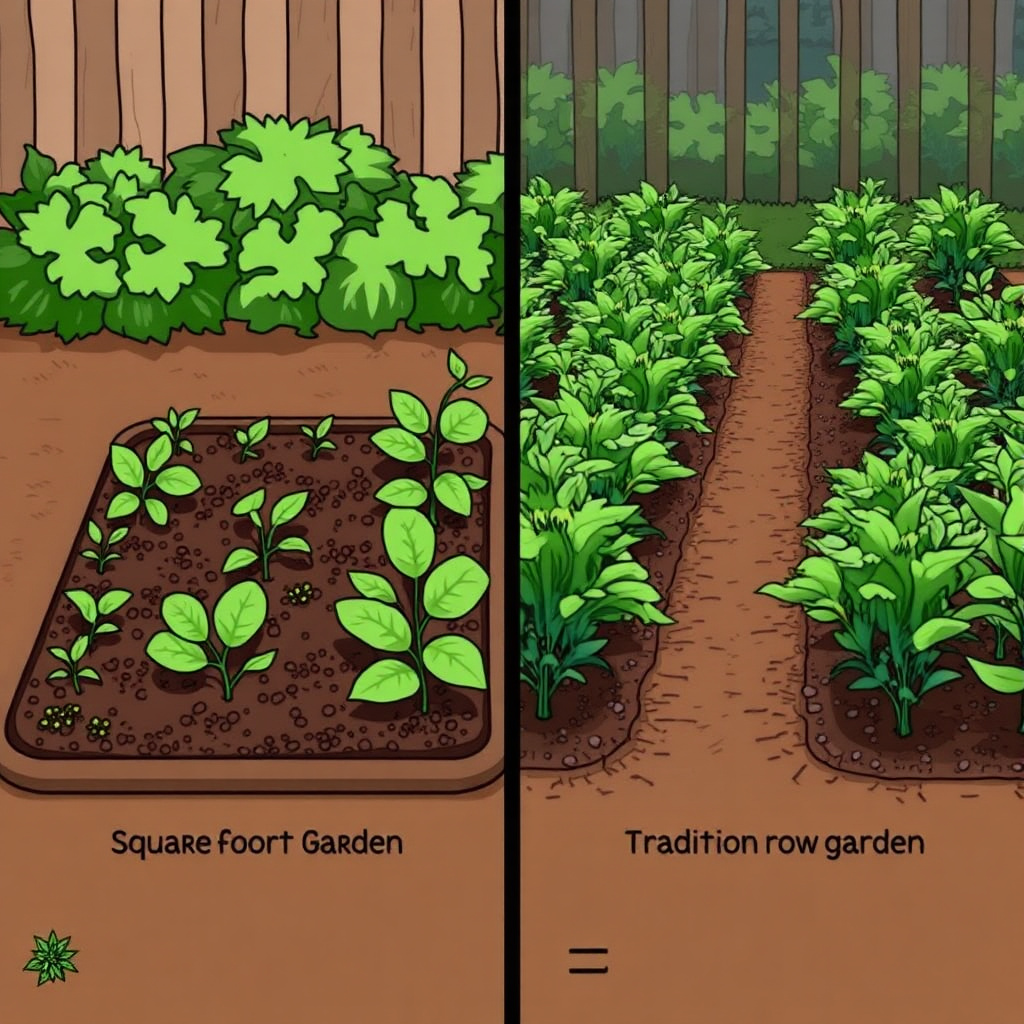
Square foot gardening dramatically increases yield per square foot through tightly planned plant spacing, making it ideal for small or urban spaces. Traditional gardens often feature wider rows and more space between plants, which can decrease total productivity per square foot.
However, traditional gardening allows for larger crops and may be preferred for sprawling plants or larger harvests if ample land is available.
For more on this, see our related guide: How to Choose High CBD Cannabis Seeds for Maximum Therapeutic Benefits.
Soil and Maintenance Requirements
Square foot gardening focuses on soil quality using carefully balanced mixes, reducing the need for tilling or heavy amendments. Maintenance is simplified with smaller beds that are easy to access and manage.
Traditional gardens rely more on natural soil and often require tilling, larger watering routines, and more weed control efforts due to open spaces.
Common Mistakes and Troubleshooting in Square Foot Gardening
Avoiding Overcrowding and Soil Depletion
One frequent error is packing too many plants into one square, which stresses them and reduces airflow, leading to disease. Stick to recommended planting densities to maintain healthy growth.
Neglecting to refresh or amend soil can lead to nutrient depletion. Rotate crops regularly and add compost to keep the growing medium fertile and productive.
Learn more background and the history of square foot gardening on Wikipedia. square foot gardening on Wikipedia.
Addressing Pest and Watering Issues
Overwatering can cause root rot while underwatering stresses plants, so balancing moisture is key. Observe your plants closely to tailor your watering routine.
Ignoring early pest signs can quickly damage crops. Use physical barriers and biological controls to manage pests before infestations spread.
Square Foot Gardening vs Traditional Gardening Comparison
This table highlights key differences between square foot gardening and traditional row gardening to help you decide which suits your needs best.
| Aspect | Square Foot Gardening | Traditional Gardening |
|---|---|---|
| Space Efficiency | High – intensive planting in small areas | Lower – spaced rows with more unused soil |
| Yield per Square Foot | Higher due to dense planting | Moderate, depends on space available |
| Soil Management | Uses custom soil mixes refreshed after seasons | Relies on natural soil, requires tilling |
| Water Usage | Conserves water with focused delivery | Often more water required for larger areas |
| Weed Control | Suppresses weeds due to dense planting | More manual weeding necessary |
| Accessibility | Smaller beds, easy access without bending | May require more physical effort |
Frequently Asked Questions
How large should a square foot garden bed be?
A common size for a square foot garden bed is 4 feet by 4 feet, providing sixteen one-foot squares. This size is manageable for planting, watering, and harvesting without stretching or straining.
Can I grow fruit trees in square foot gardening?
Square foot gardening is best suited for vegetables, herbs, and small fruits. Fruit trees generally require more space and root area than a single square foot and are not practical in this method.
Do I need special tools for square foot gardening?
You don’t need special tools beyond common garden essentials. A small hand trowel, watering can or drip system, and gardening gloves are typically sufficient for setup and maintenance.
How often should I water a square foot garden?
Watering frequency depends on weather and soil moisture, but generally, square foot gardens need daily monitoring with watering every one to three days to keep soil consistently moist but not soggy.
Is square foot gardening suitable for beginners?
Yes, it’s ideal for beginners because of its simple layout, clear guidelines, and manageable size. It encourages learning about plant spacing and care without overwhelming large spaces.
Key Takeaways
- Square foot gardening maximizes productivity by dividing space into manageable one-foot sections.
- It uses a special soil mix to promote healthy growth and conserve water.
- Plant selection and spacing guidelines are essential for success.
- This method suits small spaces and beginner gardeners effectively.
Conclusion
Choosing the right gardening method hinges on your available space, goals, and time commitment. Square foot gardening offers a precise and productive way to grow a diverse array of crops while using minimal area. By focusing on soil quality, plant spacing, and efficient watering, it drives results where conventional gardening might struggle to fit. This technique provides an accessible path for those seeking to cultivate fresh produce in tight spaces or who prefer a structured approach to gardening.
If you have limited backyard space, an urban balcony, or are just starting your gardening journey, square foot gardening presents an excellent option. Its intensive planting methods can yield significant harvests within compact beds, especially for leafy greens, herbs, and root vegetables. On the other hand, if you have larger land plots and want to grow sprawling crops like corn or pumpkins, traditional row gardening might suit your needs better. For gardeners striving to boost yield while minimizing labor and resources, square foot gardening represents an innovative, effective choice.
To begin, consider building a simple raised bed formed into square foot sections and prepare the recommended soil mix for your plants. Start with easy-to-grow varieties that fit well in this system. Over time, enhancing your layout with drip irrigation and practicing crop rotation will improve yields and soil health. Engaging with local gardening communities or educational resources can help adapt the method to your climate and preferences, turning your gardening efforts into a fruitful and enjoyable experience.