How to Read a Certificate of Analysis: A Clear Guide for Understanding Product Quality
A Certificate of Analysis (CoA) is a detailed document that provides the results of laboratory testing on a product batch, helping you verify its quality and safety. To read a CoA effectively, focus on key sections like identification details, test methods, specifications, and results to confirm the product meets established standards.
Understanding how to read a CoA matters because this document assures you that the product complies with regulatory requirements or internal benchmarks. Whether you’re a buyer, manufacturer, or quality control professional, it helps you detect discrepancies or confirm authenticity before use or sale.
This article explains the key parts of a Certificate of Analysis and how to interpret each section. We’ll explore common test types, result formats, specification limits, and how to spot red flags. You’ll also learn practical tips for comparing CoAs and applying this knowledge to make informed decisions.
Understanding the Basic Structure of a Certificate of Analysis
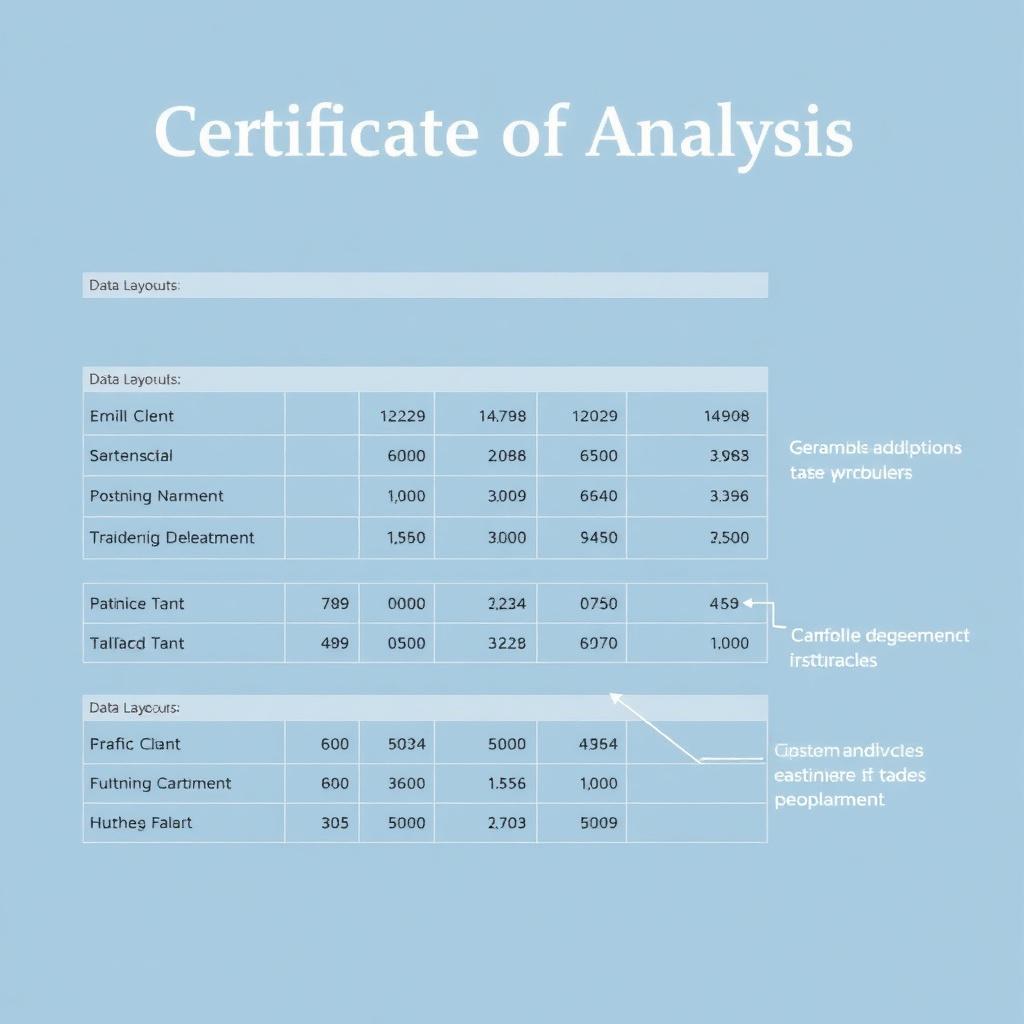
Identifying Key Information on a CoA
The top portion of a Certificate of Analysis typically contains the product name, batch or lot number, manufacturing date, and expiry date. These details ensure you’re reviewing data for the correct product batch, which prevents mix-ups and helps traceability in supply chains.
Additionally, you’ll often find the issuing laboratory or manufacturer’s information with contact details. Verifying the source legitimacy of the CoA is vital since authentic certificates come from accredited labs or trusted producers.
Common Format Elements and Terminology
Most CoAs include columns for test parameters, methods used, specification limits, and test results. The specification limits define acceptable ranges or thresholds, while the results reveal if the batch passed or failed each criterion.
Understanding terms like 'assay,' 'impurities,' 'moisture content,' and 'microbial limits' helps in interpreting the data accurately. Familiarity with these common phrases avoids confusion when reading lab test results.
Interpreting Test Results on a Certificate of Analysis

Comparing Results Against Specifications
The most important part of reading a CoA is to compare test results to the given specification ranges. Results falling within limits indicate compliance, whereas values outside these ranges signal potential quality problems or safety concerns.
Make sure to note if the specification limits are expressed as minimum, maximum, or range values. This determines whether values above, below, or between numbers are acceptable.
Recognizing Pass/Fail Indicators and Flags
Some CoAs include clear pass or fail notations beside each test result to quickly indicate compliance status. Look for terms like 'Conforms,' 'Within limits,' or explicit fail flags highlighted in red or bold.
Also watch for remarks or comments sections providing explanations for borderline or failed results, giving context on risk level or proposed corrective actions.
Navigating Regulatory and Industry Standards in CoAs

Common Standards Referenced in Certificates of Analysis
CoAs often mention standards such as USP, EP, JP, or ISO depending on the industry and product type. These references confirm the testing methods and specifications align with recognized benchmarks for quality and safety.
Understanding the specific standards your product must meet helps you interpret whether the CoA reflects compliance with relevant regulations or customer requirements.
Impact of Compliance on Product Quality Assessment
Products conforming to established standards reassure consumers and regulators about consistency and safety. Identifying adherence through referenced standards in the CoA aids in confident decision-making.
Conversely, certificates lacking standard references or using outdated methods should prompt further inquiry or alternative lab testing.
Verifying Authenticity and Reliability of a Certificate of Analysis

Checks for Legitimacy of Issuing Laboratory
Authentic CoAs come from accredited testing laboratories with certifications such as ISO/IEC 17025. Validating lab credentials is crucial before trusting test results, especially when handling sensitive or high-risk products.
Look for laboratory contact details, authorized signatures, and official stamps or seals that confirm the document’s origin and integrity.
Spotting Signs of Tampering or Forgery
Beware of inconsistent formatting, missing information, or unusual fonts that might indicate a tampered document. Some labs embed QR codes or digital signatures you can scan to verify authenticity online.
If in doubt, requesting confirmation directly from the issuing lab or conducting independent testing may be necessary.
Using a Certificate of Analysis to Make Informed Buying Decisions

Evaluating Consistency Across Multiple Batches
For ongoing product purchases, reviewing CoAs from several batches helps identify variation or trends in quality. Consistent compliance indicates reliable production processes and supply chains.
Documenting and comparing results builds confidence in supplier integrity and assists in negotiating quality agreements.
Integrating CoA Data with Other Quality Metrics
A CoA gives critical lab testing information, but combining this data with in-house inspections, supplier audits, and customer feedback provides a fuller quality picture.
Using multiple quality indicators helps reduce risk and supports better sourcing or manufacturing decisions.
Common Difficulties and Mistakes When Reading a Certificate of Analysis

Misinterpreting Test Methodologies and Units
Failing to understand specific lab test methods or the units of measurement used can lead to incorrect conclusions about product quality. Always clarify if results are reported in mg/kg, ppm, or percentage, and understand the method’s scope.
Ignoring these details can cause misclassification of compliant products as out of spec or vice versa.
For additional background and detailed definitions, refer to this Certificate of Analysis explanation on Wikipedia. Certificate of Analysis explanation on Wikipedia.
Overlooking Specification Limits or Result Variations
Another frequent error is neglecting to compare test results to specification limits, or misreading whether exceeding a value is allowed. Specification limits vary by product and parameter so double-checking these is essential.
Also watch for batch-to-batch variations that may affect overall product consistency assessment.
Certificate of Analysis Types Comparison
Here’s a comparison of common CoA types to help you understand their scope, detail, and typical applications.
| CoA Type | Detail Level | Typical Use Case | Industry |
|---|---|---|---|
| Basic CoA | Summary-level results with key parameters | Routine batch release | Food, Chemicals |
| Comprehensive CoA | Extensive testing including impurities and stability | Quality audits and regulatory submission | Pharmaceuticals, Cosmetics |
| Microbiological CoA | Focused on microbial limits and contaminants | Sterile or perishable products | Biotech, Food |
| Heavy Metals CoA | Testing specifically for toxic metals presence | Safety assurance, regulatory compliance | Supplements, Food |
Frequently Asked Questions
What is the main purpose of a Certificate of Analysis?
A Certificate of Analysis provides verified lab test results for a product batch, confirming its quality and compliance with specifications before use or sale.
How can I tell if a test result on a CoA is acceptable?
Compare the test result against the specified limits given in the CoA. If it falls within the defined range or threshold, the result is acceptable.
Are all Certificates of Analysis standardized?
No, formats and details can vary depending on the issuing lab, product type, and industry standards, though key elements like test parameters and results are typically included.
Can a Certificate of Analysis be forged, and how do I check its authenticity?
Yes, forgery is possible. Check for authorized signatures, lab accreditation, digital verification like QR codes, and verify with the issuing laboratory if needed.
What should I do if a test result on the CoA shows a fail?
Investigate the cause, request corrective actions or retesting from the supplier, and evaluate if the product batch is safe and suitable for use.
Key Takeaways
- Focus on batch details and test results when reading a Certificate of Analysis.
- Compare results precisely against specification limits to assess compliance.
- Verify the legitimacy of the issuing lab and watch for signs of tampering.
- Use CoA data alongside other quality metrics for better decision-making.
Conclusion
Reading a Certificate of Analysis effectively means breaking down its key components—batch information, test methods, specification limits, and results—to confirm product quality. This approach helps identify whether products meet safety and regulatory requirements or if further investigation is needed before accepting a batch.
When deciding based on a CoA, consider the level of detail and type of tests included, especially those referencing regulatory standards relevant to your product. For routine consumables, a basic CoA comparing key parameters may suffice, while pharmaceuticals or high-risk items often require comprehensive CoAs with extensive testing. Always double-check lab accreditation and authenticity to trust the data.
For practical application, keep a record of CoAs across batches to spot trends and ensure consistent supplier quality. If uncertain about interpreting specific results or specifications, seek expert consultation or perform independent testing to validate findings. Reading Certificates of Analysis carefully empowers better, safer purchasing and quality control decisions.