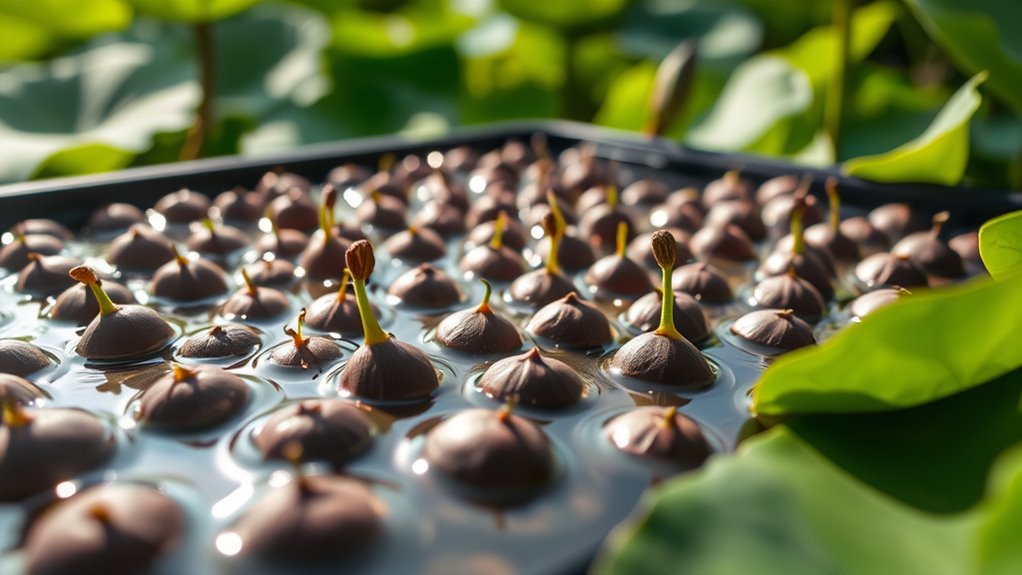
7 Simple Steps to Germinate Lotus Seeds Successfully
Getting lotus seeds to germinate can be surprisingly tricky, especially if you’re new to growing these beautiful plants. Many people struggle with getting their seeds to sprout and establish, but don’t worry—you’re not alone.
With a little patience and the right techniques, you can improve your success rate and enjoy beautiful lotus blooms.
To germinate lotus seeds successfully, start by selecting healthy, fresh seeds that are firm and smooth. Next, scarify the seed coat gently with a file or sandpaper to help water absorption.
Soak the seeds in warm water for 24-48 hours, changing the water if it gets cloudy. Plant them in a shallow container with warm, nutrient-rich water, keeping the environment humid and warm.
Proper care and environment are key, and exploring these steps further can guarantee great success.
Key Takeaways
- Choose fresh, healthy seeds that are firm, plump, and free from cracks or mold.
- Gently scarify the seed coat with a file or sandpaper to help water get in better.
- Soak the seeds in warm water, around 70°F to 85°F, for 24 to 48 hours until they soften.
- Plant the seeds on or just below the water surface in a shallow container filled with nutrient-rich water.
- Keep the environment warm, humid, and in bright, indirect sunlight for the best germination.
What You Need to Know About Lotus Seeds and How They Grow
Lotus seeds are unique and resilient, capable of remaining dormant for years until the right conditions trigger germination. Different varieties vary in seed size, color, and shape, but all have the potential for long-term viability.
Understanding seed viability is essential. Healthy seeds are firm, smooth, and free from cracks or mold. When selecting seeds, look for those that feel heavy for their size, which indicates they’re full of stored energy needed for sprouting.
Some seeds may stay dormant for decades if kept in ideal conditions like cool, dry environments. Keep in mind that not all seeds are viable, so testing a few by gently pressing them can help assess their potential to grow.
Knowing the characteristics of healthy seeds and the variety you’re working with sets a solid foundation for successful germination. This knowledge helps you choose the best seeds and prepares you for the next steps in growing your lotus.
How to Prepare Lotus Seeds for Successful Germination
To get lotus seeds ready for germination, the first thing you want to do is pick out fresh, healthy seeds. It’s important because healthy seeds are more likely to sprout and grow strong. Once you’ve got your seeds, gently scarify the seed coats—that just means lightly scratching or nicking the surface to help water get in more easily.
After scarifying, soak the seeds in water for a couple of days. This softens them up and kickstarts the germination process. Taking these steps really boosts your chances of seeing those beautiful lotus sprouts and watching them grow into healthy plants.
Selecting Fresh Seeds
Choosing fresh seeds is essential for successful lotus seed germination. When selecting seeds, focus on seed quality to guarantee healthy growth. High-quality seeds are plump, firm, and free from cracks or mold.
Avoid seeds that are shriveled, discolored, or damaged, as they’re less likely to germinate. Your seed sourcing matters too—buy from reputable suppliers or trusted sources to get the freshest, most viable seeds.
Proper seed sourcing assures you’re starting with seeds that have a higher germination rate. Always check for freshness by inspecting the seeds carefully before purchase or collection.
Fresh seeds have the best chance of sprouting quickly and developing into strong plants. So, invest time in choosing the right seeds to set a solid foundation for successful germination.
Scarifying Seed Coats
Scarifying seed coats is an important step to improve germination success, especially since lotus seeds have tough, woody shells that can make water absorption difficult.
By carefully scarifying the seed coat, you break the outer layer, which increases the chances of natural germination and boosts seed viability.
You can use a file, sandpaper, or a small knife to gently scrape or nick the seed’s surface—just enough to weaken the shell without damaging the inner embryo.
This process helps water penetrate more easily, jumpstarting germination.
Remember, scarification improves the seed’s ability to sprout naturally, making it more likely to grow into a healthy lotus plant.
Handle the seed with care to avoid damage, and you’ll increase your chances of success.
Soaking for Softening
Soaking lotus seeds is a key step in softening their tough shells and getting them ready for germination. Knowing about lotus seed anatomy helps explain why soaking is so important: the seed coat is hard and protective, making it tough for water to get in.
The benefits of soaking include softening the seed coat and kickstarting internal processes that help the seed sprout. To do this, place the seeds in warm water for 24 to 48 hours, making sure they stay fully submerged.
You might notice small cracks or the seed swelling—that means it’s ready to be planted. This step helps water reach the embryo inside, increasing your chances of successful germination.
Proper soaking ensures your lotus seeds are ready for healthy, vigorous growth.
Choosing the Right Container and Environment for Growing Lotus
Selecting the right container and environment is vital for successfully growing lotus seeds. Your choice impacts growth and health.
First, consider container materials—preferably a shallow, wide dish or pond container made of durable, non-toxic materials like plastic or ceramic. These allow ample space for roots and leaves to expand.
Second, identify the ideal location—a sunny spot with at least 6 hours of direct sunlight daily, protected from strong winds. The container should be placed in a warm, stable environment to promote germination and growth.
Third, make sure the container is filled with enough water to fully submerge the seeds, mimicking their natural habitat. Proper water depth and quality are essential for healthy development.
How to Soak and Scarify Lotus Seeds
Sure! Here’s a more conversational version of the text:
Soaking and scarifying lotus seeds is pretty straightforward, but you’ll want to keep a few things in mind. When it comes to soaking, aim for about 24 to 48 hours. Just make sure the seeds are in warm water—that helps them get ready to sprout.
Now, for scarification, it’s all about gently nicking the seed coat. You can do this with a fine file or some sandpaper—just be careful not to go too hard. The goal is to create a tiny opening that helps water get in and kickstart germination.
And don’t forget, keeping the environment warm and humid really helps those seeds sprout faster. Adjust the temperature and humidity as needed, and you’ll be on your way to growing healthy lotus plants!
Proper Soaking Duration
For the best results, you’ll want to soak lotus seeds for about 24 to 48 hours, making sure they stay submerged in warm water. This gives the seeds enough time to soften and get ready for germination.
During this period, follow proper soaking techniques to prevent mold or rot. Keep the water temperature steady between 70-85°F (21-29°C) for consistent results.
Check the seeds daily and change the water if it becomes cloudy. Avoid over-soaking, as too much time in water can damage the seed embryo.
Stick to this timeframe and maintain the right conditions to maximize germination success. Remember, patience and attention to the ideal duration are key to healthy seed sprouting.
Effective Scarification Methods
Scarification is an essential step in preparing lotus seeds for germination because it helps break the seed’s hard outer shell and promotes faster sprouting.
One effective method is natural scarification, where you gently nick the seed with a file or sandpaper to weaken the shell.
Alternatively, soaking the seed in warm water for 24-48 hours softens the outer layer, making germination easier.
You can also try mechanical scarification by carefully scoring the seed with a knife.
Here’s a quick overview:
| Method | Description |
|---|---|
| Natural scarification | Gently damaging the shell with abrasive tools |
| Soaking in water | Softens the shell for easier sprouting |
| Mechanical scarification | Scoring the seed with a sharp tool |
| Acid treatment | Using dilute acid to weaken the shell |
| Heat shock | Brief exposure to hot water or heat |
Temperature and Humidity Tips
When soaking and scarifying lotus seeds, keeping the right temperature and humidity is key to successful germination. Proper conditions help the seeds sprout healthily and prevent them from rotting.
Make sure to keep humidity levels high by covering the seeds with a damp cloth or placing them in a humid environment. The ideal temperature range is between 70°F and 85°F (21°C-29°C) to speed up germination.
To give your seeds the best chance:
- Keep humidity steady at around 80-90%.
- Maintain the temperature between 70°F and 85°F (21°C-29°C).
- Avoid sudden temperature changes or drafts that could slow down or stop germination.
Following these tips creates the perfect environment for your lotus seeds to sprout successfully.
Planting Lotus Seeds Properly for Best Results
To guarantee your lotus seeds sprout successfully, it’s essential to plant them correctly from the start. Begin by choosing the right lotus seed varieties suited for your climate and pond conditions.
For ideal planting, gently score the seed’s outer shell with a file or knife. This helps water penetrate and stimulates germination.
Use a shallow container filled with warm, nutrient-rich water. Make sure the seeds are fully submerged but not buried deep.
Position the seeds on the surface or just beneath the water’s surface to mimic natural conditions.
Keep the water temperature steady and warm—around 75-85°F (24-29°C)—to promote healthy growth.
Place the container in a sunny spot to provide adequate light. Proper placement and handling during planting maximize germination chances.
This sets a strong foundation for healthy lotus plants to thrive.
Caring for Your Lotus Seeds During Germination
Once your lotus seeds are planted, consistent care during germination is key to healthy sprouting. Providing the right conditions helps your seeds grow strong.
Here are three simple steps to support your seeds:
- Monitor water temperature: Keep the water between 75-85°F. Warmth encourages germination and healthy growth.
- Ensure proper lighting: Place the container in bright, indirect sunlight. Avoid direct sun, which can overheat the seeds.
- Maintain clean water: Change the water regularly to prevent mold and bacteria, keeping the environment healthy.
Troubleshooting Common Problems When Growing Lotus Seeds
Growing lotus seeds can sometimes present challenges, but recognizing common problems early can help you address them effectively. One issue you might face is pests, like aphids or beetles, which can damage your seedlings. Regular pest management, including manual removal or natural deterrents, keeps pests under control.
Nutrient deficiencies are another common problem. If your lotus leaves turn yellow or growth seems stunted, it could be lacking essential nutrients like nitrogen or potassium. To fix this, make sure your water and soil are enriched with the right fertilizers.
Overwatering or poor drainage can lead to root rot, so keep an eye on water levels. Also, avoid overcrowding your seedlings, as it reduces airflow and can increase disease risk. Staying vigilant and practicing good pest management and nutrient support will give your lotus seeds the best chance to thrive and grow into healthy plants.
Frequently Asked Questions
How Long Does It Take for Lotus Seeds to Germinate?
It usually takes about 2 to 4 weeks for lotus seeds to germinate, depending on the seed variety and germination methods you use. Some varieties might sprout faster, while others could take a little longer.
To give your seeds the best shot, keep them warm, moist, and in a dark place during germination. Patience is important, but with proper care, you’ll see sprouts appear within this timeframe.
Can Lotus Seeds Be Grown Indoors Successfully?
Can you bring the beauty of a lotus indoors? Yes, you can successfully grow lotus seeds indoors.
Make sure to provide strong indoor lighting, like a bright window or grow light, to mimic the sun. Start by soaking the seeds to soften the seed coat and encourage germination.
Keep the water warm and change it regularly to keep everything healthy. With patience and proper care, your indoor lotus can thrive and bloom beautifully.
What Temperature Is Ideal for Lotus Seed Germination?
You should aim for an ideal temperature of around 75-85°F (24-29°C) for lotus seed germination. Keeping the temperature in this range helps the seeds stay warm enough to break dormancy and sprout successfully.
Proper seed preparation, like soaking seeds in warm water for a few days, can really boost germination rates. It’s all about creating the right environment for those seeds to grow.
Consistently maintaining the environment within this temperature range creates perfect conditions for healthy and rapid lotus seed germination.
How Often Should I Water Lotus Seeds During Germination?
Think of watering your lotus seeds like tending a gentle rain; you’ll want to keep the soil consistently moist. During germination, water them in your germination containers daily. Make sure the seeds stay submerged but not drowning.
Check the water level regularly, especially after soaking the seeds. This helps prevent the soil from drying out. Keeping the moisture steady encourages healthy sprouting.
With proper care, your lotus seeds will thrive and grow into beautiful blooms.
Are There Specific Fertilizers Recommended for Young Lotus Plants?
You should use organic fertilizers specifically formulated for aquatic plants to support young lotus plants.
Look for fertilizers rich in nitrogen, phosphorus, and potassium, tailored for lotus seed types. Apply them sparingly at the base of the plant.
Avoid over-fertilization, which can harm the roots. Organic options like fish emulsion or seaweed extract work well.
These help ensure your lotus seedlings get the essential nutrients they need for healthy growth.
Conclusion
Growing lotus seeds is rewarding, with a success rate of about 80% when you follow these simple steps. Did you know that lotus seeds can remain viable for over 1,000 years?
By preparing, soaking, planting carefully, and providing the right environment, you’ll increase your chances of germination and enjoy beautiful blooms.
With patience and proper care, you’ll soon witness your lotus thrive and flourish, turning your gardening efforts into a stunning natural display.
Following these steps for germinating lotus seeds will help ensure your success and bring a touch of elegance to your garden.