A Step-By-Step Guide for Growing Lavender From Seed
Many gardening enthusiasts dream of growing beautiful lavender, but it can feel overwhelming to get started from seed. You’re not alone—many people struggle with knowing where to begin or how to ensure their lavender plants thrive.
To grow lavender from seed, start by choosing high-quality seeds suitable for your climate and prepare well-draining soil with a pH of 6.5 to 7.5, mixing in sand or gravel.
Sow seeds indoors in bright conditions or directly outside after the last frost, keeping the soil moist.
Care for seedlings by providing plenty of light, watering properly, and transplanting when they’re sturdy.
Regular pruning and harvesting at the right time will help your lavender thrive and flourish.
If you keep going, you’ll uncover even more tips for success.
Key Takeaways
- Choose high-quality lavender seeds that suit your climate. Prepare well-draining, slightly alkaline soil enriched with organic matter.
- Sow seeds indoors in well-draining containers. Keep the soil moist and provide bright, indirect light until seedlings appear.
- Transplant seedlings outdoors after the last frost. Space them 12-18 inches apart and water lightly to help reduce transplant shock.
- Prune regularly after flowering to encourage bushiness and prevent disease. Use sharp tools to cut above woody stems.
- Harvest buds when they are just opening in the early morning. Dry them in a dark, airy space and store in airtight containers away from sunlight.
Choosing the Best Lavender Seeds for Your Garden
Selecting the right lavender seeds is key to a successful garden. With so many varieties out there, choosing the best ones depends on your climate, space, and the scent or color you want.
Look for reputable seed sources that offer high-quality, fresh seeds to ensure good germination. Consider buying from local nurseries or trusted online sellers with positive reviews.
Choose trusted sources for fresh, high-quality lavender seeds to ensure healthy, thriving plants.
Avoid old or poorly labeled seeds—they may not grow healthy plants. If you’re after a specific type like English or French lavender, make sure the seed packet clearly states the variety.
Also, check if the seeds are suited for your growing zone. By choosing premium lavender seeds from reliable sources, you’ll set yourself up for a thriving, fragrant garden.
Careful seed selection helps you grow vibrant plants that will flourish for years to come.
Preparing Your Soil for Lavender Seed Planting
After choosing high-quality lavender seeds, the next step is to prepare your soil to give your seeds the best start. Lavender thrives in well-draining soil with the right soil pH. Aim for a pH between 6.5 and 7.5, which helps healthy growth.
To improve drainage, mix in coarse sand or gravel. This prevents water from pooling around the roots and keeps the soil loose. Proper soil prep ensures your lavender won’t suffer from root rot or waterlogged conditions.
| Soil pH | Soil Drainage | Importance |
|---|---|---|
| 6.5 – 7.5 | Well-draining, loose soil | Prevents root rot, encourages healthy growth |
| Slightly acidic | Avoid compacted soil | Ensures roots can breathe |
| Neutral pH | Add organic matter if needed | Helps plants absorb nutrients |
Focusing on these elements creates an ideal environment for your lavender seeds to develop strong roots and thrive.
How to Sow Lavender Seeds Indoors and Outdoors
Sowing lavender seeds is a straightforward process that you can do both indoors and outdoors, depending on your climate and space. Start with quality seed selection to guarantee healthy growth.
For indoor sowing, use well-draining containers with soil amendments like sand or gravel to improve drainage. Keep indoor conditions bright, with plenty of light, and maintain consistent moisture.
Outdoors, sow seeds in prepared beds with proper outdoor spacing to prevent overcrowding. Timing is essential—plant after the last frost in spring.
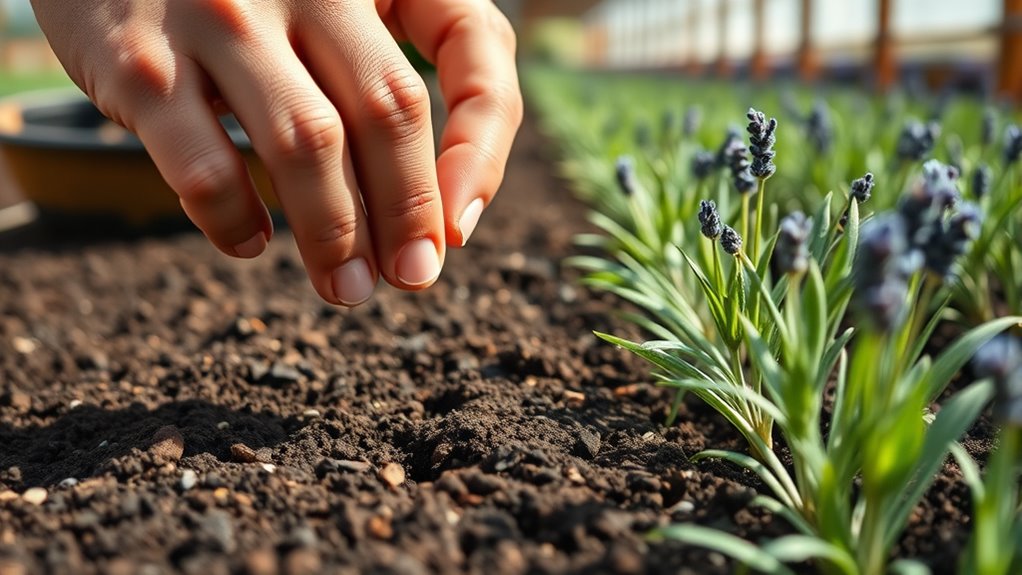
When sowing, lightly press seeds into the soil surface; they need light to germinate, so don’t cover them deeply. Maintain pest prevention by keeping the area clean and free of weeds.
Regular seedling care involves watering carefully and making sure they get enough light. Whether indoors or outside, paying attention to seasonal timing and proper seed selection will give your lavender the best start.
Germinating and Caring for Lavender Seedlings
Once your lavender seeds have germinated, it’s important to give them the right environment to grow strong. Keep the soil moist but not waterlogged, and place the seedlings in bright, indirect sunlight.
To help them thrive, make sure they get proper seedling nutrition. Use a diluted, balanced fertilizer every couple of weeks. Keep an eye out for pests like aphids or spider mites and deal with any infestations quickly using organic controls or insecticidal soap.
Here’s a quick overview:
| Light Conditions | Care Focus |
|---|---|
| Bright, indirect sunlight | Keep soil consistently moist |
| Avoid direct, harsh sunlight | Use gentle fertilization |
| Keep in a well-ventilated area | Regular pest inspections |
| Soil & Environment | Pest & Nutrition |
| Well-draining, sandy soil | Apply seedling fertilizer sparingly |
| Keep soil slightly moist | Remove pests early |
| Ensure good air circulation | Watch for signs of pests |
Following these simple steps will give your lavender seedlings the best chance to flourish.
When and How to Transplant Lavender Seedlings to Your Garden
When your lavender seedlings have developed a strong set of true leaves and are sturdy enough to handle outdoor conditions, it’s time to move them to your garden. Proper transplanting timing guarantees your seedlings establish well. Wait until the danger of frost has passed and the soil warms up. Before transplanting, harden off your seedlings by gradually exposing them to outdoor conditions over a few days.
Keep these tips in mind:
- Space seedlings about 12-18 inches apart to promote airflow and growth.
- Choose a sunny, well-drained spot for planting.
- Water the soil lightly before transplanting to minimize shock.
- Gently remove seedlings from their containers, avoiding root damage.
- Dig holes twice as wide as the root ball for easy planting.
Following these steps helps guarantee healthy growth and a thriving lavender garden. Proper seedling spacing and transplanting timing are key to success.
Watering and Sunlight Needs for Growing Lavender
Lavender thrives best when it gets plenty of sunlight and consistent watering, making these factors essential for healthy growth. Aim for at least 6 hours of direct sunlight daily, as this encourages strong, fragrant plants. Without enough sun, stems can become weak, and blooming may be poor.
Lavender needs at least 6 hours of sunlight daily for healthy, fragrant growth.
When it comes to watering, lavender prefers infrequent but deep watering. Let the soil dry out between waterings to prevent root rot and overwatering. During hot, dry times, you can water more often, but always check the soil moisture first.
Avoid shallow or excessive watering, which can harm roots and reduce plant vigor. Try to keep the soil lightly moist but not soggy. Proper sunlight and watering together help your lavender develop a healthy root system and vibrant foliage.
Following these guidelines sets the stage for a successful, fragrant lavender plant that’s both healthy and beautiful.
Troubleshooting Common Lavender Seed Growing Challenges
Growing lavender from seed can sometimes present challenges, but most issues come from environmental factors or improper care. One common problem is low seed viability; make sure you’re starting with fresh, high-quality seeds for better germination.
If seeds aren’t sprouting, check your moisture levels. Overwatering can cause mold, while underwatering stalls growth. Pests can also hinder seedlings, so use pest management strategies to protect young plants.
Inconsistent temperature or light can lead to poor germination or weak growth. Keep conditions stable and bright to give your seedlings the best chance. Also, poor soil drainage can cause root rot, so use well-draining soil mixes.
Pruning and Maintaining Healthy Lavender Plants
If you want your lavender to stay healthy and looking great, it’s important to prune it the right way and keep up with a regular care routine. When you prune properly, your lavender will grow more bushy and full, and it helps prevent diseases from taking hold.
And don’t forget, giving your lavender consistent watering and making sure it gets plenty of sunlight are key to keeping it thriving. Stick to these simple practices, and you’ll have beautiful, long-lasting lavender plants that really stand out.
Proper Pruning Techniques
Proper pruning is crucial for keeping your lavender healthy and encouraging abundant blooms. Timing is key; prune in late summer or early fall after flowering. Use sharp, clean pruning tools to make precise cuts without damaging the plant.
When pruning, adopt proper methods like cutting just above the woody base, avoiding cutting into old, brown wood. The benefits include better airflow, disease prevention, and a more vigorous, lush plant.
Keep these tips in mind: prune at the right time for peak growth, use sharp pruning tools for clean cuts, and follow correct pruning techniques to avoid damage. Regularly remove dead or woody stems to maintain shape and encourage new growth.
Consistent pruning guarantees your lavender stays healthy and productive year after year.
Consistent Care Practices
Maintaining healthy lavender plants requires consistent care practices, especially regular pruning and attention to overall plant health. Proper pruning encourages bushier growth and prevents woody stems.
You should also monitor for pests and practice pest management to keep plants healthy. Use appropriate fertilizer options like a balanced, low-nitrogen fertilizer to support growth without promoting excessive foliage.
Regular fertilization provides necessary nutrients, but avoid overdoing it, as too much fertilizer can harm the plant. Keep an eye out for signs of disease or pest infestations, and address issues promptly.
Consistent watering, well-drained soil, and pruning are essential to keeping lavender vigorous. By sticking to these practices, you’ll ensure your lavender remains resilient, aromatic, and beautiful all season long.
Harvesting and Using Lavender Blooms for Fragrance and Crafts
When your lavender blooms are at their peak, it’s the perfect time to harvest them for the best fragrance and craft projects. Timing really matters here—try to pick the flowers just as the buds are opening up. That way, you’ll get the maximum scent and the most vibrant color.
Once you’ve harvested your lavender, there are so many ways to enjoy it. You can make homemade sachets, create your own essential oils, or even use the flowers to make pretty decorative arrangements. It’s a lovely way to enjoy both the aroma and the beauty of lavender in your home.
Harvesting Techniques and Timing
Timing is key when harvesting lavender to ensure you get the best fragrance and color. The ideal time is when the buds are just starting to open, usually in the early morning after the dew has dried.
Proper harvest techniques help keep the fragrance and quality at their best. Watch the bloom stages closely to pick the right moment.
Use gentle drying methods like hanging the bundles in a dark, airy space. Keep the stems straight so they maintain their shape while drying.
Store the dried lavender in airtight containers, and keep them away from sunlight. Avoid crushing the blooms to preserve their aroma and vibrant color.
Following these steps will help you preserve the essential oils, making sure your lavender stays fragrant and beautiful for crafts or aromatic uses.
Creative Uses for Blooms
Lavender blooms are a versatile treasure, offering a fragrant burst of scent that can enhance many crafts and daily routines. You can use dried lavender in cooking, adding a floral note to baked goods, teas, or salads.
For a calming effect, incorporate lavender into sachets, potpourri, or homemade candles. Its aromatherapy benefits can help reduce stress and promote relaxation.
Fresh blooms are perfect for making beautiful wreaths or pressing for decorative art. Lavender’s scent also works well in bath salts or massage oils, providing soothing aromatherapy benefits.
Harvested blooms are a simple way to enjoy your garden’s fragrance at home while boosting your wellness routines.
Tips for Long-Term Success With Your Lavender Plants
To guarantee your lavender plants thrive in the long run, consistent care and attention are essential. Proper pest management helps prevent issues like aphids and root rot, so regularly inspect your plants and use natural deterrents or organic treatments.
Companion planting with herbs like rosemary or sage can improve growth and reduce pests naturally. Make sure your lavender gets full sun and well-draining soil to avoid overwatering.
Pruning annually keeps plants bushy and encourages more blooms. Mulching conserves moisture and suppresses weeds, reducing competition for nutrients.
Moreover, avoid over-fertilizing, which can lead to leggy growth and reduce essential oils. Regularly check soil moisture levels and provide adequate airflow to prevent fungal diseases.
Frequently Asked Questions
Can Lavender Seeds Be Started Outdoors From Seed Directly?
Yes, you can start lavender seeds outdoors directly, but it’s best to wait until after the last frost.
Make sure your outdoor conditions are just right—well-draining soil and plenty of sunlight are key. Sow the seeds on the surface and lightly cover them.
Keep the soil moist and be patient, as germination might take a few weeks. With good care, your lavender plants will thrive.
How Long Does It Take for Lavender Seeds to Germinate?
Patience is a virtue, especially when waiting for lavender seeds to sprout. Typically, lavender seed types take about 14 to 21 days to germinate if you provide the right conditions.
Factors like temperature, moisture, and light are essential. Keep your soil well-drained and maintain consistent warmth.
With proper care, your lavender seeds will soon break through the soil, rewarding your patience with fragrant, lush plants.
What Are Common Pests That Affect Lavender Seedlings?
You might encounter pests like aphids, whiteflies, or spider mites that affect lavender seedlings. To manage them, focus on identifying the specific pest causing the problem.
Use organic solutions like insecticidal soap or neem oil, which are safe and effective options. Regularly inspect your plants so you can catch any issues early.
Prompt treatment of infestations helps keep your lavender healthy and thriving. Staying vigilant is key to protecting your seedlings from common pests.
Are There Specific Fertilizers Best for Young Lavender Plants?
Think of your young lavender plants as tiny chefs needing the right ingredients. Use a balanced fertilizer with a focus on phosphorus to help develop strong roots.
Keep the nitrogen moderate to support healthy growth without making the plants too leggy. Avoid overfeeding, which can cause the plants to become stretched out and weak.
Choose a gentle, organic liquid fertilizer or a slow-release granular type. Apply it carefully, following the package instructions, to nurture your lavender from seedling to lush plant.
How Do I Prevent Mold or Damping-Off in Lavender Seedlings?
To prevent mold and damping-off in your lavender seedlings, make sure to give them good air circulation. This helps keep humidity levels down and reduces the chance of mold growth.
Avoid overwatering and use well-draining soil. Only water when the soil feels dry to the touch, and never let your seedlings sit in soggy soil.
Keep the growing area clean and sterile. Remove any affected seedlings immediately to prevent the spread of mold.
If needed, you can apply a diluted fungicide, but focus mainly on good watering habits and cleanliness.
Consistent care and good airflow will help your seedlings stay healthy and resistant to mold and damping-off.
Conclusion
With patience and a gentle touch, you’ll nurture your lavender from tiny seeds to fragrant blooms that brighten your garden and soul. Welcome each step, from soil preparation to harvest, as a delightful journey of growth and exploration.
Remember, even the most delicate beginnings can blossom into a stunning display of nature’s beauty. Trust in your care, and soon you’ll enjoy the sweet reward of a thriving lavender haven, whispering its soothing scent just for you.