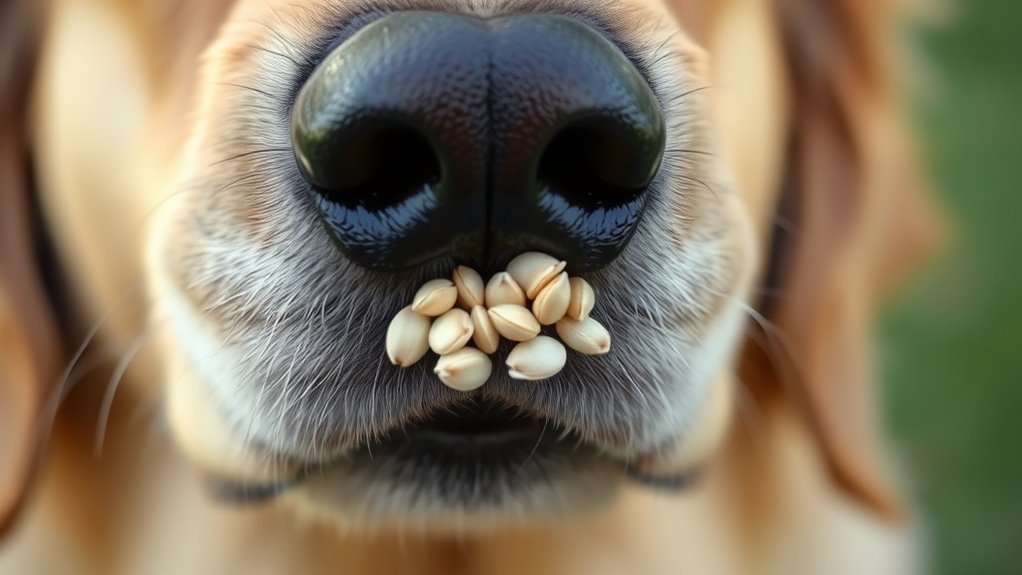
Risks of Dogs Eating Sesame Seeds
Many dog owners worry about what their pets might accidentally eat and the potential health risks involved. If your dog has a habit of snacking on unusual foods, you’re not alone—this is a common concern for many pet lovers.
One ingredient that can seem harmless but actually poses risks is sesame seeds.
If your dog eats sesame seeds, they could face risks like allergic reactions, digestive upset, or choking hazards, especially if they gulp them down whole. Excessive intake may cause diarrhea, vomiting, or strains on the pancreas, leading to health issues like pancreatitis.
Sesame seeds might also interact with medications or trigger sensitivities.
To keep your pet safe, it’s important to understand the potential dangers—more important details are just ahead.
Key Takeaways
- Eating too many sesame seeds can upset a dog’s stomach, leading to diarrhea or general discomfort.
- Sesame seeds might cause allergic reactions like itching, swelling, or trouble breathing.
- Because they’re high in fat, eating a lot could lead to pancreatitis or weight gain.
- Whole seeds can be a choking hazard or cause blockages if the dog doesn’t chew them well.
- Sesame seeds can also interfere with some medications, possibly affecting how they work or increasing bleeding risks.
What Are Sesame Seeds and Why Do Some Dog Owners Consider Giving Them?
Sesame seeds are tiny, oil-rich seeds often used in cooking and baking to add flavor and texture. You’ll see them sprinkled on salads, mixed into bread dough, or roasted as a nutty snack.
Many dog owners think about giving sesame seeds because they believe these seeds have health benefits, like providing healthy fats, antioxidants, and nutrients such as calcium and magnesium.
Many dog owners consider sesame seeds for potential health benefits like healthy fats and essential nutrients.
Some believe that small amounts can help improve a dog’s coat, support joint health, or aid digestion. But it’s important to remember that sesame seeds aren’t essential for dogs and should be given with care.
While they do have some benefits, offering sesame seeds in moderation and making sure they are plain and unsalted is key. Always check with your vet before adding new foods to your dog’s diet, since what’s good for humans isn’t always safe for dogs.
Are Sesame Seeds Safe for Dogs to Eat?
You might be curious if sesame seeds are okay for your dog to eat. They do have some good nutritional benefits, but there are also some risks to keep in mind. While a small amount might be harmless, it’s important to be aware of potential allergies or signs of upset stomach.
Before giving your dog sesame seeds, it’s a good idea to know what to watch out for. Just like with any new treat, it’s best to introduce them gradually and see how your pup reacts.
Nutritional Benefits and Risks
While sesame seeds are generally considered nutritious for humans, their safety for dogs isn’t a straightforward yes or no. These seeds pack a lot of good stuff, like healthy fats, fiber, vitamins, and minerals such as calcium and magnesium.
But remember, feeding guidelines for dogs are different from ours. Small amounts might be okay and even beneficial, but giving too much can cause digestive upset or other health problems.
Sesame seeds can be a healthy treat if given sparingly and prepared properly, like in small, plain portions. Always keep moderation in mind.
Before adding sesame seeds to your dog’s diet, it’s a good idea to check with your veterinarian. This is especially important if your pup has health issues or is on medication.
When used properly, sesame seeds can be a safe, nutritious snack for your dog.
Potential Allergic Reactions
Although sesame seeds are generally safe for most dogs, some pups may have allergic reactions. An allergic response happens when your dog’s immune system overreacts to a substance it mistakenly thinks is harmful.
If your dog is allergic to sesame seeds, you might notice symptoms like itching, swelling, ear infections, or skin irritation. In more severe cases, an allergic reaction can cause difficulty breathing or stomach issues like vomiting and diarrhea.
It’s really important to watch your dog after introducing sesame seeds into their diet. If you see any signs of an allergic reaction, remove the seeds right away and talk to your vet.
Knowing about potential sensitivities helps prevent discomfort and keeps your dog healthy and safe.
Sesame Seed Toxicity Signs
Sesame seeds are generally safe for dogs in small amounts, but eating a lot can cause toxicity signs. Keep an eye out for issues like vomiting, diarrhea, or tummy discomfort.
These symptoms might happen if your dog eats too many seeds, which can upset their stomach. While sesame seeds do have some healthy fats, protein, and minerals, they aren’t essential for dogs and should be given in moderation.
Eating too many could trigger allergic reactions or digestive problems. If your dog shows any strange behavior or symptoms that stick around after eating sesame seeds, contact your vet right away.
Knowing these signs helps keep your dog safe and healthy.
Can Sesame Seeds Cause Allergic Reactions in Dogs?
Some dogs can actually be allergic to sesame seeds, so they might have a negative reaction if they eat them. It’s good to keep an eye out for signs like itching, swelling, or even trouble breathing. If your dog shows any of these symptoms after eating sesame, it’s best to talk to your vet.
To keep your pup safe, it’s a good idea to avoid giving them sesame seeds altogether. And if you’re ever unsure or notice any reactions, definitely check in with your vet for advice. Better safe than sorry!
Sesame Allergies in Dogs
While sesame seeds are generally safe for many dogs, there’s still a chance they can trigger allergic reactions in some.
Sesame seed reactions can range from mild to severe, so it’s important to recognize the signs early. If you suspect your dog has a sesame allergy, talk to your vet for allergy testing. This can help identify specific food sensitivities.
Not all dogs will develop an allergy, but if your pet shows signs like itching or upset stomach after eating sesame seeds, allergy testing can confirm the cause. Keep in mind that allergy symptoms may develop over time, so stay vigilant.
Understanding your dog’s potential sesame allergies helps prevent adverse reactions and keeps them safe when trying new foods.
Symptoms of Allergic Reactions
Have you noticed your dog scratching more, licking their paws, or showing signs of discomfort after eating sesame seeds? These are common signs of an allergic reaction. Your dog might also experience swelling, redness, or ear infections.
In some cases, they could develop difficulty breathing or vomiting. Recognizing these symptoms early helps you respond quickly and effectively. If you suspect a sesame seed allergy, stop feeding them immediately and consult your veterinarian.
Proper allergy management involves monitoring your dog’s reactions and avoiding sesame seeds altogether. Keep an eye out for any changes in behavior or physical symptoms, and don’t hesitate to seek professional advice if you notice anything unusual.
Prompt action can prevent more severe allergic reactions and keep your dog safe.
Managing Sesame Sensitivities
Managing sesame sensitivities in your dog requires vigilance and proactive steps, especially since sesame seeds can trigger allergic reactions in some dogs. Start with sesame sensitivity testing through your veterinarian to see if your dog has a real allergy.
Once confirmed, avoid feeding sesame seeds and look for suitable dietary alternatives that provide the necessary nutrients without risking a reaction. Reading ingredient labels carefully helps prevent accidental exposure.
Keep a close eye on your dog’s behavior and health after introducing new foods. If symptoms appear, contact your vet immediately. Consistent management, including avoiding sesame seeds and choosing safe substitutes, helps minimize your dog’s allergic response.
With proper testing and careful diet planning, you can help keep your dog healthy and allergy-free.
How Do Sesame Seeds Affect a Dog’s Digestive System?
Sesame seeds can have a noticeable effect on a dog’s digestive system mainly because they’re high in fiber. This fiber helps with digestion and keeps your dog’s bowel movements regular, preventing constipation.
The fiber also interacts with digestive enzymes, which are key for breaking down food efficiently. When your dog eats sesame seeds, the fiber can slow down digestion a bit, giving the body more time to absorb nutrients.
On the plus side, this can make your dog feel full longer and support gut health. But if your dog eats too many sesame seeds, the extra fiber might cause discomfort like bloating or diarrhea.
It’s important to watch how your dog’s digestion reacts to sesame seeds and not overdo it. In moderation, sesame seeds can help with digestion, but eating too much can strain your dog’s digestive enzymes and upset their stomach.
Are Sesame Seeds Harmful If My Dog Eats Too Many?
While small amounts of sesame seeds can benefit your dog’s digestion thanks to their nutrient profile, eating too many can cause health problems. Sesame nutrition includes healthy fats, fiber, and minerals that support digestion and overall health.
However, overindulging may lead to gastrointestinal discomfort like diarrhea or upset stomach. The high-fat content from excess sesame seeds can also strain your dog’s digestive system, which could result in pancreatitis or weight gain.
Furthermore, consuming large quantities increases the risk of nutrient imbalances or allergic reactions, especially if your dog has sensitivities. It’s important to remember that moderation is key when sharing sesame seeds with your pet.
While they can be a healthy snack in small amounts, feeding too many may overwhelm your dog’s digestive system and cause discomfort. Always consult your veterinarian before making sesame seeds a regular part of your dog’s diet.
What Are the Risks of Choking or Obstructions From Sesame Seeds?
Have you ever wondered if sesame seeds could pose a choking hazard for your dog? Small, round, and hard, sesame seeds can be a choking risk, especially if your dog tries to swallow them whole. These tiny seeds can get stuck in the throat, blocking airflow and causing distress.
Sesame seeds can pose a choking risk for dogs if swallowed whole or in large quantities.
Sesame seeds also pose obstruction risks if they aren’t chewed properly. If your dog swallows a large number without breaking them down, the seeds could build up in the digestive tract, leading to a blockage that needs veterinary help.
Dogs that gulp their food without chewing are especially vulnerable. To keep your dog safe, always supervise snack time and avoid offering large quantities of sesame seeds.
If your dog coughs, gags, or has trouble swallowing after eating sesame seeds, seek vet help right away. Preventing choking and obstructions is key to keeping your dog safe.
Can Sesame Seeds Lead to Pancreatitis or Other Health Issues?
Eating too many sesame seeds might cause some issues for your dog, like pancreatitis or other health problems. If your pet eats a lot of them, it could lead to inflammation or upset their digestion, especially if they already have health concerns.
Keep an eye out for signs like vomiting, stomach pain, or loss of appetite. Catching these symptoms early can help prevent more serious complications down the line.
Potential Triggers for Pancreatitis
Sesame seeds, although generally safe for dogs in small amounts, can sometimes trigger health issues like pancreatitis, especially in sensitive or predisposed animals.
Certain dietary factors can increase the risk of pancreatitis, so it’s important to keep an eye on what your dog eats.
Potential triggers include high-fat content in sesame seeds, which can put strain on the pancreas.
Allergic reactions can also cause inflammation, and overfeeding may lead to digestive upset.
Underlying health conditions that make your dog more sensitive can also be a concern.
If your dog has a history of pancreatitis or other health issues, even small amounts of sesame seeds could be risky.
Always consider your dog’s overall diet and check with your vet to avoid unnecessary health problems related to what they eat.
Impact of Excessive Sesame Intake
While sesame seeds are generally safe in small amounts, eating too much can cause health problems for your dog. Overdoing it can upset their stomach or cause diarrhea.
Consuming large quantities may also put strain on your dog’s pancreas, raising the risk of pancreatitis, especially if they eat sesame regularly or in big amounts. Moderation is really important to avoid these issues.
Even healthy treats like sesame can be harmful if given excessively. If your dog shows signs of stomach upset after eating sesame seeds, cut back on the amount and talk to your vet.
Signs of Health Complications
If your dog shows certain symptoms after eating sesame seeds, it could be a sign of health problems like pancreatitis or other issues. Keep an eye out for vomiting, diarrhea, abdominal pain, or lethargy. These could mean an allergic reaction or digestion troubles.
To find out if allergy testing is needed, talk to your vet. They might suggest avoiding sesame seeds completely and trying alternatives like pumpkin or flaxseed. Remember, seeds can sometimes cause inflammation or other health concerns in sensitive dogs.
Stay alert for these warning signs and seek veterinary advice promptly if you notice any symptoms. Catching these early can help prevent serious health problems and keep your dog happy and healthy.
Do Sesame Seeds Interact With Common Dog Medications?
Although sesame seeds are generally safe for dogs in moderation, they can potentially interact with certain medications your dog might be taking. These interactions could affect how your dog’s body processes drugs, possibly reducing effectiveness or increasing risks like sesame toxicity.
| Medication Type | Possible Interaction |
|---|---|
| Blood thinners | Sesame seeds contain vitamin E, which may raise bleeding risks. |
| Anti-inflammatory | May interfere with medication absorption or effectiveness. |
| Diuretics | Could affect electrolyte balance, impacting medication efficacy. |
If your dog is on medication, it’s best to consult your vet before adding sesame seeds to their diet. While sesame toxicity isn’t common, combining seeds with certain drugs might lead to unexpected health issues. Always seek professional advice to keep your dog safe.
What Signs Should I Watch for If My Dog Eats Sesame Seeds?
Even though sesame seeds are generally safe for dogs in moderation, it’s important to watch for any adverse reactions after your dog eats them. Some signs indicate your dog might be having an allergic response or digestive upset. Keep an eye out for:
- Itching, swelling, or redness around the face or paws
- Vomiting or diarrhea
- Difficulty breathing or wheezing
- Lethargy or unusual behavior
These symptoms can signal an allergic reaction and may need prompt veterinary attention. Digestive issues like vomiting or diarrhea could also happen if your dog’s stomach doesn’t tolerate the seeds well. If you notice any of these signs, contact your vet immediately. Catching problems early can prevent more serious reactions and keep your dog safe. Remember, even small amounts can trigger issues in sensitive dogs, so monitor closely after they eat sesame seeds.
Should I Avoid Giving My Dog Sesame Seeds Entirely?
While sesame seeds are generally safe for most dogs in small amounts, many pet owners prefer to avoid giving them altogether to eliminate any risk of bad reactions. Although sesame offers benefits like healthy fats and antioxidants, the small chance of allergies or choking worries makes some owners choose to skip them.
If your dog has a history of food sensitivities or allergies, it’s safer to avoid sesame seeds completely. Some dogs might also have trouble digesting seeds, which could lead to stomach issues.
Talking to your vet before adding sesame seeds to your dog’s diet is a good idea. They can help you weigh the potential benefits against the risks.
If you’re unsure or want to be cautious, avoiding sesame seeds altogether is a smart choice. This approach keeps your dog’s health a priority, especially if they have special dietary needs or sensitivities.
Frequently Asked Questions
Are There Any Benefits of Giving Sesame Seeds to Dogs?
Yes, giving sesame seeds to your dog can offer benefits, thanks to their nutritional value. They’re rich in healthy fats, protein, and minerals like calcium and magnesium, which support your dog’s overall health.
However, you should watch for potential allergies, as some dogs might react negatively. Always introduce new foods gradually and consult your vet to verify sesame seeds fit safely into your dog’s diet.
How Much Sesame Seeds Is Safe for Dogs to Consume?
You should give your dog only a small amount of sesame seeds to avoid sesame seed toxicity. A safe serving is about half a teaspoon for small dogs and up to a teaspoon for larger dogs.
Keep in mind that too many seeds can cause stomach upset or blockages. Always check with your vet before adding sesame seeds to your dog’s diet to make sure it’s safe and suitable for their health.
Can Sesame Seeds Affect a Dog’s Weight or Metabolism?
Sesame seeds can influence your dog’s weight and metabolism, especially if fed in excess. They contain healthy fats that help support metabolic health, but too many might lead to weight gain.
If you’re using sesame seeds for weight management, keep portion sizes small and make sure they’re balanced with your dog’s overall diet. Moderation is key.
Monitor your dog’s response and talk to your vet to ensure sesame seeds support a healthy metabolism without causing unwanted weight gain.
Are Organic Sesame Seeds Safer for Dogs Than Non-Organic?
Yes, organic sesame seeds are generally safer for your dog because they often have organic certification, which means they’re free from pesticides and harmful chemicals. Higher seed quality means fewer contaminants, so there’s less risk to your dog’s health.
When you give your dog sesame seeds, choosing organic options can give you peace of mind. It’s a way to ensure you’re offering a cleaner, safer treat for your furry friend.
Just remember to feed sesame seeds in moderation and check with your vet if you’re unsure about giving them to your dog.
What Should I Do if My Dog Accidentally Eats a Large Amount?
If your dog accidentally eats a large amount of sesame seeds, act quickly. Watch for signs like vomiting, diarrhea, or lethargy.
If these symptoms appear or if you’re worried, contact your veterinarian immediately for emergency advice.
Stay calm, note how much was eaten, and follow your vet’s instructions.
Taking prompt action can help prevent complications and keep your dog safe.
Conclusion
While sesame seeds might seem harmless, they can pose health risks for your dog, especially if eaten in excess or if your dog has allergies. Did you know that up to 10% of dogs may develop food allergies, including to sesame seeds?
To keep your beloved companion safe, it’s best to consult your vet before offering any new treats. Always monitor for adverse reactions and prioritize your dog’s health above all.
Remember, when it comes to sesame seeds and dogs, caution is key.