How Many Chia Seeds to Eat Per Day?
Many people want to boost their health but find it tricky to know how much of certain superfoods like chia seeds to include in their diet. You’re not alone—figuring out the right amount can feel overwhelming.
Luckily, incorporating chia seeds can be simple and beneficial. You should aim for 1 to 2 tablespoons of chia seeds daily to enjoy their health benefits without causing digestive issues. This amount provides essential nutrients like fiber, omega-3s, and protein, supporting digestion, heart health, and weight management.
Keep in mind that individual needs vary based on age, activity level, and health conditions. To learn more about how to include chia seeds safely into your diet, keep exploring for detailed tips and guidelines.
Key Takeaways
- The usual recommended amount is 1 to 2 tablespoons (15-30 grams) for adults.
- You can tweak your chia seed intake based on your age, weight, activity level, and health needs.
- It’s best to soak the seeds in liquid for at least 15 minutes before eating to help with digestion.
- Don’t go overboard—too much chia can cause bloating, gas, or stomach discomfort.
- Start adding chia gradually to your meals and pay attention to how your body responds.
What Are the Nutritional Benefits of Chia Seeds?
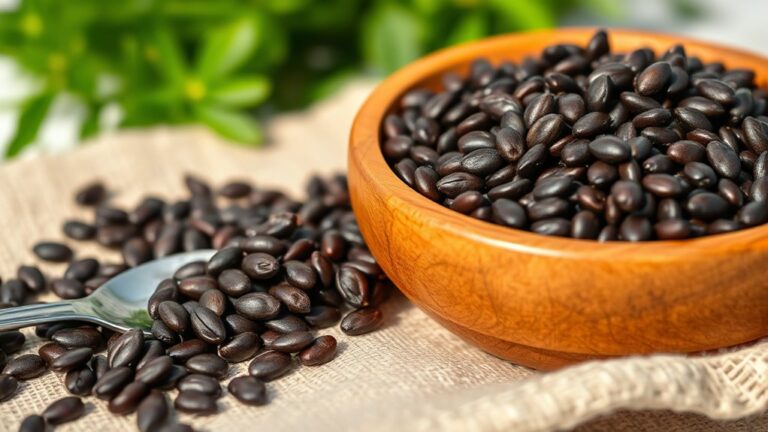
Chia seeds are packed with nutrients that can boost your health in multiple ways. Their impressive nutrition includes high levels of fiber, omega-3 fatty acids, protein, vitamins, and minerals like calcium, magnesium, and phosphorus.
These nutrients support digestion, improve heart health, and strengthen bones. The health benefits of chia seeds go beyond nutrition; they help regulate blood sugar levels, reduce inflammation, and promote feelings of fullness, which can aid weight management.
Because they’re rich in antioxidants, chia seeds protect your cells from damage caused by free radicals. Incorporating these tiny seeds into your diet can be simple—you can add them to smoothies, oatmeal, or yogurt, or use them as an egg substitute in recipes.
How Much Chia Seeds Should You Eat Daily?
To enjoy the health benefits of chia seeds without overdoing it, it’s helpful to know the recommended daily amount. The typical chia seed dosage for most adults is about 1 to 2 tablespoons per day, which equals roughly 15 to 30 grams.
Most adults should aim for 1 to 2 tablespoons of chia seeds daily for optimal health benefits.
This daily intake provides essential nutrients like fiber, omega-3 fatty acids, and protein without risking digestive discomfort or nutrient imbalance. Keep in mind that the chia seed dosage can vary depending on your body size, diet, and health goals, but sticking within this range is generally safe and effective.
Incorporating chia seeds into your meals—such as smoothies, yogurt, or oatmeal—can help you meet your daily intake naturally. Remember, moderation is key to maximizing benefits while avoiding potential side effects like bloating or gastrointestinal issues.
Always listen to your body and adjust your chia seed consumption accordingly.
What Factors Influence Your Ideal Chia Seed Intake?
Several factors can influence the ideal amount of chia seeds for you, including your age, weight, activity level, and overall health. Your personal health goals and dietary needs also play a role.
For example, if you’re aiming to boost chia seed nutrition, you might need a different amount than someone using them for fiber or omega-3s.
Below is a table highlighting key factors:
| Factor | Impact on Intake |
|---|---|
| Age | Older adults may need smaller portions |
| Weight | Heavier individuals might require more |
| Activity Level | Active people may benefit from higher intake |
| Health Conditions | Certain conditions need tailored amounts |
| Dietary Goals | Weight loss vs. general health needs |
Understanding these factors helps you customize your chia seed consumption for maximum benefits and personal health.
How Much Chia Seeds Do You Need for Different Goals?
Determining how much chia seeds you should eat really depends on your specific health goals. If you’re aiming for overall wellness, about one to two tablespoons (roughly 12-24 grams) daily is a good target. This provides fiber, omega-3s, and antioxidants without going overboard.
For weight loss, smaller portions—around one tablespoon daily—can help curb hunger and keep calorie intake in check. Athletes or those looking to boost energy might go up to three tablespoons to get the most omega-3s and protein benefits.
If you’re managing digestive issues, start with small amounts and increase gradually. This helps your body adjust comfortably. Always listen to your body and check with a healthcare professional if you’re unsure.
Adjusting your daily intake based on your goals ensures you get the benefits without exceeding recommended amounts.
How to Measure and Prepare Chia Seeds Safely
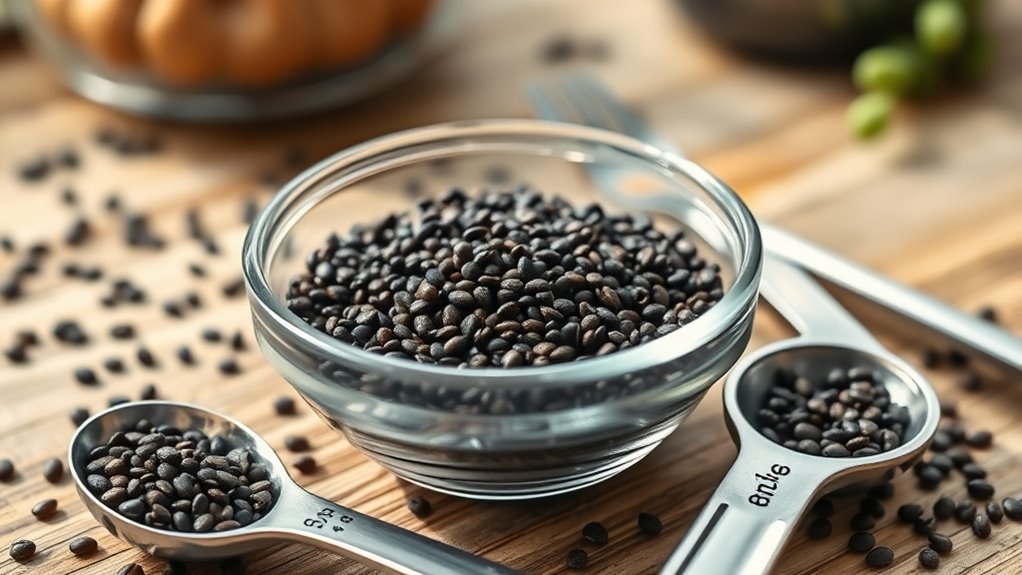
Measuring and preparing chia seeds correctly ensures you get the most benefits while avoiding potential digestive discomfort. Use precise techniques like a tablespoon or a kitchen scale to control your intake accurately.
For example, a standard tablespoon holds about 12 grams of seeds, which is a good serving size for many people. Before eating, always choose safe preparation methods.
Soak chia seeds in water, milk, or juice for at least 15 minutes to let them form a gel-like consistency. This makes them easier to digest and helps your body absorb nutrients better.
Avoid adding dry seeds directly to recipes without soaking, as they can cause digestive issues. Keep your chia seeds stored in an airtight container in a cool, dark place to stay fresh.
Using proper measuring techniques and safe preparation methods will help you enjoy the health benefits of chia seeds without discomfort.
Common Mistakes When Eating Chia Seeds
One mistake people often make is eating too many chia seeds at once. It might seem harmless, but it can actually cause some digestive issues or other health problems. So, it’s best to stick to the recommended amounts.
Another common mistake is not drinking enough water alongside chia seeds. Since they absorb a lot of liquid, not staying well-hydrated can lead to choking or blockages. To stay safe, just remember to drink plenty of fluids and enjoy your chia seeds in moderation.
Overconsumption Risks
While chia seeds are generally healthy, eating too many can lead to some unwanted side effects. Overdoing it might cause bloating, gas, and stomach discomfort.
These digestive issues happen because chia seeds are high in fiber, which can overwhelm your system if you consume too much. Drinking enough water is key, or you might end up with constipation or diarrhea.
Eating a lot of chia seeds can also interfere with nutrient absorption and make you feel overly full or nauseous. To avoid these problems, stick to the recommended daily amount and introduce chia gradually.
Pay attention to how your body responds, so you can prevent digestive issues from overconsumption. Moderation lets you enjoy the benefits of chia seeds without the uncomfortable side effects.
Insufficient Hydration
Because chia seeds can absorb many times their weight in water, not drinking enough fluids is a common mistake that can cause discomfort or health issues. When you ignore hydration, the seed absorption process slows down, increasing the risk of choking or digestive problems.
To avoid these dangers, make sure to drink plenty of water before and after eating chia seeds—aim for at least 8 ounces per serving. Soak your seeds thoroughly in liquid for at least 10-15 minutes to ensure proper absorption.
Listen to your body; if you feel dryness or discomfort, hydrate immediately. Proper hydration supports healthy digestion, prevents blockages, and helps you get the most benefits from chia seeds, keeping your body safe and nourished.
What Are the Side Effects of Eating Too Many Chia Seeds?
Eating too many chia seeds can lead to several side effects, especially if you’re not used to eating a lot of high-fiber foods. You might end up with digestive issues like bloating, gas, or constipation if you go overboard.
Some people could have allergic reactions, such as skin rashes or swelling, but these are pretty rare. Eating too many chia seeds can also interfere with how your body absorbs nutrients, which might limit your intake of vitamins and minerals.
Plus, chia seeds are calorie-dense, so eating too much could unexpectedly increase your calorie intake. It’s also important to stay well-hydrated because dry seeds expand in your stomach, making hydration crucial.
And be mindful of meal timing—large amounts at once can cause discomfort. Remember, moderation is key. Eating chia seeds in reasonable amounts allows you to enjoy their benefits without risking side effects.
How Age and Health Conditions Affect Your Chia Seed Intake?
Your age and health conditions can significantly influence how much chia seeds you should add to your diet. As you get older, you might need to adjust your intake to prevent digestive issues or nutrient imbalances.
If you’re older, your body may require less chia to avoid bloating or discomfort. Likewise, conditions like diabetes or hypertension can impact how your body processes chia seeds, especially since they’re high in fiber and omega-3s.
If you’re managing a health condition, it’s best to check with your doctor to find out a safe amount. Older adults may also need smaller portions to avoid gastrointestinal discomfort.
People with digestive issues should introduce chia gradually and watch how their body responds. Listening to your body and consulting your healthcare provider helps you enjoy the benefits of chia seeds safely.
Properly adjusting your intake based on your age and health conditions keeps you safe and helps you stay healthy.
Tips for Incorporating Chia Seeds Into Your Meals
Finding easy ways to include chia seeds in your daily meals can help you enjoy their health benefits without feeling overwhelmed. One simple idea is adding them to breakfast, like making chia pudding. Just mix chia seeds with your favorite milk, let it sit until it thickens, and top with fruit or nuts.
Add chia seeds to breakfast with pudding, fruits, or nuts for a simple nutrient boost.
If you love chocolate, try making chocolate chia pudding by blending cocoa powder into the mix for a rich, satisfying treat. You can also sprinkle chia seeds over yogurt, oatmeal, or smoothie bowls for extra texture and nutrition.
Incorporating chia seeds into baked goods like muffins or energy bars is another effortless option. They also work well stirred into salads or used as a crunchy topping for desserts.
These versatile seeds are easy to add to your meals, making it simple to boost your daily nutrient intake without complicating your routine.
FAQs About Daily Chia Seed Consumption
Many people wonder about the ideal amount of chia seeds to include in their daily diet, and it’s a common question for those seeking health benefits without overdoing it. You might have heard chia seed myths suggesting you need large amounts, but moderation is key.
Here are some FAQs to clear things up:
- Can I eat too many chia seeds? Yes, eating too much can cause digestive issues. About 1-2 tablespoons daily is enough.
- Are chia seed recipes enough? Incorporate them into smoothies, oatmeal, or yogurt to enjoy their benefits without overdoing it.
- Do I need to soak them? Soaking chia seeds makes them easier to digest and helps your body absorb nutrients better.
Understanding these points helps you enjoy chia seeds safely and effectively, avoiding myths and getting the most health benefits from your favorite recipes.
Frequently Asked Questions
Can Children Eat Chia Seeds Safely Every Day?
Children can safely eat chia seeds daily when given in moderation. These seeds are packed with nutrients like fiber, omega-3s, and calcium, which help with growth and overall health.
You might serve them soaked in yogurt, smoothies, or puddings to make it easy and fun for kids to enjoy. Just remember to introduce them gradually, and make sure your child drinks plenty of water since chia seeds swell.
Always check with your pediatrician if you’re unsure about the right amount or if your child has specific health concerns.
Are There Any Specific Storage Tips for Chia Seeds?
Storing chia seeds is like keeping a treasure safe; use airtight storage containers to keep them fresh.
Keep them in a cool, dark place away from sunlight, which can damage their quality.
Proper storage helps extend their shelf life and prevents spoilage and clumping.
Check the container regularly for any signs of moisture or pests.
How Do Chia Seeds Affect Blood Sugar Levels?
Chia seeds help regulate blood sugar levels by slowing down digestion and carbohydrate absorption, which prevents spikes.
The chia benefits include stabilizing blood sugar and improving insulin sensitivity. When you include chia seeds in your diet, you may experience better blood sugar control over time.
Just remember to consume them in moderation and pair with a balanced diet for ideal health.
Can Chia Seeds Replace Other Dietary Fibers?
Chia seeds can effectively replace some dietary fiber sources, providing about 10 grams per ounce. They’re packed with nutritional benefits, including omega-3s and antioxidants.
Imagine filling half your plate with fiber-rich foods. Chia seeds add to that, making it easier to meet your daily goals.
While they’re versatile, it’s best to include other fiber sources like fruits, vegetables, and grains for a well-rounded diet.
Is Organic Chia Seed Better Than Non-Organic?
Organic chia seeds are generally better than non-organic because they often have more organic benefits, like fewer pesticides and chemicals. Sourcing is key since organic seeds usually come from trusted farms that focus on sustainable practices.
By choosing organic, you’re more likely to get pure, high-quality seeds. Plus, organic chia seeds support better health and help protect the environment.
Conclusion
So, figuring out how many chia seeds to eat each day really depends on your goals, health, and preferences. With all their benefits, they can be a fantastic addition to your diet—just keep it in moderation.
Are you ready to start incorporating this tiny superfood into your meals and enjoy the boost it offers? Remember, listening to your body is key to making chia seeds a healthy, tasty part of your routine.