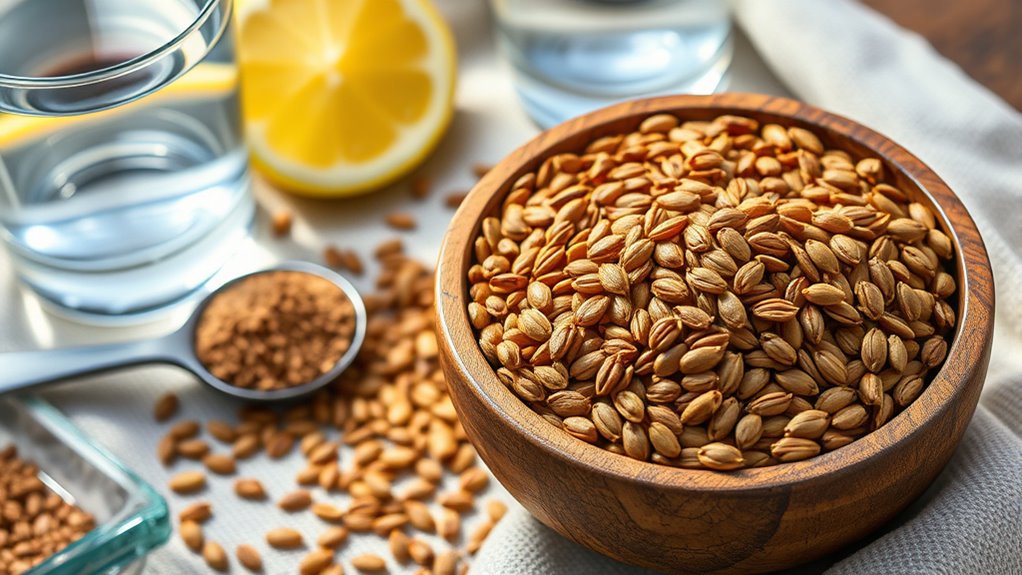
How to Maximize Benefits From Eaten Flax Seeds
Many people want to enjoy the health benefits of flax seeds but find it tricky to get the most out of them. You’re not alone—knowing how to prepare and store flax seeds properly can make all the difference.
To maximize the benefits of flax seeds, always opt for freshly ground seeds to improve nutrient absorption. Store them properly in airtight containers in a cool, dark place or freeze them to prevent oxidation.
Incorporate ground flax into smoothies, yogurt, or baked goods to boost digestibility. Soaking the seeds before eating can also reduce natural toxins and improve digestion.
For more tips on getting the most from flax seeds, keep exploring how preparation and storage make a difference.
Key Takeaways
- Grind flax seeds thoroughly to boost nutrient absorption and unlock the full benefits of omega-3s, fiber, and lignans.
- Store ground seeds in airtight containers in a cool, dark place or freezer to keep them fresh and prevent oxidation.
- Soak ground flax seeds for 4-6 hours or overnight to reduce toxins and make them easier to digest.
- Pair flax seeds with vitamin C-rich foods to help your body absorb more nutrients and improve overall health.
- Mix ground flax seeds into smoothies, yogurt, oatmeal, or baked goods for an easy and consistent way to enjoy them.
What Are Flax Seeds and Why Are They Healthy?
Flax seeds are small, brown or golden seeds packed with nutrients that offer numerous health benefits. These seeds come in various flax seed varieties, mainly brown and golden, each with similar nutritional profiles but slight differences in flavor and appearance.
Flax seeds are rich in omega-3 fatty acids, fiber, protein, and lignans, making them a powerful addition to your diet. Their nutritional profiles support heart health, improve digestion, and help balance hormones.
Flax seeds boost heart health, digestion, hormone balance, and are packed with omega-3s, fiber, protein, and lignans.
The high fiber content promotes regular bowel movements and keeps you full longer, while omega-3s contribute to reducing inflammation. Lignans provide antioxidant properties that may lower cancer risk.
Because flax seeds are nutrient-dense and versatile, incorporating them into your meals is simple. Whether ground or whole, they boost your intake of essential fatty acids, antioxidants, and fiber, supporting overall health.
Understanding the different flax seed varieties helps you choose the best type for your nutritional needs.
How Do Flax Seeds Boost Your Health Benefits?
Because of their rich nutrient composition, flax seeds actively contribute to your overall health by delivering essential fatty acids, fiber, and antioxidants. These benefits support your body in multiple ways.
The omega-3 fatty acids, especially alpha-linolenic acid, promote heart health by reducing inflammation and lowering cholesterol levels. The high fiber content helps with digestion, regulates blood sugar, and keeps you feeling full, which can aid in weight management.
Antioxidants like lignans protect your cells from oxidative damage and may lower the risk of chronic diseases. Flax seeds also contain plant-based proteins and minerals that strengthen your immune system and boost overall well-being.
Adding flax seeds to your diet can lead to better cardiovascular health, improved digestion, and hormonal balance. Their unique mix of nutrients makes them a powerful, natural way to support your wellness goals.
Should You Use Whole or Ground Flax Seeds?
In regard to maximizing the health benefits of flax seeds, choosing between whole and ground forms makes a difference. Whole seeds are more stable and have a longer shelf life because their outer shells protect the nutrients inside.
However, your body can’t effectively access the nutrients in whole seeds unless you chew them thoroughly, which isn’t always reliable. Ground flax seeds, on the other hand, provide ground benefits—making it easier for your body to absorb omega-3 fatty acids, fiber, and lignans.
For maximum nutritional impact, it’s recommended to consume ground flax seeds soon after grinding, as they can quickly oxidize and lose nutrients when exposed to air and light. While whole seeds are convenient to store, grinding them just before use guarantees you get the most out of their health-promoting compounds.
Ultimately, ground flax seeds offer better bioavailability and health benefits with proper storage.
How to Properly Prepare Flax Seeds for Better Digestion
If you want to get the most out of your flax seeds and make them easier to digest, it’s a good idea to grind them before eating. Grinding helps break down the tough outer shell, making the nutrients more accessible to your body.
You might also want to soak the seeds beforehand. Soaking can help reduce any natural toxins and make the seeds gentler on your digestion.
Basically, doing these two simple steps — grinding and soaking — can really help you maximize the health benefits of flax seeds and keep your digestion happy.
Grinding for Better Absorption
Grinding flax seeds is key to unlocking their full nutritional potential because whole seeds often slip through your digestion without releasing their benefits. Proper grinding makes nutrients more accessible and effective.
Start by choosing a good-quality grinder, like a coffee mill or spice grinder. Then, grind the seeds until they’re a fine, powdery consistency so your body can absorb the omega-3s, fiber, and lignans better.
Store the ground seeds in an airtight container in the fridge to keep them fresh and prevent oxidation. Remember, freshly ground flax seeds give you the best health benefits, so only grind what you need for immediate use or short-term storage.
This simple step can really boost the health perks of flax seeds and help you get more out of them.
Soaking to Reduce Toxins
Soaking flax seeds before eating can significantly reduce their natural toxins, making them safer and easier to digest.
This process helps break down antinutrients like phytic acid and cyanogenic compounds, which can block nutrient absorption or cause discomfort.
Reducing toxins allows your body to better absorb essential nutrients such as omega-3 fatty acids, lignans, and fiber.
To soak flax seeds properly, put them in a bowl with enough water to cover them completely.
Let them sit for about 4-6 hours or overnight. After soaking, drain and rinse the seeds thoroughly.
This not only detoxifies the seeds but also softens them, making them easier to digest and boosting their health benefits.
How Much Flax Seed Should You Eat Daily?
So, how much flax seed should you be eating each day? Well, a good rule of thumb is about one to two tablespoons of ground flax seeds daily. But honestly, the right amount really depends on what you’re aiming for and what your diet needs.
Just a quick heads-up—it’s important to watch your portions. Eating too much might not be great, especially if you’re keeping an eye on your calorie intake. So, think about what benefits you’re after—whether it’s more fiber, omega-3s, or other health perks—and adjust your intake accordingly.
Recommended Daily Intake
The recommended daily intake of flax seeds is usually one to two tablespoons. This gives you a healthy dose of fiber, omega-3 fatty acids, and lignans. Sticking to this amount helps you enjoy the benefits without going overboard.
One tablespoon has about 37 calories, making it a good choice for weight management. Two tablespoons provide roughly 5 grams of fiber, which supports digestion.
Eating this amount every day ensures you get essential nutrients for your heart health and hormonal balance.
Portion Control Tips
Maintaining the right portion size is key to maximizing flax seed benefits without overdoing it. Usually, about one to two tablespoons of ground flax seeds daily is a good serving.
Be mindful of portion sizes to avoid consuming too much, which could lead to digestive discomfort. You can sprinkle flax seeds over yogurt, mix them into smoothies, or add them to oatmeal.
Measuring your portions helps ensure you’re not exceeding the recommended amount. Remember, ground flax seeds are easier to digest and absorb nutrients better than whole seeds.
Stick to these serving suggestions to enjoy the health benefits without risking potential side effects. Proper portion control helps you get the most out of flax seeds while keeping your diet balanced.
Adjusting For Goals
Adjusting your flax seed intake depends largely on your health goals. When setting your goals, think about your dietary preferences and how flax seeds fit into your overall nutrition plan.
For example, if you’re aiming for heart health, eating 1-2 tablespoons daily gives you omega-3s and fiber.
If your focus is digestive wellness, start with 1 tablespoon and increase gradually based on how your body responds.
For weight management, incorporate flax seeds into your meals to help keep you full without eating too much.
Your ideal intake will vary based on your personal needs and diet choices, so listen to your body.
Adjust portion sizes as needed, and talk to a healthcare provider if you have questions.
Customizing your flax seed intake helps you get the most benefits for your specific goals.
What Are Common Mistakes When Eating Flax Seeds?
Are you aware of the common mistakes people make when incorporating flax seeds into their diet? One mistake is not storing them properly, which can reduce their benefits. Exposure to heat, light, or moisture causes them to spoil faster and lose nutrients.
Another mistake is eating whole flax seeds without grinding. Whole seeds often pass through your digestive system without being digested, limiting their health benefits. Some people also eat too many, which can cause digestive discomfort or interfere with medications.
| Mistake | Impact |
|---|---|
| Not storing properly | Nutrients degrade, benefits decrease |
| Eating whole seeds | Reduced digestibility and nutrient absorption |
| Overconsumption | Digestive issues or medication interference |
Avoid these pitfalls to get the most out of flax seeds. Proper storage and eating methods ensure you enjoy all their health benefits.
How to Store Flax Seeds to Keep Them Fresh
Storing flax seeds properly is essential to preserve their freshness and maximize their health benefits. To keep them fresh longer, consider these tips:
- Use airtight containers to prevent exposure to air and moisture, which can cause rancidity.
- Store flax seeds in a cool, dark place away from direct sunlight and heat sources.
- For extended storage, freeze flax seeds to slow down oxidation. Place them in a sealed, airtight bag or container before freezing.
Freezing flax seeds is an effective way to maintain their nutritional quality, but always verify the seeds are completely dry before freezing to avoid ice crystals. When you’re ready to use them, simply take out the needed amount and let it thaw at room temperature.
Avoid storing flax seeds in warm or humid environments, as this accelerates spoilage. Proper storage guarantees your flax seeds stay fresh, flavorful, and packed with nutrients.
Creative Ways to Incorporate Flax Seeds Into Your Diet
Thinking about adding flax seeds to your diet? It’s pretty easy and super versatile! You can toss them into your smoothies for a quick, nutritious boost—just a spoonful does the trick. Or, if you’re into breakfast bowls, sprinkle some on top for a little extra crunch and added health benefits.
And don’t forget about baking! Mixing ground flax into your muffins, pancakes, or bread not only enhances the flavor but also ups the nutritional ante. It’s a simple way to make your favorite treats a bit healthier without changing the taste too much.
Smoothie Boosts
Adding flax seeds to your smoothies is an easy and tasty way to boost their nutritional value. They blend well into different smoothie recipes, enhancing both flavor and health benefits.
To get the most out of flax seeds, start by grinding them for better absorption. Then, just blend them into your favorite smoothies.
Try mixing flax seeds into berry and banana smoothies for a sweet, classic flavor. You can also combine them with spinach, avocado, and apple for a green, nutrient-packed boost.
For a tropical twist, add flax seeds to coconut and pineapple smoothies. The subtle nutty flavor complements the tropical fruits nicely.
These simple tweaks let you explore different flavor combos while making sure you get all the benefits from flax seeds.
Breakfast Toppings
Incorporating flax seeds into your breakfast toppings is an easy way to boost your morning nutrition without sacrificing flavor. One simple method is sprinkling ground flax seeds over your yogurt topping, adding a nutty flavor and extra fiber.
You can also mix flax seed into homemade or store-bought flax seed granola for added crunch and health benefits. These toppings make it easy to include flax seeds in your daily routine without changing your favorite breakfast.
For variety, try combining flax seeds with fresh fruit or honey on top of your cereal or oatmeal. The key is consistency—adding flax seeds regularly helps you get the omega-3 and fiber benefits while enhancing your breakfast with minimal effort.
Baked Goods Enhancements
Baking with flax seeds is a simple way to boost your favorite treats and add more nutrition. You can easily incorporate ground flax seed into different baked goods, increasing fiber and omega-3 content.
For example, mix ground flax seed into your muffin batter for extra moisture and nutrition. Or, replace part of the flour with flax seed in your cookie recipe to boost fiber and healthy fats.
You can also sprinkle whole or ground flax seeds on top of bread or muffins before baking for a crunchy, nutritious topping. These small tweaks make a noticeable difference.
Adding flax seeds to baked goods is an effortless way to enjoy their health benefits without sacrificing flavor or texture.
Best Recipes Featuring Flax Seeds
Uncovering delicious ways to include flax seeds in your meals can transform your diet effortlessly. One simple idea is making flaxseed pudding, which combines ground flax seeds with milk or a dairy alternative, sweeteners, and toppings like fruits or nuts. It’s quick to prepare and makes a nutritious breakfast or snack.
Another tasty option is a flaxseed salad; sprinkle ground flax on your greens or mix it into dressings to boost fiber and omega-3 intake. You can also add flax seeds to smoothies, yogurt, or oatmeal for extra crunch and nutrients.
Incorporating flax seeds into baked goods like muffins or bread is another easy method. These recipes not only improve flavor but also make it simpler to enjoy the health benefits of flax seeds daily.
Experiment with these ideas to diversify your meals while maximizing your intake of this superseed.
How to Maximize Nutrient Absorption From Flax Seeds?
To maximize the nutrient absorption from flax seeds, it’s important to prepare them properly before eating. First, grind the seeds to break down their tough outer shell and unlock their full nutrient potential, making nutrients easier to absorb.
Next, soak the ground seeds in water for a few hours. This makes them easier to digest and supports your digestive health. Combining flax seeds with vitamin C-rich foods like citrus or berries can also boost nutrient absorption, especially for antioxidants.
These simple steps help your body access omega-3 fatty acids, lignans, and fiber more efficiently. Proper preparation not only enhances nutritional benefits but also promotes better digestion by reducing potential irritants.
Frequently Asked Questions
Can Flax Seeds Interfere With Certain Medications?
Yes, flax seeds can interfere with some medications, especially blood thinners and diabetes drugs. This is because of their blood-thinning properties and nutrient absorption effects.
To prevent any issues, it’s important to follow dosage recommendations carefully and talk to your healthcare provider. Eating flax seeds in moderation can also help avoid interference.
You might also consider taking flax seeds at different times from your medications to reduce potential interactions. Always check with your doctor before adding flax seeds to your diet.
Are There Any Risks for People With Thyroid Issues?
Like the delicate balance of a tightrope walker, your thyroid health can be sensitive to flax seed benefits.
If you have thyroid issues, flax seeds may pose a risk due to their potential iodine interaction, which can interfere with hormone production.
While flax seeds are generally healthy, consuming them in moderation is wise—especially if you’re iodine-deficient or on thyroid medication.
Always consult your healthcare provider for personalized advice.
How Do Flax Seeds Affect Blood Sugar Levels?
Flax seeds can positively impact your blood sugar management by slowing down digestion and carbohydrate absorption, which helps prevent spikes. Their fiber content, especially soluble fiber, supports steady glucose levels.
Incorporating flax seeds into your diet boosts their benefits, but if you have diabetes or blood sugar concerns, it’s a good idea to monitor your response and talk to a healthcare professional.
Consuming them regularly can improve overall blood sugar control and promote better health.
Can Children Safely Consume Flax Seeds Regularly?
Children can safely consume flax seeds regularly, but start with small amounts so you can see how they react. It’s a good idea to introduce them gradually.
Flax seeds are packed with omega-3s and fiber, which help with growth and digestion. Choosing ground flax seeds is better because they’re easier for kids to digest than whole seeds.
Make sure to introduce different types of flax seeds slowly, and talk to your pediatrician if your child has allergies or medical issues. That way, you can be sure it’s safe and beneficial for them.
What Are the Signs of Consuming Too Many Flax Seeds?
Think of your body as a delicate garden; overwatering can drown delicate plants. Consuming too many flax seeds may lead to digestive issues like bloating, gas, or constipation, signaling you’ve overdone it.
While flax seed benefits are numerous, moderation is key. Pay attention to these signs, and if you experience discomfort, cut back.
Balance your intake to enjoy the nourishing benefits without overwhelming your body’s natural harmony.
Conclusion
By adding flax seeds to your daily routine, you’re unlocking a treasure trove of health benefits that can truly boost your well-being. Proper preparation, storage, and creative recipes help you get the most nutrition from these tiny powerhouses.
Remember, missing out on maximizing their benefits is like leaving a goldmine untouched—you’re missing a chance for a health transformation. So, embrace flax seeds wholeheartedly and watch your vitality soar to new heights!