How Long Does Grass Seed Take to Germinate?
Many people struggle with getting their grass to grow quickly and healthily. It’s frustrating to plant seeds and wait weeks without seeing any green pop through the soil. If you’re eager to have a lush lawn sooner, understanding how long grass seed takes to germinate can make all the difference.
Grass seed typically takes between 7 and 21 days to germinate, depending on the type and conditions. Cool-season grasses like Kentucky bluegrass usually sprout in 14 to 21 days, while warm-season varieties like Bermuda emerge in 7 to 14 days.
Factors such as soil temperature, moisture, and seed quality influence germination speed.
If you want to find out how to guarantee faster growth and healthy landscaping, there’s more to investigate below.
Key Takeaways
- Cool-season grasses usually take about 14 to 21 days to germinate, while warm-season grasses tend to sprout in 7 to 14 days.
- The best soil temperature for germination is between 55°F and 75°F.
- Keeping the soil consistently moist and preparing it properly can help speed up the process.
- Using high-quality seeds and creating optimal conditions can lead to quicker sprouting.
- You can expect full lawn coverage within 4 to 8 weeks after planting.
How Long Does Grass Seed Take to Germinate?
Wondering how long it takes for grass seed to sprout? The answer depends on the seed type and the germination temperature. Different grass varieties, like Kentucky bluegrass or Bermuda, have their own germination times.
Generally, cool-season grasses like Kentucky bluegrass take about 14 to 21 days to sprout, while warm-season grasses like Bermuda can take 7 to 14 days. Germination temperature is key in this process.
Most grass seeds need a specific temperature range—usually between 55°F and 75°F—to sprout effectively. If it’s too cold, germination slows down or stops. If it’s too hot, seeds may not sprout or could become weak.
To get quick sprouting, plant your seeds when soil temperatures match their preferred range. Knowing the seed type and keeping the temperature just right helps you grow healthy, lush grass faster.
What Factors Affect How Quickly Grass Sprouts?
Several factors influence how quickly grass sprouts, including soil temperature, moisture levels, and seed quality. If the soil is too cold or too hot, germination slows down or stops altogether.
Ideal soil temperature varies by grass type but is usually between 55°F and 65°F. Moisture levels need to stay steady—too little moisture delays sprouting, while too much can cause rot.
Seed quality also matters. High-quality seeds with good germination rates tend to sprout faster. Light exposure can make a difference too, especially for certain grass varieties that need more sunlight to start growing.
How to Prepare Your Soil for Fast Germination
Want your grass seeds to sprout quickly? First off, it’s a good idea to test your soil’s pH level and make any necessary adjustments. This helps create the perfect environment for germination. Then, clear away any debris or weeds so your seeds can have direct contact with the soil—no obstacles in the way! Lastly, improve the soil with the right nutrients to give your grass the best possible start.
Test Soil pH
Testing your soil pH is a key step to make sure your grass seed germinates quickly and builds strong roots. Knowing the pH helps you make the right adjustments for healthy growth.
Soil testing shows the pH levels, so you can prevent problems like poor germination or weak roots. Grass does best in soil with a pH between 6.0 and 7.0.
To get accurate results, test your soil regularly. Use a reliable soil test kit or hire a professional service. Adjust pH with lime or sulfur based on your test results.
Keep an eye on your soil’s pH levels throughout the season. Remember, pH affects nutrient availability and overall grass health.
Clear Debris Thoroughly
Before you seed, make sure to clear your soil of debris like rocks, sticks, and leftover plant material. Removing this stuff is key for good lawn maintenance and helps your grass seed make proper contact with the soil.
A smooth surface is important for even germination and healthy growth. Use a rake or garden fork to clean the area and check for hidden obstacles that could get in the way.
Here’s a quick guide:
| Debris Type | Removal Method | Importance |
|---|---|---|
| Rocks & Sticks | Raking & hand-picking | Keeps seed from moving around |
| Leaves & Plant Material | Raking & composting | Keeps soil clean and well-aerated |
| Trash & Debris | Manual removal | Ensures a safe, clear planting spot |
Getting rid of debris now sets a strong foundation for healthy grass to grow.
Amend With Nutrients
Enhancing your soil with the right nutrients is key for quick and healthy grass germination. Proper nutrient sources and soil amendments boost seed growth by improving soil fertility.
Start by incorporating organic matter like compost or aged manure, which act as natural soil amendments. Using balanced fertilizers with nitrogen, phosphorus, and potassium encourages strong root development.
Getting your soil tested helps identify any deficiencies, so you can make targeted amendments. Consider adding mineral supplements like lime or sulfur if pH adjustments are needed.
These nutrients support vigorous growth and faster germination. Remember, healthy soil creates ideal conditions, making your grass seed more resilient and establishing faster.
Focusing on quality nutrient sources and timely amendments will help you achieve a lush, green lawn in no time.
Creating the Best Conditions for Rapid Grass Growth
To promote rapid grass growth, you need to create ideal growing conditions by preparing your soil and managing water effectively. Start by ensuring the soil temperature is optimal, around 55-65°F, as it encourages seed germination. Use a soil thermometer to check this before planting.
Also, focus on moisture retention; your soil should stay consistently moist but not waterlogged. To achieve this, loosen compacted soil to improve aeration and drainage. Incorporate organic matter or compost to improve soil structure and help retain moisture.
Avoid overly dry or soggy conditions, as both hinder seed sprouting. Covering the soil lightly with mulch or straw can help maintain moisture levels and protect against rapid evaporation. By paying close attention to soil temperature and moisture retention, you set a strong foundation for your grass seed to germinate quickly and grow healthily.
Watering Tips to Help Your Grass Seed Sprout Quickly
Proper watering is key to ensuring your grass seed germinates quickly. Keeping the soil damp without waterlogging is essential for successful germination.
Consistently keep soil moist without overwatering for quick, successful grass seed germination.
Avoid letting the soil dry out, as it can halt seed growth, or becoming overly saturated, which risks rot. Aim for even, light watering several times a day, especially in warm weather, to keep the soil consistently moist.
Furthermore, ideal germination temperature helps seeds sprout faster. Too hot or cold can slow this process. To support healthy germination:
- Water lightly and frequently to maintain seed moisture
- Use a gentle spray to avoid washing away seeds
- Water early in the day to maximize seed absorption
- Adjust watering based on weather conditions
- Monitor soil temperature to stay within perfect germination ranges
Staying attentive to seed moisture and germination temperature creates the perfect environment for rapid grass sprouting.
Best Grass Types and Their Germination Times
Different grass types have their own germination times, and choosing the right one really depends on your climate. For example, cool-season grasses usually sprout pretty quickly in spring or fall, so you’ll see results sooner. On the other hand, warm-season grasses tend to take a bit longer to establish, but they thrive during the hotter months.
Knowing how long it takes for each type to grow helps you plan better. That way, you can have a lush, green lawn all year round without any surprises!
Cool-Season Grass Varieties
- Germination usually happens within 7-21 days, depending on the type.
- Choose varieties like Kentucky bluegrass, fescue, or perennial ryegrass.
- These grasses do well in areas with steady moisture.
- They create a dense, resilient lawn during cooler months.
- Proper soil prep and planting at the right time can boost germination.
Knowing these basics helps you pick the right cool-season grass for your climate, so you get a healthy, vibrant lawn.
Warm-Season Grass Durations
Warm-season grasses thrive in hotter climates and typically germinate faster than their cool-season counterparts. These warm-season varieties usually take about 7 to 21 days to sprout, depending on the specific type and soil conditions.
To guarantee successful germination, you should plant them during the period when temperatures reach their ideal levels, generally between 80°F and 95°F. Maintaining consistent moisture and proper soil preparation can also speed up the process.
Common warm-season grasses like Bermuda, Zoysia, and St. Augustine are well-suited for these conditions and often establish quicker when planted at the right time. By understanding their ideal temperatures and germination times, you can achieve a lush, healthy lawn in less time.
How to Know When Your Grass Seed Is Germinating
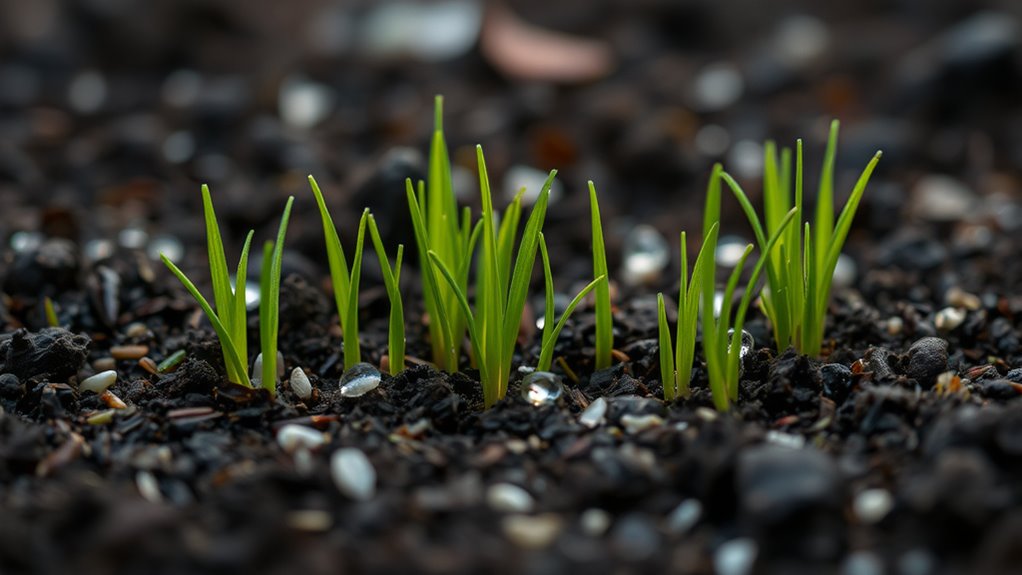
How can you tell when your grass seed is starting to germinate? Look for clear signs like tiny roots breaking through the seed coat and small seedlings popping up. Seedling growth starts quietly but becomes noticeable with close observation.
Keep an eye on these key indicators: roots just below the soil surface, small green shoots emerging, and increased soil moisture around the seed area.
Consistent warm temperatures help activate the seeds, so make sure the weather stays favorable. You might also notice slight movement or swelling in the seed itself.
These signs confirm that your grass seed is actively germinating. Be patient, as initial growth can be slow. Once you see these cues, you’ll know your effort is paying off.
Your lawn is on its way to becoming lush and healthy. Recognizing germination early helps you provide the right care and support seedling development.
Troubleshooting Germination Delays
Even when conditions seem perfect, sometimes grass seed germination takes longer than you’d expect. If you’re waiting longer, poor seed quality might be the problem. Low-quality seeds often don’t sprout well because they have reduced viability.
Check the seed packaging for freshness and certification, and make sure it’s not past the expiration date. Also, uneven watering or poor soil contact can prevent seeds from sprouting.
If the soil is too compacted or dry, seeds won’t absorb enough moisture to grow. It’s also worth checking for pests or diseases that might attack young seedlings and slow things down.
To troubleshoot, use high-quality seed, keep the soil evenly moist, and avoid disturbing the seedbed. Patience is key, but if germination still doesn’t happen after a few weeks, revisit your seed source and environmental conditions.
Post-Germination Care for a Healthy Lawn
Once your grass seedlings have emerged, giving them the right post-germination care is key to growing a strong, healthy lawn. Regular watering helps keep the soil moist, encouraging deep root growth and stopping seedlings from drying out.
Be careful not to overwater, as too much can cause disease. Water early in the day to ensure proper absorption and avoid standing water. Fertilizing is just as important; use a balanced fertilizer to provide the nutrients your lawn needs to grow strong and resilient.
To get the best results, remember these tips:
- Keep the soil evenly moist with consistent watering
- Limit foot traffic on the tender seedlings
- Use a slow-release fertilizer for steady nutrition
- Keep weeds away since they compete for resources
- Watch for pests or diseases and address problems early
When Will Your Lawn Be Fully Covered and Ready to Mow?
So, when can you expect your lawn to be ready for mowing? Well, generally, you’ll want to wait until the grass has grown to about 3 to 4 inches tall and looks nice and even all over. Usually, this takes around 2 to 3 weeks after the grass starts sprouting, but it can vary depending on the weather and other conditions.
It’s really important to give your lawn enough time to develop strong roots before you start mowing regularly. That way, you’ll end up with a thick, healthy lawn that can handle the trimming without any issues. Patience is key here!
Growth Timeline Expectations
Typically, grass seeds start to sprout within one to three weeks after planting, but how quickly your lawn is fully covered depends on the grass type and growing conditions. During this time, seedling development varies depending on the grass variety. Some establish quickly, while others take a bit longer.
To get a good idea of the growth timeline, keep in mind these factors: consistent watering helps seedlings develop steadily, soil temperature affects germination speed, proper lawn care supports healthy growth, sunlight exposure influences the growth rate, and soil quality impacts overall development.
Patience is important because some grass types need more time to fill in and create a lush, mow-ready lawn. By keeping an eye on these aspects, you’ll better anticipate when your yard will be fully covered.
Achieving a Thick Lawn
Achieving a thick, lush lawn takes patience and proper care as the grass grows and fills in. Regular maintenance like watering, mowing, and fertilizing helps promote dense growth.
Soil aeration is also key. It improves air, water, and nutrient penetration, encouraging stronger roots. As your grass matures, it will cover more ground and become fully established.
Most lawns reach full coverage within 4 to 8 weeks after germination, depending on the grass type and conditions. Keep an eye on patches that look thin or bare, and overseed if needed.
Consistent care and soil aeration will help your lawn develop into a thick, healthy carpet that’s nice to mow and boosts your yard’s appearance.
Frequently Asked Questions
Can Grass Seed Germinate in Shaded Areas?
Yes, grass seed can germinate in shaded areas, especially if you pick shade-tolerant seed varieties.
Focus on choosing the right seed for your shade conditions since some grass types do better with less sunlight. Keep the soil moist and water regularly to help the seeds germinate.
Shade-tolerant seeds might take a little longer to grow, but with the right care and seed choice, you’ll see results even in shaded spots.
How Does Temperature Influence Germination Speed?
Temperature really affects how quickly seeds germinate. Usually, warmer temperatures speed things up, while cooler ones slow them down.
You’ll see seeds sprouting faster when the soil stays moist and the temperature is just right for your seed type.
Extreme temperatures, whether too hot or too cold, can actually stop germination in its tracks.
To get the best results, keep an eye on the soil moisture and temperature. Make sure they match the ideal range for your grass seed.
What Are Common Signs of Poor Germination?
You’ll notice poor germination signs like patchy, uneven patches that seem to mock your efforts, indicating issues with germination factors or seed quality. If sprouts are sparse, slow to emerge, or fail altogether, it’s a clear sign your grass isn’t thriving.
Poor seed quality or unfavorable conditions can sabotage your lawn’s growth. Keep an eye out for these signs to troubleshoot effectively and guarantee lush, healthy grass.
Does Grass Seed Need Fertilizer to Germinate?
Grass seed doesn’t need fertilizer to germinate, but seed nutrition and germination factors play a role in its success. Adequate moisture, proper soil contact, and ideal temperature are vital for germination.
Fertilizer can promote healthy growth after the seed has sprouted, but it’s not essential for the initial germination process. Focusing on these germination factors guarantees your grass seed develops strong roots and a lush, green lawn.
How Long Should I Wait Before Overseeding?
Patience is key when figuring out the right time to overseed. It’s best to wait until your existing grass is in its prime, which is usually late summer or early fall.
Make sure the conditions are just right—warm soil and enough moisture—before you start overseeding. This gives your new seeds the best chance to take hold.
Typically, waiting about four to six weeks after lawn maintenance is a good rule. This allows the soil to settle and gives the grass time to establish.
Following this waiting period helps your new seeds blend in better and thrive, leading to a healthier, more lush lawn.
Conclusion
On average, grass seed takes about 7 to 21 days to germinate. Proper soil preparation and watering can even cut this time in half.
By following the right steps, you can have a lush, green lawn in just a few weeks. Keep in mind, consistent care is key—so stay patient and attentive.
With the right approach, you’ll be mowing your beautiful new lawn before you know it. Proper soil prep and watering are essential for faster grass seed germination.