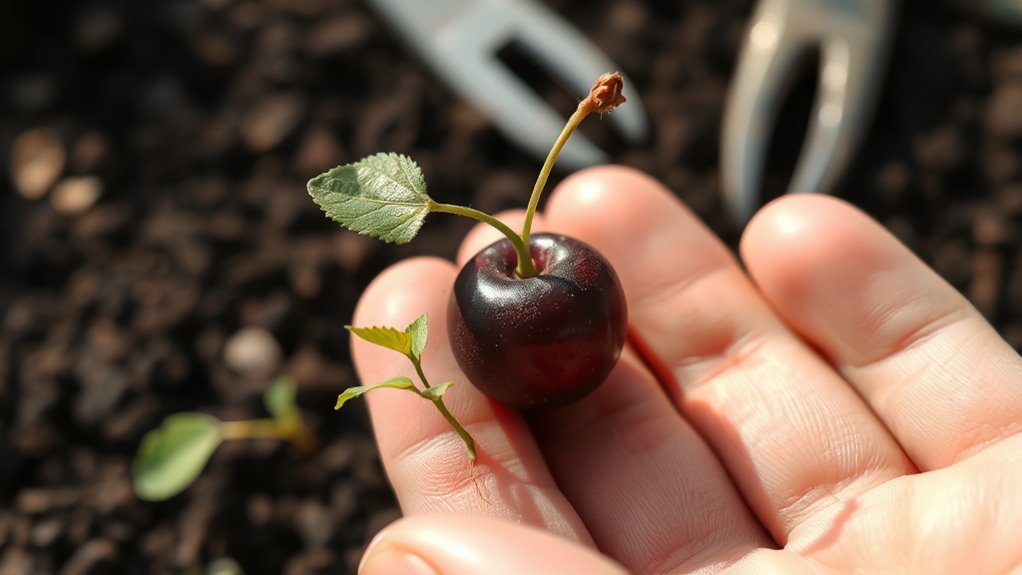
7 Simple Steps to Grow a Cherry Tree From Seed
Many gardening enthusiasts dream of growing their own cherry trees but often feel overwhelmed by the process. You’re not alone—starting from seed can seem tricky at first, but with a little guidance, it’s totally doable.
Start by choosing healthy, firm cherry seeds from reputable sources and remove fruit debris.
Next, prepare the seeds through cold stratification for 8-12 weeks, or soak older seeds for 24 hours.
Plant them in well-draining, rich soil with plenty of sunlight, and keep the soil moist.
Care for your seedlings with regular pruning and pest checks.
Transplant outdoors after the frost risk passes and ensure they get proper nutrition.
To uncover all the easy steps for success, keep exploring this guide.
Key Takeaways
- Select healthy, firm cherry seeds from reputable sources and clean them thoroughly.
- Cold stratify seeds for 8-12 weeks to break dormancy before planting.
- Use well-draining, fertile soil and plant seeds in a sunny, protected spot.
- Water consistently, keeping the soil moist but not waterlogged, and protect young seedlings from frost.
- Prune, mulch, and keep an eye out for pests to help your cherry tree grow strong and produce fruit.
How to Select the Best Cherry Seed for Planting
Choosing the right cherry seed is key to successful planting. Start by checking where the seed comes from, since seeds from healthy, disease-free trees tend to do better.
Selecting healthy, disease-free seeds from reputable sources is essential for successful cherry tree planting.
Look for seeds from reputable sources or nursery-grown trees. Make sure they come from a variety that suits your climate and matches your preferences like flavor, size, and growth habits.
Avoid seeds from unknown or wild sources because they might carry pests or diseases, lowering your chances of success. When picking a seed, examine it closely for any damage or mold.
Choose seeds that are mature, firm, and look healthy. Keep in mind that the seed’s origin and variety not only affect how well it grows but also the quality of the fruit you’ll get later.
Making an informed choice sets a strong foundation for your cherry tree’s future growth.
Getting Your Cherry Seed Ready to Grow
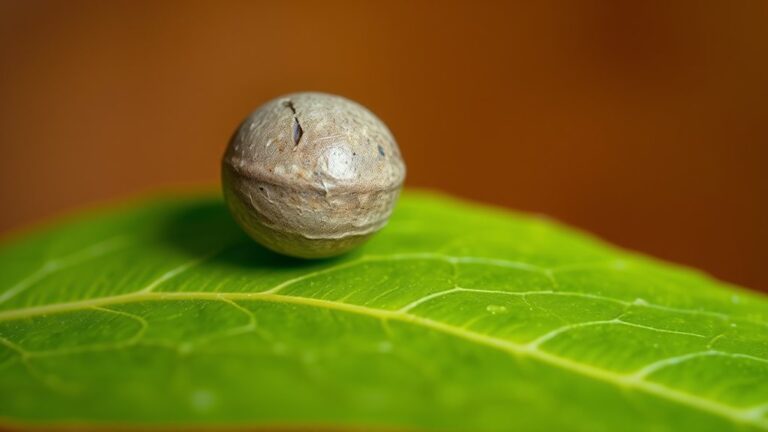
Getting your cherry seed ready to grow is an exciting process! First, you’ll want to pick out some good-quality seeds. Look for ones that feel firm and don’t have any cracks or damage—that way, you’re giving your plant the best start.
Once you’ve got your seeds, give them a gentle clean to wash away any leftover pulp or dirt. This step is important because debris can make it harder for the seed to sprout properly. Just use some water and a soft brush if needed.
After that, you’ll need to go through the cold stratification process. Think of it as giving your seed a little winter nap—by mimicking cold conditions, it gets ready to sprout when spring arrives. This step really helps improve your chances of success!
Selecting Quality Cherry Seeds
Selecting high-quality cherry seeds is key to growing a healthy and fruitful tree. Start by choosing the right seed variety that suits your climate and soil conditions.
Different cherry types, like sweet or tart, grow differently, so pick the one that matches what you want. When sourcing seeds, buy from reputable nurseries or trusted suppliers to ensure they’re viable and authentic.
Avoid seeds from unknown sources—they might be damaged or not suitable for planting. Check the seeds for firmness and evenness, and discard any that are soft, moldy, or discolored.
Proper seed selection lays the foundation for successful growth. Take your time to choose the best quality seeds for your planting project.
Proper Seed Cleaning Techniques
Before planting, it’s important to properly clean your cherry seeds to guarantee healthy germination. Start by removing any remaining fruit flesh, as it can promote mold or rot and threaten seed sanitation.
Rinse the seeds under cool, running water to wash away debris and residues. Gently scrub with a soft brush if needed, making sure no dirt or residue remains on the seed surface.
This process improves seed sanitation, reducing the risk of disease and increasing germination viability. After cleaning, pat the seeds dry with a paper towel and let them air dry completely before storage or planting.
Proper seed cleaning guarantees your cherry seeds are free of contaminants, giving them the best chance to sprout healthy and strong.
Cold Stratification Process
After thoroughly cleaning your cherry seeds, the next step is to expose them to a cold stratification process. This mimics winter conditions, helping break seed dormancy and encouraging germination.
Place the seeds in a damp paper towel or moist soil, then seal them in a plastic bag or container. Keep this in the refrigerator at about 32–41°F (0–5°C) for 8 to 12 weeks.
Cold temperatures signal to the seed that winter has passed, triggering the start of germination. During this time, check periodically to make sure the environment stays moist but not soaked.
This process helps the seed develop the necessary conditions to sprout when planted outdoors or in pots. Patience is key—cold stratification is essential for successful cherry seed growth.
How to Sow Your Cherry Seed and Start Germination
First off, pick some healthy, high-quality cherry seeds. Using good seeds really makes a difference when you’re trying to get them to sprout. Once you’ve got your seeds, give them a little prep work—soaking them in water for a day or scarifying them to help break their dormancy. This step can really boost your chances of success.
Next, make sure you’re planting your seeds in well-draining, rich soil. Cherry seeds love a nice, loamy environment that retains some moisture but doesn’t stay soggy. Find a spot with the right conditions, and with a bit of patience and care, your seeds will have the best shot at germinating and growing into healthy cherry trees.
Selecting Quality Cherry Seeds
Choosing high-quality cherry seeds is essential for successful germination and healthy tree growth. To ensure this, focus on good seed sourcing by selecting seeds from reputable sources or healthy, mature trees.
Check seed viability by inspecting the seeds—look for firm, plump seeds without cracks or mold. Avoid seeds that look dried out or damaged, as they’re less likely to sprout successfully.
Consider the seed’s origin; locally sourced seeds often have better adaptability to your climate. Keep in mind, fresh seeds tend to have higher viability than older ones.
Preparing Seeds for Planting
To give your cherry seed the best chance to sprout, you need to prepare it properly for planting. Start by choosing the right seed variety, as some types have higher germination rates than others.
If you have fresh seeds, consider cold stratification—place them in a moist, refrigerated environment for about 8 to 12 weeks. This mimics winter conditions and helps break dormancy.
For older seeds, soaking them in water for 24 hours can improve germination success. Make sure to clean and dry the seeds thoroughly before planting to prevent mold.
Proper preparation boosts germination rates and sets your cherry tree on the path to healthy growth. Taking these steps guarantees your seeds are ready to develop into strong, fruitful trees.
Proper Soil and Environment
Plant your cherry seed in well-draining soil that’s rich in organic matter to give it the best environment for germination. The right soil types, like loamy or sandy soils, help retain moisture while preventing waterlogging.
Keep environmental factors in mind: cherries thrive in areas with full sun and moderate temperatures. Avoid planting in places prone to frost or heavy winds, which can hinder growth.
To improve your chances, consider adding compost or organic matter to boost soil fertility. Make sure the soil stays consistently moist but not soaked.
Choose a location with ample sunlight, ideally 6–8 hours daily. Protect young seedlings from extreme weather conditions for healthy germination.
Caring for Your Young Cherry Tree: Tips for Healthy Growth
Caring for your young cherry tree is key to ensuring healthy growth and a fruitful future. Regular maintenance helps strengthen branches and keeps common problems at bay.
Focus on proper pruning to shape the tree and improve airflow, which reduces the risk of disease. Keep an eye out for pests like aphids or caterpillars; catching them early prevents damage.
Mulch around the base to help retain moisture and regulate temperature. Water deeply during dry spells, but avoid overwatering to keep roots healthy.
Use this table to guide your care:
| Care Aspect | Action | Benefits |
|---|---|---|
| Pruning techniques | Trim dead or crossing branches | Improves structure and health |
| Pest management | Inspect weekly, apply organic controls | Prevents infestations |
| Watering | Deep soak once a week | Promotes strong root development |
| Mulching | Apply organic mulch | Conserves moisture and suppresses weeds |
| Fertilizing | Use balanced fertilizer in spring | Supports healthy growth |
Troubleshooting Germination and Early Growth Problems
Germination and early growth stages can be tricky, and problems often come up before your cherry tree even gets going. Seedling diseases and environmental stress are common issues that can hold back progress. If your seeds aren’t sprouting, check if the soil is too wet, which can encourage fungal diseases. Too much moisture or poor drainage can lead to seed rot and seedling problems.
Environmental stress from temperature swings or not enough light can also stunt growth or make seedlings wilt.
To troubleshoot, make sure you’re watering properly—keep the soil moist but not soggy. Maintain consistent temperatures and give your seedlings plenty of light. Using sterilized soil or a seed-starting mix can help prevent seedling diseases.
When and How to Transplant Your Cherry Seedling Outdoors
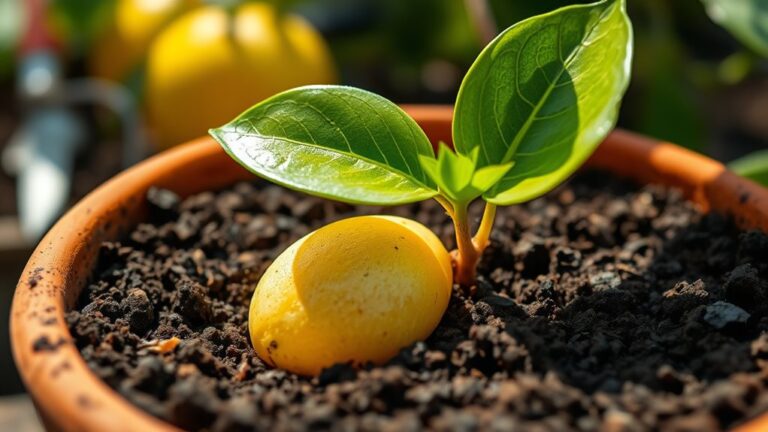
Once your cherry seedlings have grown strong indoors or in a protected spot, it’s time to move them outside. Timing is important—wait until the danger of frost is gone and daytime temps stay above 50°F (10°C). This helps prevent cold shock.
When you’re ready, gently dig around each seedling, keeping the root ball intact. Carefully lift the plant, making sure not to damage the roots. Plant outdoors at the same depth it was growing in its container or pot—that’s the right planting depth.
Make sure the hole is wide enough for the roots to spread out comfortably. Fill the hole with soil and gently firm it around the base. Water thoroughly to settle the soil and help the roots take hold.
Getting the timing right and planting at the correct depth are key to giving your cherry seedling a strong start outside.
How to Ensure Your Cherry Tree Produces Delicious Fruit
To guarantee your cherry tree produces delicious fruit, focus on proper pruning, watering, and fertilization from the start. Choose fruiting varieties suited to your climate and make sure you have the right pollination partners nearby; many cherry varieties need cross-pollination to thrive.
Use pruning techniques to remove dead or crowded branches, which improves air circulation and helps direct energy toward fruit production. Meet your tree’s nutrient needs with balanced fertilization, especially during the growing season.
Seasonal care involves keeping an eye out for pests and diseases and applying pest management strategies promptly. Consistent watering keeps the soil moist but not waterlogged, supporting healthy fruit development.
- Choose compatible fruiting varieties and pollination partners
- Use effective pruning techniques to maximize fruiting potential
- Follow seasonal care routines for pest management and nutrient supply
Frequently Asked Questions
How Long Does It Take for a Cherry Seed to Sprout?
You can expect cherry seed germination to take anywhere from 6 to 12 weeks, depending on the cherry varieties and how well you prepare the seed.
Keep the seed in a cold stratification period, then provide consistent moisture and warmth.
Patience is key, as different cherry varieties may sprout at different times.
With proper care, you’ll see your cherry seed start to sprout within this timeframe.
Can Cherry Seeds Be Grown Indoors Successfully?
Yes, you can grow cherry seeds indoors successfully with the right care. Just make sure to give your plants plenty of sunlight and keep the soil consistently moist.
Start by refrigerating the seeds for about 8-12 weeks to break dormancy through stratification. Once that’s done, plant them in well-draining soil and keep the environment warm.
Be patient, as germination can take several weeks. With some dedication, you’ll be able to nurture a healthy cherry seedling indoors.
What Are the Common Pests Affecting Young Cherry Trees?
You might worry about pests ruining your young cherry trees, but with proper pest management, you can keep them safe.
Common pests like aphids, cherry fruit flies, and borers can be controlled using organic solutions such as neem oil, insecticidal soap, or beneficial insects.
Regular monitoring and early intervention help protect your trees without harsh chemicals, ensuring healthy growth and a bountiful harvest.
Do Cherry Trees Require Specific Soil Types for Optimal Growth?
Cherry trees thrive best in well-draining soil with a pH between 6.0 and 7.0. Make sure the soil isn’t too heavy or clayey, as poor drainage can cause root rot.
You should amend your soil with organic matter if needed and avoid overly acidic or alkaline conditions. Proper soil prep helps your cherry tree grow strong and produce healthy fruit.
It also helps prevent common issues caused by soil imbalance, so paying attention to your soil’s condition is really worth it.
How Often Should I Water My Cherry Seedling?
Are you wondering how often to water your cherry seedling? For proper care, you should water it regularly, keeping the soil moist but not waterlogged.
Typically, watering once every 2-3 days works well, but feel free to adjust based on the weather and soil conditions.
During hot, dry periods, you might need to water more often.
Consistent watering helps develop healthy roots and keeps your seedling strong and vibrant.
Conclusion
Growing a cherry tree from seed is a rewarding journey that requires patience and care. By selecting the right seed, preparing it properly, and providing consistent nurturing, you’ll set a strong foundation for healthy growth.
Remember, cherry trees can take several years to bear fruit, so stay dedicated and enjoy the process. Some studies suggest that trees grown from seed often produce more resilient fruit, making your efforts even more worthwhile.
Growing a cherry tree from seed can be a fulfilling experience that pays off over time. With patience and consistent care, you’ll watch your tree grow strong and eventually produce delicious cherries.