7 Simple Steps to Grow Sunflowers From Seed
Growing sunflowers from seed can be a rewarding experience, but many gardeners find it tricky to get started. You’re not alone—achieving those tall, vibrant blooms often feels challenging at first.
Luckily, with a little guidance, you can grow beautiful sunflowers that brighten up your garden.
To grow sunflowers from seed, pick high-quality seeds suited for your climate and guarantee they have high germination rates. Prepare well-draining, nutrient-rich soil with the right pH and remove weeds and debris.
Plant seeds at the correct depth and spacing when soil is warm and the weather is sunny. Water consistently and fertilize as needed.
Support tall plants early on and harvest seeds when the back of the flower turns brown.
Keep exploring for more tips to guarantee your sunflowers thrive.
Key Takeaways
- Choose high-quality sunflower seeds that are suited for your climate and have a high germination rate.
- Prepare well-draining, nutrient-rich soil with a pH between 6.0 and 7.5 before planting.
- Plant seeds about 1 to 2 inches deep, making sure to space them properly in full sun.
- Water regularly to keep the soil moist but not waterlogged, which helps roots grow strong.
- Support tall sunflower varieties with stakes and keep an eye out for pests and diseases during growth.
Choose the Best Sunflower Seeds for Your Garden
How do you pick the right sunflower seeds for your garden? First, think about the different seed varieties out there. Do you want tall, giant sunflowers with large blooms or smaller, ornamental types? Your choice depends on your space and how you want your garden to look.
Next, check the germination rates on the seed packets. Higher rates mean a better chance your seeds will sprout successfully. It’s a good idea to buy from reputable brands or local seed stores to ensure quality and freshness.
Keep in mind that some sunflower varieties are better suited for certain climates. Pick seeds that will thrive in your growing conditions. Also, look for seeds labeled as non-GMO or organic if that’s important to you.
Prepare Your Soil for Sunflower Seeds
Before you plant your sunflower seeds, it’s a good idea to clear away any debris and weeds from the soil. This gives your seeds a clean space to grow and helps prevent competition for nutrients.
Next, sprinkle some compost into the soil to boost its nutrients. It’s also helpful to check the pH levels to make sure they’re in the right range for sunflowers. Doing these simple steps will set the stage for healthy, tall sunflowers to thrive!
Clear Debris and Weeds
Clear away any debris, like leaves, twigs, or rocks, to create a clean, open space for your sunflower seeds. This step ensures the soil is clear and free of obstacles that could block seed germination.
Removing debris also improves air circulation and cuts down on hiding spots for pests. Focus on pulling out any weeds that might compete with your sunflowers for nutrients and water.
Be thorough, especially with shallow-rooted weeds, so they don’t grow back. Clearing weeds and debris early makes your planting area easier to manage and helps your seedlings grow strong.
Once everything is tidy and free of unwanted plants, your soil will be better prepared to support healthy, vibrant sunflower plants.
Enrich Soil With Compost
Enriching your soil with compost provides essential nutrients that help sunflower seeds establish strong, healthy roots. Compost benefits your garden by improving soil fertility and structure, creating a nutrient-rich environment for your plants.
It also supports the soil microbiome, the community of beneficial microorganisms that aid in nutrient absorption and disease resistance. When you mix compost into your planting bed, you boost the soil’s ability to retain moisture and promote better aeration, which sunflowers need to grow tall and sturdy.
Use a generous layer of compost and work it into the topsoil before planting your seeds. This preparation guarantees your sunflowers have the foundation they need to thrive throughout the growing season.
Adjust pH Levels
Adjusting your soil’s pH helps make nutrients from the compost more available to sunflower seeds. First, test your soil to see what its current pH level is. You can find simple test kits at garden centers or get lab testing done.
Once you know the pH, you can decide what needs to be adjusted. Aim for a pH between 6.0 and 7.5, which is ideal for sunflowers. If the soil is too acidic (below 6.0), add lime to raise the pH.
If the soil is too alkaline (above 7.5), mix in sulfur or peat moss to lower it. Proper pH adjustment ensures your sunflower seeds get the nutrients they need to thrive.
Plant Sunflower Seeds for Healthy Growth
If you want your sunflowers to grow big and healthy, the first step is to pick high-quality seeds that are right for your climate. It’s a good idea to do a bit of research to find seeds that will thrive where you live.
Next, make sure your soil is well-prepared and packed with nutrients. A rich, loamy soil will give your sunflowers the solid foundation they need to grow tall and strong.
Finally, plant the seeds at the right depth and keep enough space between them. This way, each sunflower has plenty of room to stretch out and get the sunlight and air it needs to flourish.
Choose the Right Seeds
Choosing the right sunflower seeds is key to ensuring healthy growth and vibrant blooms. Pick seed varieties that suit your climate and growing season.
Look for high-quality seeds with good germination rates to increase your chances of success. To pick the best seeds, keep these tips in mind:
- Choose seed varieties known for disease resistance and big, bright flowers.
- Check the seed packaging for germination rates—aim for 80 percent or higher.
- Buy from reputable sources to make sure your seeds are fresh and of good quality.
Proper Soil Preparation
Healthy soil is the foundation for strong sunflower growth, so preparing it properly is vital. First, assess your soil types—sandy, loamy, or clay—and adjust as needed. Sunflowers thrive in well-draining soil, so drainage is very important.
If your soil retains too much water, mix in organic matter like compost or sand to improve drainage. Remove weeds and debris to give your sunflower seeds a clean environment. Loosen the soil to allow roots to develop freely.
Test the soil pH; sunflowers prefer slightly acidic to neutral soil, around pH 6.0 to 7.5. Proper soil preparation guarantees your sunflowers get the nutrients and drainage they need, setting the stage for healthy growth from seed to bloom.
Optimal Planting Conditions
Once your soil is properly prepared, choosing the right time to plant helps your sunflower seeds thrive. Sunflowers need plenty of sunlight—at least 6 to 8 hours daily—to grow strong and tall.
Make sure you plant when the soil temperature is between 55°F and 60°F, which matches their preferred range. To give your plants the best start, keep these tips in mind:
- Plant seeds in full sun for the best sunlight exposure.
- Wait until the soil warms up enough to avoid poor germination.
- Pick a spot with good air circulation and well-drained soil.
Water and Fertilize Your Sunflowers Properly
To guarantee your sunflowers thrive, it’s essential to water them consistently and provide the right nutrients through fertilization. Sunflower watering should be regular, especially during dry spells, making sure the soil stays moist but not waterlogged.
Deep watering helps develop strong roots. For fertilizer, choose a balanced, high-phosphorus formula to promote healthy blooms. Organic options like compost or fish emulsion work well, or you can go with a synthetic fertilizer with equal parts nitrogen, phosphorus, and potassium.
Deep watering and balanced, high-phosphorus fertilizer boost strong roots and vibrant blooms.
Apply fertilizer every few weeks once your sunflowers are established, following the package instructions for the best results. Be careful not to over-fertilize, as this can cause weak stems or too much foliage.
Proper watering and fertilization give your sunflowers the nutrients they need to grow tall, vibrant, and healthy. This sets the stage for a stunning display of flowers.
Support and Manage Tall Sunflowers
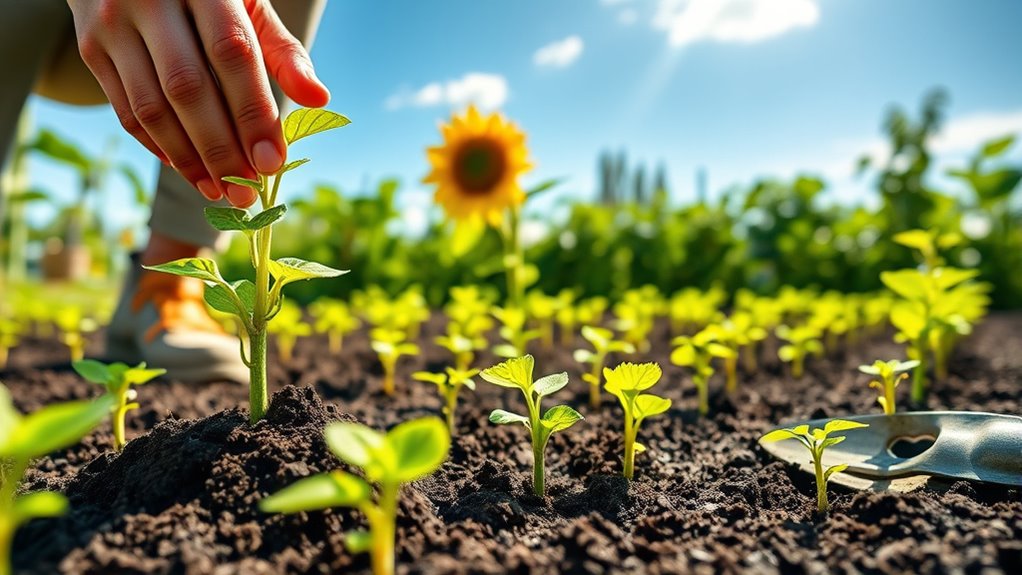
As your sunflowers grow taller, it’s important to provide sturdy support to prevent them from toppling over or breaking in the wind. Use stakes early on to keep the stems upright, especially during stormy weather.
You can also add wind protection by placing barriers or planting windbreaks nearby. Regularly check your plants for pests or weak stems to catch any issues early.
To manage their height better, prune by removing lower leaves or side shoots that drain nutrients. Keep in mind that tall sunflowers need more nutrients, so fertilize accordingly.
As the season progresses, adjust your support methods to give the plants enough space and stability. Planting tall grasses or beans nearby can offer natural wind protection and help deter pests.
With proper support and care, your sunflowers will stay healthy, strong, and beautiful throughout their season.
When and How to Harvest Sunflower Seeds
Knowing the right time to harvest sunflower seeds guarantees you get the best flavor and viability. Typically, you’ll want to wait until the back of the sunflower head turns yellow or brown and the seeds are plump and slightly striped.
To test ripeness, gently press a seed; if it feels firm and the hulls are dry, it’s time to harvest. Use harvesting techniques like cutting the head with a few inches of stem and hanging it upside down in a cool, dry place for further drying.
Once the seeds are fully dried and hulls are crispy, you can rub them gently to loosen. Proper seed storage is essential to keep them viable for planting next season.
Store your seeds in an airtight container in a cool, dark place to prevent mold and pests. This careful approach guarantees your sunflower seeds stay fresh and ready for future planting or snacking.
Troubleshoot Common Sunflower Growing Problems
Growing sunflowers can sometimes present challenges, but most common problems can be quickly identified and addressed. If your sunflowers aren’t thriving, try these troubleshooting tips:
- Pest management: Watch out for insects like aphids or caterpillars. Use natural predators or organic insecticides to control these pests without harming your plants.
- Disease prevention: Avoid fungal issues by ensuring good air circulation and not watering from above. Remove any infected leaves as soon as you notice them.
- Addressing poor growth: If your sunflowers aren’t reaching the expected height, check the soil nutrients. Fertilize with a balanced, slow-release fertilizer and make sure they get plenty of sunlight.
Frequently Asked Questions
Can Sunflowers Grow in Containers or Only in the Ground?
Sunflowers can absolutely grow in containers, making them perfect for container gardening. You just need a large, well-draining pot and nutrient-rich soil.
Choose sunflowers suited for smaller spaces, and make sure they get plenty of direct sunlight. For sunflower care, water regularly but avoid overwatering.
Support taller varieties with stakes to keep them upright. Growing in containers lets you enjoy bright, cheerful blooms even if you don’t have garden space.
How Long Does It Take for Sunflower Seeds to Bloom?
Sunflower seed germination usually takes about 7 to 10 days if you provide the right conditions. Once you plant the seeds, patience is key as the tall, striking sunflowers start to emerge and bloom.
Typically, you’ll see flowers within 70 to 100 days. During this period, make sure they get plenty of sunlight, water, and space to grow strong.
With consistent care, you’ll soon be enjoying vibrant blooms that brighten up your garden or container.
What Pests Commonly Affect Sunflower Plants?
You’ll often see pests like sunflower beetles, aphids, and caterpillars attacking your sunflower plants. To keep them healthy, start by identifying what’s causing the damage.
Use organic control methods like neem oil, insecticidal soap, or introduce beneficial insects such as ladybugs. Regularly check your plants for signs of pests and act quickly to prevent serious damage.
These simple steps will help ensure your sunflowers grow strong and vibrant.
Are There Specific Sunflower Varieties Best for Beginners?
Think of sunflower care as guiding a sunbeam to bloom; some varieties are like gentle giants, perfect for beginners. Look for easy-to-grow options like ‘Mammoth’ or ‘Autumn Beauty,’ which thrive with minimal fuss.
When choosing seeds, go for large, robust ones to help ensure hearty growth. These varieties are forgiving and rewarding, making it simple to watch your garden turn into a cheerful sea of yellow with just a little love and attention.
How Do I Prevent Birds From Eating My Sunflower Seeds?
To prevent birds from eating your sunflower seeds, focus on protecting the seeds. Use garden netting around your sunflower beds to keep birds away while still letting sunlight and water reach the plants.
You can also place shiny objects or reflective tape nearby to scare off the birds. Regularly check the netting for holes or damage, and consider covering young seedlings until they’re strong enough to defend themselves.
Conclusion
Just like the sun’s eternal dance across the sky, your sunflower journey flourishes with patience and care. By choosing the right seeds, preparing your soil, and nurturing each sprout, you’re weaving your own tapestry of golden blooms.
Stay vigilant, support your giants, and harvest with joy. Your garden’s symphony will echo the sun’s endless grace, reminding you that growth, like the seasons, is a timeless, beautiful cycle.
Keep growing, and let your sunflowers shine. Growing sunflowers from seed is a rewarding experience that brings beauty and sunshine to your life.