Can You Eat Sunflower Seed Shells?
Are you someone who loves snacking on sunflower seeds but isn’t quite sure what to do with the shells? You’re not alone—many people struggle with whether it’s okay to eat those tough shells or not.
You shouldn’t eat sunflower seed shells because they’re tough, fibrous, and difficult to digest. They pose choking hazards and could damage your teeth, plus they offer minimal nutritional value.
Eating them regularly might cause gut irritation or blockages.
While they’re popular as mulch or for crafting, processing them into edible products is still experimental.
To learn more about the risks and safe uses of sunflower seed shells, continue exploring the facts below.
Key Takeaways
- Sunflower seed shells are generally not edible because they’re tough, fibrous, and hard to digest.
- Eating shells can also be a choking hazard and might damage your teeth.
- They don’t offer much nutritional value and could irritate your digestive system if you eat them regularly.
- It’s better to use shells for gardening, crafts, or as bedding for animals rather than eating them.
- While it’s possible to process shells into food products, this involves removing safety and digestion concerns.
Are Sunflower Seed Shells Edible and Safe to Eat?
Are sunflower seed shells safe to eat? Generally, they’re not recommended. While sunflower seed benefits mostly come from the seeds themselves, some people wonder if the shells are edible.
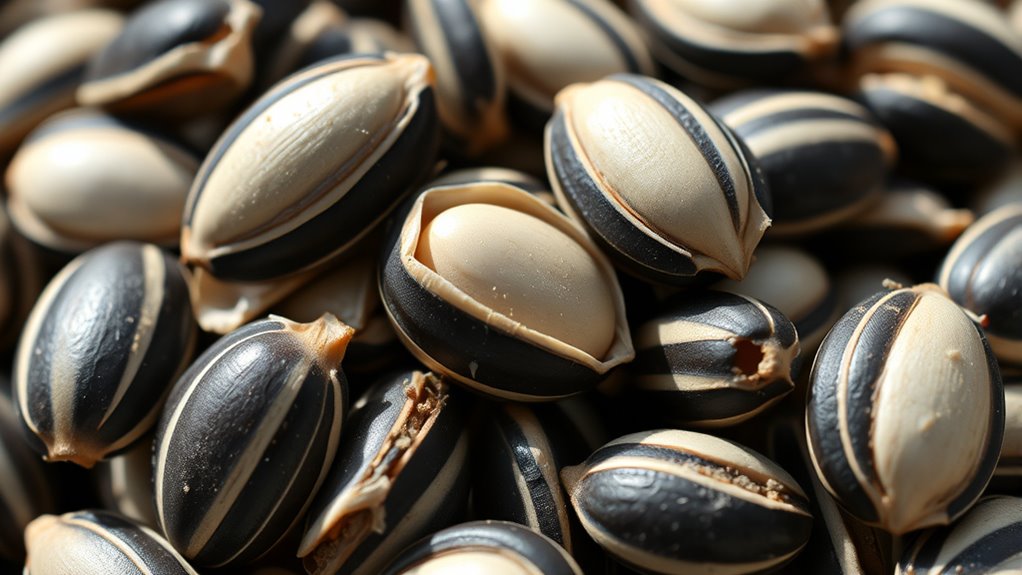
The shell texture is tough and fibrous, making it difficult to digest and potentially causing discomfort. Eating sunflower seed shells can also pose choking hazards or damage your teeth.
Although the shells contain fiber, they’re not designed to be consumed regularly or in large quantities. If you’re curious, some people grind shells into powders or use them in compost, but simply chewing or swallowing shells isn’t advised.
Most health experts recommend removing the shells before eating sunflower seeds to maximize their nutritional benefits. So, while the shells aren’t inherently toxic, they don’t offer enough sunflower seed benefits to justify eating them.
Their shell texture makes them a poor choice for consumption, and it’s better to enjoy the seeds without the shells.
What Nutritional Value Do Sunflower Seed Shells Have?
Sunflower seed shells actually have some interesting nutritional aspects, even if they’re not typically eaten on their own. They contain a decent amount of dietary fiber, which is great for supporting digestion and helping you feel full longer.
You’ll also find minerals like magnesium and zinc in these shells, although the levels can vary. Plus, they contain antioxidants that might offer some health benefits, but overall, their nutritional value isn’t very high on its own.
Dietary Fiber Content
While sunflower seed shells are often discarded, they do contain a notable amount of dietary fiber that can contribute to your daily nutrition. This fiber helps your digestive health by adding bulk to your stool and promoting regularity.
Including fiber-rich foods can help prevent constipation and support overall gut function. Sunflower seed shells are a source of insoluble fiber, which doesn’t dissolve in water but helps move food through your digestive system.
Although tough and woody, these shells can be a part of a fiber-rich diet if properly processed. Remember, eating shells directly isn’t practical, but knowing their fiber content shows their potential role in balanced nutrition.
Mineral Composition Levels
Although often overlooked, sunflower seed shells contain trace minerals that contribute minimally to your overall nutrient intake. These shell nutrients include small amounts of minerals like magnesium, calcium, and iron, which support essential bodily functions.
While not a significant source, they offer some mineral benefits, especially in traditional or alternative uses. The mineral composition levels in sunflower seed shells are generally low compared to other food parts, making their nutritional contribution minor.
Still, consuming shells might provide slight mineral boosts, but relying on them for your mineral needs isn’t practical. Overall, the mineral benefits of sunflower seed shells are minimal, and they shouldn’t replace more nutrient-dense foods.
Instead, focus on edible seed kernels for your daily mineral intake.
Antioxidant Presence
Sunflower seed shells do contain antioxidants, but their levels are quite low compared to other plant-based materials. While they offer some antioxidant benefits, the amount of antioxidants in the shells isn’t enough to significantly impact your health.
Consuming sunflower seed shells for antioxidant purposes isn’t recommended, as their contribution to your overall antioxidant intake is minimal. However, understanding their antioxidant presence helps you better evaluate their nutritional value.
The limited antioxidants in the shells suggest they have little to no direct health implications. If you’re looking for antioxidant-rich foods for health benefits, focus on fruits, vegetables, or nuts.
Sunflower seed shells aren’t a reliable source of antioxidants, so their nutritional value in this regard remains quite low.
What Are the Risks of Eating Sunflower Seed Shells?
Eating sunflower seed shells can pose several health risks, especially if you’re not prepared for what might happen. The tough shells can cause digestive issues like stomach pain, bloating, or even blockages if you eat a lot of them.
Since shells are hard to digest, they might irritate your gut, leading to discomfort or constipation. Plus, sunflower seed shells may contain pesticide residues or other contaminants, which could be toxic.
Ingesting shells could also hurt your teeth or mouth if they’re sharp or brittle. For some people, especially those with sensitive stomachs or dental problems, eating shells can be especially problematic.
While small amounts might pass through your system without trouble, regularly eating shells could cause long-term health issues. It’s best to avoid eating sunflower seed shells to protect your digestive health and stay safe.
How Do People Use Sunflower Seed Shells?
You might have seen sunflower seed shells being used in different ways around you. People often use them as mulch in their gardens to help protect plants and keep weeds at bay. They’re also popular for crafting, with folks turning them into art projects or decorative items. Plus, some even use these shells as bedding for small animals, like hamsters or birds.
There are so many ways to get creative with sunflower seed shells, showing that they’re more than just a snack leftover. They really offer a lot of versatile options!
Mulch and Garden Use
Many gardeners turn to sunflower seed shells as an eco-friendly mulch option because they’re durable and look natural. They help keep moisture in, block weeds, and protect roots from temperature swings.
When used as mulch, sunflower seed shells also break down slowly, adding organic matter to the soil. This helps improve soil quality, leading to healthier plants and better yields.
Their lightweight, porous texture allows air to circulate around plant roots, which can help prevent fungal problems. Plus, they’re a sustainable choice since they’re a byproduct that might otherwise go to waste.
Craft and Artistic Projects
Sunflower seed shells have found a surprising new life beyond gardening, as their unique texture and natural appearance make them popular materials for craft and artistic projects. You can create stunning shell art and decorative crafts by repurposing these shells. Here are some ideas to inspire you:
- Make mosaic art pieces by gluing shells onto surfaces for a textured, organic look.
- Create ornaments or jewelry, such as necklaces or earrings, using small shells.
- Design decorative picture frames or mirrors with shells as borders.
- Assemble shell sculptures or topiaries for vibrant, nature-inspired decor.
Using sunflower seed shells in these projects adds a rustic charm, making your crafts stand out with their natural appeal.
Animal Bedding Applications
Sunflower seed shells are becoming a popular choice for small animal and livestock bedding because they’re sustainable. They provide great absorption, odor control, and are a natural, biodegradable option.
You can easily spread sunflower shells in cages or stalls, creating a comfortable and clean environment for your animals. After use, they can be composted, which helps enrich the soil naturally.
This eco-friendly bedding reduces waste and cuts down on the need for chemical-laden materials. Plus, sunflower shells are lightweight and affordable, making them accessible for many farming or pet-keeping setups.
Using sunflower seed shells as bedding supports sustainable practices while keeping your animals’ habitat healthy and odor-free.
Can Sunflower Seed Shells Be Processed Into Edible Products?
Although sunflower seed shells are usually thrown away, scientists are looking into ways to turn them into edible products. This process, called sunflower shell processing, aims to make shells into nutritious ingredients.
Here are four main steps in developing edible products from sunflower shells:
- Collection and cleaning – Removing dirt and debris from the shells.
- Grinding and milling – Turning shells into a fine powder for easier use.
- Nutritional improvement – Adding vitamins or minerals to boost health benefits.
- Formulation and testing – Making food items like snacks or flour and checking for safety and flavor.
This way, sunflower seed shells can be repurposed as a sustainable, fiber-rich ingredient. Researchers focus on methods that ensure safety, good taste, and nutritional value.
While still in the experimental phase, sunflower shell processing shows promise for creating new edible products, reducing waste, and expanding food options.
Are There Culinary Uses for Sunflower Seed Shells?
Are sunflower seed shells actually used in cooking? While it’s not very common, some culinary experiments explore their potential. Chefs and home cooks might grind shells into a powder to add crunch or texture, aiming for unique flavor profiles.
Though not traditional, these shells can serve as natural abrasives or garnishes, adding an earthy, nutty note to dishes. Here’s a visual to inspire your imagination:
| Texture | Flavor Profile | Usage Ideas |
|---|---|---|
| Hard, crunchy | Earthy, nutty | Toasted as a topping |
| Coarse | Slight bitterness | Incorporated into bread |
| Powdered | Mildly bitter | Used in spice blends |
| Fractured | Chewy, crunchy | Mixed into granola |
| Ground | Rich, woody | Infused in broths |
While unconventional, sunflower seed shells could reveal new culinary possibilities if used thoughtfully.
How Do Sunflower Seed Shells Compare to Other Edible Plant Shells?
Ever wondered how sunflower seed shells compare to other edible plant shells? When looking at their nutritional value and culinary uses, a few things stand out.
First, sunflower seed shells are mostly fibrous and low in calories. In contrast, shells of nuts like almonds or pistachios offer more fats and proteins.
Sunflower shells are fibrous and low-calorie, unlike nut shells rich in fats and proteins.
As for digestibility, sunflower shells are tough and less easy to digest than fruit peels, like citrus or apple skins. This makes them less suitable for eating or cooking.
While sunflower shells aren’t typically eaten, shells from nuts or seeds like pumpkin or sesame are often ground into powders or used to add flavor.
Other shells, such as coconut husks, are used as natural fiber sources or in crafts. Sunflower shells mainly end up as waste, with fewer alternative uses.
How Should You Handle and Prepare Sunflower Seed Shells Safely?
When handling sunflower seed shells, it’s really important to remove them carefully so you don’t accidentally choke. Taking your time and being gentle can make the process safer and more manageable.
Also, when you’re about to eat the seeds, start with small amounts and make sure to chew thoroughly. This way, you’ll avoid any digestion problems and enjoy them without worries. Properly preparing and handling the shells can make your sunflower seed snacking safer and more enjoyable.
Proper Shell Removal Techniques
Handling sunflower seed shells safely starts with proper removal techniques to avoid choking or injury. To do this effectively, try these shell removal methods:
- Gently pinch and peel back the shell with your fingers, using minimal force.
- If the shell doesn’t come off easily, use a small tool like a toothpick to loosen it carefully.
- Avoid biting directly into the shell, as it can damage your teeth.
- Make sure to toss shells into a designated trash container to prevent accidental swallowing.
Safe Consumption Practices
Are you aware of the best ways to handle and prepare sunflower seed shells safely? Before eating them, make sure shells are thoroughly cleaned and free of dirt or contaminants.
While sunflower shell benefits include potential fiber content, it’s important to consider digestive issues. Some shells can be tough to digest or cause discomfort if not prepared properly.
If you choose to consume shells, think about lightly roasting or grinding them to make them easier to digest. Always start with small amounts to see how your digestive system reacts.
Avoid eating shells that are cracked or damaged, as they might harbor bacteria. Remember, moderation is key, and it’s a good idea to consult a healthcare professional if you have digestive sensitivities or concerns about shell benefits.
What Does Science Say About Digesting Sunflower Seed Shells?
What does science say about digesting sunflower seed shells? The digestive process struggles with these hard shells, often preventing your body from breaking them down fully. Here are four key points to consider:
- Indigestibility: Sunflower seed shells are mainly made of cellulose, which humans lack the enzymes to digest effectively.
- Potential blockages: Eating shells can cause blockages or irritation in your digestive tract, leading to discomfort or health risks.
- Minimal nutritional value: The shells don’t offer significant nutrients, so ingesting them doesn’t provide much health benefit.
- Health impacts: Regularly swallowing shells might cause gut irritation or damage, especially if you consume large amounts.
Should You Eat Sunflower Seed Shells or Avoid Them?
Deciding whether to eat sunflower seed shells depends on understanding their risks and benefits. Sunflower shell benefits include their potential to provide fiber, which can help with digestion if eaten safely.
However, shells are tough and hard to digest, which can cause discomfort or even blockages in your digestive system. Eating shells might also damage your teeth or cause choking.
While some people like the crunch, most health experts recommend not eating sunflower seed shells regularly. They don’t add much nutritional value and can be risky if swallowed in large pieces.
If you do choose to eat sunflower seeds with shells, be cautious. Make sure to chew thoroughly or grind the shells into smaller pieces.
For most, it’s safer to remove the shells and just enjoy the edible kernels. Overall, the limited benefits of shells don’t outweigh the potential health risks. It’s better to avoid sunflower seed shells altogether.
Frequently Asked Questions
Are Sunflower Seed Shells Biodegradable or Environmentally Friendly?
Sunflower seed shells are biodegradable and environmentally friendly, making them great for composting and disposal. You can toss them into your compost bin, where they break down naturally and enrich the soil.
Unlike plastic or synthetic materials, they decompose quickly, helping to reduce waste and support eco-friendly practices. Using sunflower seed shells in composting also helps minimize landfill waste and promotes sustainable disposal.
Can Sunflower Seed Shells Be Used as a Natural Abrasive or Cleaning Agent?
Sunflower seed shells can serve as a natural cleaning companion due to their abrasive properties. You can use these shells as a simple, sustainable scrubber for stubborn grime, especially on tough surfaces.
Their texture provides a gentle grit that improves natural cleaning efforts. Just verify the shells are clean and dry before use, and test on small areas first to avoid scratching more delicate surfaces.
Do Sunflower Seed Shells Contain Any Harmful Chemicals or Residues?
Sunflower seed shells are generally safe to handle, but it’s good to be cautious about potential sunflower shell toxins and contaminants. They might have residual pesticides or chemicals from farming or processing.
While small amounts of shell material usually aren’t harmful, ingesting or inhaling large quantities could pose health risks. Always wash shells thoroughly and buy from reputable suppliers to reduce exposure to possible contaminants.
How Do Sunflower Seed Shells Affect Digestion in Different Age Groups?
Think of your digestion as a garden; different ages plant different seeds. For children, shells might be like tough weeds, harder to break down, risking digestion issues.
Adults usually handle sunflower seed shells better, but older folks may find them abrasive, causing discomfort or blockage. Age considerations matter—your body’s ability to process shells varies.
It’s safest to enjoy just the kernels, respecting your digestion’s unique needs at each life stage.
Are There Any Cultural or Traditional Uses of Sunflower Seed Shells?
Sunflower seed shells have cultural significance in various societies. They are often used in traditional crafts like jewelry, ornaments, and decorative items.
You might find communities incorporating shells into storytelling or rituals, symbolizing resilience or a connection to nature. These shells are valued for their texture and appearance.
They serve as eco-friendly materials in crafts, helping to preserve cultural heritage and showcase craftsmanship. Embracing these traditional uses keeps these practices alive.
Conclusion
In short, steer clear of sunflower seed shells unless you’re seeking trouble. They’re tough, not tasty, and can cause problems for your digestion.
Instead, enjoy the sweet, crunchy seeds inside, which offer plenty of nutritional benefits without the risks. Focusing on the seeds is a smarter choice for your health.
Remember, handling snacks responsibly and sticking to healthy habits helps you avoid harm and enjoy your treats safely.
So, stay smart, skip the shells, and savor the seeds — your stomach will thank you!