Can You Eat Guava Seeds?
Are you curious about adding guava seeds to your diet but worried about whether they’re safe to eat? You’re not alone—many people struggle with knowing what’s okay to consume when it comes to fruit seeds.
Luckily, guava seeds are entirely safe and packed with health benefits.
Yes, you can eat guava seeds safely, and they offer health benefits like high fiber, antioxidants, and essential minerals. They’re small, crunchy, and mildly nutty, making them easy to incorporate into your diet.
Many enjoy swallowing them whole or chewing them for added texture.
Just wash the fruit thoroughly and start with small amounts to see how your body responds.
Keep exploring to uncover more tips and insights about guava seeds.
Key Takeaways
- Yes, guava seeds are safe to eat in moderation and offer health benefits because they’re high in fiber and antioxidants.
- They have a mild, nutty flavor and a crunchy texture, which many people enjoy along with the fruit.
- When properly chewed or swallowed whole, seeds usually don’t pose significant choking or digestion risks for most people.
- If you have digestive sensitivities, it’s best to start with small amounts to see how your body reacts.
- Eating guava seeds also helps support biodiversity and ecological health by helping with seed dispersal.
Are Guava Seeds Safe to Eat? What You Need to Know
Many people wonder if it’s safe to eat guava seeds, and the good news is, in most cases, it is. Guava seed texture is generally crunchy and firm, which some find enjoyable, while others prefer to swallow them whole.
The guava seed flavor is mild, slightly nutty, and doesn’t overpower the fruit’s sweet, tropical taste. Since the seeds are small and hard, they’re unlikely to cause choking when eaten in moderation, especially if you chew them well.
Some concerns about guava seeds come from their high fiber content, which can help digestion but might cause discomfort if you eat too many. Overall, consuming guava seeds is safe and can even offer health benefits like fiber and antioxidants.
Just be mindful of your own digestion and preferences. As long as you’re comfortable with the seed texture and flavor, there’s no reason to avoid eating guava seeds.
What Are Guava Seeds and Why Are They Edible?
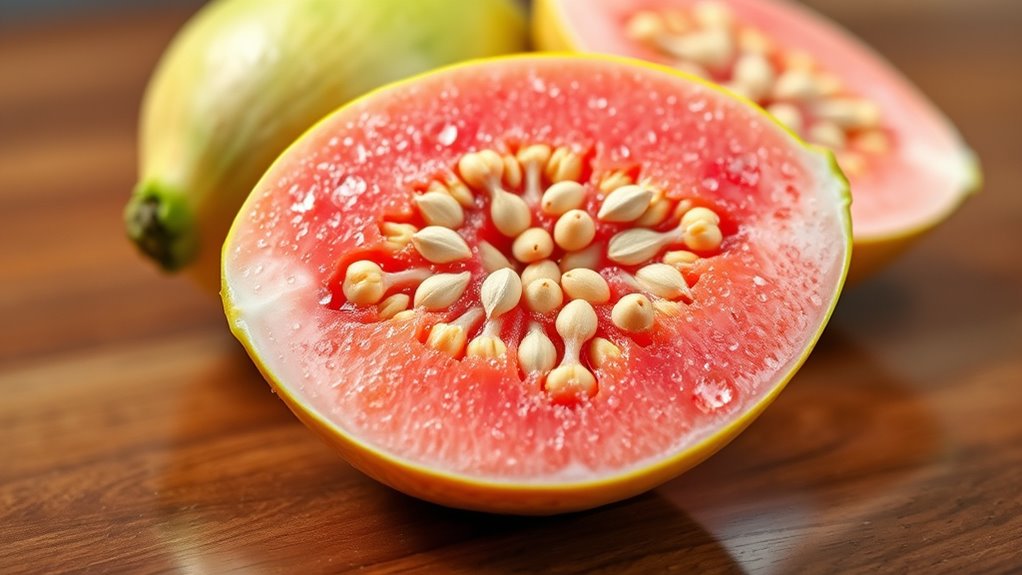
Guava seeds are the tiny, hard cores you find inside the fruit. Even though they’re small and a bit crunchy, they’re actually safe to eat and can be easily digested. Plus, they pack a good punch when it comes to nutrition.
These seeds are loaded with fiber and antioxidants, which are great for your health. Knowing that they’re safe and nutritious makes it easier to enjoy guava seeds without any worries. So, next time you’re munching on a guava, don’t be shy about eating those seeds!
Nutritional Benefits of Seeds
Although they may seem small, guava seeds pack a surprising amount of nutrition, making them worth adding to your diet. These tiny seeds are rich in dietary fiber, which helps with digestion and keeps you feeling full.
Guava seeds are also loaded with antioxidants that fight free radicals, supporting your overall health. Plus, they contain small amounts of healthy fats and essential minerals like magnesium and potassium.
You can boost your nutrient intake naturally by eating guava seeds with the fruit or blending them into smoothies. Their seed nutrition makes them a versatile, healthful addition to your meals.
More than just flavor, they deliver valuable nutrients that support your well-being. Incorporating guava seeds is a simple way to enjoy added health benefits.
Digestibility and Safety
You can safely eat guava seeds because they are naturally small and easy to digest, making them a convenient part of your diet. Seed consumption from guavas generally doesn’t cause digestive concerns for most people, as the seeds are soft and break down during digestion.
Unlike larger, harder seeds, guava seeds pose minimal risk of blockages or discomfort. Eating them won’t harm your digestive system and can add fiber to your diet, supporting healthy digestion.
However, if you have underlying digestive issues or concerns about seed consumption, it’s best to start with small amounts and see how your body responds. Overall, guava seeds are safe and beneficial, providing nutrients without risking digestive safety.
Health Benefits of Guava Seeds: Why You Should Include Them
Guava seeds are a fantastic addition to your diet because they’re loaded with dietary fiber. This fiber helps keep your digestive system working smoothly, so you can feel more comfortable and energized throughout the day.
Plus, those tiny seeds are packed with antioxidants, which are great for fighting off free radicals. That means they can help support your overall health and keep your body feeling its best.
Adding guava seeds to your meals can give your digestive health a nice boost and provide some essential nutrients your body needs to stay healthy.
Rich in Dietary Fiber
Guava seeds are a powerhouse of dietary fiber, making them an excellent addition to your diet. They provide a natural way to boost your fiber intake, which supports overall health.
Eating guava seeds helps improve digestion by promoting regularity and preventing constipation. Their high fiber content can also help manage blood sugar levels and lower cholesterol.
Including these seeds in your meals is an easy, tasty way to increase your fiber. You can add them to smoothies, salads, or even eat them directly.
Getting enough fiber from various sources is key to a balanced diet and good gut health. By adding guava seeds, you’re giving your digestive system a natural and effective boost.
Packed With Antioxidants
Because they are rich in antioxidants, guava seeds help protect your cells from oxidative stress and free radical damage. Their antioxidant properties contribute to overall health by neutralizing harmful molecules that can lead to aging and chronic diseases.
Different guava varieties contain varying levels of these beneficial compounds, but all provide a notable antioxidant boost. Including guava seeds in your diet allows you to maximize these health benefits naturally.
The antioxidants in seeds work alongside other nutrients in the fruit to support your immune system and promote healthy skin. So, whether you prefer red, white, or pink guavas, you’re getting a valuable source of antioxidants with every seed you consume.
Incorporating guava seeds can be a simple yet effective way to improve your nutritional intake.
Supports Digestive Health
If you’re looking to improve your digestion, adding guava seeds to your diet can be really helpful. These seeds are packed with dietary fiber that supports a healthy gut microbiome, which helps with digestion and nutrient absorption.
They also boost the production of digestive enzymes, making it easier for your body to break down food efficiently. Including guava seeds can help prevent constipation and soothe digestive discomfort.
- Improve gut microbiome diversity
- Increase digestive enzyme activity
- Promote regular bowel movements
How to Properly Eat Guava Seeds: Tips and Tricks
To enjoy guava seeds safely and effectively, it’s important to know how to eat them properly. The seed texture varies from soft and jelly-like to crunchy, depending on ripeness, so your approach might change accordingly.
When preparing guava, wash it thoroughly and decide whether to eat the seeds whole or remove them. If you prefer a smoother texture, you can scoop out the pulp and mash it, which helps break down the seeds.
For a crunchier experience, simply eat the seeds along with the fruit. If you want to minimize seed bitterness, you can also strain the pulp and seeds, then add the juice to smoothies or drinks.
Common Myths About Guava Seeds Debunked
Many people have misconceptions about guava seeds that can lead to unnecessary worries or misunderstandings. One common myth is that guava seeds are harmful or toxic, which isn’t true. In fact, these seeds are safe to eat and contain valuable nutrients.
Another false belief is that eating the seeds reduces the fruit’s overall health benefits. But actually, guava nutrition benefits extend to the seeds themselves, which are packed with fiber and antioxidants. Some think the seeds are just waste, but they actually help with digestion and overall health.
To clarify:
- Guava seeds are safe and nutritious, not toxic.
- The seeds add to the fruit’s overall health benefits.
- Eating seeds can boost your intake of fiber and antioxidants.
Understanding these myths helps you appreciate the full nutritional value of guava, including its seeds, without unnecessary worry.
How Guava Seeds Affect Digestion and Gut Health
Guava seeds are great for digestion and gut health because they are packed with dietary fiber. This fiber feeds your gut bacteria, helping to keep your microbiome balanced and healthy.
The texture of guava seeds ranges from crunchy to slightly gritty, which stimulates digestion as you chew. This can lead to smoother bowel movements and better nutrient absorption.
Including guava seeds in your diet can help prevent constipation and improve overall gut function. They support digestion naturally and can boost your immune system by maintaining a healthy gut.
Here’s how guava seeds benefit your gut:
| Effect | Explanation | Benefit |
|---|---|---|
| Gut flora support | Fiber acts as a prebiotic, nourishing good bacteria | Improves digestion overall |
| Seed texture | Chewing crunchy seeds stimulates saliva and digestion | Eases bowel movements |
| Fiber content | Promotes regularity and prevents constipation | Maintains gut health |
| Digestive enzymes | Seeds may help release enzymes during digestion | Better nutrient absorption |
| Microbial balance | Seeds help maintain a healthy gut microbiome | Boosts immune function |
Adding guava seeds to your diet can positively influence your gut health thanks to their fiber and texture.
Are Guava Seeds Suitable for All Diets?
Guava seeds are loaded with nutrients, but whether they’re right for you really depends on your diet and how your body reacts to them. Some folks can enjoy them without any problems, while others might find that they cause some digestive discomfort.
It’s a good idea to think about your own dietary needs and how your body responds before making guava seeds a regular part of your meals.
Nutritional Value of Seeds
While guava seeds are often overlooked, they actually pack a surprising nutritional punch that can benefit a variety of diets. Their seed composition includes fiber, healthy fats, and antioxidants, making them a valuable addition.
The seed storage process helps preserve these nutrients, ensuring you get the maximum benefit. Guava seeds are rich in dietary fiber, which supports digestion and helps you feel full longer.
They also contain beneficial fatty acids that promote heart health. Plus, antioxidants in the seeds help fight oxidative stress and reduce inflammation.
If you’re thinking about adding guava seeds to your diet, know that they offer a natural source of fiber and healthy fats. Proper storage keeps their nutrients intact.
Their nutrient profile supports various dietary needs, from weight management to cardiovascular health.
Digestive Tolerance Variations
Although guava seeds are nutrient-rich and offer health benefits, their digestibility can vary among individuals. Some people have enough digestive enzymes to process the seeds easily, while others may experience discomfort or indigestion.
Your individual tolerance depends on factors like digestive health, enzyme levels, and gut sensitivity. If your digestive system struggles with seeds, you might notice bloating or a feeling of fullness after eating guava.
For others, the seeds pass without issue. To figure out your tolerance, start with small amounts and see how your body reacts. If you feel discomfort, consider removing the seeds or eating them in moderation.
Ultimately, listening to your body helps you decide whether guava seeds suit your digestive needs.
Is Eating Guava Seeds Good for the Environment?
Eating guava seeds can actually benefit the environment, especially when you think about how they support biodiversity. When you eat seeds, you’re helping spread them naturally, which allows plants to grow and thrive in different ecosystems.
This process means there’s less need for humans to plant and maintain crops, which lowers our ecological footprint. Plus, guava seeds break down and enrich the soil with organic material, helping the soil stay healthy.
By encouraging seed dispersal, you help promote a variety of plants, which in turn supports wildlife and keeps ecosystems balanced. Here’s how eating guava seeds benefits the environment:
- It improves seed dispersal, helping native plants spread naturally
- It reduces reliance on artificial planting methods
- It fosters biodiversity and ecological stability
Easy Recipes and Creative Ways to Use Guava Seeds
Uncovering creative ways to incorporate guava seeds into your recipes can add both flavor and nutritional benefits. One simple idea is making guava seed smoothies—blend ripe guava with yogurt, a splash of juice, and a handful of seeds for added texture and fiber. These smoothies deliver a revitalizing taste while boosting your nutrition.
You can also turn guava seeds into easy snacks by drying them out and sprinkling over salads, yogurt, or oatmeal. For a crunchy treat, roast the seeds with a touch of salt and spices, creating flavorful guava seed snacks you can munch on anytime.
Incorporate guava seeds into fruit salads or mix them into homemade granola bars for added crunch and health benefits. These simple ideas make it easy to enjoy the nutritional perks of guava seeds while experimenting with new flavors and textures in your everyday meals.
Are Guava Seeds Safe for Everyone? Allergies and Side Effects
Guava seeds are generally safe for most people to eat, but some individuals may experience allergies or side effects. If you’re sensitive, you might notice reactions like itching, swelling, or difficulty breathing.
Some people could also have digestive issues such as stomach cramps or diarrhea after eating a lot of seeds. It’s important to be cautious if you have known food allergies or sensitive digestion.
To stay safe, watch out for these potential issues: allergic reactions like swelling, hives, or breathing problems; digestive issues such as stomach pain, cramps, or diarrhea; and overconsumption leading to blockages or discomfort.
If you notice any adverse symptoms, it’s best to stop eating guava seeds and talk to a healthcare professional. Most people can enjoy them without problems, but paying attention to how your body reacts is always a good idea.
Frequently Asked Questions
Can Guava Seeds Be Toxic if Consumed in Large Quantities?
Guava seeds aren’t toxic, even if you eat them in large quantities. However, eating too many might cause some digestive discomfort or even blockages.
They’re generally safe, but it’s smart to understand guava seed toxicity and set some limits on how much you eat. Moderation is key—enjoy the seeds for their fiber and nutrients without overdoing it.
If you start feeling uncomfortable, try cutting back on the seeds and talk to a healthcare professional if needed.
Are There Any Age Restrictions for Eating Guava Seeds?
Are there age restrictions for eating guava seeds? Generally, no. Kids and adults can enjoy the benefits of guava seeds, as they support digestion and are high in fiber.
That said, young children might find it hard to chew or digest them comfortably. Do you think your little one can handle the seeds? If so, they can safely enjoy the nutritional perks.
Just keep an eye out for any digestive issues, and you should be good to go.
How Do Guava Seeds Impact Dental Health?
Guava seeds can impact your dental health both positively and negatively. Their seed composition includes fiber and antioxidants, which can benefit your gums and teeth by reducing inflammation.
However, if you don’t chew them properly, the seeds might cause damage or get stuck between your teeth. This can lead to plaque buildup or cavities.
To enjoy the dental benefits, chew guava seeds carefully and keep up good oral hygiene to prevent any potential issues.
Can Guava Seeds Be Used in Smoothies or Juices Safely?
Yes, you can use guava seeds in smoothies or juices safely. They add a slight crunch and can make the smoothie more interesting.
Just remember that seeds are generally digestible, but if you have sensitive digestion, you might want to blend the seeds thoroughly or strain them out.
This way, you can enjoy the nutritional benefits without any discomfort, and your drink stays smooth and enjoyable.
Do Guava Seeds Contain Any Harmful Pesticides or Chemicals?
You’re right to wonder about pesticide residues on guava seeds. While they’re generally safe to eat, some seeds might carry tiny amounts of chemicals from pesticides used during farming.
Studies show that exposure to contaminated produce can impact health over time. To stay safe, wash your guava thoroughly or opt for organic if you’re worried about pesticides.
Doing this simple step can help reduce potential harm from harmful chemicals.
Conclusion
So, yes, you can safely enjoy guava seeds—they’re packed with nutrients and good for your health. Don’t let myths scare you away; eating the seeds might even support the environment by reducing waste.
Welcome the seeds in your recipes and uncover their benefits firsthand. Next time you bite into a ripe guava, remember: those little seeds are a tiny powerhouse, waiting to boost your wellness and delight your taste buds.
Trust in nature’s little miracles and enjoy guava seeds guilt-free!