How to Determine if Sunflower Oil Is Seed Oil
Are you trying to figure out if your sunflower oil is truly made from seeds? Many people struggle with identifying the quality and source of their oils, especially with so many options in the store.
To determine if sunflower oil is seed oil, check the label for terms like “sunflower oil” or “high-oleic sunflower oil,” and note how it’s processed.
Cold-pressed or expeller-pressed oils usually retain more nutrients, indicating a seed origin.
Refined oils, often labeled as vegetable or just sunflower oil, go through processing that confirms they come from seeds.
Keep exploring further details to get a clearer understanding.
Key Takeaways
- Check the label for “sunflower oil” or “seed oil” to confirm it comes from sunflower seeds.
- See if the oil is marked as “high-oleic” or “cold-pressed,” which indicates a seed oil extraction method.
- Look at the ingredient list in blends; pure sunflower seed oil should be the main ingredient.
- Notice the oil’s clarity and color; seed oils like sunflower oil are usually clear and light in hue.
- Research the brand’s sourcing and processing practices to make sure it’s derived from sunflower seeds.
How Is Sunflower Oil Made? Is It a Seed Oil?
Have you ever wondered how sunflower oil is made and if it’s considered a seed oil? It all starts with sunflower farming, where farmers grow tall plants with big, bright flower heads.
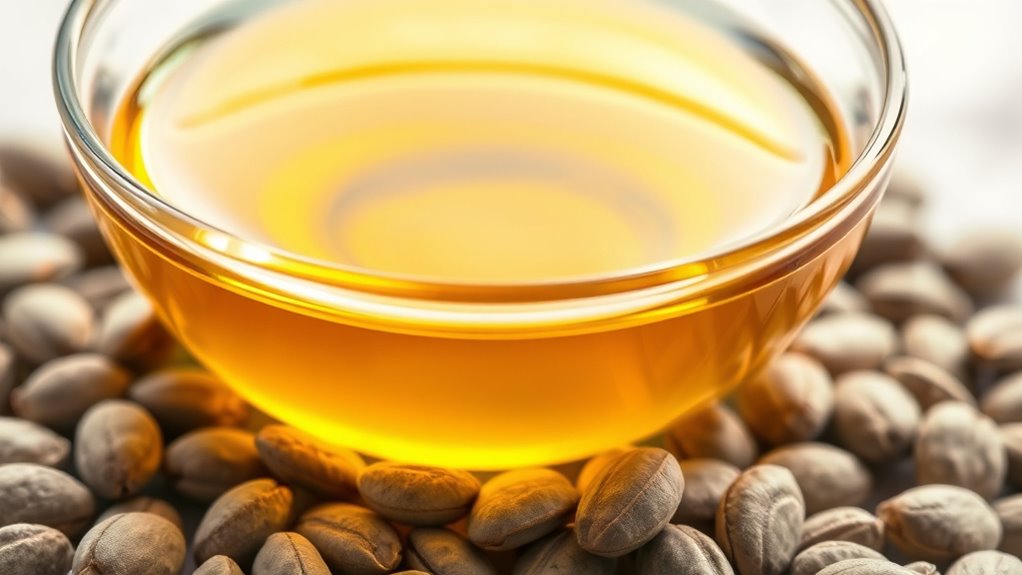
Once the flowers bloom and mature, the seeds inside are harvested. The oil is then extracted by cleaning and crushing these seeds.
Most often, they use mechanical pressing or solvent extraction to get the oil out efficiently. After that, the oil is refined to improve its clarity, flavor, and shelf life.
Understanding this process shows that sunflower oil is indeed a seed oil, made directly from sunflower seeds. This method helps preserve its natural nutrients.
That’s why sunflower oil is popular for cooking and health. Its origin comes from careful farming and precise extraction of sunflower seeds.
What Are the Key Features of Seed Oils?
Seed oils usually come with their own unique mix of fats and nutrients that make them stand out. The way they’re extracted—whether through cold pressing or using chemical solvents—also plays a big role in determining their quality and purity. Getting to know these features can really help you spot authentic seed oils more easily.
Composition and Nutrients
The composition of seed oils mainly comes from their high content of healthy fats, especially polyunsaturated and monounsaturated fatty acids. These fats give seed oils a good nutritional profile, making them good for heart health and managing cholesterol.
You’ll see that seed oils are rich in essential fatty acids like omega-3 and omega-6, which your body can’t produce on its own. These nutrients support brain function, reduce inflammation, and promote overall wellness.
Knowing the specific makeup helps you understand the health benefits of seed oils, like sunflower oil. Usually, seed oils are low in saturated fats and high in antioxidants, which boost their nutritional value.
Recognizing these features helps you make smarter choices about adding seed oils to your diet.
Extraction Methods Used
Extraction methods play an essential role in determining the purity and quality of sunflower oil. They influence extraction efficiency and the final oil’s purity. Common methods include cold pressing, solvent extraction, and expeller pressing.
Cold pressing preserves nutrients and yields less oil but maintains higher purity. Solvent extraction offers high efficiency, extracting more oil quickly, but may require refining to remove residues. Expeller pressing strikes a balance, providing decent extraction efficiency with minimal chemical use.
| Method | Extraction Efficiency | Oil Purity |
|---|---|---|
| Cold Pressing | Moderate | Very high |
| Solvent Extraction | Very high | May need refining |
| Expeller Pressing | High | Good |
How Can You Identify Sunflower Oil on Labels?
Wondering how to spot sunflower oil on a label? The key is careful label reading. Look for “sunflower oil” or “high-oleic sunflower oil” in the ingredient list.
Since many oils are blended, check if sunflower oil is listed as the primary ingredient, which shows it’s the main source. Be aware that ingredient sourcing can influence label details; some brands specify whether their sunflower oil is refined, cold-pressed, or expeller-pressed.
These details can help you determine if the oil is more likely to be seed oil or derived through less processed methods. Also, watch for labels that list “vegetable oil,” which can sometimes include sunflower oil but may also contain other oils.
To be certain, research the brand’s sourcing practices or contact manufacturers directly. Clear, transparent labeling is your best guide in identifying pure sunflower oil and understanding its origins.
Does Processing Turn Sunflower Oil Into a Seed Oil?
Processing can definitely change the characteristics of sunflower oil, but it doesn’t turn it into a seed oil. In fact, sunflower oil is already classified as a seed oil because it’s extracted from sunflower seeds. The refining methods and extraction techniques can affect things like purity, flavor, and nutritional content, but they don’t change the fundamental source of the oil.
Impact of Refining Process
The refining process plays an essential role in shaping sunflower oil’s final characteristics, but it doesn’t transform it into a seed oil in the strictest sense. Refining effects primarily improve oil purity by removing impurities, free fatty acids, and contaminants.
This process results in a clearer, more stable product with a longer shelf life. However, refining doesn’t alter the fundamental botanical source of the oil, so it remains sunflower seed oil despite the processing.
The goal is to produce a neutral-tasting, high-quality oil suitable for cooking and consumption. While refining impacts texture, appearance, and shelf stability, it doesn’t change the oil’s origin.
Consequently, understanding refining effects helps you assess whether the oil has been heavily processed but not whether it’s technically seed oil.
Oil Extraction Methods
Oil extraction methods determine how sunflower seeds are transformed into oil, but they do not change the seed origin itself. The extraction process impacts both efficiency and oil purity.
Mechanical pressing, like cold-pressing, offers high extraction efficiency with minimal heat. This helps preserve natural nutrients and ensures a pure product.
Solvent extraction, often used in commercial settings, maximizes yield but may introduce residual chemicals. If not properly refined, this can affect oil purity.
The choice of method influences whether the oil remains close to its seed origin or undergoes extensive processing. While extraction techniques don’t alter the seed’s fundamental nature, they determine the oil’s final quality.
Understanding these methods helps you identify whether sunflower oil is minimally processed seed oil or heavily refined.
Are Seed Oils Like Sunflower Oil Healthy?
Many people wonder whether seed oils like sunflower oil are really healthy options for their diets. While they do have some benefits, it’s important to understand the potential risks associated with sunflower oil.
These oils are high in omega-6 fatty acids. Eating too much of them can promote inflammation, which isn’t good for your health. Here are some key points to keep in mind:
- Balance is vital: Consuming too much omega-6 can overshadow your omega-3 intake, affecting your overall health.
- Processing matters: Refined sunflower oil may lose some nutrients and often contains additives.
- Potential inflammation: Eating a lot of sunflower oil might increase inflammation-related issues.
- Moderation is key: Using small amounts can help you enjoy the benefits without the risks.
While seed oils do provide healthy fats, relying too much on sunflower oil could pose health concerns. It’s best to balance your diet with a variety of fat sources and stay aware of sunflower oil risks.
What’s the Difference Between Cold-Pressed and Refined Sunflower Oil?
Cold-pressed sunflower oil is made using minimal processing, so it keeps more of its natural nutrients and has a richer, stronger flavor. It’s like getting the purest form of sunflower oil straight from the seeds. On the other hand, refined sunflower oil goes through a lot of processing, which removes some of those nutrients and leaves it with a more neutral, bland taste.
Knowing the difference can really help you pick the right oil for your needs. If you’re looking for something more natural and flavorful, cold-pressed might be the way to go. But if you prefer a milder taste that doesn’t interfere with your dishes, refined oil could be a better choice.
Processing Methods Compared
Understanding the differences between cold-pressed and refined sunflower oil can help you make informed choices in your kitchen. Cold-pressed oil is extracted without heat, so it keeps most of its nutrients and antioxidants.
Refined oil, on the other hand, goes through processing to remove impurities. This gives it a neutral flavor and a higher smoke point but slightly reduces its nutrients.
Here are some key points to consider:
- Nutritional benefits: Cold-pressed retains more vitamins and antioxidants.
- Environmental impact: Cold-pressing uses less energy and fewer chemicals.
- Processing methods: Cold-pressed involves minimal heat, while refining includes chemical and high-heat steps.
- Usage preferences: Cold-pressed is great for raw or low-heat dishes. Refined works better for high-temperature cooking.
Your choice between these methods can affect both your health and the environment.
Nutritional Content Differences
Choosing between cold-pressed and refined sunflower oil can really change the nutritional benefits you get. Cold-pressed oil keeps more nutrients because it’s processed without high heat or chemicals, preserving antioxidants and vitamin E.
This means it offers better health perks, like supporting your skin and immune system. Refined sunflower oil, however, goes through bleaching and deodorizing, which reduces some nutrients but makes the oil more stable and neutral in flavor.
Refined oil also lasts longer on the shelf and has a higher smoke point, making it good for high-heat cooking. But it provides fewer health benefits overall. If you’re after more vitamins and antioxidants, cold-pressed sunflower oil is the better choice.
On the other hand, refined oil might be better for certain cooking methods that require higher heat, even if it means sacrificing some nutritional value.
Flavor and Aroma Variations
While refined sunflower oil usually has a neutral taste and aroma, cold-pressed sunflower oil keeps more of its natural flavors, giving it a richer, nuttier profile. The main difference is in flavor and aroma intensity.
Cold-pressed oil tends to have a stronger, more noticeable aroma and a nuttier, earthier flavor. It also undergoes less processing, so it retains its natural taste better and is great for raw uses.
Refined oil, on the other hand, offers a mild, almost odorless profile. It’s perfect for high-heat cooking because it won’t overpower other ingredients.
Your choice depends on whether you want a more robust flavor or a neutral base. Knowing these flavor and aroma differences helps you pick the right sunflower oil for your cooking needs.
How Do You Use Seed Oils Like Sunflower Oil in Cooking?
Seed oils like sunflower oil are versatile ingredients that can be easily incorporated into various cooking methods. You can use them for sautéing, frying, baking, or drizzling over salads.
Their high smoke point makes them ideal for high-heat cooking techniques like stir-frying or deep frying without breaking down or imparting unwanted flavors.
In terms of flavor pairing, sunflower oil’s mild, neutral taste complements a wide range of ingredients, allowing the flavors of your dishes to shine.
It works well with vegetables, meats, and grains, enhancing their natural tastes without overpowering them.
For dressings and dips, simply whisk sunflower oil with herbs, lemon juice, or vinegar for a light, fresh flavor.
Whether you’re cooking at high heat or adding a finishing touch, sunflower oil is a practical, adaptable choice that supports many different cooking techniques and flavor pairings.
How to Choose the Best Sunflower Oil for Your Needs
Are you unsure how to pick the right sunflower oil for your cooking? To choose the best one, consider your cooking applications and health benefits. First, check the oil’s refinement level: extra virgin or cold-pressed oils retain more nutrients and flavor, making them great for salads or drizzling.
Second, look at the smoke point. High smoke points around 440°F are perfect for frying and sautéing. Third, review the label for nutritional info—aim for oils rich in monounsaturated fats to support heart health.
Fourth, opt for oils stored in dark glass bottles. This helps preserve freshness and prevent oxidation. These factors help ensure you pick a sunflower oil that matches your needs, whether for crispy frying or healthy dressings.
Choosing the right oil improves your cooking results and boosts health benefits. It makes your meals both tasty and nutritious.
Questions to Ask When Buying Sunflower Oil
When shopping for sunflower oil, asking the right questions can help you make an informed choice. Start by inquiring about labeling regulations to ensure the product clearly states whether it’s refined or unrefined, and if any additives are included. Knowing this helps you match the oil to your needs and health preferences.
Furthermore, ask about sourcing practices to understand where and how the oil was produced. Reputable brands should be transparent about their sourcing, making sure the sunflower seeds come from trusted farms and sustainable sources.
Ask about sourcing practices to ensure sunflower seeds come from trusted, sustainable farms for quality and ethical integrity.
Don’t hesitate to request details on whether the oil is made from non-GMO seeds or if it’s processed without harmful chemicals. These questions help you verify quality and authenticity, giving you confidence in your purchase.
Ultimately, understanding labeling regulations and sourcing practices guarantees you select a sunflower oil that aligns with your health, ethical, and culinary standards.
Final Tips: Making Informed Choices About Sunflower Oil
To make well-informed choices about sunflower oil, start by reading labels carefully and understanding where the product comes from. Knowing whether it’s a seed oil or a refined product helps you decide if it fits your health goals and cooking style.
Here are some key tips:
- Look for cold-pressed or unrefined labels to get the most health benefits.
- Choose organic options to avoid pesticides and additives.
- Pay attention to the source country, as it can affect the oil’s quality and purity.
- Compare labels for any additives or preservatives that might impact health or flavor.
Opting for high-quality sunflower oil can boost your intake of healthy fats and antioxidants. If you’re worried about refined oils, try alternatives like olive or avocado oil.
Being diligent with labels and knowing the product’s background helps you pick the best option for your dietary needs and culinary preferences. Making these informed choices means you can enjoy healthier, tastier meals without sacrificing flavor or quality.
Frequently Asked Questions
Can Sunflower Oil Be Derived From Other Parts Besides Seeds?
Sunflower oil mainly comes from the seeds of the sunflower plant through oil extraction. Some people wonder if other parts of the plant can produce oil, but the seeds are the main source.
The reason is that sunflower seeds have the highest oil content. Other parts like stems or leaves don’t have enough oil to make it worth extracting commercially.
Are Organic Sunflower Oils Different From Conventional Ones?
Yes, organic sunflower oils differ from conventional ones mainly because of how they’re made and their organic benefits. Organic oils are made from sunflowers grown without synthetic pesticides or fertilizers.
They’re often cold-pressed, which helps keep more nutrients intact.
This process results in a purer, healthier oil with fewer chemicals. If you want the organic benefits, look for oils labeled as organic.
Also, check for certifications to make sure you’re getting quality and authenticity.
How Long Does Sunflower Oil Typically Last Before Spoiling?
Sunflower oil usually stays fresh for about 6 to 12 months if you store it properly. Keep an eye out for signs of spoilage like a rancid smell, cloudy appearance, or off-taste.
To make it last longer, store it in a cool, dark place away from heat and light. Proper storage helps keep its quality and prevents it from spoiling too soon.
Is Sunflower Oil Suitable for All Cooking Methods?
You can use sunflower oil for many cooking methods, including frying techniques like pan-frying and deep-frying. Its high smoke point makes it great for cooking at high temperatures, and it has a mild flavor that won’t overpower your dishes.
That said, it’s best to avoid using sunflower oil for recipes that need strong flavors or delicate textures. Overall, sunflower oil is pretty versatile and works well for many cooking styles, especially when you want a neutral taste.
Does Sunflower Oil Contain Any Natural Antioxidants?
Sunflower oil does contain natural antioxidants, mainly vitamin E and phenolic compounds. These help protect your cells from damage.
These natural compounds offer health benefits like reducing oxidative stress and supporting your immune system. Including sunflower oil in your diet means you’re adding a versatile cooking ingredient and antioxidants that can boost your overall health.
Conclusion
So, now you’re practically a sunflower oil expert—ready to spot a seed oil at a glance and outsmart sneaky labels. Remember, whether you’re frying or drizzling, choosing the right oil is your secret weapon.
Don’t let those shiny bottles fool you. Sometimes, it’s just a seed of deception! Stay savvy, read labels carefully, and turn your kitchen into a battlefield of informed choices.
After all, a little knowledge goes a long way, especially when it comes to identifying if sunflower oil is seed oil.