How to Read a Lab Report: A Step-by-Step Guide for Clear Understanding
Reading a lab report begins with understanding its structured sections: abstract, introduction, methods, results, discussion, and conclusion. By recognizing how each part functions, you can quickly grasp the purpose, findings, and implications of the experiment without confusion.
Lab reports serve as a formal record of scientific experiments, presenting data in a clear, organized manner. Knowing how to interpret these reports matters, as it allows you to evaluate the validity of experiments, replicate studies if needed, and draw meaningful insights from the results.
This article breaks down the components of a lab report step-by-step, explaining what to focus on in each section and how to interpret technical data and visuals. You’ll gain techniques to analyze lab content critically and apply these skills across many scientific disciplines.
Understanding the Lab Report Structure
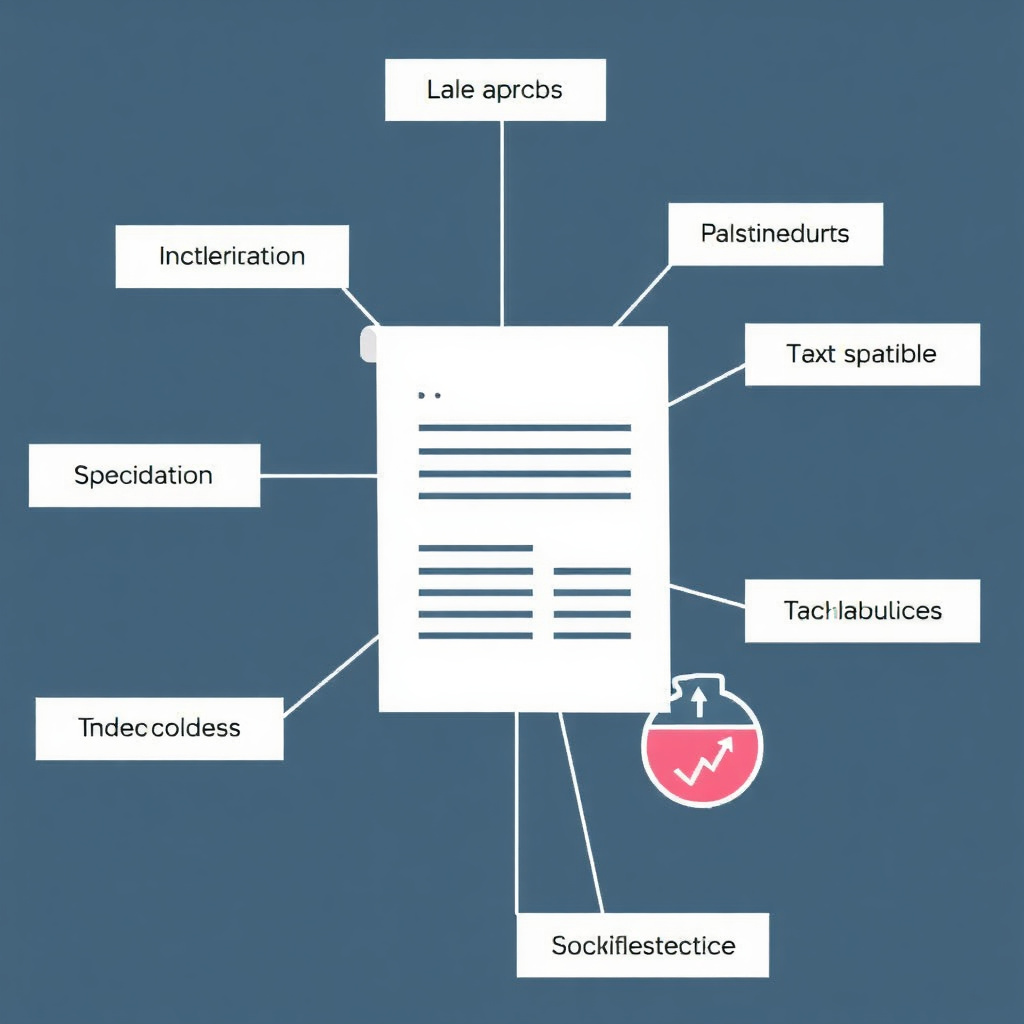
Abstract and Introduction Overview
The abstract summarizes the entire report in about 150-200 words. It highlights the experiment’s purpose, key methods, major results, and the main conclusions, offering a quick snapshot to decide if reading the full report is relevant.
The introduction provides background information, states the research question, and frames the hypothesis. It sets the context by reviewing related research or theory and explains why the experiment was performed.
Methods and Materials Explained
The methods section describes step-by-step how the experiment was conducted, including equipment, procedures, and variables. This section ensures the experiment’s reproducibility and helps readers assess if the approach was appropriate.
Materials lists the substances or tools used. Detailed descriptions clarify how measurements were taken, highlighting controls and how errors were minimized or managed throughout the procedure.
Interpreting Results and Data

Reading Graphs, Tables, and Figures
Lab report analysis techniques include carefully examining visual data like graphs and tables. Check axis labels, units, legends, and any notes explaining anomalies or calculations to understand trends and significant findings fully.
Tables organize raw or processed data, often showing measurements under different conditions. Graphs plot these data points visually, making patterns or correlations easier to identify at a glance.
- Identify the variables displayed
- Look for error bars or confidence intervals
- Note any outliers or irregular data points
Statistical Data and Significance
Results often include statistical analysis like mean values, standard deviations, or p-values to test hypotheses rigorously. Understanding these concepts helps you judge if the results are meaningful or possibly due to chance.
Significance levels indicate whether the observed effects support the hypotheses, guiding conclusions and further research directions.
- Mean and median for central tendency
- Standard deviation for variability
- P-values for hypothesis testing
Analyzing the Discussion and Conclusion

Evaluating the Discussion Section
The discussion interprets the results, comparing them to prior studies or expected outcomes. It addresses whether the data support the hypothesis and explores possible errors or alternative explanations.
This section reveals the researchers’ reasoning, giving insight into the experiment’s strengths and limitations, and suggesting improvements or additional questions.
For more on this, see our related guide: How to Read Cannabis Strain Descriptions to Find Your Perfect Match.
Understanding the Conclusion
The conclusion succinctly summarizes what the study achieved and its implications. It emphasizes key findings and may propose practical applications or areas for future work.
Reading the conclusion helps you digest the overall takeaway without wading through detailed data, highlighting the experiment’s significance in a broader context.
Spotting Common Lab Report Pitfalls

Identifying Incomplete or Confusing Data
Watch for missing information like unclear methods, inconsistent data, or unsupported conclusions, which can undermine a report’s reliability.
Incomplete data presentation, such as absent control results or unexplained anomalies, limits understanding and replication potential.
- Check for missing units or unclear measurement techniques
- Note unexplained data inconsistencies
- Verify if controls are adequately mentioned
Recognizing Overgeneralized Conclusions
Some reports draw conclusions beyond what the data can justify, often ignoring study limitations or alternative interpretations.
Scrutinize claims and assess whether the experimental evidence directly supports them, maintaining an objective perspective.
Applying Lab Report Analysis Techniques

Comparing Reports Across Studies
Comparing multiple lab reports helps develop critical judgment and understanding of trends in research topics or methodologies.
Note differences in experimental design or data interpretation that influence how results are framed and conclusions drawn.
For more on this, see our related guide: Cannabis Flowering Time Explained: How to Optimize Your Grow Cycle.
Using Lab Reports for Academic and Practical Purposes
Reading lab reports is essential for students, researchers, and professionals to support learning, research projects, or real-world applications.
Mastering lab report reading enhances scientific literacy, enabling you to make informed decisions based on experimental evidence and stay updated with technological advances.
Understanding Citations and References
Importance of References in Lab Reports
References point to prior research or sources that frame the experiment’s context and support claims made.
Understanding citations helps verify facts, follow study lineage, and access additional resources for deeper insight.
For a thorough overview of lab report formats and components, refer to the detailed explanation available on Lab report – Wikipedia. Lab report – Wikipedia.
How to Cross-Check Sources
Verifying referenced sources improves confidence in the lab report’s quality and highlights potential biases or conflicts of interest.
Use accessible databases or journals to review cited materials, ensuring information accuracy and relevance.
Types of Lab Reports Compared
Here’s a comparison of common types of lab reports based on purpose, content detail, and typical audience.
| Type | Purpose | Detail Level | Common Audience |
|---|---|---|---|
| Academic Lab Report | Document experimental research | High detail, including methods and stats | Students and educators |
| Industrial Lab Report | Product testing and quality control | Detailed with focus on compliance | Engineers and managers |
| Clinical Lab Report | Patient diagnostic tests | Focused on results and interpretation | Healthcare providers |
| Research Article | Publish new scientific findings | Comprehensive with peer review | Researchers and professionals |
| Technical Lab Report | Technical experiments or prototypes | Precise with procedure and specs | Developers and scientists |
Frequently Asked Questions
What is the quickest way to understand a lab report?
Start by reading the abstract and conclusion to grasp the overall purpose and findings, then examine the results and discussion to confirm details.
How do I read scientific graphs in a lab report?
Look at axis labels, units, and legends carefully to interpret data points. Identify trends, outliers, and error margins to understand findings accurately.
Why is the methods section important in a lab report?
It describes how the experiment was conducted, allowing evaluation of validity and enabling replication for verification or further study.
How can I tell if a lab report’s conclusion is reliable?
Check if the conclusion directly relates to the presented results, acknowledges limitations, and avoids overgeneralizing beyond the evidence.
Can I use lab reports to improve my own experiments?
Yes, analyzing others’ lab reports can highlight successful approaches, common pitfalls, and inspire methods to optimize your experimental design.
Key Takeaways
- Focus first on the abstract and conclusion to capture main points quickly.
- Examine results sections carefully, especially graphs and statistics.
- Critically evaluate if conclusions align with data and acknowledge limitations.
- Use lab report analysis techniques to enhance scientific comprehension and application.
Conclusion
Approaching how to read a lab report requires a systematic method that acknowledges the report’s specific sections and their purposes. By recognizing the role of each part—from abstract to references—you build a clear framework that aids in extracting accurate and meaningful information. This method facilitates not only understanding but also critical evaluation, allowing you to distinguish reliable data from incomplete or biased reports. The ability to read a lab report effectively becomes especially relevant as scientific communication grows increasingly complex, demanding precise interpretation skills.
When deciding how to focus your reading, consider your goal: whether verifying experimental results, learning new methods, or applying findings practically. Academic lab reports offer a detailed walk-through ideal for mastering scientific processes, while industrial or clinical reports emphasize practical implications and compliance. For example, analyzing the results and discussion sections closely can clarify the validity of data in academic reports, whereas clinical lab reports prioritize clear result interpretation for patient care. Tailoring your approach to the report type ensures efficient use of your time and effort.
The next practical step is practicing these analysis strategies with varied lab reports. Start with straightforward academic papers to familiarize yourself with common structures and gradually explore specialized reports relevant to your field. Taking notes on each section’s key points and cross-referencing citations builds deeper insight and confidence. Combining this disciplined reading with critical thinking transforms lab reports from dense documents into valuable tools, empowering you to harness scientific knowledge effectively.