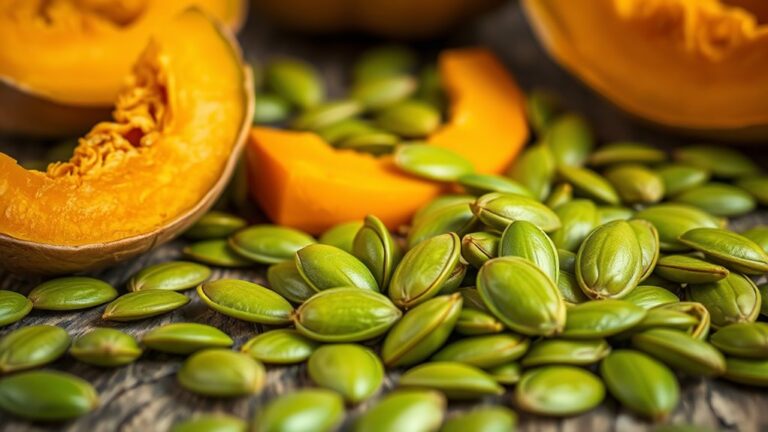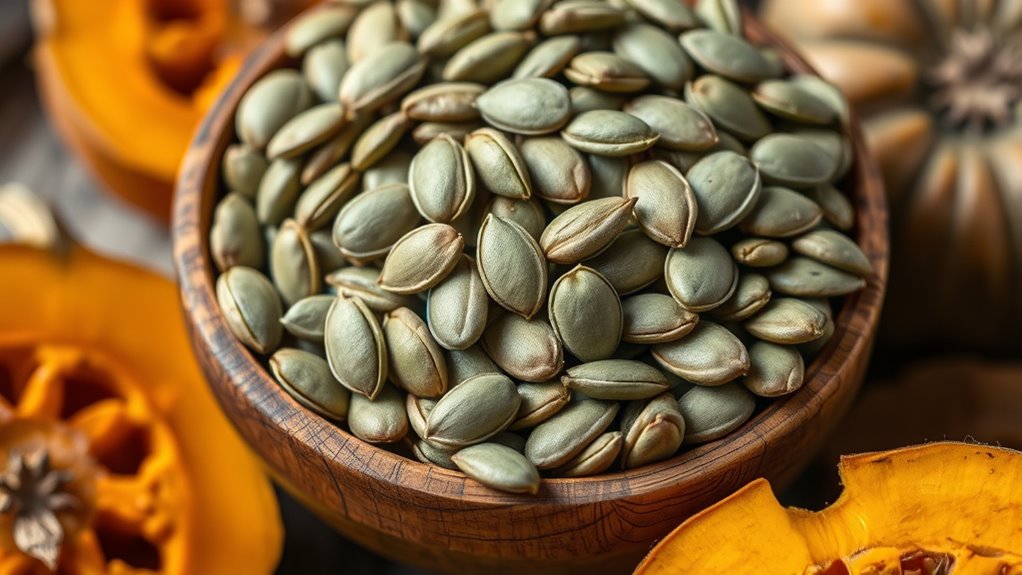
What Health Benefits Are Good for You in Pumpkin Seeds?
Many people struggle with finding healthy snacks that actually support their wellness goals. If you’re looking for a tasty option that packs a punch, pumpkin seeds might just be your new best friend.
Pumpkin seeds are a nutrient-dense snack that supports your heart, immune system, and digestion. They provide healthy fats, magnesium, zinc, and fiber that help lower bad cholesterol, boost insulin sensitivity, and promote gut health.
These seeds also benefit your skin and hair by providing antioxidants and essential minerals. Plus, they strengthen your bones with calcium and magnesium.
Want to uncover more ways pumpkin seeds can improve your health? Keep exploring to learn even more.
Key Takeaways
- Rich in essential nutrients like magnesium, zinc, and healthy fats that support overall health.
- Promote heart health by lowering bad cholesterol and improving blood vessel function.
- Boost immune system function with high zinc and antioxidant content.
- Aid digestion and gut health through high dietary fiber and prebiotic properties.
- Support skin, hair, and bone health with antioxidants, collagen formation, and mineral content.
What Makes Pumpkin Seeds a Superfood?
Pumpkin seeds are considered a superfood because they pack a powerful punch of nutrients in a small package. Their impressive pumpkin seed nutrition includes healthy fats, protein, fiber, vitamins, and minerals—all essential for your well-being.
These seeds are rich in magnesium, zinc, and iron, which support immune function, energy production, and bone health. The superfood benefits of pumpkin seeds go beyond basic nutrition.
They can help reduce inflammation, improve heart health, and boost your mood. Incorpor’s you might notice that adding pumpkin seeds to your diet increases your intake of antioxidants, which fight free radicals and lower the risk of chronic diseases.
Their versatility makes it easy to add them to salads, snacks, or baked goods. Because of their dense nutrient profile, pumpkin seeds deliver concentrated health benefits without many calories, making them a great addition to your daily routine.
The Nutrients in Pumpkin Seeds That Boost Your Health
The nutrients in pumpkin seeds are powerful tools for supporting your overall health. Pumpkin seed nutrition includes magnesium, zinc, iron, and manganese, which are essential for keeping your body functioning well.
Pumpkin seeds provide essential nutrients like magnesium, zinc, iron, and manganese to support overall health.
They’re also packed with healthy fats like omega-3 and omega-6 fatty acids. These help reduce inflammation and support brain health. Plus, pumpkin seeds provide a good amount of plant-based protein, which helps with muscle repair and boosts energy.
Their high fiber content promotes good digestion and keeps you feeling full longer. The health benefits extend to boosting your immune system thanks to zinc and antioxidants like vitamin E.
Eating pumpkin seeds regularly can also improve sleep quality because of their tryptophan content. Overall, the diverse nutrients in pumpkin seeds make them a nutritious addition to your diet, helping you stay energized, support immunity, and maintain overall well-being.
How Pumpkin Seeds Support Heart Health
Eating pumpkin seeds regularly can really help your heart by lowering bad cholesterol and improving how blood vessels work. These seeds are packed with magnesium, which helps control blood pressure and keeps your cardiovascular system functioning smoothly.
They also contain healthy fats like omega-3 and omega-6 fatty acids, which reduce inflammation and prevent arteries from clogging. Plus, pumpkin seeds are rich in antioxidants and phytosterols that fight oxidative stress and block cholesterol absorption.
Their high fiber content is another plus, helping to lower cholesterol levels and support healthy blood flow. Adding pumpkin seeds to your diet gives your heart essential nutrients that boost overall health.
Consuming them regularly can lower your risk of heart disease, keeping your heart strong and working well. Making pumpkin seeds part of your daily routine supports long-term heart health and wellness.
Can Pumpkin Seeds Help Strengthen Your Immune System?
Have you ever wondered if pumpkin seeds can give your immune system a boost? The answer is yes, thanks to their powerful nutrient combo.
Pumpkin seeds are packed with zinc, which is crucial for immune support because it helps your body fight infections and heal wounds. They also contain magnesium, which helps regulate immune functions, and antioxidants like vitamin E that protect your cells from damage.
This mix of nutrients works together to strengthen your immune defenses. Plus, pumpkin seeds provide healthy fats and fiber, supporting overall health and reducing inflammation.
Adding pumpkin seeds to your diet is an easy way to naturally boost your immune system. Their nutrient synergy gives you a well-rounded blend of immune-boosting compounds, making these tiny seeds a smart health habit.
How Pumpkin Seeds Improve Digestive Health
Eating pumpkin seeds is a great way to add more dietary fiber to your diet. That fiber helps keep your digestion smooth and regular, so you’re not stuck with bloating or discomfort. Plus, pumpkin seeds support the growth of healthy gut bacteria, which is super important for overall gut health.
Incorporating pumpkin seeds into your meals is a simple and natural way to give your digestive system a little boost. Whether you sprinkle them on salads, yogurt, or enjoy them as a snack, they’re easy to include in your daily routine.
Rich in Dietary Fiber
Pumpkin seeds are a rich source of dietary fiber, which is key for keeping your digestion healthy. The fiber in pumpkin seeds helps regulate bowel movements and prevents constipation.
By adding these seeds to your diet, you support your digestive system naturally. Their fiber adds bulk to your stool, making waste easier to pass. Plus, fiber helps you stay full longer, which can help with weight management.
For the best digestive benefits, enjoy pumpkin seeds as a snack or sprinkle them on your meals. Remember, eating a variety of fiber-rich foods can lower your risk of digestive issues.
Supports Gut Flora
Pumpkin seeds contain compounds that promote the growth of beneficial gut bacteria, supporting a healthy balance of your digestive flora. Their prebiotic properties help nourish good bacteria in your gut, which is essential for optimal gut health.
When these beneficial microbes thrive, they improve digestion, reduce inflammation, and strengthen your immune system. Consuming pumpkin seeds regularly can boost your gut’s resilience, making it better equipped to handle harmful pathogens and toxins.
These seeds provide a natural way to support digestive function without relying on artificial supplements. By including pumpkin seeds in your diet, you’re actively contributing to a healthier gut environment, which can positively influence your overall well-being and digestion.
Using Pumpkin Seeds for Better Sleep and Relaxation
If you’re looking for a natural way to improve your sleep and relax more easily, try adding pumpkin seeds to your routine. These seeds have sleep benefits like magnesium, which helps you relax and supports better sleep quality.
Eating a handful before bed can promote calmness and reduce stress, making it easier to fall asleep. Pumpkin seeds also help relax your nervous system naturally, aiding overall relaxation.
To get the most out of these benefits, consider adding pumpkin seeds to your evening snack or smoothie. You can also try simple relaxation techniques like deep breathing or meditation alongside eating pumpkin seeds for better results.
Key ways pumpkin seeds support relaxation and sleep include:
- Providing magnesium to relax muscles and nerves
- Offering tryptophan, which helps produce serotonin and melatonin
- Supporting overall calming effects for a restful night
The Benefits of Pumpkin Seeds for Skin and Hair
Pumpkin seeds are great for giving your skin a natural boost and helping it stay radiant. They’re packed with nutrients that support healthy, glowing skin from the inside out.
And when it comes to your hair, these seeds can really help with growth and strength. The essential nutrients in pumpkin seeds nourish your strands, making them thicker and healthier over time. Plus, their antioxidants fight off aging signs, keeping your skin looking youthful and fresh.
Nourishes Skin Naturally
Because of their rich nutrient profile, pumpkin seeds can really boost your skin’s health and appearance. They’re packed with zinc, magnesium, and antioxidants that nourish your skin naturally. These nutrients help with cell repair and shield your skin from environmental damage.
The moisturizing properties of pumpkin seeds help keep your skin hydrated and soft, which can reduce dryness and flakiness. Their antioxidants fight free radicals, preventing premature aging and keeping your skin looking youthful.
You can enjoy these benefits by adding pumpkin seeds to your diet or skincare routine. They promote a healthy, glowing complexion and help maintain skin elasticity. Plus, their anti-inflammatory qualities soothe irritated skin.
Incorporate pumpkin seeds into your routine for a natural boost to your skin’s overall health and youthful appearance.
Promotes Hair Growth
Rich in zinc, magnesium, and healthy fats, pumpkin seeds are a natural way to promote hair growth. The nutrients help keep hair follicles strong and healthy.
Pumpkin seed oil contains phytosterols that may block DHT, a hormone linked to hair loss. Regular intake can boost hair density and prevent thinning.
You can add pumpkin seeds to your diet or apply pumpkin seed oil directly to your scalp for extra benefits. Here’s a quick overview:
| Nutrients | Benefits | How to Use |
|---|---|---|
| Zinc | Strengthens hair follicles | Eat a handful daily or take supplements |
| Magnesium | Promotes circulation | Add to smoothies or salads |
| Healthy Fats | Nourish scalp and hair | Use pumpkin seed oil as a scalp massage |
Fights Skin Aging
If you want to slow down the visible signs of aging, incorporating pumpkin seeds into your diet can be a smart move. Their rich content of antioxidants and anti-inflammatory properties helps combat skin damage caused by free radicals and environmental stressors.
The antioxidant effects help preserve collagen and elastin, maintaining your skin’s firmness and elasticity. Plus, the anti-inflammatory properties can reduce redness and swelling, promoting a smoother complexion.
Eating pumpkin seeds regularly can also support skin hydration and repair. To get the most benefits, include them as a snack or toss them into salads and smoothies.
Remember, consistent intake is key to seeing improvements in your skin’s youthful appearance.
- Boosts collagen preservation
- Reduces inflammation and redness
- Protects against environmental damage
How Pumpkin Seeds Help Manage Blood Sugar Levels
Pumpkin seeds can play a valuable role in managing blood sugar levels because of their nutrient profile. They contain magnesium, which helps boost insulin sensitivity, making it easier for your body to regulate blood sugar.
Their healthy fats and fiber also slow down glucose absorption, helping prevent spikes after meals. Including pumpkin seeds regularly in your diet may help with better blood sugar control and reduce the risk of type 2 diabetes.
Here’s a quick look at key nutrients and their effects:
| Nutrient | Benefits |
|---|---|
| Magnesium | Improves insulin sensitivity |
| Healthy fats | Stabilizes blood sugar levels |
| Fiber | Slows glucose absorption |
| Zinc | Supports pancreatic function |
| Antioxidants | Reduce inflammation linked to insulin resistance |
Adding pumpkin seeds to your meals is an easy step toward better blood sugar management.
Building Stronger Bones With Pumpkin Seeds
Pumpkin seeds are a fantastic snack if you’re looking to build stronger bones. They’re packed with calcium, which is super important for keeping your bones strong and healthy.
Plus, they contain magnesium, which helps support your bone structure and density. So, by adding pumpkin seeds to your diet, you’re giving your bones a natural boost and supporting your overall health.
Rich Calcium Content
Calcium plays an essential role in maintaining strong, healthy bones, and pumpkin seeds are a surprisingly rich source of this crucial mineral. Consuming pumpkin seeds can boost your calcium intake, supporting ideal calcium absorption and enhancing your overall bone health.
Incorporating these seeds into your diet helps provide the necessary nutrients for maintaining bone density and preventing osteoporosis. Here are some reasons why pumpkin seeds are a bone health powerhouse:
- High calcium content for stronger bones
- Easily incorporated into snacks or meals
- Supports calcium absorption naturally
Magnesium’s Bone Role
Since magnesium is crucial for bone health, including it in your diet can really strengthen your bones. Pumpkin seeds are a rich source of magnesium, making them an easy and tasty way to support your skeletal system.
Magnesium helps convert vitamin D into its active form, which makes it easier for your body to absorb calcium. Getting enough magnesium can also boost bone formation and slow down bone loss, lowering the risk of osteoporosis.
Adding pumpkin seeds to your snacks or meals is a simple way to make sure your bones get this essential mineral regularly. Keeping your magnesium levels up is key to maintaining strong, healthy bones throughout your life.
Boosting Bone Density
Building stronger bones is achievable by adding nutrient-rich foods like pumpkin seeds to your diet. These seeds are full of minerals that support bone health and help with mineral absorption, which is key for maintaining density.
Eating pumpkin seeds regularly provides calcium, magnesium, and zinc. These nutrients work together to strengthen bones and prevent density loss.
To boost your bone health, consider these benefits:
- Improving mineral absorption for stronger bones
- Supporting collagen formation for bone flexibility
- Providing a natural source of essential nutrients
Adding pumpkin seeds to your meals is an easy way to support your skeletal system. Their nutrient profile makes them a simple, effective choice for building and maintaining healthy bones over time.
Easy Ways to Incorporate Pumpkin Seeds Into Your Diet
Adding pumpkin seeds to your diet is simple and versatile. You can blend them into smoothies or sprinkle them on salads for extra crunch.
Roasted seed snacks are a quick, healthy treat to keep on hand. You can also add pumpkin seeds to homemade granola or seed energy bars for a nutritious boost.
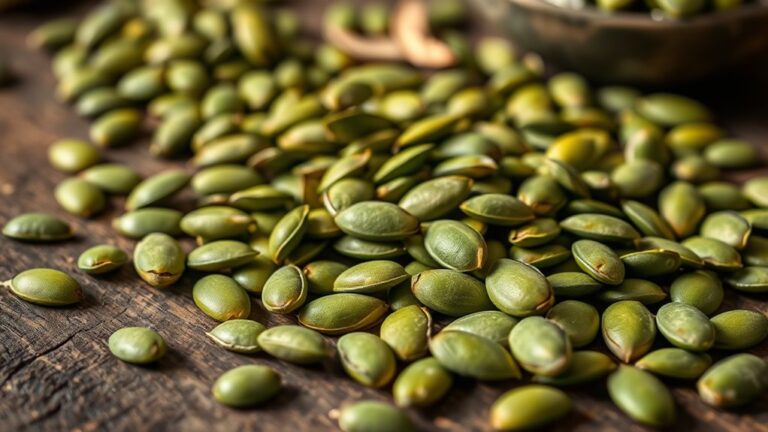
Roasted pumpkin seeds make a quick, healthy snack to enjoy anytime.
Mix them into trail mixes for on-the-go snacking or spread seed butter on toast for a savory snack. Pumpkin seed pesto adds flavor to pasta or sandwiches.
Seed protein shakes are great for a quick post-workout boost. Sprinkle pumpkin seed toppings on yogurt or oatmeal to add texture and nutrition.
You can even blend pumpkin seeds into seed butter spreads for sandwiches or dips. These simple ideas make it easy to include pumpkin seeds in your meals and snacks.
Enjoy their health benefits effortlessly throughout the day with these easy tips.
Frequently Asked Questions
Are Pumpkin Seeds Suitable for People With Nut Allergies?
If you have nut allergies, pumpkin seeds might be a safe snack option, but it’s important to check for cross-contamination. While they aren’t nuts, some people with nut allergies could still react to them.
Consider allergen alternatives like sunflower or chia seeds instead. Always read labels carefully and talk to your doctor to make sure pumpkin seeds are okay for your diet, especially if you’re looking for safe snack options.
How Many Pumpkin Seeds Should I Eat Daily for Health Benefits?
You should aim for a daily serving of about a quarter cup (roughly 30 grams) of pumpkin seeds for ideal intake.
While some worry about calories, this amount offers plenty of health benefits without overdoing it.
Eating this portion daily can boost your magnesium, zinc, and healthy fats intake, supporting overall health.
Just make sure you don’t go beyond this, as excessive consumption could lead to unwanted calorie intake.
Can Pumpkin Seeds Cause Any Side Effects or Allergies?
Pumpkin seeds can cause side effects or allergies if you’re sensitive. You might experience allergy symptoms like itching, swelling, or trouble breathing.
In rare cases, eating too many pumpkin seeds can lead to digestive issues or nutrient imbalances. It’s best to start with small portions and see how your body reacts.
Be especially cautious if you have known seed or nut allergies. Watching your intake helps keep you safe.
Are Roasted Pumpkin Seeds as Nutritious as Raw Ones?
Roasted pumpkin seeds are quite similar nutritionally to raw ones, though preparation methods can slightly change their nutrient content.
Roasting boosts flavor and makes them easier to eat, but high heat might decrease some heat-sensitive nutrients like vitamin E.
To get the most nutrition, go for light roasting or dry roasting without added oils.
Do Pumpkin Seeds Interact With Any Medications?
While pumpkin seed interactions are generally mild, they can influence medication effects. You should be cautious if you’re on blood pressure or anticoagulant meds, as pumpkin seeds contain compounds that might amplify their effects.
Always talk to your healthcare provider before adding large amounts of pumpkin seeds to your diet, especially if you’re on medication. This can help you avoid unintended interactions and keep your health on track.
Conclusion
Incorporating pumpkin seeds into your diet is a small step that can pay big dividends for your health. They’re packed with nutrients that support your heart, immune system, digestion, and more. Think of them as your secret weapon—easy to add and powerful in effect.
Don’t wait for a wake-up call; start today and give your well-being a boost. Every little bit counts when it comes to living your best life.
Adding pumpkin seeds to your routine is a simple way to enjoy many health benefits, including improved heart health, better immunity, and better digestion. So go ahead—embrace this tiny but mighty snack and support your overall wellness.