How to Eat Flax Seeds
Many people want to include more nutritious foods in their diets but struggle with how to do it easily and effectively. Flax seeds are a fantastic addition, packed with fiber and healthy fats, but figuring out the best way to eat them can be tricky. Don’t worry—you’re not alone in this.
To eat flax seeds, start by choosing ground seeds for better digestion and nutrient absorption, though whole seeds last longer. Add ground flax to smoothies, sprinkle over cereal or salads, or include in baked goods.
You can also mix whole seeds into rice or soups for extra crunch. Be sure to store them in a cool, dark place to keep fresh.
Keep portions moderate—about one to two tablespoons a day—for maximum benefits and safety. Investigate more tips to incorporate flax seeds effectively.
Key Takeaways
- Grind flax seeds before eating to help your body absorb the nutrients and make digestion easier.
- Toss ground flax seeds into smoothies, cereals, or baked goods for a simple way to add them to your diet.
- Keep flax seeds in a cool, airtight container to prevent them from going rancid and to keep them fresh longer.
- Aim for 1-2 tablespoons of ground flax seeds each day as a healthy supplement to your meals.
- Mix flax seeds into savory dishes like soups, salads, or grain bowls to enjoy some variety.
What Are Flax Seeds and Why Are They Good for Your Health?
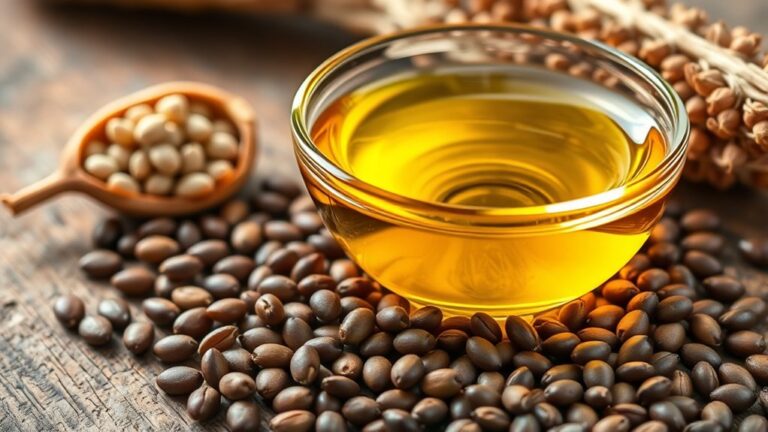
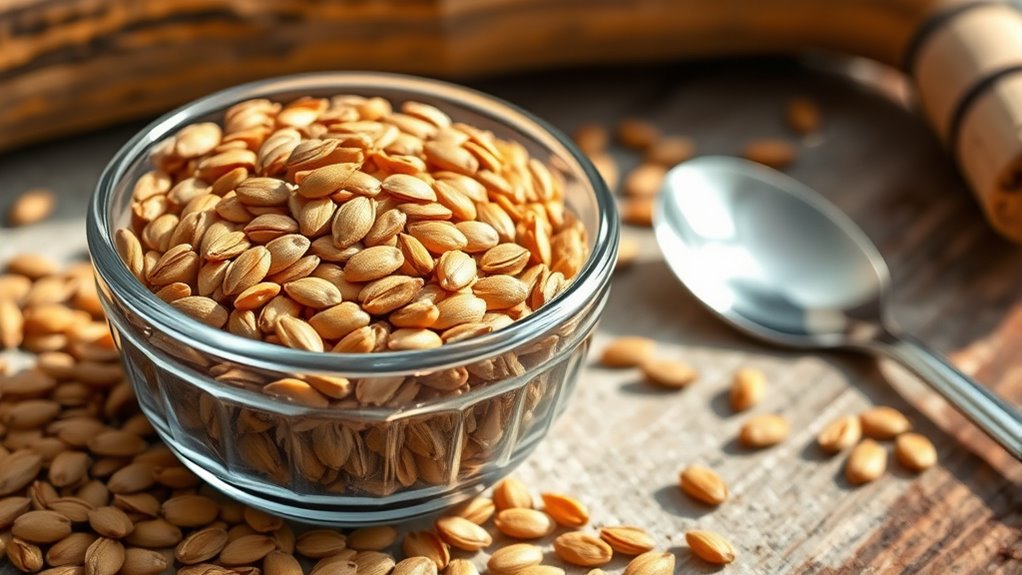
Flax seeds are tiny, nutrient-packed seeds from the flax plant. They’re loaded with dietary fiber, omega-3 fatty acids, and lignans, making them a great addition to your diet.
These nutrients support heart health, improve digestion, and might even help lower cholesterol levels. Plus, their high antioxidant content can give your immune system a boost.
Supporting heart health, boosting digestion, lowering cholesterol, and strengthening immunity with their rich antioxidant content.
But it’s good to be aware of some potential risks. Eating a lot of flax seeds might cause bloating or constipation, especially if you don’t drink enough water. Sometimes, the high fiber can interfere with medication absorption or trigger allergies.
Start with small servings to see how your body reacts. While flax seeds are super nutritious, moderation is key. Incorporating them thoughtfully helps you enjoy their benefits without unnecessary risks.
Whole or Ground Flax Seeds: Which Should You Use?
When deciding between whole or ground flax seeds, think about how you’ll use them and what benefits you’re after. Whole seeds last longer and have a crunch, so they’re great for toppings or adding texture to dishes.
Ground seeds, on the other hand, are easier to digest and your body can absorb their nutrients better. This makes them a smarter choice if you’re looking for maximum health benefits and convenience.
If you prefer convenience and want to get the most nutrients, go for ground flax seeds. But if you want to keep them fresh longer and enjoy a chewy texture, whole seeds work well.
Just remember, whole seeds need to be chewed thoroughly to release their nutrients.
In the end, your choice depends on your routine and what health goals you have. Both options can be useful, so knowing the differences helps you make an informed decision that fits your lifestyle and wellness priorities.
How to Prepare and Store Flax Seeds for Freshness
To keep your flax seeds fresh and flavorful, it’s best to store them in a cool, airtight container and keep it away from sunlight. That way, they stay protected from heat and light, which can cause them to go rancid faster.
When it’s time to use them, grinding the seeds with a clean coffee grinder is a great idea. Freshly ground flax seeds retain more nutrients and taste better. Just remember, it’s smart to buy them in small amounts and use them up quickly so you get the most out of their health benefits.
Optimal Storage Conditions
Ensuring your flax seeds stay fresh starts with proper storage. Use airtight containers to lock in freshness and prevent moisture.
Keep them in a cool, dark place where temperature stays steady—avoid sunlight and heat. Proper storage helps preserve their nutty flavor and nutritional value.
Protect your seeds from light and heat for maximum freshness. Choose high-quality, airtight containers to prevent spoilage.
Store in a cool, dark pantry or refrigerator to extend their shelf life. Avoid storing near strong-smelling foods that can transfer odors.
Regularly check for signs of rancidity or moisture to keep your flax seeds fresh and tasty.
Proper Grinding Techniques
Proper grinding is essential to access the full nutritional benefits of flax seeds while maintaining their freshness. The best methods include using a coffee grinder, spice grinder, or a high-speed blender.
These tools break down the tough seed coat, releasing omega-3 fatty acids, fiber, and lignans, which are otherwise hard to absorb. To keep nutrients intact, grind only what you need right before eating since ground flax can quickly oxidize and lose its potency.
Store whole seeds in an airtight container in a cool, dark place, and grind them fresh when you’re ready to use them. Avoid pre-ground flax that has been sitting for weeks, as that reduces their nutritional value.
Proper grinding techniques help you maximize the benefits while keeping your flax seeds fresh.
Freshness Preservation Tips
Keeping flax seeds fresh starts with smart storage practices. To maintain their quality, look for signs like a faint aroma and vibrant color. Store your seeds in airtight, opaque containers to block light and prevent oxidation.
Keep them in a cool, dark place like a pantry or refrigerator to slow spoilage. Always check for signs of rancidity, such as a sour smell or oily texture, before using.
Use airtight, opaque containers to lock in freshness. Store in a cool, dark environment for a longer shelf life. Regularly check for signs of spoilage.
Label containers with purchase dates so you know when to use them up. Keep your seeds away from heat and direct sunlight to preserve their oils and freshness.
Easy Ways to Add Flax Seeds to Your Breakfast
Looking for easy ways to give your breakfast a healthy boost? Just toss some flax seeds into your smoothies—they blend right in and add a nutritious punch. It’s such a simple trick that makes a big difference!
Or, if you prefer cereal, sprinkle some ground flax seeds right over the top. No extra effort needed, and you’re all set to enjoy their health benefits each morning. It’s quick, easy, and super tasty!
Incorporate Into Smoothies
Adding flax seeds to your smoothies is an easy way to boost their nutrition. Just blend a tablespoon into your favorite combo, and you’ll get a subtle nutty flavor plus some great health benefits.
Flax seeds bring in fiber, omega-3s, and antioxidants, making your breakfast more energizing. For the best flavor, try mixing them with berries, bananas, or greens.
You’ll love how simple it is to add this superfood into your morning routine. The earthy taste works well with many ingredients, creating a satisfying, nutrient-packed drink.
Imagine sipping a vibrant, creamy smoothie that fuels your day and supports your wellness goals. With just a few seconds of blending, you turn a regular drink into a health powerhouse.
It’s easy, tasty, and incredibly effective.
Sprinkle On Cereal
Sprinkling flax seeds on your cereal is one of the easiest ways to boost your breakfast’s nutrition. They add a subtle nutty flavor and give your toppings a fiber and omega-3 boost.
Just sprinkle a teaspoon over your favorite bowl for a quick health upgrade. Flax seeds blend well with many cereals and don’t change the taste much.
To make it even simpler, pre-measure portions and keep them nearby. For extra flavor, mix flax seeds with nuts, berries, or honey. Here’s a quick guide:
| Topping | Flavor Profile | Best For |
|---|---|---|
| Flax Seeds | Nutty, mild | Morning cereals |
| Fresh Berries | Sweet, tart | Fruit-flavored cereals |
| Honey | Sweet, floral | Naturally boosting flavor |
| Nuts | Crunchy, rich | Adds texture |
| Cinnamon | Warm, spicy | Flavor boost |
Incorporate Flax Seeds Into Smoothies and Drinks
Incorporating flax seeds into smoothies and drinks is an easy way to boost their nutritional value. Just add a tablespoon of ground flax seeds to your favorite smoothies or drinks for an instant health upgrade.
Flax seeds blend well into fruit smoothies, green smoothies, or even protein shakes. They add a subtle nutty flavor and extra fiber, making your drinks more satisfying and nutritious.
For drinks, stir ground flax into juices, herbal teas, or flavored waters. It’s a simple way to enrich your hydration routine and get more health benefits.
Imagine the benefits:
- Energize your mornings with a vibrant, nutrient-packed smoothie
- Feel confident knowing you’re supporting digestion and heart health
- Satisfy your sweet tooth with a wholesome, guilt-free treat
- Create a delicious, creamy texture without extra calories
- Enjoy a versatile way to incorporate superfoods into your day
Using flax seeds in drinks helps you stay consistent with healthy habits. It makes nourishing your body effortless and enjoyable.
Bake With Flax Seeds: Nutritious Recipes for Every Day
Baking with flax seeds is such a simple way to give your recipes a nutritious boost and a little extra flavor. You can easily mix ground flax into breads, muffins, or pancakes to add more fiber and omega-3 fatty acids. It’s a small change that can make a big difference in how healthy your treats are.
And don’t worry, with a few tips, you’ll get perfect results every time. Just keep an eye on the moisture, because flax can help keep your baked goods moist and tender. So go ahead, experiment and enjoy baking something that’s both tasty and good for you!
Incorporating Flax Into Bakes
Adding flax seeds to your baked goods is an easy way to boost their nutritional value and improve flavor. You can incorporate flax seed benefits by swapping a portion of flour with ground flax, which adds fiber and omega-3s.
Baking substitutions are simple: replace 1/4 cup of flour with 2 tablespoons of ground flaxseed for muffins, bread, or pancakes. This not only boosts nutrition but also adds a subtle nutty taste.
You’ll feel good knowing you’re making smarter choices for your health. Plus, flax seeds help keep baked goods moist and tender.
Imagine the satisfaction of knowing your favorite recipes are now more nourishing. Small changes like these make a big difference in your daily diet, turning ordinary baking into a healthful habit.
Nutritious Flax Seed Recipes
Whether you’re looking to boost your daily nutrition or enjoy tasty, wholesome meals, flax seeds are a versatile ingredient to include in your recipes. You can easily add their benefits by baking muffins, bread, or energy bars.
When choosing flax seed varieties, go for ground flax seeds. They help your body absorb nutrients better since whole seeds might pass through your digestive system unprocessed.
Nutritious flax seed recipes are simple to make and add a nutty flavor to your dishes. With their high omega-3 content, fiber, and lignans, they support overall health.
Try experimenting with flax seeds in your favorite baked goods. This way, you can enjoy their health benefits while creating delicious, wholesome treats for every day.
Tips for Baking Success
To achieve great results when baking with flax seeds, it’s important to understand how they interact with your other ingredients. Flax seed benefits include added fiber and omega-3s, but they also require specific baking techniques to maximize their effectiveness.
When incorporating flax seeds, consider grinding them for better absorption and binding. Be mindful of moisture; adding extra liquids helps prevent dryness.
Experiment with different recipes to uncover how they improve texture and flavor. Welcome the versatility of flax seeds for creative, nutritious baking.
Use freshly ground flax for ideal flax seed benefits. Adjust liquids to maintain the perfect batter consistency.
Combine flax with other wholesome ingredients for healthful treats. Trust your instincts—baking is an art, not just a science.
Use Flax Seeds in Savory Dishes and Salads
Incorporating flax seeds into savory dishes and salads is an easy way to boost their nutritional value and add a subtle nutty flavor. You can sprinkle ground flax seeds over soups, stews, or roasted vegetables for extra crunch and health benefits.
In salads, use flax seeds as a topping to improve texture and nutrition without overpowering other flavors. Mix them into grain bowls or pasta salads for a gentle nutty taste and a boost of omega-3 fatty acids.
Ground flax seeds blend well into dressings, creating creamy, nutritious vinaigrettes. If you prefer a milder flavor, toss whole flax seeds into cooked rice or quinoa and let them soften slightly.
These versatile seeds work well in many savory dishes and as salad toppings. They’re an easy way to add extra fiber, healthy fats, and antioxidants to your meals.
Common Mistakes When Eating Flax Seeds and How to Avoid Them
Are you aware of the common mistakes people make when eating flax seeds? Many fall for misconceptions that can prevent you from getting the full health benefits.
One big mistake is not grinding the seeds. Whole flax seeds often pass through your digestive system without releasing their nutrients, so you miss out on the good stuff.
Another error is eating flax seeds before soaking or grinding them. This limits how effective they are and reduces nutrient absorption.
Relying on flaxseed oil alone is also a mistake. It ignores the fiber and other nutrients found in whole seeds, which are important for your health.
Some people overconsume flax seeds, leading to digestive issues or interfering with medications. Moderation is key.
Finally, not storing flax seeds properly can cause them to go rancid and lose their nutritional value. Keep them in a cool, dark place to preserve freshness.
To avoid these pitfalls, always grind flax seeds before eating, store them properly, and enjoy them in moderation. Knowing these common mistakes helps you maximize the benefits and get the most from your flax seeds.
How Much Flax Seeds Should You Eat Each Day?
Wondering how much flax seeds you should include in your daily diet? The recommended daily intake is about one to two tablespoons of ground flax seeds. This amount lets you enjoy the health benefits without overdoing it.
Consuming this quantity provides a good source of omega-3 fatty acids, fiber, and lignans, which support heart health, digestion, and hormone balance. Keep in mind, you don’t need large amounts to gain these benefits—moderation is key.
Adding ground flax seeds to smoothies, oatmeal, or yogurt makes it easy to incorporate into your routine. Too much flax seed can cause digestive discomfort or interfere with nutrient absorption, so stick to the recommended daily intake.
Are Flax Seeds Suitable for Everyone? Precautions and Considerations
While flax seeds are generally safe for most people, it’s important to consider your personal health conditions and dietary restrictions before adding them to your routine. They offer many benefits, but certain groups should be cautious.
If you have a hormone-sensitive condition like breast cancer, it’s best to talk to your doctor since flax seeds contain phytoestrogens. People on blood-thinning medications should also be aware of their natural blood-thinning properties.
Those with digestive issues might experience bloating or discomfort due to the high fiber content. Pregnant or breastfeeding women should seek medical advice to ensure safety.
Keep these considerations in mind to avoid any unwanted effects: hormone-sensitive health issues, blood clotting concerns, digestive sensitivities, pregnancy or breastfeeding, and specific dietary restrictions.
Frequently Asked Questions
Can Flax Seeds Cause Allergies or Allergic Reactions?
Yes, flax seed allergies can cause allergic reactions. You might experience symptoms like itching, swelling, or difficulty breathing if you’re sensitive.
If you’ve never eaten flax seeds before, start with a small amount to see how your body reacts. If you notice any allergy symptoms, stop eating them immediately and talk to a healthcare professional.
Being aware of flax seed allergies helps prevent serious health issues.
How Do Flax Seeds Affect Medication Absorption?
Flax seeds can affect how medications are absorbed, mainly because of their high fiber content and their effect on digestion. They might slow down how quickly your body takes in certain drugs.
This slowdown can make some medications less effective. Not everyone will experience these interactions, but it’s good to pay attention to how your body responds.
To stay safe, try to take flax seeds a few hours apart from your medications. And it’s always a good idea to check with your healthcare provider for advice tailored to you.
Are There Any Specific Diets That Benefit Most From Flax Seeds?
You’ll find that diets rich in plant-based foods, like vegetarian or Mediterranean diets, benefit most from flax seed benefits. Including flax seeds in your daily routine improves heart health, digestion, and reduces inflammation.
Can Children Safely Consume Flax Seeds Regularly?
Yes, children can safely consume flax seeds regularly, but you should be cautious. The nutritional benefits like omega-3 fatty acids and fiber are impressive.
Just make sure to stick to the recommended servings—about one teaspoon of ground flax seeds for young kids—to avoid choking or digestive issues.
Always check with a pediatrician before adding flax seeds to your child’s diet, especially if they have allergies or health concerns.
Do Flax Seeds Have Any Known Interactions With Health Conditions?
Flax seeds can interact with certain health conditions, so you should be cautious. They offer benefits like omega-3s and fiber, but there are some risks to be aware of.
These include potential allergic reactions, effects on blood sugar, or interference with medications like blood thinners. If you have thyroid issues or are pregnant, it’s a good idea to check with your healthcare provider before adding flax seeds to your diet.
Sticking to proper moderation helps you get the benefits while minimizing any risks.
Conclusion
Incorporating flax seeds into your diet is like adding a tiny treasure chest of health benefits to your meals. With simple tips on preparation and creative ideas for usage, you’ll find it easy to enjoy their nutritional perks daily.
Just remember, like a delicate dance, moderation is key. Start small and listen to your body as you introduce flax seeds into your routine.
Welcome these versatile seeds, and you’ll be nourishing yourself with a natural gift that keeps your health thriving through the power of flax seeds.