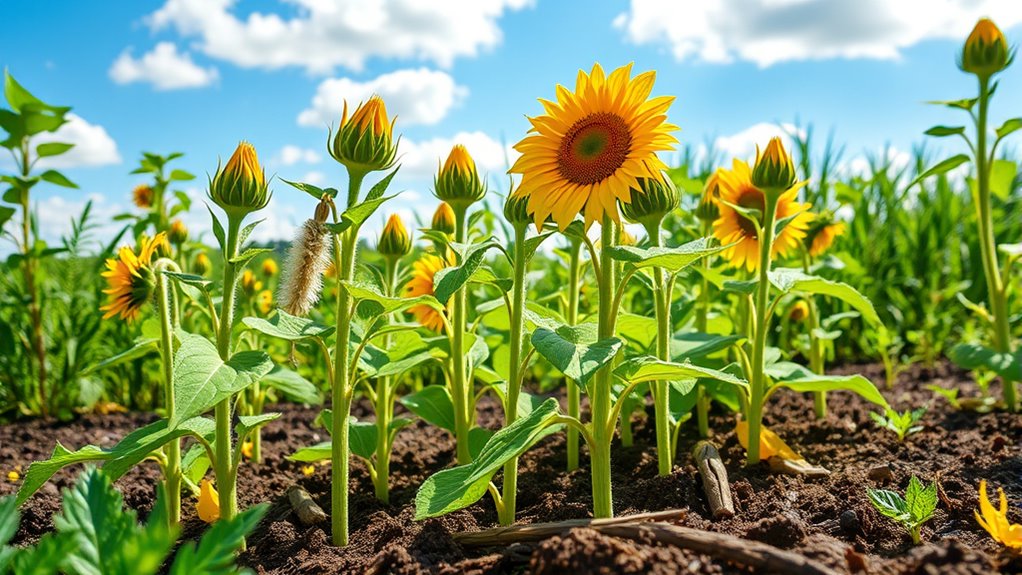
10 Best Times to Plant Sunflower Seeds for Growth
Planting sunflower seeds at the right time can be tricky, especially if you’re new to gardening or unsure about your local climate. Many people struggle with figuring out when to sow seeds for the best growth and blooms. Don’t worry—you’re not alone, and with a little guidance, you can get your sunflowers thriving all season long.
To find the best times to plant sunflower seeds, consider your local climate and soil conditions. In spring, plant after the danger of frost and when soil reaches around 55°F, aiming for 1-2 inches deep.
Summer planting needs warmer weather, with soil above 50°F. Adjust your schedule based on weather forecasts and avoid early or late planting.
Keep watching for tips on timing adjustments to help your sunflowers thrive all season long.
Key Takeaways
- Plant after the last frost date when soil temperatures reach at least 55°F (13°C).
- Make sure daytime temperatures stay above 70°F for the best summer growth.
- Check your local climate zones to find the ideal planting window and avoid frost damage.
- Amend your soil to have a pH between 6.0 and 7.5, and ensure it drains well for healthy sunflowers.
- Adjust your planting schedule based on weather forecasts, and try not to plant too early or too late to prevent setbacks.
Why Timing Is Key to Growing Healthy Sunflowers
Timing is key when growing healthy sunflowers because planting at the right time ensures they get the right amount of sunlight, warmth, and good soil conditions.
When you plant during the right season, your sunflowers will grow strong stems and vibrant blooms. Sunflowers love warm temperatures, so knowing the ideal time to plant is important.
If you plant too early, cold soil can stunt their growth or cause seedlings to rot. On the other hand, planting too late might mean they don’t get enough sunlight or warmth to thrive fully.
By matching your planting schedule to the season’s natural warmth, you give your sunflowers the best chance to grow tall and healthy. Proper timing also means the soil has warmed enough to encourage vigorous growth and avoid problems caused by cold weather.
In the end, planting at the right moment helps you maximize your sunflower’s potential for beautiful, healthy growth.
When Is the Best Time to Plant Sunflowers in Spring?
In spring, the best time to plant sunflowers is after the danger of frost has passed and the soil has warmed to at least 55°F (13°C). This gives your sunflower varieties the warm environment they need to thrive.
Timing is key to avoid cold setbacks that can stunt growth or damage seeds. When planting, pick a sunny spot with well-draining soil.
Pay attention to the proper planting depth—usually 1 to 2 inches deep—to give roots stability and encourage healthy growth.
Imagine watching tiny sprouts burst through the soil, promising a bright, sunny garden. Feel the warmth of the sun energizing your plants each day. See your sunflower varieties reach for the sky, becoming a stunning focal point.
How to Know the Right Time for Summer Sunflower Planting
To figure out the right time for summer sunflower planting, look for warm weather and consistently high temperatures. Most sunflower varieties do well when daytime temps stay above 70°F, usually between 75°F and 85°F.
Wait until the danger of frost has passed and the soil is warm enough. Check local weather forecasts and soil temperatures—aim for at least 50°F for good germination.
When planting, space your seeds about 6 inches apart and plant them 1 to 2 inches deep. This helps ensure healthy growth and less competition for nutrients.
Keep in mind, different sunflower varieties might have slightly different needs, so always check the specific requirements for your seeds.
How Climate Affects Your Sunflower Planting Schedule
Climate plays a key role in deciding the best time to plant sunflowers because weather patterns impact soil temperature and frost risk.
Knowing your climate zone helps you choose the right planting window for healthy growth.
In cooler areas, you’ll want to wait until temperatures warm up before planting.
Warmer zones allow for planting earlier in the season, giving you a head start.
Understanding your climate helps you avoid frost damage and creates perfect conditions for your sunflowers to thrive.
Knowing your climate ensures your sunflowers stay safe from frost and flourish beautifully.
This knowledge gives you confidence to plan your planting schedule around seasonal patterns.
Imagine the thrill of watching your sunflowers burst into vibrant bloom at just the right moment.
It’s incredibly satisfying to pick sunflower varieties suited for your climate zone.
Planning ahead makes the entire process more enjoyable and rewarding.
Assessing Soil Conditions for Successful Sunflower Growth
Want to give your sunflowers the best shot at thriving? First things first, check your soil’s pH levels. Ideally, you want it to be somewhere between 6.0 and 7.5 — that’s your sweet spot for healthy growth. Also, make sure the soil drains well and isn’t too compacted because sunflowers need plenty of space to develop those strong roots. By testing these conditions ahead of time, you’re setting yourself up for a successful sunflower garden.
Soil pH Levels
Understanding your soil’s pH level is key to growing thriving sunflowers. These plants love a pH between 6.0 and 7.5, which helps them access the nutrients they need.
If your soil’s pH isn’t within that range, don’t worry. Soil amendments can help adjust it and create a healthier environment for your sunflowers.
When your soil’s pH is just right, your sunflowers will grow stronger, taller, and burst with vibrant blooms.
Keep in mind that a balanced pH unlocks the full potential of your soil’s nutrients.
Proper adjustments make a big difference in creating a garden where your sunflowers can truly thrive.
Monitoring and tweaking your soil’s pH can be the secret to a beautiful, successful sunflower garden.
Drainage and Texture
Evaluating your soil’s drainage and texture is key to growing healthy sunflowers. Good soil lets excess water drain easily, preventing root rot and helping your plants grow strong.
If your soil holds too much water, it can suffocate the roots. On the other hand, if it retains too little, your plants might suffer from drought stress. To check this, dig a small hole and fill it with water. Watch how quickly it drains.
Sandy soils drain fast but may need amendments to hold enough water. Clay soils, however, tend to hold water longer but can become waterlogged. Ideally, your soil should have a balanced texture that retains enough moisture without becoming soggy.
Making adjustments like adding organic matter or sand can improve drainage and soil structure. This helps create the perfect environment for your sunflowers to thrive.
Creating a Planting Calendar for Continuous Sunflower Blooms
Creating a planting calendar for continuous sunflower blooms requires careful planning to keep your garden vibrant throughout the season. To do this, you’ll want to stagger your plantings using different seed varieties and effective planting techniques. This way, you’ll get a steady display of bright, cheerful flowers.
Think about selecting diverse seed varieties to extend your bloom period and avoid gaps in color. It’s also helpful to stagger your planting dates every 2-3 weeks so new plants come up as others fade.
Use proper planting techniques like consistent spacing and preparing the soil well to promote healthy growth. These simple steps will help you enjoy a continuous burst of sunflower beauty in your garden.
Choosing the Right Planting Time for Different Sunflower Varieties
Different sunflower varieties have specific planting windows to ensure they reach full maturity and bloom beautifully. Knowing your planting zones can help you determine the best time to sow different types.
For example, short-season varieties thrive when planted early in cooler zones, while taller, late-season types need warmer soil temperatures. Check your USDA hardiness zone to plan accordingly.
Some sunflower varieties, like dwarf types, can be planted earlier, about 2-4 weeks after the last frost. Larger varieties should wait until the soil warms to at least 55°F (13°C).
If you live in a warmer zone, you can start planting earlier in spring. Cooler zones might need to wait until late spring or early summer. Adjust your schedule based on your local climate.
Make sure the soil is warm enough for good germination. Proper timing helps your sunflowers develop strong stems and vibrant blooms, making your garden look its best.
Tips to Extend Your Sunflower Growing Season
To maximize your sunflower’s growing season, you can try several simple techniques to extend their bloom time and overall productivity. First, keep an eye out for pests by inspecting your plants regularly and using natural repellents to keep bugs away. Healthy plants are more resilient and tend to last longer.
Second, try companion planting by placing beneficial plants like marigolds or nasturtiums around your sunflowers. These can help deter pests and create better growing conditions. Third, using row covers or cloches during cooler nights can protect your sunflowers from early frost and help them bloom longer.
Additionally, maintaining consistent watering and fertilizing encourages your sunflowers to keep flowering. These easy steps can really boost their lifespan, letting you enjoy vibrant blooms for a longer time.
With good pest management and strategic companion planting, you set the stage for a lush, extended sunflower season filled with cheerful, radiant blossoms.
Common Mistakes to Avoid When Timing Your Sunflower Planting
Ignoring your local climate can really backfire when you’re planting sunflowers. If you plant too early or too late, it can throw off their growth and health. For example, planting too soon might mean your seeds get hit by unexpected cold snaps, while waiting too long could mean missing the best growing window.
It’s a good idea to consider your area’s specific weather patterns and seasonal changes before you plant. That way, you’ll give your sunflowers the best chance to thrive and enjoy a beautiful bloom!
Ignoring Local Climate Variations
Many gardeners make the mistake of planting sunflower seeds without thinking about their local climate, which can lead to poor germination or weak plants. Ignoring climate differences can cause you to pick the wrong sunflower varieties or use the wrong planting methods, risking your garden’s success.
You might face unexpected frosts that can destroy young plants, hot dry spells that stunt growth, or unpredictable rainfall that can cause diseases. Knowing your local weather helps you choose the right sunflower types and adjust your planting techniques for the best results.
Adapting to your climate ensures your sunflowers get the right warmth, moisture, and sunlight. Don’t overlook these factors—your sunflowers will reward you with vibrant, healthy blooms. Proper timing based on climate is key to a thriving sunflower garden.
Planting at Wrong Time
Planting sunflower seeds at the wrong time can ruin your entire gardening effort, leading to poor germination or weak plants. Different sunflower varieties have specific planting windows, so planting too early or too late can affect how well they grow.
Some varieties prefer planting after the last frost, while others can handle cooler weather. Getting the timing right is key to healthy, vibrant plants. Improper planting depth can also be an issue, especially if you plant too deep or too shallow.
Sunflower seeds should generally be planted about 1 to 2 inches deep, depending on the variety. Timing is crucial—plant too early, and cold weather can stunt growth; plant too late, and you might miss the best growing season.
Be sure to pay attention to your local climate and the specific recommendations for your sunflower variety. This will help ensure your plants grow strong and healthy.
Adjusting Your Sunflower Planting Schedule Based on Local Weather
Because local weather conditions can vary a lot, it’s important to adjust your sunflower planting schedule accordingly. Weather patterns and seasonal changes influence the best time for your sunflowers to thrive.
Keep an eye on local forecasts and soil temperatures to find the ideal planting window. If you notice early cold snaps or late frosts, it’s a good idea to delay planting so young plants aren’t damaged.
On the other hand, if warm weather arrives early, you might want to start sooner to maximize growth.
Adjusting your schedule helps you feel more confident and connected with nature’s rhythms. Here are some ways to stay in tune:
- Feel the anticipation build as you wait for the warm days.
- Experience joy when the soil warms enough for planting.
- Enjoy the satisfaction of aligning your garden with seasonal shifts.
Frequently Asked Questions
Can I Plant Sunflower Seeds Indoors Before Outdoor Planting?
Yes, you can plant sunflower seeds indoors before outdoor planting. Start by germinating the seeds in pots with well-draining soil in a warm, bright spot.
Once the seedlings grow a few inches and the weather warms up, you can carefully transplant them outdoors. During this process, make sure they get plenty of sunlight and water.
This helps them develop strong roots before moving outside, giving your sunflowers a good start.
How Do I Adjust Planting Times for Unusual Weather Patterns?
Did you know that unpredictable weather patterns can delay planting by up to two weeks? To adjust, use weather forecasts to stay informed about upcoming changes.
Make seasonal adjustments by planting sunflower seeds when soil temperatures reach 55°F, regardless of traditional dates. This proactive approach helps your sunflowers thrive despite unusual weather, ensuring better growth and harvest times.
What Are Signs That My Sunflowers Are Planted at the Wrong Time?
If your sunflowers are growing slowly or not sprouting at all, you might have planted them at the wrong time or made some mistakes. Look for signs like legginess, weak stems, or flowering too early or late.
Poor growth can happen if you planted too early in cold soil or too late when days are short. Timing is key for healthy, tall sunflowers.
Adjust your planting schedule based on your local climate. Make sure to plant when conditions support strong growth for the best, most vibrant sunflowers.
Do Different Sunflower Varieties Require Different Planting Schedules?
Yes, different sunflower varieties often need unique planting schedules. For example, taller varieties may be better planted later to avoid wind damage, while smaller ones can go in earlier.
You should also adapt your planting techniques based on the variety’s needs, like spacing and soil type. Always check the seed packet or supplier’s recommendations to make sure you’re timing things right.
This will give each variety the best chance to thrive and grow healthy.
How Does Soil Type Influence the Best Planting Time?
Soil type really affects the best time to plant because of moisture and nutrients. If your soil drains quickly, it’s best to plant when moisture levels are just right, usually in early spring.
For soils rich in nutrients, you might be able to plant a little earlier. Sandy or clay soils may mean waiting until moisture and nutrients are at their best.
Keeping an eye on these factors helps ensure your sunflower seeds germinate and grow successfully.
Conclusion
Think of planting sunflowers as tending to a delicate symphony. When you choose the right moment, the notes align, and your garden blooms harmoniously.
Timing is your conductor, guiding growth with precision. Knowing the best times to plant sunflower seeds helps ensure a thriving garden.
By understanding the seasons and climate cues, you set the stage for vibrant, resilient sunflowers. Master this rhythm, and your garden will sing with color and life.
Getting the timing right is key to growing healthy sunflowers. Follow these best planting times, and you’ll enjoy a beautiful, lively garden full of sunshine.