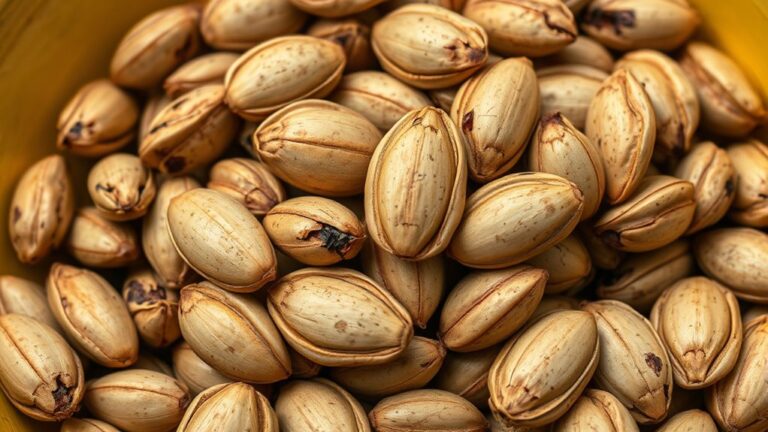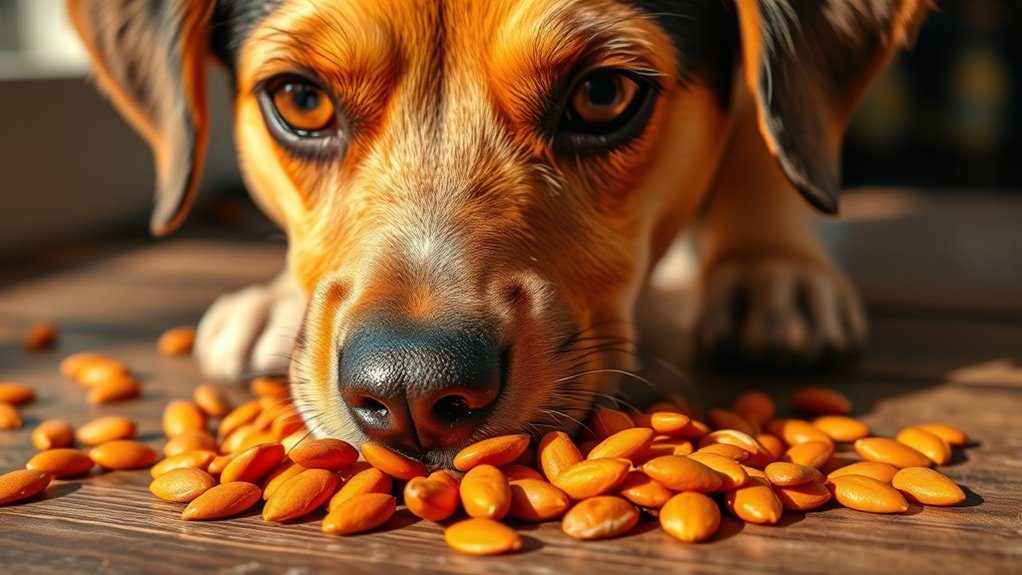
Can Dogs Eat Pumpkin Seeds?
Many dog owners want to share healthy treats with their furry friends but often worry about what’s safe. If you’re curious about giving your dog pumpkin seeds, you’re not alone. Many people struggle with knowing the right amount and how to prepare them properly.
Yes, you can give your dog pumpkin seeds in moderation, but it’s important to prepare them properly—remove shells, avoid salt or oils, and serve small amounts based on your dog’s size.
Pumpkin seeds are nutritious and support digestion, immune health, and coat shine, but overfeeding or whole seeds may cause choking or digestive upset.
To guarantee safety and benefits, learn more about proper serving tips and precautions by exploring the full details.
Key Takeaways
- Pumpkin seeds can be safe for dogs when given in moderation, without added salt or oils.
- Remove shells and serve small portions, about 1 teaspoon per 10 pounds of weight.
- Too much can cause digestive problems or toxicity, so keep an eye on your dog’s reaction.
- Pumpkin seeds are packed with nutrients like zinc, magnesium, and antioxidants that help support your dog’s health.
- It’s always a good idea to check with your vet before adding pumpkin seeds regularly to your dog’s diet.
Are Pumpkin Seeds Safe for Dogs?
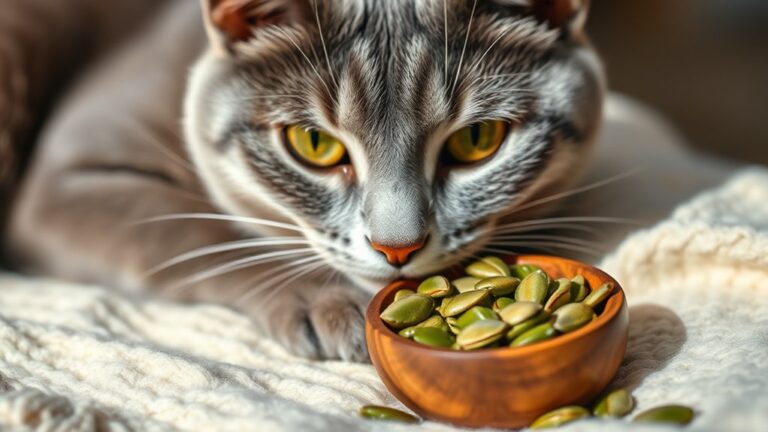
Pumpkin seeds can be safe for dogs to eat in moderation, but it’s important to consider how they’re prepared and served. Raw or roasted pumpkin seeds without added salt, seasoning, or oils are best.
Overfeeding or improperly prepared seeds could lead to pumpkin seed toxicity, which might cause symptoms like vomiting or diarrhea. Some dogs are more prone to digestive issues when they eat pumpkin seeds, especially if they have sensitive stomachs.
Overfeeding or improper prep can cause pumpkin seed toxicity, leading to vomiting, diarrhea, or digestive issues in sensitive dogs.
Always start with small amounts to see how your dog reacts. Keep in mind that pumpkin seeds are high in fat, which can upset your dog’s stomach or lead to weight gain if given in excess.
Never give your dog whole, unshelled pumpkin seeds, as they might cause choking or digestive blockages. When in doubt, talk to your veterinarian to confirm if pumpkin seeds are safe for your specific dog.
What Are the Benefits of Pumpkin Seeds for Dogs?
Pumpkin seeds are full of nutrients that can really give your dog’s health a boost. They’re packed with essential vitamins and minerals that are good for them. Plus, they can help keep their digestive system running smoothly by supporting regularity and reducing inflammation.
And here’s the nice part — pumpkin seeds can also help strengthen your dog’s immune system. So, adding them to your dog’s diet can be a smart move for overall health and well-being.
Rich in Nutrients
Rich in essential nutrients, pumpkin seeds offer numerous health benefits for dogs. Their high nutrient density means you get a lot of crucial nutrients in a small amount. These seeds are packed with magnesium, zinc, iron, and healthy fats, supporting overall health.
Their antioxidant properties help combat free radicals, reducing oxidative stress and promoting immune health. Here are some key benefits:
- Boost immune function with zinc and antioxidants.
- Support bone health through magnesium.
- Improve coat shine with healthy fats.
- Aid in maintaining energy levels thanks to their nutrient richness.
Adding pumpkin seeds to your dog’s diet can boost their well-being, thanks to their impressive nutrient profile and antioxidant benefits. Just remember to serve in moderation and prepare them properly.
Promotes Digestive Health
Because of their high fiber content, pumpkin seeds can greatly promote digestive health in dogs. The fiber provides significant digestive benefits by supporting regular bowel movements and preventing constipation.
When included in your dog’s diet, pumpkin seeds help maintain a healthy gut by adding bulk to their stool, which encourages smooth digestion. The fiber content also aids in stabilizing blood sugar levels and reduces the risk of gastrointestinal issues.
Consuming pumpkin seeds can improve overall gut health, ensuring your dog’s digestive system functions efficiently. Just remember to offer them in moderation and ground up to prevent choking. Incorporating pumpkin seeds into your dog’s diet is a simple, natural way to boost their digestive health without any artificial additives.
Supports Immune System
Since they are packed with essential nutrients, pumpkin seeds can give your dog’s immune system a big boost. Their immune benefits come from zinc, antioxidants, and healthy fats that support overall health.
These nutrients help your dog fight off infections and stay resilient against illnesses. Zinc strengthens the immune response and speeds up healing.
Antioxidants reduce oxidative stress, protecting cells from damage. Healthy fats promote overall well-being and support immune function. Phytochemicals in pumpkin seeds may also help fight harmful bacteria.
How to Prepare Pumpkin Seeds for Your Dog’s Diet
To prepare pumpkin seeds for your dog’s diet, start by removing the seeds from a fresh pumpkin and rinsing them thoroughly to eliminate any pulp or debris. Once clean, you can consider various preparation methods.
The simplest way is to dry the seeds completely and then roast them at 350°F for about 10-15 minutes, stirring occasionally. Be sure to avoid adding salt, spices, or oils, as these can upset your dog’s stomach.
If you prefer, you can also serve raw seeds, but roasting enhances flavor and makes them easier to digest. When offering pumpkin seeds, serve small portions as treats or mix them into your dog’s regular food for added texture and nutrients.
Always remember to remove any shells if your dog tends to swallow large pieces, and watch for any signs of allergies or digestive upset after introducing pumpkin seeds. Proper preparation helps your dog enjoy the benefits safely.
Risks and Precautions When Feeding Pumpkin Seeds to Dogs
While pumpkin seeds can be a healthy treat for your dog when prepared properly, it’s important to be aware of potential risks. First, allergy concerns might come up, especially if your dog has known food sensitivities. Allergic reactions can include itching, swelling, or upset stomach.
Digestive issues can also happen if your dog overeats or eats seeds with shells, which might lead to vomiting or constipation. Choking hazards are another concern if the seeds aren’t broken into manageable pieces or if your dog tends to swallow them whole.
Added ingredients like salt, spices, or flavorings can upset your dog’s stomach or cause other health problems. To keep your pup safe, introduce pumpkin seeds gradually, watch for any reactions, and avoid seasoned or salted seeds. It’s always a good idea to check with your vet before adding pumpkin seeds to your dog’s diet to make sure it’s safe.
How Much Pumpkin Seeds Can My Dog Eat Safely?
You want to make sure you’re giving your dog just the right amount of pumpkin seeds, so it’s best to keep the portions small. Usually, a few seeds are enough, but it really depends on your dog’s size.
Just keep an eye out for any signs that your dog might be overdoing it, like an upset stomach or diarrhea. If you notice anything unusual, it’s a good idea to cut back on the treats.
And remember, it’s better to feed pumpkin seeds as an occasional treat rather than every day, to keep your dog healthy and happy.
Appropriate Serving Sizes
Determining the right amount of pumpkin seeds for your dog is key to helping them enjoy the benefits without any health risks. Following proper serving guidelines keeps portion sizes in check and prevents overfeeding.
As a general rule, give no more than a teaspoon of pumpkin seeds for every 10 pounds of your dog’s weight each day. To make sure it’s safe, keep these tips in mind:
- Start with small portions to see how your dog tolerates it.
- Remove shells to lessen choking hazards and improve digestibility.
- Feed plain, unsalted, and unseasoned seeds.
- Keep treats to no more than 10% of your dog’s daily calories.
Sticking to these serving tips helps your dog enjoy pumpkin seeds safely and avoid potential health issues.
Signs of Overconsumption
Although pumpkin seeds are generally safe in moderation, overfeeding can cause health issues in your dog. Keep an eye out for symptoms like vomiting, diarrhea, or bloating, which show your dog might be having digestive trouble.
If your dog seems uncomfortable or is very lethargic after eating pumpkin seeds, it’s a sign to cut back. Too much can upset their stomach because of the high fat content or because the seeds are hard to digest.
Watch your dog’s behavior and bowel movements after giving pumpkin seeds. Start with small amounts to see how they react. If the symptoms stick around or get worse, check with your vet.
Preventing overconsumption is key to making sure your dog gets the benefits of pumpkin seeds without any problems.
Frequency of Feeding
Feeding pumpkin seeds to your dog can offer health benefits, but it’s important to stick to a safe frequency and amount. Proper portion control and moderation are key to avoiding digestive issues or overconsumption.
To guarantee safe feeding frequency:
- Limit pumpkin seeds to 1-2 teaspoons per 10 pounds of your dog’s weight daily.
- Feed seeds only a few times a week, not every day.
- Watch how your dog reacts and adjust portions if needed.
- Talk to your vet before making pumpkin seeds a regular part of their diet.
How to Recognize Allergic or Digestive Problems in Dogs
How can you tell if your dog is experiencing allergic or digestive issues? Watch for allergy symptoms like itching, swelling, or redness around the face and paws. Excessive scratching or licking may also mean an allergy is at play.
For digestive problems, look out for vomiting, diarrhea, or abdominal discomfort. Changes in appetite or behavior, such as lethargy or irritability, can also indicate something’s wrong.
Keep an eye on any signs that seem unusual or stick around. These often point to underlying health issues. Remember, allergic reactions can happen quickly, while digestive issues might develop more gradually.
If you notice these signs after introducing pumpkin seeds or other new foods, contact your veterinarian right away. Early detection helps prevent complications and keeps your dog healthy and comfortable.
Always monitor your pet closely whenever you try new treats or foods. Being attentive ensures you catch any problems early and can seek help when needed.
Should Dogs With Health Conditions Eat Pumpkin Seeds?
If your dog has a health condition, it’s important to check whether pumpkin seeds are safe before giving this treat. Some health issues might mean pumpkin seeds aren’t suitable.
Think about potential allergies. Dogs with allergies may react negatively, so watch for signs of discomfort.
Every dog is different—some tolerate pumpkin seeds well, while others might have digestive upset.
Each dog reacts differently—some handle pumpkin seeds fine, others may experience digestive issues.
Pumpkin seeds have nutrients like magnesium and zinc, but too much can be a problem for certain health conditions.
Always talk to your vet first. They can confirm if pumpkin seeds fit into your dog’s diet and health plan.
Put your dog’s safety and health first, and never introduce new treats without professional advice.
Healthy Snack Alternatives for Dogs
In the matter of choosing healthy snacks for your dog, there are plenty of nutritious options that can satisfy their cravings without compromising their health. Healthy fruits like apple slices, blueberries, and watermelon make excellent alternative treats. They’re low in calories, rich in vitamins, and easy to share during playtime or training.
Carrots, green beans, and cucumber slices also serve as crunchy, wholesome snacks that dogs enjoy. These options provide essential nutrients while avoiding added sugars, artificial flavors, or unhealthy fats found in many commercial treats.
Incorporating these healthy fruits into your dog’s diet offers variety, keeps them satisfied, and supports their overall well-being. Remember, moderation is key, and always remove pits or seeds that could be harmful.
Tips for Incorporating Pumpkin Seeds Into Your Dog’s Overall Diet
Building on healthy snack options like fruits and vegetables, incorporating pumpkin seeds into your dog’s diet can boost their nutrition in a tasty way. To get the most benefit, start with small amounts and gradually increase.
Here are some tips for incorporating seeds effectively:
- Choose plain, unsalted seeds to avoid excess sodium that could harm your dog.
- Crush or grind the seeds to make them easier to digest and to release more nutrients.
- Mix seeds into regular food like kibble or homemade meals for a seamless addition.
- Use moderation and offer seeds as an occasional treat rather than daily to prevent overfeeding.
Why Consult Your Veterinarian Before Feeding Pumpkin Seeds
Before adding pumpkin seeds to your dog’s diet, it’s really important to talk to your veterinarian first. They can confirm if it’s a safe option for your dog.
Your vet can help you identify any health issues or allergies that might make pumpkin seeds unsuitable. This way, you know they fit into your dog’s specific dietary needs.
They can also advise on how much to give and how often, so you won’t risk overfeeding or causing stomach upset.
| Consideration | Question to Ask | Why It Matters |
|---|---|---|
| Health status | Is my dog healthy enough for seeds? | Some health conditions may restrict intake. |
| Allergies | Could my dog be allergic? | To avoid allergic reactions. |
| Portion size | How much is safe to give? | To prevent choking or upset stomach. |
| Frequency | How often can I feed seeds? | To keep your dog’s diet balanced. |
Talking to your vet ensures you make safe and informed choices about feeding pumpkin seeds to your dog.
Frequently Asked Questions
Can Puppies Eat Pumpkin Seeds Safely?
Yes, puppies can eat pumpkin seeds safely if you prepare them properly.
For good puppy digestion, remove shells and chop seeds into small pieces to prevent choking.
Always offer seeds in moderation because too many can upset their stomach.
Make sure the seeds are plain, without salt or seasoning.
With careful seed preparation and moderation, pumpkin seeds can be a healthy treat for your puppy.
Are Flavored or Seasoned Pumpkin Seeds Safe for Dogs?
Flavored or seasoned pumpkin seeds are definitely not safe for your dog. You might think they’d love the tasty coatings, but the added salt, spices, and artificial flavors can cause serious health issues like stomach upset or toxicity.
While plain pumpkin seed benefits include fiber and antioxidants, flavored seed risks outweigh these benefits. Keep your pup healthy by avoiding seasoned seeds and sticking to plain, unsalted pumpkin seeds instead.
How Do Pumpkin Seeds Affect a Dog’s Weight Management?
Pumpkin seeds can impact your dog’s weight management because they offer nutritional benefits like healthy fats, fiber, and protein.
However, you need to practice portion control, as too many seeds can add extra calories and lead to weight gain.
Always give them in moderation, and consider your dog’s size and activity level.
Properly portioned pumpkin seeds can be a healthy treat that supports your pet’s overall health without compromising weight management.
Can Pumpkin Seeds Help With a Dog’s Flea or Parasite Issues?
Imagine a small, unexpected bump in your dog’s routine—pumpkin seeds might seem like a coincidence, but they can help with flea prevention and parasite control.
The natural compounds in pumpkin seeds, like cucurbitacin, may help repel fleas and parasites. While they’re not a cure-all, adding these seeds to your dog’s diet can support overall health.
They can also serve as a supplementary measure in parasite management, helping you keep your dog healthy and comfortable.
Are There Any Long-Term Health Effects of Feeding Pumpkin Seeds to Dogs?
Feeding pumpkin seeds to your dog can offer nutritional benefits like fiber, zinc, and antioxidants, but long-term effects depend on moderation.
Overfeeding may lead to potential risks such as gastrointestinal upset, weight gain, or nutrient imbalance.
You should monitor your dog’s response and consult your vet for personalized advice.
When given as an occasional treat, pumpkin seeds can be a healthy addition, but avoid excessive amounts to prevent health issues.
Conclusion
Incorporating pumpkin seeds into your dog’s diet can be a beneficial, belly-loving boost when done wisely. With mindful moderation and careful preparation, you can make this marvelous munchie a memorable part of their meal.
Remember, always consult your veterinarian to guarantee your four-legged companion’s health and happiness. By blending balance with care, you’ll build a beautiful bond of trust and treat your pup to a healthy, hearty happiness that’s both safe and satisfying.
When considering pumpkin seeds for dogs, it’s important to be cautious. Small, plain, and unsalted seeds are best, and always remove the shells to prevent choking.
In moderation, pumpkin seeds can be a nutritious addition, providing fiber, vitamins, and healthy fats. Just ensure they’re prepared properly and introduced gradually.
So yes, dogs can eat pumpkin seeds, but always prioritize safety and moderation. Talking to your vet about adding them to your dog’s diet is the best way to keep your pup happy and healthy.