What Is Potassium for Plants? Essential Guide to Its Role and Benefits
Potassium is one of the three primary macronutrients vital for plant growth, playing a key role in various physiological processes like water regulation, enzyme activation, and photosynthesis. Without enough potassium, plants struggle to develop strong roots, resist diseases, and produce quality fruits or flowers.
This nutrient’s importance extends beyond simple growth; potassium helps plants manage drought stress, improves nutrient uptake, and supports overall vitality which directly affects crop yield and ornamental quality. Its availability in soil or fertilizer is crucial for gardeners and farmers aiming for healthy plants.
In this article, we will explain potassium’s function in plants, signs of deficiency, methods to supply potassium effectively, and how it interacts with other nutrients. We’ll also explore common sources and best practices for maintaining balanced potassium levels in different gardening and agricultural settings.
Overview of Potassium's Role in Plant Physiology

Potassium as a Macronutrient
Potassium is a macronutrient that plants need in relatively high amounts compared to micronutrients. It regulates many key metabolic pathways, including photosynthesis, protein synthesis, and energy production.
Rather than being part of plant structures, potassium acts as a mobile ion helping transport water and nutrients within plant tissues. It's crucial for balancing cellular processes and maintaining turgor pressure for plant rigidity.
Functions in Water Regulation and Stress Tolerance
Potassium controls the opening and closing of stomata on leaf surfaces, which affects water loss through transpiration and gas exchange. This regulation helps plants use water more efficiently, especially under drought conditions.
Additionally, potassium increases plant resistance to stresses like cold or pathogen attacks by activating enzymes and reinforcing cell walls, helping maintain overall health under challenging environmental factors.
Identifying and Addressing Potassium Deficiency in Plants

Common Symptoms of Potassium Deficiency
Plants lacking potassium often display yellowing or browning leaf edges, known as leaf scorch, along with weak stems and reduced growth. Fruit and flower development may also be impaired with poor size or quality.
Deficiency signs can vary depending on species and growing conditions, but stunted root systems and increased susceptibility to diseases are often linked to insufficient potassium.
- Yellowing leaf margins
- Weak stems
- Reduced flowering or fruiting
- Increased disease vulnerability
Correcting Potassium Deficiency with Fertilizers
Applying potassium-rich fertilizers such as potassium sulfate or muriate of potash can quickly alleviate deficiencies. Soil testing helps determine exact potassium levels and prevents overapplication.
Foliar sprays offer another option when rapid correction is needed, delivering potassium directly to leaves for immediate uptake in some cases.
- Use soil test to guide application
- Apply granular or liquid potassium fertilizers
- Consider foliar potassium sprays
Sources of Potassium for Plant Nutrition

Inorganic Fertilizer Options
Commercial fertilizers like potassium chloride (muriate of potash) and potassium sulfate are widely used for reliable potassium supply. These products vary in solubility and salt content which influence their suitability for different plants and soils.
Potassium sulfate is preferred for chloride-sensitive crops, while potassium chloride offers a cost-effective option with higher potassium concentration.
- Potassium chloride (muriate of potash)
- Potassium sulfate
- Specialty blends for sensitive crops
For more on this, see our related guide: How to Fix Overwatered Cannabis Plants: Effective Recovery Tips.
Organic and Natural Potassium Sources
Organic materials such as wood ash, compost, and greensand provide potassium more slowly through natural breakdown. These sources improve soil health and microbial activity, offering long-term nutrient availability.
However, their potassium content may vary widely, so combining them with soil tests helps balance nutrient supply.
- Wood ash
- Compost
- Greensand
Potassium Interaction with Other Nutrients in Plant Growth

Synergy with Nitrogen and Phosphorus
Potassium works closely with nitrogen and phosphorus—the other two primary macronutrients—to promote healthy plant development. While nitrogen drives leaf growth and phosphorus supports root and flower formation, potassium regulates water and nutrient transport for balanced growth.
An imbalance can reduce nutrient uptake efficiency, highlighting the need for balanced fertilization to optimize plant health.
Potassium's Influence on Micronutrient Availability
High potassium levels can affect absorption of micronutrients like magnesium and calcium, sometimes leading to deficiencies if not managed properly. Monitoring soil nutrient ratios helps maintain optimal levels for all essential elements.
Correct potassium application enhances enzyme activity necessary for micronutrient utilization, supporting overall nutrient efficiency.
Best Practices to Maintain Adequate Potassium Levels in Soil

Soil Testing and Regular Monitoring
Regular soil testing provides critical information about existing potassium levels and other nutrient balances, guiding appropriate fertilization decisions and preventing nutrient imbalances.
Testing is especially important before planting and during key crop growth stages to adjust potassium supply according to crop needs.
For more on this, see our related guide: Best Nutrients for Cannabis Plants: Essential Guides for Thriving Growth.
Timing and Methods of Potassium Application
Potassium should be applied at planting or early growth stages for best uptake, but split applications during the growing season can support ongoing development. Both soil incorporation and foliar feeding have roles depending on crop type and urgency.
Avoid over-fertilization which can lead to salt buildup and harm soil health.
- Apply at planting
- Split applications during growth
- Use foliar feeding for quick correction
- Avoid excessive use
Potassium Requirements for Different Types of Plants
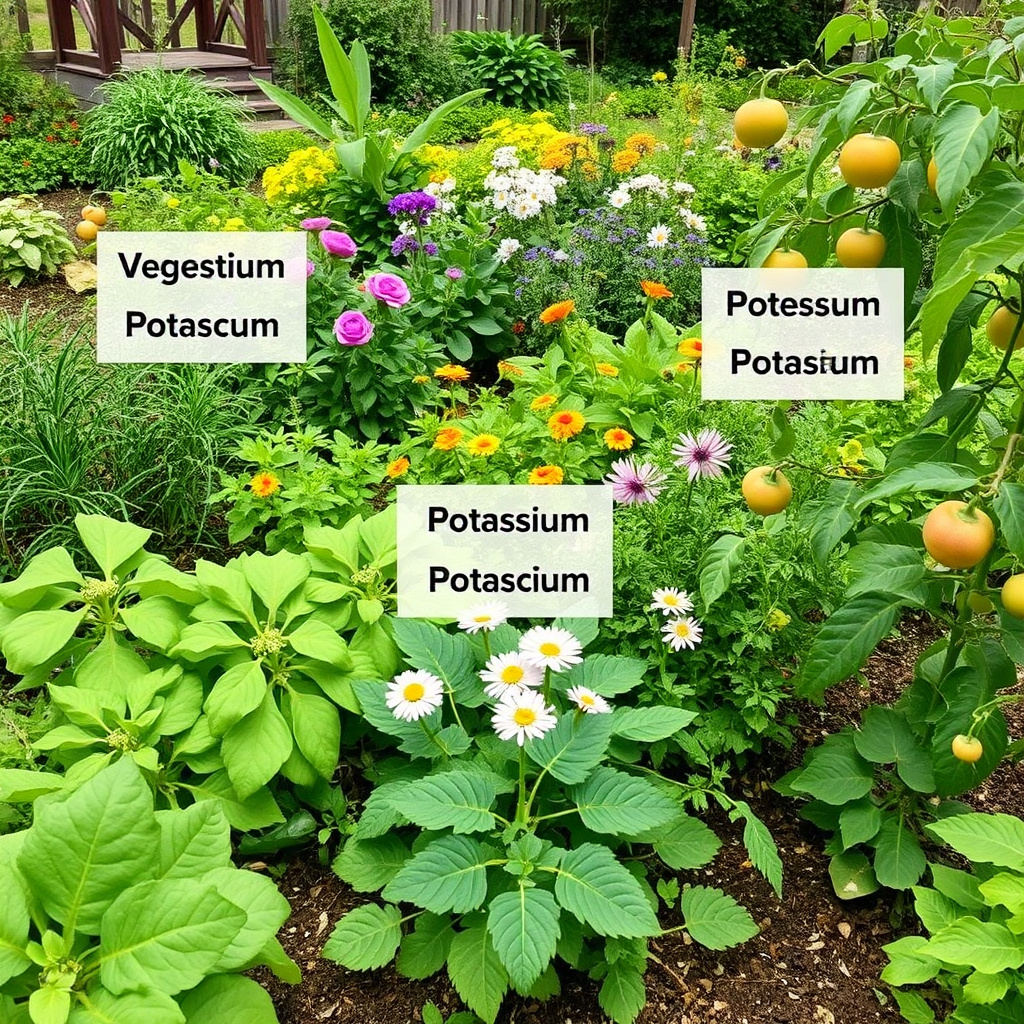
Vegetables and Field Crops
Vegetables like tomatoes, potatoes, and corn typically require moderate to high potassium levels to support fruiting and tuber quality. Field crops such as wheat and soybeans also depend on potassium for yield and disease resistance.
Crop-specific fertilization recommendations vary widely, so producer guidelines should be followed closely.
For a detailed scientific overview, visit the Wikipedia page on potassium in plants. Potassium in plants on Wikipedia.
Ornamental Plants and Lawns
Ornamental plants benefit from potassium for stress tolerance, vibrant flowers, and strong root systems, while lawns need steady potassium to maintain green color and durability.
Potassium applications are often lower or more regulated for ornamental purposes to prevent excessive growth and nutrient runoff.
Comparison of Potassium Fertilizer Types
Here’s a comparison table summarizing common potassium fertilizer options to help you choose based on crop needs and soil conditions.
| Fertilizer Type | Potassium Content (%) | Chloride Content | Suitability | Cost Range |
|---|---|---|---|---|
| Potassium Chloride (Muriate of Potash) | 60-62% | High | General use except chloride-sensitive crops | $ |
| Potassium Sulfate | 50% | Low | Chloride-sensitive crops like fruits and vegetables | $$$ |
| Wood Ash (Organic) | 1-7% | None | Organic gardens and soil amendment | $ |
| Greensand | 5-8% | None | Slow-release potassium and soil conditioning | $$ |
| Potassium Nitrate | 44-46% | Low | High-value crops needing nitrogen and potassium | $$$ |
Frequently Asked Questions
Why do plants need potassium?
Plants require potassium for water regulation, enzyme activation, photosynthesis, and overall stress resistance, which supports healthy growth and fruit quality.
How can I tell if my plants lack potassium?
Signs include yellowing leaf edges, weak stems, reduced flowering or fruiting, and increased disease susceptibility.
Can I use organic materials to provide potassium?
Yes, organic sources like wood ash and compost supply potassium slowly and improve soil health but may need supplementation for higher crop demands.
How often should I test soil for potassium?
Testing before planting and every 1-2 years during cultivation helps maintain appropriate potassium levels and avoids imbalances.
Is potassium fertilizer necessary if I already use a balanced fertilizer?
Balanced fertilizers contain potassium, but specific crop needs or soil deficiencies may require additional potassium application for optimal results.
Key Takeaways
- Potassium is essential for plant water regulation and stress resistance.
- Deficiency symptoms include leaf edge yellowing and stunted growth.
- Fertilizer choice should consider crop sensitivity and soil potassium levels.
- Regular soil testing and timely potassium applications boost plant health.
Conclusion
Understanding what potassium for plants does is foundational to nurturing healthy, productive gardens and crops. Potassium’s dynamic role in regulating vital processes like stomatal function, enzyme activation, and stress tolerance means that plants without enough potassium will lag in development and yield. Effective potassium management starts with monitoring soil nutrient levels and recognizing deficiency signs for timely correction. This approach helps maintain nutrient balance and supports robust plant growth throughout their life cycles.
For growers, potassium needs vary by plant type and growing conditions. Field crops such as corn and wheat often require high potassium doses to maximize yields, while fruits and vegetables may need chloride-free fertilizers like potassium sulfate to avoid toxicity. Organic gardeners can supplement soil health with wood ash or compost but may sometimes need additional inorganic potassium sources to meet higher nutrient demands. Tailoring potassium application according to these factors results in healthier plants and better harvests.
The next step for growers involves regular soil testing combined with attentive visual monitoring of plants. Applying potassium fertilizers at planting and during critical growth stages, using appropriate types and rates, optimizes plant nutrient uptake. For those addressing potassium deficiency symptoms or managing sensitive crops, incorporating foliar sprays can offer faster relief. With these practices, gardeners and farmers ensure potassium effectively supports strong plants and fruitful growth seasons.