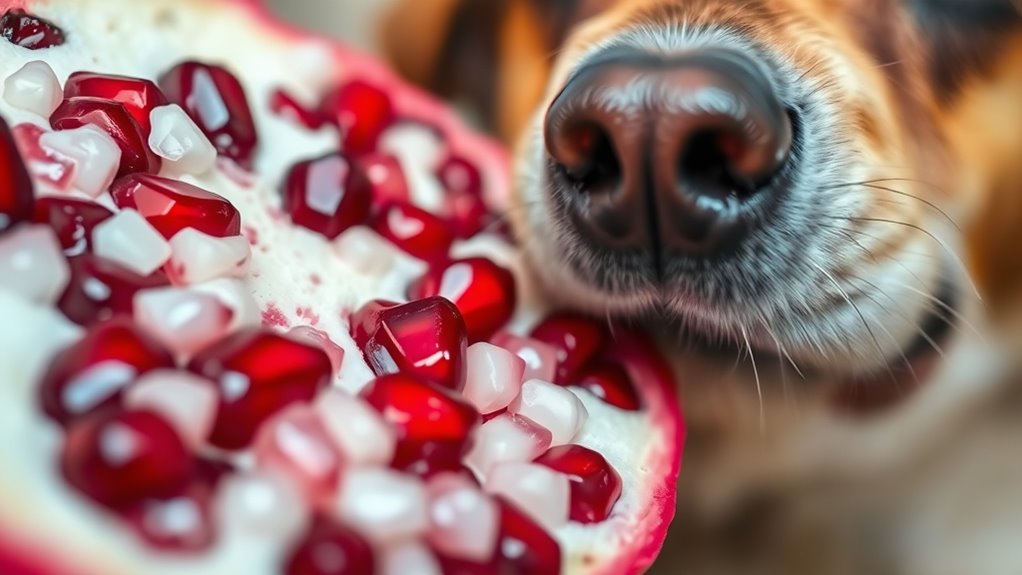
Can Dogs Eat Pomegranate Seeds?
Many dog owners want to share healthy treats like pomegranate seeds with their furry friends but aren’t sure if it’s safe. You’re not alone—navigating what’s good or bad for your pup can feel confusing.
You can give your dog pomegranate seeds in moderation, but you should be careful. While they offer antioxidants, vitamins, and fiber, the seeds can cause digestive upset or pose choking hazards, especially if your dog eats too many.
Start with a small amount and watch for any reactions like vomiting or diarrhea.
If you’re curious about safe amounts and how to introduce pomegranate properly, there’s more to evaluate to keep your pup safe.
Key Takeaways
- Pomegranate seeds are generally safe in moderation but can cause digestive issues or choking hazards for dogs.
- Small amounts of pomegranate pulp may offer antioxidants and vitamins, but seeds should be removed.
- Overfeeding or giving large quantities can lead to constipation, diarrhea, or intestinal blockages.
- Keep an eye out for signs of allergic reactions or upset stomach after feeding pomegranate seeds.
- It’s best to talk to your veterinarian before adding pomegranate seeds to your dog’s diet.
Are Pomegranates Safe for Dogs to Eat?
Are pomegranates safe for dogs to eat? In moderation, the answer is generally yes, but you should be cautious. Pomegranates offer benefits like antioxidants, vitamins, and fiber, which can boost your dog’s health. These nutrients may support their immune system and improve digestion.
However, not all dogs react the same way. Some may have allergies or sensitivities to certain fruits, including pomegranates. If your dog has a history of food allergies or skin issues, introduce pomegranate gradually and watch for signs like itching, swelling, or vomiting.
Not all dogs react the same; watch for allergies like itching, swelling, or vomiting when introducing pomegranate.
Always remove seeds before offering a small amount of the fruit, as seeds can pose choking hazards or cause digestive issues. Consulting your vet before giving your dog pomegranate is a good idea, especially if you’re unsure about allergies or health risks.
With proper preparation, pomegranates can be a healthy treat for your canine companion.
What Are the Risks of Dogs Eating Pomegranate Seeds?
Eating pomegranate seeds can sometimes upset your dog’s stomach or cause digestive problems. It’s not uncommon for dogs to experience discomfort if they eat too many. Plus, there’s the risk of choking, especially if they swallow large seeds without chewing them up first.
And in rare cases, those seeds might be toxic to your dog, which could lead to more serious health issues. So, it’s usually best to keep pomegranate seeds out of their reach to avoid any potential problems.
Potential Digestive Issues
While pomegranate seeds may seem harmless, they can cause digestive issues for dogs. The seeds’ fiber content, which is fine for humans in moderation, can be hard for a dog’s stomach to handle.
Eating too many seeds might lead to upset stomach, diarrhea, or discomfort. Dogs have sensitive digestion, and their ability to break down seeds isn’t as strong as ours.
The fiber can cause blockages or slow digestion if eaten in large amounts. Even small amounts might cause minor problems, especially in dogs with existing digestive sensitivities.
To keep your dog healthy, it’s best to avoid giving them pomegranate seeds altogether. If you want to share fruit, check with your vet first.
Risk of Choking
Because pomegranate seeds are small and hard, they can pose a choking risk to dogs, especially if swallowed whole or without enough chewing. These hazards can block your dog’s airway, making it hard to breathe or even causing emergency situations.
Dogs tend to swallow seeds quickly, which increases the chance of an obstruction. To keep your furry friend safe, avoid giving them pomegranate seeds directly. Instead, try removing the seeds completely or offering small, dog-friendly fruits that aren’t a choking risk.
Always supervise your dog when they’re trying new foods. If you suspect they’ve swallowed a seed and are choking, seek veterinary help immediately. Being cautious helps prevent dangerous choking incidents and keeps your dog safe during treat time.
Pomegranate Seed Toxicity
Although choking is a primary concern, many pet owners wonder if pomegranate seeds are toxic to dogs. Generally, they’re considered safe, but it’s important to know about canine dietary restrictions.
Small amounts of seeds aren’t usually poisonous, but eating too many can cause tummy issues or blockages. Some dogs might get upset stomachs, diarrhea, or constipation from the seeds.
The hard texture can also lead to choking or damage to your dog’s teeth. It’s a good idea to check with your vet before giving your dog pomegranate seeds.
Do Pomegranate Seeds Offer Any Health Benefits for Dogs?
Are pomegranate seeds truly beneficial for your dog’s health? They do offer some potential advantages, mainly because of their antioxidants and fiber.
Antioxidants help fight free radicals, which can damage cells and speed up aging or cause illness. The fiber supports healthy digestion and can help keep bowel movements regular. These seeds also contain vitamins like C and K, which boost immune function and help blood clotting.
Consider these benefits:
- Rich in antioxidants that protect cells
- High fiber content aiding digestion
- Vitamins that strengthen immunity
- Anti-inflammatory properties
- Possible support for heart health
That said, it’s important to remember moderation. Feeding too many pomegranate seeds can upset your dog’s stomach. Always check with your vet before adding new foods to your dog’s diet to make sure it’s safe for them.
How Much Pomegranate Seed Is Safe for My Dog?
How much pomegranate seed is safe for your dog? It’s important to follow proper portion guidelines to keep your dog safe.
Generally, small amounts of pomegranate seeds can be given as an occasional treat, but portion sizes matter. A safe serving size depends on your dog’s size and weight.
For small dogs, a few seeds or a teaspoon of pomegranate pulp is enough. Larger dogs can handle a bit more, but it’s best to start with a small amount and watch how they react.
Remember, moderation is key. Overfeeding can cause digestive issues. As a rule, never give more than 10% of your dog’s daily calories in treats, including pomegranate seeds.
Always check with your vet if you’re unsure about the right amount for your pet. Keeping servings small helps prevent stomach upset while letting your dog enjoy the benefits safely.
Signs Your Dog Has Had a Negative Reaction to Pomegranate Seeds
If your dog starts vomiting or has diarrhea after eating pomegranate seeds, it might be reacting badly to them. Keep an eye out for these kinds of digestive issues—they’re often the first clue something’s wrong.
You should also watch for any unusual behaviors, like your dog being extra lethargic or suddenly agitated. These signs can indicate they’re not feeling well and need some help. Spotting these symptoms early means you can get your dog the care they need before things get worse.
Digestive Upset Symptoms
When your dog eats pomegranate seeds and gets a upset stomach, you might see symptoms like vomiting, diarrhea, or general discomfort. These signs show that their digestive system is affected.
Keep an eye out if your dog has frequent vomiting or retching, or if they have loose, watery stool or diarrhea. You might also notice signs of abdominal pain or discomfort, loss of appetite, or lethargy and weakness.
These symptoms suggest that your dog’s upset stomach could be because of the pomegranate seeds. Digestive upset can affect their overall health, so it’s important to monitor them closely.
If the symptoms stick around or get worse, it’s best to talk to your veterinarian right away. This way, you can make sure your dog’s digestive health isn’t getting any more compromised.
Unusual Behavior Signs
Unusual behavior in your dog can be a clear sign that they’ve had a negative reaction to pomegranate seeds. Watch for signs of distress, like increased curiosity about their surroundings or sudden, unusual cravings for non-food items.
If your dog starts sniffing or pawing at their mouth, or shows signs of discomfort like restlessness, it could indicate a reaction. Some dogs may become overly clingy or seem lethargic without any clear reason.
Changes in behavior, such as whining or agitation, should also alert you to potential issues. Keep an eye out for anything out of the ordinary, especially if your dog has recently ingested pomegranate seeds.
If you notice these unusual signs, it’s best to consult your veterinarian promptly to ensure your dog’s safety.
Should I Remove Pomegranate Seeds Before Sharing Pomegranate With My Dog?
You might wonder whether you should remove pomegranate seeds before sharing this fruit with your dog. When preparing pomegranate for your pet, it’s generally best to remove the seeds.
Seeds can be hard for dogs to digest and might pose a choking risk or cause stomach upset. To keep your dog safe, follow these tips:
Seeds may cause choking or upset stomachs—remove them before sharing pomegranate with your dog.
- Remove seeds to reduce choking hazards.
- Give small, manageable pieces.
- Avoid feeding seeds if your dog has digestive problems.
- Use only fresh, ripe pomegranate without added sugars or preservatives.
- Watch your dog for any bad reactions after eating.
Removing the seeds helps control portion size and lowers health risks, making sharing safer and more fun. Overall, taking out the seeds is a simple step that promotes safe snacking and helps prevent stomach issues.
What Are Better Fruit Options for Dogs?
Many fruits are safe and healthy choices for dogs, offering essential vitamins and hydration without unnecessary risks. Opt for dog-friendly snacks like blueberries, which are rich in antioxidants and low in sugar, or apple slices (without seeds) that provide fiber and vitamin C.
Watermelon is another excellent option, as it’s hydrating and low in calories, but always remove seeds and rind. Bananas are a good choice too, offering potassium and natural sugars for quick energy.
Strawberries are packed with vitamin C and fiber, making them a tasty treat. Remember to introduce new fruits gradually and in moderation to monitor your dog’s response.
Avoid fruits with high sugar content or those toxic to dogs, like grapes or citrus. Choosing healthy fruit options guarantees your dog enjoys tasty treats without risking their health, making them a satisfying and safe addition to their diet.
How to Introduce Pomegranate to Your Dog Safely
Introducing pomegranate to your dog should be done gradually and with caution to guarantee it agrees with their digestive system. Start by offering a small amount of pomegranate, focusing on proper preparation to remove seeds and rind, which can be hard to digest. Always monitor your dog for any adverse reactions.
Keep portion control in mind—offer just a tiny piece initially, then gradually increase if no issues arise. To do this safely, remove seeds and rind thoroughly before serving. Offer only a small portion to assess their tolerance.
Mix a small piece into their regular food and observe your dog’s reaction over 24 hours. If everything goes well, you can consider increasing the amount gradually. Always consult your vet for personalized guidance.
Common Mistakes to Avoid When Giving Your Dog Pomegranate
Be careful not to give your dog too much pomegranate. Overfeeding can lead to stomach upset or other health problems, so it’s important to stick to small amounts.
Also, keep an eye out for any signs of allergic reactions, like itching or swelling. If you notice anything unusual, it’s best to stop giving pomegranate right away.
And don’t assume that just a little bit is always safe—moderation is key, and watching your dog’s response is really important.
Overfeeding Risks
While pomegranate seeds can provide health benefits to your dog, overfeeding them can cause serious health problems. Too many seeds might lead to symptoms like upset stomach, diarrhea, or vomiting.
To avoid this, practice strict portion control and don’t give too much at once. Overfeeding can also cause weight gain or digestive upset, putting stress on your dog’s system.
Keep these tips in mind:
- Watch your dog’s reaction after giving seeds.
- Serve small, controlled amounts.
- Don’t feed seeds too often or in large quantities.
- Look out for signs of tummy trouble.
- Talk to your vet for personalized advice on portion sizes.
Ignoring Allergic Reactions
Even if you’re excited to share pomegranate seeds with your dog, overlooking potential allergic reactions can be risky. Some dogs have sensitivities that trigger allergy symptoms like itching, swelling, or difficulty breathing. Recognizing these signs early is important to prevent serious health problems.
Always introduce new foods gradually and keep a close eye on your dog. Use the table below to understand common sensitivities and allergy symptoms:
| Dog Sensitivities | Allergy Symptoms |
|---|---|
| Pomegranate seeds or skin | Itching, redness, swelling |
| New foods or treats | Vomiting, diarrhea |
| Environmental factors | Sneezing, coughing |
| Certain chemicals or pollen | Breathing difficulties |
Ignoring these signs can lead to severe reactions, so stay alert. If you notice any adverse effects, consult your vet right away.
Veterinarian Opinions on Dogs Eating Pomegranate Seeds
Veterinarians generally advise caution regarding dogs consuming pomegranate seeds, as opinions vary based on potential risks and benefits. Some experts highlight possible health benefits, while others focus on hazards. Most recommendations emphasize moderation and considering your dog’s individual health.
Some vets see antioxidants in pomegranate seeds as beneficial for immune support. Others warn about gastrointestinal upset from seed ingestion. Experts also advise watching out for choking hazards or blockages.
Many recommend talking to your vet before adding seeds to your dog’s diet. Some veterinarians believe small amounts are unlikely to cause harm, but larger quantities could be risky.
Ultimately, your vet’s advice should guide you, especially based on your dog’s size, breed, and health history. While opinions differ, prioritizing safety and professional guidance is always best when deciding if your dog can eat pomegranate seeds.
Frequently Asked Questions
Can Pomegranate Seeds Cause Allergic Reactions in Dogs?
Yes, pomegranate seeds can cause allergic reactions in dogs, especially if they have known allergies. While pomegranate toxicity is rare, some dogs might be sensitive to it and show symptoms like itching or swelling.
Always introduce new foods carefully and watch for any adverse reactions. If you notice anything unusual, it’s best to consult your vet.
Keep in mind that each dog is different, so what’s safe for one might not be for another.
Are There Specific Dog Breeds That Tolerate Pomegranate Seeds Better?
You’re barking up the right tree to wonder about breed differences. Some breeds show less sensitivity and can tolerate pomegranate seeds better, but beware of toxicity in others.
While small breeds or those with sensitive stomachs might react negatively, larger or sturdier breeds often handle it better. Always introduce new foods gradually and monitor your dog for signs of discomfort.
And don’t forget to check with your vet to prevent any health issues.
How Do Pomegranate Seeds Compare to Other Fruit Seeds for Dogs?
Pomegranate seeds offer nutritional benefits like antioxidants and fiber, but they can pose seed toxicity risks for dogs if eaten in large amounts.
Compared to other fruit seeds, pomegranate seeds are less likely to cause blockages. Still, it’s best to give them in moderation.
Always watch your dog after offering any seeds, and check with your vet to make sure they’re safe, especially if your dog has sensitivities or health issues.
Can Pomegranate Seeds Improve My Dog’s Dental Health?
Imagine a medieval healer with a magic elixir—pomegranate seeds might offer some dental benefits, but they’re not a cure-all.
While the seeds contain antioxidants that could support your dog’s oral health, they can also pose seed toxicity risks if consumed in excess.
Use caution and consult your vet before giving pomegranate seeds to your pup, as they’re not a guaranteed way to improve dental health and may do more harm than good.
Are There Any Natural Remedies Involving Pomegranate Seeds for Dogs?
Yes, you can use pomegranate seeds as a natural remedy for your dog, but with caution. Pomegranate offers antioxidants that may support your dog’s immune system, but seed safety is important.
Always start with small amounts and watch for any bad reactions. It’s a good idea to talk to your vet before adding pomegranate seeds to your dog’s diet to make sure it’s safe and helpful.
When prepared properly, pomegranate seeds can be a healthy supplement for your furry friend.
Conclusion
Think of your dog’s health like a delicate garden—each new treat is a seed that can either flourish or falter. While pomegranate seeds might seem tempting, they carry risks that could harm your beloved companion.
Stick to safer, vet-approved fruits and introduce new treats carefully. By choosing wisely, you’re watering your dog’s well-being, helping them thrive instead of risking a storm in their health garden.
In the case of pomegranate seeds, it’s best to avoid giving them to your dog. They can be hard to digest and may cause stomach upset or other issues.
Always prioritize your dog’s safety and consult your vet if you’re unsure about giving them new treats like pomegranate seeds.