What Is a Trichome? Understanding Plant Trichomes and Their Functions
A trichome is a small hair-like structure found on the surface of plants. These microscopic outgrowths can serve various purposes, such as protecting the plant from pests, reducing water loss, and sometimes aiding in secretion of substances. Trichomes are a key feature in many species, including cannabis, tomatoes, and many herbs, where they influence the plant’s interaction with its environment.
Trichomes matter because they impact a plant’s survival and productivity. For example, glandular trichomes can produce sticky oils that deter herbivores and attract pollinators. Non-glandular trichomes often form a physical barrier or reflect light, helping plants cope with drought or intense sunlight. Understanding trichomes can also inform cultivation and breeding decisions in agriculture and horticulture.
This article explores the biology of trichomes, their different types, and their roles in plant ecology and human use. You will learn how trichomes affect plant protection, their chemical secretions, and how they are studied for agricultural benefits.
What Are Trichomes? A Botanical Overview

Structure and Composition of Trichomes
Trichomes are epidermal outgrowths that vary widely in shape, size, and complexity. They can be unicellular or multicellular and may have glandular capabilities, secreting substances like oils or resins. Their cellular structure provides physical and chemical protection to plants.
The composition often includes cellulose, cutin, and sometimes secreted compounds. This structural diversity allows trichomes to perform a range of functions from mechanical defense to chemical interaction.
Where Are Trichomes Found?
Trichomes commonly occur on leaves, stems, flowers, and sometimes roots. Their density and distribution vary depending on species and environmental factors. For example, desert plants often have dense trichomes to reduce water loss.
In cannabis and certain herbs, trichomes on flowers are rich in essential oils and cannabinoids, which have commercial and medicinal value.
Types of Trichomes and Their Functions
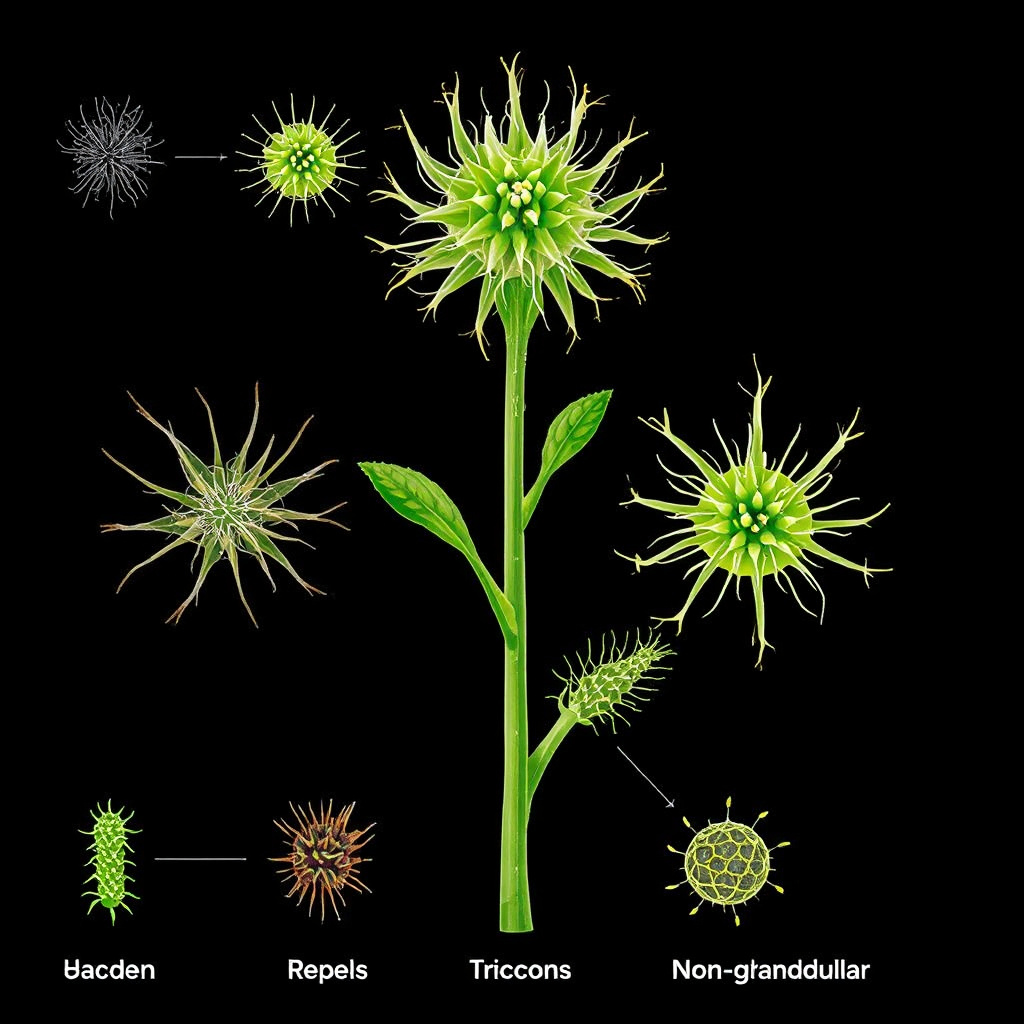
Glandular Trichomes
Glandular trichomes contain secretory cells that produce essential oils, resins, or other chemical compounds. These secretions play roles in attracting pollinators or repelling insects and pathogens. In plants like mint or cannabis, these trichomes are responsible for aromatic and therapeutic properties.
The secreted substances can also protect plants from UV radiation and harsh climates. Glandular trichomes often have bulbous heads where these compounds accumulate.
- Produce essential oils and resins
- Protect against herbivores and pathogens
- Attract pollinators through scent
For more on this, see our related guide: How Long Does Cannabis Curing Take: A Complete Timeline for Best Results.
Non-Glandular Trichomes
Non-glandular trichomes typically serve as a physical barrier to insects and reduce water loss by minimizing air flow and reflecting sunlight. These hair-like structures can also trap moisture or frost, aiding in the plant’s microclimate regulation.
They may appear as fine hairs, scales, or branched structures and do not secrete chemicals but provide mechanical protection.
- Physical deterrent to pests
- Reduce transpiration
- Reflect solar radiation
Trichomes and Plant Defense Mechanisms

How Trichomes Deter Herbivores
Trichomes can prevent or limit herbivore feeding by forming dense mats that are difficult to penetrate or by releasing irritants. Their sticky secretions trap small insects physically, reducing damage to the plant.
They also produce toxic or unpleasant compounds that discourage larger herbivores from feeding, providing a natural and effective defense.
- Mechanical barriers against insects
- Chemical deterrents from glandular secretions
Trichome Responses to Environmental Stress
Trichomes help plants adapt to stress like drought or UV radiation by reflecting light and reducing water evaporation. In some cases, their presence increases under stress conditions, indicating a dynamic response to the environment.
This adaptability supports plant survival in challenging habitats and can influence growth patterns.
The Role of Trichomes in Agriculture and Horticulture

Benefits of Trichomes for Crop Production
Trichomes enhance pest resistance naturally, which can reduce reliance on chemical pesticides. This leads to healthier crops and lower production costs. Certain trichomes also increase the plant’s resilience against drought, improving yields in dry conditions.
Selective breeding can encourage desirable trichome traits in crops like tomatoes or peppers to optimize these advantages.
- Natural pest resistance
- Improved drought tolerance
- Potential quality enhancement
For more on this, see our related guide: How to Dry and Cure Cannabis for the Best Quality and Potency.
Breeding and Genetic Research on Trichomes
Scientists study trichomes to understand genetic pathways controlling their development and function. This research helps breed plants with specific trichome traits, such as increased production of medicinal compounds or enhanced pest defense.
Genetic modification and marker-assisted breeding are key techniques expanding the potential of trichomes in crop improvement.
How Trichomes Impact Human Use of Plants

Trichomes in Medicinal and Aromatic Plants
In plants like cannabis, lavender, and peppermint, glandular trichomes produce valuable aromatic oils and medicinal compounds. These trichomes influence the potency, flavor, and therapeutic effects of plant-derived products.
Harvesting techniques focus on preserving these delicate structures to retain maximum benefit in herbal and pharmaceutical preparations.
For more detailed botanical definitions and examples, see the Trichome information on Wikipedia. Trichome information on Wikipedia.
Trichomes in Culinary Applications
Certain culinary herbs rely on trichomes to provide flavor and aroma essential for cooking. The concentration and quality of these trichomes affect taste intensity and freshness.
Understanding trichome development helps farmers and chefs select herbs at peak potency.
Types of Trichomes Category Comparison
Here’s a comparison of the main trichome types including their structure, secretions, and key functions for quick reference.
| Trichome Type | Structure | Secretions | Primary Function | Examples |
|---|---|---|---|---|
| Glandular | Multicellular, bulbous heads | Essential oils, resins | Chemical defense and attraction | Cannabis, mint, lavender |
| Non-Glandular | Unicellular or multicellular, hair-like | None | Physical protection and water regulation | Tomato, cucumber, sunflower |
| Capitate | Stalked glandular with secretory head | Aromatic oils | Defense and pollinator attraction | Basil, cannabis |
| Peltate | Shield-shaped glandular | Resins and terpenes | Defense, UV protection | Mint, cannabis |
Frequently Asked Questions
Are trichomes found on all plants?
No, not all plants have trichomes. While many species feature these structures, some smooth-leaved plants lack them entirely or have very few. Trichome presence often relates to the plant's environment and evolutionary adaptations.
Do all trichomes produce secretions?
No, only glandular trichomes secrete substances such as oils or resins. Non-glandular trichomes primarily serve physical roles like protection against herbivores or water loss without producing secretions.
Can trichomes affect the potency of medicinal plants?
Yes, glandular trichomes are the primary sites where medicinal compounds are synthesized and stored. The number and quality of these trichomes directly influence the potency and effectiveness of medicinal plants like cannabis.
How do trichomes help in pest control for crops?
Trichomes act as barriers that physically deter or trap pests. Their chemical secretions may also repel insects and pathogens, reducing crop damage and lowering the need for pesticides.
Is it possible to breed plants for more trichomes?
Yes, plant breeders and geneticists develop varieties with enhanced trichome density or glandular function to improve pest resistance or increase production of valuable compounds.
Key Takeaways
- Trichomes are microscopic hair-like structures on plants with protective and secretory functions.
- Glandular trichomes produce chemicals like essential oils, while non-glandular ones provide physical defense.
- They play important roles in plant ecology, defense, and human uses including medicine and cooking.
- Understanding plant trichome types helps improve crop breeding and product quality.
Conclusion
Understanding what a trichome is involves recognizing its diverse forms and functions as an epidermal structure on plants. They are not mere hairs but highly specialized features essential for survival. Whether glandular or non-glandular, trichomes provide physical barriers and chemical defenses that safeguard plants from environmental threats, while also aiding in interactions like pollination and water retention.
For growers and researchers, paying attention to plant trichome types offers direct benefits. Glandular trichomes, for example, are valuable in crops used for essential oils, perfumes, and herbal medicine. Crop varieties with dense non-glandular trichomes can show improved drought resistance or natural pest control. Therefore, selecting or breeding plants based on trichome characteristics can lead to healthier, more resilient crops with added economic value.
If you want to explore further, focus on studying the trichome types most relevant to your plants or crops. For medicinal applications, aim for maximizing glandular trichomes, while for field crops, enhancing non-glandular density might be more beneficial. Continuing research and experimentation can refine cultivation practices to harness the full potential of trichomes in agriculture and horticulture.