7 Simple Steps to Successfully Plant Zinnia Seeds
Many gardening enthusiasts dream of creating vibrant, colorful blooms in their garden but often feel overwhelmed by where to start. You’re not alone—getting beautiful zinnia flowers to thrive can seem tricky at first. Luckily, with a few simple steps, you can grow stunning zinnia plants that brighten up your space.
Start by preparing well-draining soil rich in organic matter and test the pH to keep it between 6.0 and 7.0. Choose a sunny spot with 6-8 hours of direct sunlight daily.
Plant your seeds shallowly, about ¼ inch deep, and water consistently without overdoing it. Thin out seedlings once they grow, and fertilize every few weeks to promote blooms.
Keep pests at bay and deadhead to extend flowering. For more tips on each step, keep going!
Key Takeaways
- Choose a sunny spot that gets 6-8 hours of direct sunlight daily for the best growth.
- Prepare well-draining, loose soil mixed with compost, and adjust the pH if needed.
- Sow the seeds shallowly, about ¼ inch deep, after soaking them first. Lightly cover with soil to ensure good seed contact.
- Water regularly to keep the soil moist but not soggy, and try to avoid wetting the leaves.
- Keep up with deadheading flowers and fertilize every 2-3 weeks to keep the blooms coming.
Get Your Soil Ready for Zinnias
Before planting zinnia seeds, you need to prepare the soil properly. First, check your soil type—sandy, loamy, or clay—and see how well it drains. Zinnias like soil that drains well to prevent root rot, so improve drainage if needed.
Do a soil test to check the pH level. They do best in slightly acidic to neutral soil, with a pH of 6.0 to 7.0. If necessary, adjust the pH using lime or sulfur.
Add organic matter like compost to boost soil fertility and improve its structure. Compost helps retain nutrients and makes the soil healthier overall. Mulching can help keep moisture in, regulate temperature, and keep weeds out.
During testing, look for nutrient deficiencies and amend the soil as needed. This ensures your zinnias get all the essential nutrients for healthy growth and lots of blooms.
Proper soil prep creates a strong foundation, giving your zinnias the best chance to thrive and produce vibrant flowers.
Choose the Best Spot With Plenty of Sunlight
Choosing the right spot for your zinnias ensures they get the sunlight they need to thrive. Sunlight is crucial for healthy growth and bright, vibrant blooms. Aim for a garden spot that gets at least 6 to 8 hours of direct sun daily, preferably in the morning or early afternoon.
Avoid shady areas caused by trees, buildings, or fences, as not enough sunlight can weaken your plants and cut down on flowering. Make sure the spot has good air circulation to help keep diseases at bay.
Also, pick a location that doesn’t collect water, as too much pooling can drown the roots. Finally, choose well-draining soil to prevent waterlogging and keep your zinnias happy and healthy.
Plant Your Zinnia Seeds for Easy Germination
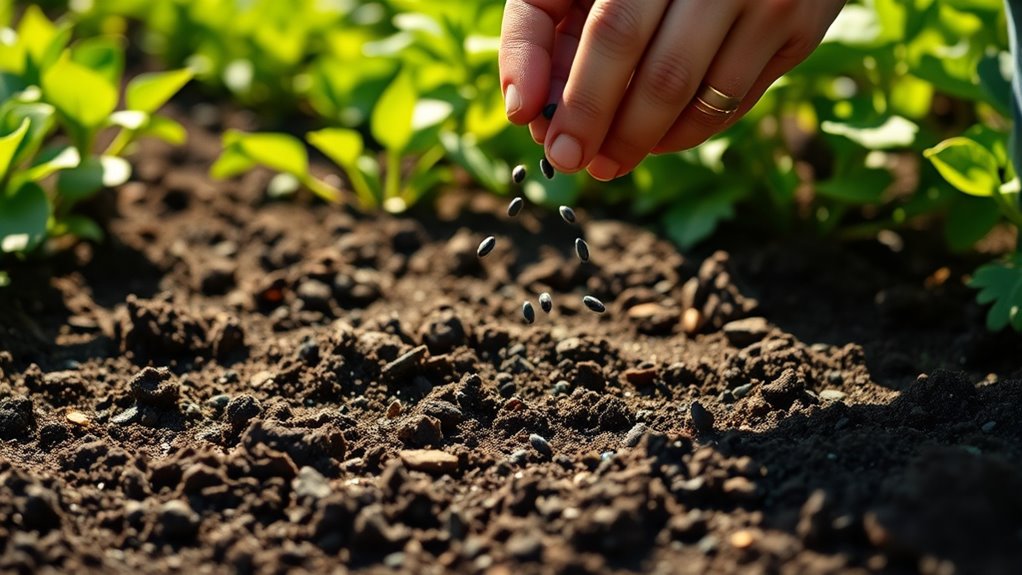
To guarantee your zinnia seeds sprout quickly and evenly, start by planting them shallowly in well-prepared soil. You can improve germination by soaking your seeds in water for a few hours before planting, which helps soften the seed coat and encourages sprouting.
When planting, keep the seeds at the correct depth—about ¼ inch—so they’re not buried too deeply or left too exposed. Use a light layer of soil to cover the seeds gently, making sure they have good soil contact.
Avoid planting too deep, as this can hinder germination. Make sure the soil is well-draining and loose to allow roots to develop easily. Consistent moisture is key, but don’t overwater.
Water and Care for Your Young Zinnias
Once your zinnias have sprouted, consistent watering is key to helping them develop strong roots and healthy growth. Proper watering keeps seedlings healthy and ensures they build a sturdy foundation. Be careful not to overwater, as soggy soil can cause root rot and weaken your plants. Aim for moist, well-drained soil, and water when the top inch feels dry.
Consistently water zinnias, avoiding overwatering to prevent root rot and promote strong, healthy growth.
To help your zinnias grow their best, focus on a few simple practices:
- Use a diluted, balanced fertilizer every couple of weeks to keep nutrients steady.
- Water early in the day so excess moisture can evaporate, reducing disease risk.
- Try not to water the leaves directly, which helps prevent fungal problems.
With consistent care and good watering habits, your seedlings will thrive. This will give you vibrant, healthy zinnias ready to bloom in your garden.
Thin Out Seedlings and Transplant When Ready
As your zinnia seedlings grow, it’s important to thin them out to prevent overcrowding and make sure each plant has enough space to develop properly. Proper spacing helps ensure healthy roots and vibrant blooms.
When seedlings are about 2-3 inches tall, check how they’re growing and remove the weaker ones. Keep the strongest seedlings in place so they can thrive. Transplant timing is key—wait until seedlings have 2-3 true leaves and the weather is warm enough.
Imagine your garden at different seedling stages:
| Seedling Stage | Spacing Needed | Transplant Timing |
|---|---|---|
| Small sprouts | 1-2 inches | When 2 inches tall |
| Developing | 2-3 inches | After 4 weeks |
| Mature leaves | 3 inches | When roots are visible |
Thinning and transplanting at the right time promotes healthy growth and abundant blooms.
Encourage Bright Blooms and Keep Them Coming
Want your zinnias to keep bursting with color all season? Just remember to water them consistently, especially when the weather gets dry. A little extra attention here really pays off!
And don’t forget about feeding them—applying fertilizer regularly gives those plants the nutrients they need to stay healthy and produce lots of blooms. Plus, deadheading the spent flowers encourages new ones to grow, keeping your garden looking lively and bright.
Follow these simple tips, and your garden will stay vibrant and beautiful all season long!
Consistent Watering Practices
Consistent watering is key to keeping your zinnia plants vibrant and healthy. Regular moisture helps prevent stress and encourages lush blooms. Stick to a steady watering schedule that keeps seedlings hydrated without overdoing it.
Good soil drainage is crucial, so avoid waterlogged roots that can harm your plants. Use watering techniques like watering at the base and doing so early in the day to help maintain proper humidity and prevent fungal issues.
Keep the soil consistently moist but not soggy, and adjust based on the weather. Water deeply to promote drought resistance and strong root growth. Also, keep an eye on humidity levels to prevent drying out or excess moisture, which supports healthy development.
Use Fertilizer Regularly
Regularly applying fertilizer is key to keeping your zinnia blooms vibrant all season long. Use organic options like compost tea or soil amendments to improve soil health and support strong roots.
You can also give your plants quick nutrients through foliar feeding, which helps during active growth. Slow-release fertilizers are great too—they provide a steady supply of nutrients over time and reduce the risk of overfeeding.
Timing matters. Fertilize when your zinnias are actively growing, usually every 2–3 weeks. This ensures they get the right nutrients at the right moments for the best blooms.
Consistent feeding encourages bright, abundant flowers and keeps your zinnias healthy and vigorous throughout the season.
Deadhead for Continuous Blooms
Deadheading your zinnias encourages new blooms to emerge, keeping your flower bed vibrant and full of color throughout the season. Proper pruning helps remove faded flowers and promotes continuous blooming.
To get the best results, regularly check your plants and snip off dead or spent blooms just above the next set of leaves. Focus on cutting back the flower stems to help the plant grow bushier and produce more flowers.
Stick to a consistent deadheading routine, especially during peak blooming times. This prevents seed formation, which can stop the flowers from blooming further.
Troubleshoot Common Zinnia Growing Problems
If your zinnias aren’t looking their best, it’s a good idea to keep an eye out for pests and diseases that might be bothering them. Sometimes, tiny bugs or fungal issues can cause leaves to yellow or spots to appear, so catching these problems early makes a big difference.
Also, don’t forget about watering and soil. Giving your zinnias the right amount of water and making sure they’re in well-draining soil can really help keep them happy and healthy. When you address these issues early on, your zinnias are more likely to stay vibrant and strong all season long.
Identifying Pests and Diseases
Pests and diseases can quickly turn a healthy zinnia patch into a struggling garden, so it’s essential to stay vigilant. Proper pest identification helps you catch problems early and apply targeted solutions. Look out for common pests like aphids, spider mites, and thrips, which can stunt growth or spread disease.
For disease management, watch for signs such as discolored leaves, mold, or spots—these could indicate fungal or bacterial infections. To keep your zinnias healthy, regularly inspect your plants and take action immediately when you notice trouble.
Here are key steps to identify and address issues:
- Regularly examine leaves and stems for pests or damage.
- Remove and destroy infected plant parts to prevent spread.
- Use appropriate organic or chemical controls when necessary.
Managing Water and Soil
Proper water and soil management are essential for healthy zinnias, especially after identifying and addressing pests and diseases. Keeping the right soil moisture is key; avoid overwatering or letting the soil dry out completely.
Use effective irrigation techniques, like deep watering at the base of the plants, to ensure consistent moisture without waterlogging. Mulching helps retain soil moisture and keeps roots cool.
Check soil moisture regularly with your finger or a moisture meter, and adjust your watering schedule as needed. Well-drained soil prevents root rot and promotes strong growth.
Frequently Asked Questions
Can I Grow Zinnias in Containers or Pots?
Yes, you can grow zinnias in containers or pots through container gardening. Just pick a container with good drainage and fill it with well-draining soil.
Choose a variety of zinnia suited for containers, like dwarf or compact types. Place the container in a sunny spot, water regularly, and fertilize as needed.
This way, you’ll enjoy vibrant blooms and a beautiful display right on your patio or balcony.
What Soil pH Is Ideal for Zinnia Growth?
You should aim for a soil pH of 5.8 to 7.0 for healthy zinnia growth. To get there, use soil amendments like lime if your soil is too acidic or sulfur if it’s too alkaline.
Different zinnia varieties have slight preferences, but sticking to this pH range helps them absorb nutrients properly. Regular soil testing can help you keep the pH in check.
This way, you’ll promote vibrant blooms and strong plants, making your garden look its best.
How Long Does It Take for Zinnia Seeds to Bloom?
You’ll see zinnia seeds bloom in about 7 to 14 weeks after planting, depending on your conditions. Once you’ve achieved seed germination, providing ideal temperatures around 70 to 75°F helps promote healthy growth and flowering.
Keep the soil warm and consistent, and make sure they get plenty of sunlight. With proper care, your zinnias will start blooming beautifully within this timeframe, adding vibrant colors to your garden.
Are Zinnias Resistant to Pests and Diseases?
Zinnias are fairly resistant to pests and diseases, but it’s still a good idea to keep an eye out. Watch for common issues like aphids, powdery mildew, and leaf spots.
To help prevent problems, make sure your plants have enough space for airflow. Remove any affected leaves as soon as you notice them, and avoid overwatering.
Regularly inspecting your zinnias will help catch issues early. This way, you can keep your plants healthy and vibrant all season long.
When Is the Best Time to Start Zinnia Seeds Indoors?
You should start seed starting your zinnia seeds indoors about 4 to 6 weeks before the last frost date. Think of your indoor garden as a cozy nursery where young plants get a head start.
This timing helps your zinnias develop strong roots and vibrant blooms. Keep the soil warm and bright, and soon your indoor efforts will turn into a colorful outdoor display.
Conclusion
With a little patience and care, your zinnias will flourish like a vibrant garden sculpture, bursting with color and life.
As you nurture each tiny sprout, imagine them growing into a lush tapestry of blossoms, inviting butterflies and joy into your space.
Keep tending to your garden with gentle hands, and soon, your outdoor canvas will be painted with the cheerful hues of zinnias.
By following these simple steps to plant zinnia seeds, you’ll create a beautiful garden that makes every moment spent tending feel like a small masterpiece in the making.