Unlock the Mystery of Finding a Minecraft Server Seed
Are you tired of wandering your Minecraft world, hoping to find that rare structure or hidden treasure? Many players struggle to uncover their server seeds, which can feel like a mystery you can’t crack. You’re not alone—finding the seed can unlock endless possibilities for your gameplay.
To reveal the mystery of your Minecraft server seed, start by using the `/seed` command in-game to easily disclose it. You can also investigate backup files or use tools like Amidst to visualize and identify your seed.
Sharing seeds with friends helps recreate worlds and investigate rare structures.
Interested in mastering this? Keep examining to uncover more tips and tools to unveil and utilize seeds efficiently for your gameplay.
Key Takeaways
- Use the `/seed` command in-game to instantly reveal the server’s seed number.
- Tools like Amidst or MineAtlas are great for visualizing and comparing different seed options.
- Check out community forums and seed databases to find popular or specific world seeds.
- You can extract seeds from backups with editors like Universal Minecraft Editor for recreating worlds.
- Share and verify seeds with friends to make sure everyone gets the same world generation for collaborative gameplay.
What Are Minecraft Seeds and How Do They Work?
Minecraft seeds are strings of characters or numbers that determine how your world is generated. When you start a new game, seed generation uses these inputs to shape the landscape, influencing terrain features like mountains, rivers, forests, and villages.
Basically, the seed acts like a blueprint for your world, controlling where and how different elements appear. By entering a specific seed, you can recreate worlds with similar terrain features, making it easier to find the perfect environment for your gameplay style.
Seeds work behind the scenes, guiding the game’s algorithms to generate unique, detailed worlds based on the seed value. Whether you want sprawling plains, mountain ranges, or dense jungles, your chosen seed will directly impact the geography you encounter.
Understanding how seeds influence terrain features can help you pick or share worlds that match your preferences. This can really enhance your overall Minecraft experience.
Why Is Finding Your Server Seed Important for Your Gameplay?
Knowing your server seed is pretty important because it allows you to recreate your world exactly the same way every time. If you want to share your world with friends or friends want to jump into the same setup, having that seed makes it super easy.
Plus, if you run into any issues or glitches, knowing the seed helps you troubleshoot more effectively since you can pinpoint exactly how the world was generated. In the end, it gives you more control over your gameplay and helps keep things consistent so you can enjoy your world without surprises.
Enhances World Recreation
Understanding your server seed is super important because it helps you recreate the world you love. When you know the seed, you can generate the same world every time you start a new game or share it with friends.
This consistency means you can analyze terrain, find specific biomes, and plan your builds with confidence. Different seeds create unique worlds with varying features, resources, and landscapes.
By saving your server seed, you can revisit your favorite spots or restore a world you’ve spent a lot of time on. It makes your gameplay more precise, personalized, and fun.
Facilitates World Sharing
Sharing your server seed makes it simple for friends to explore the same world you’ve built and enjoyed. It’s a great way to let others see what you’ve created and have fun together.
Seed sharing encourages community collaboration, letting others navigate, build, and survive in your world. When you share your seed, everyone can generate the same map for coordinated multiplayer adventures.
Here’s a quick look at what seed sharing allows:
| Benefit | Description |
|---|---|
| Consistent World | Everyone sees the same terrain and structures. |
| Easier Collaboration | Work on projects with shared resources. |
| Competitive Play | Set up challenges with the same starting point. |
| Exploration | Discover the same biomes and landmarks. |
| Community Growth | Sharing seeds helps grow a vibrant community. |
Aids in Troubleshooting
If you run into issues like missing structures, mismatched terrain, or problems with world generation, finding your server seed is a key troubleshooting step. Knowing the seed helps you figure out if the problem comes from the world’s core data.
It also lets you compare server performance and spot inconsistencies in world creation, which can really impact your gameplay. Sharing the seed with server admins or community forums can help you get targeted advice and solutions.
This process can restore or improve your experience, especially if corrupted or mismatched chunks are causing frustration. Ultimately, understanding your server seed helps you diagnose issues faster and ensures smoother gameplay.
This makes your Minecraft experience more fun and less likely to be disrupted by technical problems.
Best Tools and Techniques to Discover Your Minecraft Seed
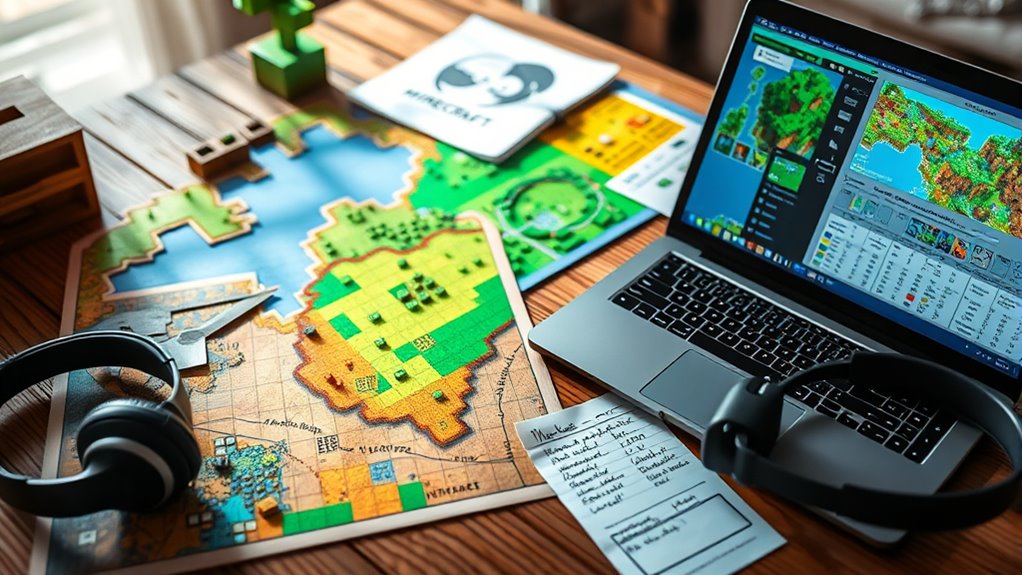
Uncovering your Minecraft seed can be easy when you use the right tools and techniques. Specialized programs like Amidst or MineAtlas help you visualize worlds based on seed data, making it simpler to spot specific features.
These tools let you compare seeds side-by-side, helping you find one that matches your preferred landscape or structures. You can input known seed numbers or generate random ones to explore different worlds quickly.
Community forums and seed databases are also great resources. They offer shared seeds, screenshots, and coordinates that can guide your search. These help you narrow down options faster, saving you time and effort.
How to Use In-Game Commands to Find Your Minecraft Seed
If you want to find your Minecraft seed quickly, the easiest way is to use in-game commands. Just type `/seed` in the chat, and it’ll show you the seed number right there on the screen. It’s super simple and works in most game modes.
Once you’ve got that seed number, you can look up what it means for your world or even share it with friends. It’s pretty handy because this method also works on multiplayer servers, making it easy to recreate or explore the same world across different players.
Accessing the Seed Command
Accessing your Minecraft seed through in-game commands is simple and quick. Just type the right command in the chat window to see your seed.
To find out your seed, open the chat with the “/” key, then type `/seed` and hit Enter. Instantly, your seed number will appear on the screen.
Knowing this command makes it easy to get your seed anytime you need it. It works in both single-player and multiplayer worlds, so you can explore seed details whenever you want.
Mastering this simple command helps you plan adventures or recreate worlds with accuracy.
Interpreting the Seed Number
Once you’ve used the `/seed` command to reveal your seed number, understanding what that number means can help you better interpret your world’s layout. The seed’s significance lies in how it determines the terrain and structures generated in your world. Keep in mind that small changes in the seed can produce very different landscapes, even if the numbers are similar.
Some seeds are more popular because they create interesting features, while others produce unique worlds. By recognizing the seed number’s role, you can compare worlds or even replicate specific landscapes. Knowing how to interpret your seed gives you insight into the patterns shaping your Minecraft universe, making it easier to find or recreate the worlds you love.
Using Seeds in Multiplayer
In multiplayer worlds, sharing and finding each other’s seeds can really boost your gameplay by letting you explore similar landscapes or recreate specific environments.
Using in-game commands to reveal your seed is a key part of multiplayer strategies and connecting with seed communities.
To find your seed, just type `/seed` in the chat window, and your seed number will pop up on the screen. It’s super easy to share with friends or check out new servers.
You can also use commands like `/difficulty` or `/worldborder` to get more details about your world’s settings.
Joining seed communities is a great way to learn new tricks for finding and using seeds effectively, which can make your multiplayer adventures even more exciting.
This simple step opens up tons of possibilities in your shared Minecraft worlds.
Extracting Seeds From World Files and Backups
When you open your world files or backups, you can often find the seed embedded within the data. Extracting the seed becomes easier with a bit of knowledge about how Minecraft stores world info.
First, locate your world folder, then open the level.dat file. Using an NBT editor, you can view the data directly, and the seed is usually listed under the “Data” section.
Backup analysis can also help reveal the seed if you’ve saved multiple versions of your world. Sometimes, the seed is stored in the backup’s metadata, so you can access it without even launching the game.
Tools like Universal Minecraft Editor or NBTExplorer make this process quick and simple. They let you find and extract the seed easily.
This method is handy if you want to recover a seed from an existing world without using in-game commands. With a little digging into your world files, seed extraction becomes a straightforward process.
How to Recreate Biomes and Structures Using Seeds
If you want to recreate the same biome layouts and structures, you can do so by using specific seed numbers. This makes your worlds a lot more predictable because you know what to expect in each seed. It’s pretty handy if you’re trying to build in a certain style or want to find particular features easily.
Now, if you’re after those rare structures, you might need to tweak your seed settings a bit or try out different seed values. Playing around with these options can help you generate worlds that have the exact features and layouts you’re looking for. Understanding how to adjust these settings can make your world-building experience much more fun and tailored to your preferences.
Reproducing Biome Layouts
Reproducing biome layouts using seeds lets players recreate specific worlds with familiar terrain features. By understanding how terrain is generated, you can predict how biomes will appear in a seed, helping you create diverse and interesting landscapes.
To do this well, focus on analyzing seed data to spot biome diversity and placement patterns. Using tools like seed viewers allows you to visualize biome distributions before actually exploring the world.
Experimenting with different seeds helps you match your preferred terrain layout. This approach makes it easier to craft worlds with the right mix of biomes, whether you want plains, forests, or deserts.
Understanding how terrain generation affects biome arrangement is key to reproducing or finding familiar worlds accurately.
Locating Rare Structures
Have you ever wondered how to find rare structures like temples, villages, or bastions in a specific world seed? By understanding where structures are placed and how rare biomes generate, you can recreate worlds with these features intact.
Seeds influence where structures spawn, making some worlds more likely to contain these rare sites. Using seed data, you can predict their locations and plan your exploration effectively.
Focus on how structure placement varies with biome types and seed numbers. For example, deserts often have temples, plains are common for villages, and the Nether features bastions.
In oceans, you’ll find shipwrecks and ocean monuments. Knowing these patterns helps you locate rare structures more efficiently and makes exploring your world much more fun.
Adjusting Seed Settings
Adjusting seed settings lets you recreate specific biomes and structures in your world, giving you more control over your exploration.
By tweaking seed generation, you can influence biome variation and ensure certain features appear exactly as you want.
This is especially handy if you want consistent results or are trying to replicate a particular environment.
To modify seed settings effectively, consider inputting specific seed numbers known for desired biome layouts.
You can also use seed maps online to find seeds with the ideal biome variation.
Experimenting with seed tweaks can generate unique structures or rare biomes.
These adjustments help you craft a world tailored to your preferences, making exploration more predictable and fun.
Whether you’re after dense forests or sprawling deserts, seed settings are your tool for precise world customization.
Troubleshooting Common Issues When Finding Your Seed
Revealing your Minecraft seed can sometimes be tricky because of common issues like incorrect commands or outdated game versions. If you’re confused about your seed, start by checking for server problems or version mismatches. These can stop you from accurately finding the seed.
Here’s a visual to help you troubleshoot:
| Issue | Cause | Solution |
|---|---|---|
| Seed not displaying | Using the wrong command or an outdated version | Update your game or verify command syntax |
| Seed incorrect | Server issues or a corrupted save | Restart the server or reload the world |
| No seed info | Seed is hidden or turned off in settings | Enable seed display in game settings |
Tips for troubleshooting include checking your game version, making sure your commands are correct, and confirming your server status. Staying precise and methodical will help you avoid frustration and quickly find your seed.
Tips for Sharing and Using Seeds Responsibly
Sharing and using Minecraft seeds responsibly helps everyone have a fair and fun experience. Good seed etiquette keeps the community respectful and prevents conflicts or disappointment.
When sharing seeds, always give credit if someone else created or found it. Don’t claim it as your own. Respect others’ privacy by not sharing seeds that could lead to unwanted interactions or harassment.
To promote respect, try sharing seeds privately with friends or trusted players instead of posting them publicly. Avoid changing seeds in ways that might disrupt gameplay for others.
Be honest about where the seed came from and if it has any special conditions or requirements. This way, everyone can enjoy the game without surprises.
Community Resources and Seed Databases for Minecraft
Community resources and seed databases are awesome tools that help players find exciting worlds and team up more easily. They connect you with a bigger Minecraft community, making seed sharing simple and quick.
Community forums are great places for players to swap seed codes, chat about strategies, and show off their discoveries. Seed databases gather popular and rare seeds, often with detailed info about biomes, structures, and resources.
These resources save you time by providing tested seeds, so you start with promising worlds. Using these platforms, you can find seeds that match your preferences—whether you want huge jungles or endless deserts.
The table below highlights some key community resources:
| Resource Type | Description |
|---|---|
| Community Forums | Spaces for seed sharing, discussions, and tips |
| Seed Databases | Collections of curated, high-quality seeds |
| Social Media Groups | Platforms for real-time seed exchange and inspiration |
Customizing Your Minecraft Experience With Different Seeds
Once you’ve checked out seed databases and community forums, you can start customizing your Minecraft world based on your playstyle and preferences. Exploring different seed variations lets you find landscapes, resource spots, or challenges that suit you.
This way, you can create a world that feels unique and exciting every time. Whether it’s rare biomes, interesting structures, or resource-rich areas, customizing your seed makes your gameplay more fun and engaging.
You might look for seeds with rare biomes or structures to explore, or ones that have plenty of resources for efficient mining. Unique terrain formations can also inspire creative building projects and make your world stand out.
Frequently Asked Questions
Can I Find Seeds for Custom or Modified Minecraft Versions?
Yes, you can find seeds for custom or modified Minecraft versions, but it depends on the mod or seed investigation tools you use.
Some seed generators work with certain mods, letting you explore specific worlds in your modified version.
However, compatibility varies, so it’s important to check if the seed tool supports your custom version.
Trying out different tools can help you discover unique seeds tailored to your modded gameplay.
Are There Legal Concerns When Sharing Seed Information Publicly?
Yes, there are legal concerns with seed sharing, especially if it involves proprietary or copyrighted content.
You should consider ethical considerations like respecting the creators’ rights and privacy.
When sharing seed information publicly, make sure it doesn’t infringe on any rules or agreements.
Being transparent and respectful in seed sharing helps keep the community positive and avoids legal issues.
How Do Seeds Affect Multiplayer Server Performance and Stability?
Seeds play a key role in multiplayer server performance and stability by influencing seed generation and world complexity. If you pick a seed that creates a very detailed or huge world, it can slow things down.
To keep things running smoothly, it’s best to choose seeds that generate manageable, balanced environments. Picking the right seed helps improve performance, cut down on lag, and make your multiplayer experience smooth and fun, even as your server expands.
Can Seed Discovery Vary Between Different Minecraft Game Editions?
Yes, seed identification can vary between different Minecraft game editions because each one has its own seed generation algorithms.
For example, Java and Bedrock editions use different methods for generating seeds, which impacts how you find and interpret them.
You might notice that seeds act differently or require different techniques to reveal, so it’s important to understand how each edition handles seed generation.
Knowing this helps you better investigate and share seeds across the various versions of Minecraft.
What Are the Best Practices for Backing up Seed Data Securely?
Picture your seed data as a treasure chest, vulnerable without proper protection. To back it up securely, use seed storage solutions like encrypted drives or cloud services.
Seed encryption acts as a lock, safeguarding your data from unauthorized access. Regularly update and verify your backups to make sure your Minecraft worlds stay safe, accessible, and ready to restore whenever needed.
Protect your digital treasure with these best practices.
Conclusion
Now that you know how to reveal your Minecraft seed, imagine the endless worlds waiting to be explored. Every seed holds a secret, a hidden landscape just waiting to be discovered.
Will you stumble upon a rare biome or an incredible spawn point? The next step is yours—dive into the game, unveil the mysteries, and see what surprises your unique seed has in store.
Your next great adventure is just a seed away. Unlock the mystery of finding a Minecraft server seed and start exploring!