7 Simple Steps to Do You Pick Sunflower Seeds Like a Pro
Many people love enjoying sunflower seeds, but mastering the art of picking them like a pro can be tricky. You’re not alone—finding fresh, clean seeds and cracking them just right takes practice. With a few simple tips, you’ll be on your way to seed-picking mastery.
To pick sunflower seeds like a pro, start by selecting fresh, uniform, and clean seeds with a shiny surface and subtle aroma.
Prepare your workspace with organized tools and a clean area.
Use gentle pressure or tools to crack the shells carefully, keeping shells in a nearby container for quick disposal. If shells stick or break unevenly, try chilling the seeds or adjusting your technique.
Keep practicing these steps, and you’ll master the art of seed picking with ease. Soon, you’ll enjoy your sunflower seeds without the hassle.
Key Takeaways
- Select plump, shiny, and uniform sunflower seeds that are free of mold or damage.
- Organize your tools and workspace so shelling is quick and clean.
- Use gentle, controlled pressure to crack the shells without crushing the seeds.
- Dispose of shells immediately to keep your area tidy.
- Handle the seeds carefully and make sure they’re fully mature for easier shelling.
Choose and Recognize Quality Sunflower Seeds
When selecting sunflower seeds, it’s important to look for fresh, wholesome options to get the best flavor and nutrition. Recognizing quality starts with understanding seed varieties, since some are better for snacking, planting, or oil extraction.
Look for seeds that appear plump, firm, and clean—free from mold, discoloration, or damage. These signs can indicate poor harvesting techniques or that the seeds are old. Fresh seeds often have a shiny surface and a subtle aroma.
If you’re buying in bulk, check the batch for uniformity in size and appearance. Knowing how seeds are harvested helps you identify quality because careful harvesting usually means fresher seeds with less damage.
Seeds harvested with care tend to avoid cracks and empty shells, which ensures you get the best flavor and nutritional value. By paying attention to seed varieties and harvesting methods, you can pick only the finest sunflower seeds for your needs.
Prepare Your Seeds and Setup for Shelling
Before you start shelling, gather all your seeds and set up a clean, well-lit workspace. Proper seed prep and a good setup make the process much easier and faster.
Begin by sorting the seeds, removing any debris or damaged ones. This ensures you’re only working with quality seeds.
Arrange your tools—like a bowl for shells, a tray for seeds, and a cloth for catching debris—in an organized way.
A tidy shelling area helps keep things neat and speeds up your work.
| Step | Action | Tips |
|---|---|---|
| Gather seeds | Collect all sunflower seeds | Check for quality and damage |
| Clean workspace | Clear surface and lighting | Bright light helps see shells better |
| Arrange tools | Place bowls, trays, cloth | Keep everything within reach |
| Sort seeds | Remove debris and bad seeds | Prepare for shelling process |
This setup gets you ready for a smooth, efficient shelling session.
Learn How to Crack Sunflower Seeds Tidy and Easy
Cracking sunflower seeds neatly and easily starts with using the right technique and tools. Your shelling techniques should focus on gentle, controlled pressure to avoid crushing the seed inside.
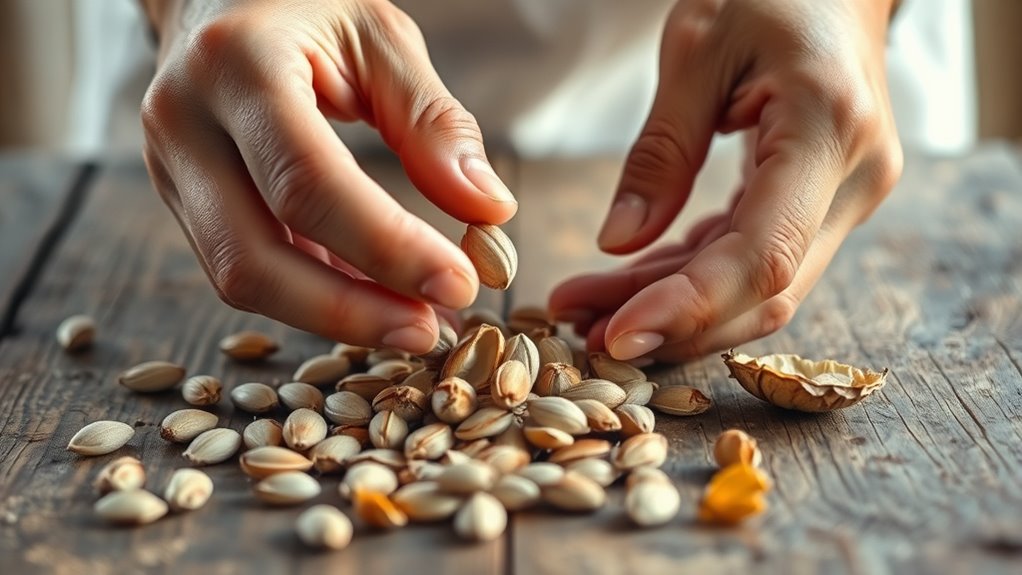
A common method is to hold the seed between your thumb and forefinger, then apply light pressure until the shell cracks open. Using your teeth can be quick, but it often leads to broken shells and messy hands, so a nutcracker or small pliers can help.
Hold the seed gently between your thumb and forefinger, then apply light pressure to crack the shell open smoothly.
Keep in mind, sunflower varieties vary in shell thickness. Thicker shells require a bit more force, while thinner shells are easier to crack. Experiment with different sunflower varieties to find the ones that suit your shelling style best.
Consistent, careful technique guarantees you crack open seeds tidily, minimizing shell fragments and mess. With practice, you’ll develop a smooth, efficient process, making shelling sunflower seeds a simple, stress-free task.
Keep Shells in Check: Discarding Efficiently
Keeping your shells organized as you go guarantees a cleaner, more efficient process. To keep your workspace tidy, focus on shell disposal right after cracking each seed. Use a small bowl or trash bin nearby to discard shells immediately, so they don’t clutter your surface.
Efficient seed cleanup involves regularly clearing away shells, helping you stay focused and avoiding mess buildup. Try separating shells from your seed pile by using a designated container or tray for discarded shells. This keeps things organized and speeds up your work.
Remember, discarding shells promptly not only keeps your area neat but also reduces the risk of slipping or spilling. Consistent shell disposal makes the entire seed-eating experience more enjoyable and less stressful.
Enjoy Your Sunflower Seeds and Maximize Flavor
Once you’ve cleared your workspace and organized your shells, it’s time to really enjoy your sunflower seeds and savor their flavor. To make the experience even better, try experimenting with different recipes or flavor techniques.
You can sprinkle a little sea salt, add some spice, or even toss them with a sweet glaze for variety. These small tweaks can make a big difference in flavor.
| Flavor Tips | Tasting Experience |
|---|---|
| Add spices or salt | Boosts flavor and enjoyment |
| Roast for crunchiness | Improves texture and taste |
| Mix with herbs | Creates unique flavor profiles |
These simple adjustments help you appreciate the natural nutty taste and turn plain seeds into a tasty treat. Remember, balancing seasoning and trying new recipes is the key to maximizing flavor.
Troubleshoot Common Shelling Problems
Even with careful preparation, shelling sunflower seeds can sometimes be tricky. If you find shells stubborn or hard to crack, revisit your shelling techniques.
Using the right tools, like a nutcracker or just your fingers, can make a big difference. Applying too much force risks crushing the seed, so gentle pressure often works better.
If seeds are sticking or breaking unevenly, try chilling them in the fridge for a bit. It can make shells easier to remove.
When seeds break or get damaged, it affects seed preservation. So, handling them carefully is really important. Also, make sure you’re shelling at the right temperature and humidity levels to prevent mold or spoilage.
If shells are too tough, check if the seeds are fully mature. Immature seeds are harder to shell.
With patience and proper techniques, you’ll avoid common problems and keep your sunflower seeds in great shape for future use.
Practice and Improve Your Seed Picking Skills
If you want to get better at picking seeds, the key is to practice regularly and challenge yourself to be precise and quick. It’s all about paying attention to the little details—like the size of the seeds, how strong their shells are, and how fresh they look.
The more you practice and really analyze what you’re picking, the faster and more accurately you’ll be able to select the best sunflower seeds. Keep at it, and you’ll see your skills improve over time!
Consistent Practice Techniques
Practicing your seed-picking skills regularly is the key to becoming more efficient and precise. Consistent practice helps improve your hand coordination, which is essential for quick, accurate seed picking.
Set aside dedicated time each day to focus solely on this skill, gradually increasing your speed without sacrificing accuracy. Use the same technique repeatedly to build muscle memory, making the process feel more natural.
Keep your hand movements steady and controlled, paying attention to how your fingers grasp and release the seeds. Track your progress by timing yourself and aiming for steady improvement.
Over time, you’ll notice a smoother rhythm and greater confidence in your seed-picking ability, turning a simple task into a skill you can perform with ease.
Analyzing Seed Quality
As you practice your seed-picking skills regularly, the next step is learning to analyze seed quality. Focus on seed genetics, which affect size, shell strength, and flavor.
Healthy, high-quality seeds usually have vibrant color and firm shells. Look for seeds that are uniform in size and have minimal imperfections.
| Factor | What to Look For | Why It Matters |
|---|---|---|
| Seed Color | Bright, consistent hue | Shows freshness and good quality |
| Shell Integrity | No cracks or dents | Helps prevent spoilage and enhances flavor |
| Size Uniformity | Similar size across seeds | Ensures even roasting and flavor |
| Texture | Firm and smooth | Indicates seed maturity and genetics |
Frequently Asked Questions
What Are the Health Benefits of Eating Sunflower Seeds?
Eating sunflower seeds offers great health benefits. You get a boost of nutritional value, including healthy fats, protein, and fiber, which support digestion.
These seeds promote heart health by reducing bad cholesterol levels and providing magnesium, which helps regulate blood pressure. Incorporating sunflower seeds into your diet can improve your overall wellness.
They also boost energy and support cardiovascular health, making them a smart, tasty snack choice.
How Long Do Sunflower Seeds Stay Fresh?
Sunflower seeds can stay fresh for up to 6-12 months if you store them properly. To keep them fresh longer, store your sunflower seeds in an airtight container in a cool, dark place.
Always check for signs of spoilage, like a rancid smell or mold, before eating. Following these tips will help your sunflower seeds stay crunchy and delicious for as long as possible.
Can Sunflower Seeds Be Roasted at Home?
Yes, you can easily roast sunflower seeds at home using simple techniques. Start by preheating your oven to around 350°F.
Spread the seeds in a single layer on a baking sheet. Roast for 10-15 minutes, stirring occasionally, until they’re golden and fragrant.
This method gives you fresh, tasty sunflower seeds, and you can customize the seasoning for your perfect snack.
Are There Any Safety Tips for Shelling Sunflower Seeds?
Think of shelling sunflower seeds as a dance with a vintage twist—you want to stay safe while enjoying the rhythm. Always handle shelled seeds carefully to avoid pinched fingers, and work on a stable surface.
Keep your seeds and shells separate, and store shelled seeds in an airtight container to prevent spoilage. Use a gentle touch and avoid rushing to prevent injuries, making sure your seed experience stays safe and fun.
What Are Alternative Ways to Enjoy Sunflower Seeds?
You can enjoy sunflower seeds in many creative snacks and recipes. Try adding them to salads, yogurt, or trail mixes for some extra crunch.
Make sunflower seed butter as a peanut butter alternative, or sprinkle them on oatmeal or baked goods. Roasting them with spices creates a flavorful snack.
These options let you enjoy sunflower seeds in versatile ways, boosting nutrition and taste in your daily meals.
Conclusion
Now that you’ve mastered these simple steps, you can enjoy sunflower seeds like a pro, turning a small snack into a satisfying ritual. With a bit of practice, shelling will become as effortless as a gentle breeze, and you’ll savor every crunchy bite.
Remember, patience and a steady hand are your best friends on this journey. Soon, you’ll be sharing your newfound skills and feeling proud and connected—like a sunflower reaching for the sun, confident and bright.
By mastering how to do you pick sunflower seeds properly, you’ll enjoy this tasty treat even more. Keep practicing, and you’ll be a sunflower seed shelling expert in no time!