7 Simple Steps to Grow Pumpkins From Seeds
Growing your own pumpkins from seeds can be a rewarding experience, but many people struggle with getting healthy plants to thrive. If you’ve ever planted seeds only to be disappointed by poor germination or weak growth, you’re not alone.
Luckily, with a few simple steps, you can grow big, beautiful pumpkins that impress everyone.
To grow pumpkins from seeds, start by choosing healthy seeds and soaking them for better germination.
Select a sunny location with well-draining, nutrient-rich soil. Plant the seeds 1-2 inches deep, spacing them properly after the last frost when the soil is warm.
Water consistently, fertilize appropriately, and mulch to retain moisture. Support heavy fruits with slings and good airflow.
Keep an eye out for pests and diseases. With proper care, your pumpkins will flourish. Learn more to grow even bigger and better.
Key Takeaways
- Select healthy, mature seeds and soak or scarify them to improve germination.
- Pick a sunny spot with well-drained, nutrient-rich soil at pH 6.0-7.0.
- Plant seeds 1-2 inches deep, spaced properly, once the soil warms to at least 70°F.
- Water regularly, fertilize as needed, and support vines with trellises and fruit slings.
- Keep an eye out for pests and diseases. Harvest pumpkins when they’re fully colored and firm, then cure and store them properly.
How to Prepare Pumpkin Seeds for Planting
Before planting pumpkin seeds, you need to prepare them properly to guarantee good germination. Start with seed selection—choose healthy, mature seeds from a reliable source, avoiding those that are cracked or damaged.
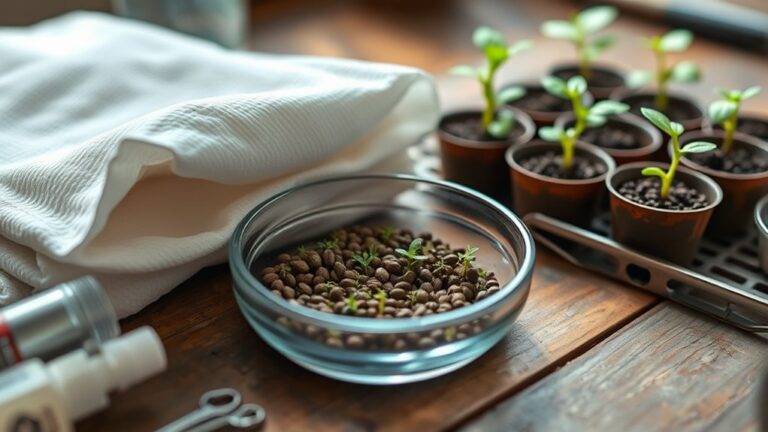
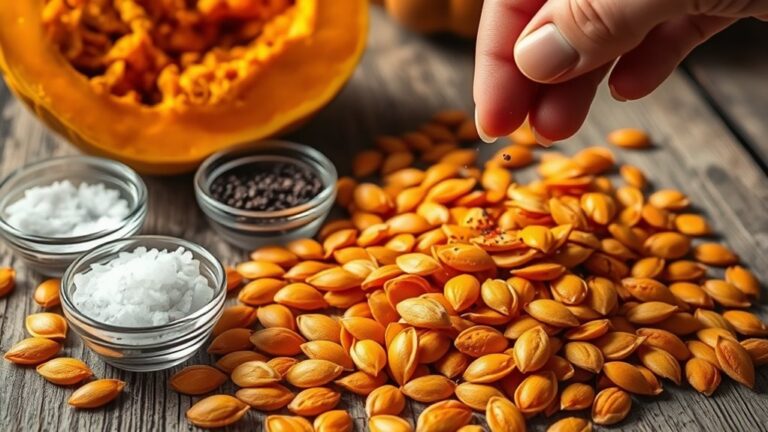
Proper seed soaking is an essential step; it helps soften the seed coat and speeds up germination. To do this, place your seeds in a bowl of warm water for about 12-24 hours.
Soak seeds in warm water for 12-24 hours to soften the coat and promote faster germination.
You’ll notice some seeds sinking, which indicates they’re viable, while those floating are less likely to sprout. After soaking, pat the seeds dry with a paper towel to prevent rotting.
If you want to give your seeds an extra boost, you can also lightly scarify the seed coat with a file or knife before soaking. This makes it easier for the seed to sprout.
Proper seed selection and soaking are simple steps that set the foundation for healthy pumpkin plants.
Choosing the Best Location and Soil for Pumpkins
If you want to grow healthy pumpkins, start by choosing a sunny spot in your yard that gets at least six hours of direct sunlight each day. It’s really important because pumpkins love the sun and need plenty of light to grow big and sweet.
Next, you’ll want to prepare the soil. Mix in some compost to give it a boost of nutrients, and make sure the soil drains well. You don’t want your pumpkin roots sitting in water, so good drainage is key. Keeping the soil fertile and well-drained will give your pumpkins the best chance to thrive and produce lots of great fruit.
Sunlight Requirements
Pumpkins thrive best when they get plenty of direct sunlight, which is key for healthy growth and lots of fruit. Aim for a spot that gets at least 6 to 8 hours of sunlight each day.
Make sure the sunlight is strong enough to warm the soil and help the plants do photosynthesis. Avoid shady areas or places with uneven sunlight, as inconsistent exposure can slow down growth.
Consistent sunlight helps the vines grow sturdy and produces bigger pumpkins. If sunlight is limited, try moving your plants or trimming nearby plants that cast shadows.
Getting enough sunlight not only speeds up growth but also improves the quality of your pumpkins. This makes your pumpkin patch more productive and rewarding.
Soil Preparation Tips
Choosing the right location and soil is essential for healthy pumpkin growth. Pick a sunny spot with plenty of space for your vines to spread out.
Before planting, prepare the soil by mixing in compost. This helps improve soil structure and supplies essential nutrients, which encourages strong root growth.
Check the soil pH; pumpkins do best in slightly acidic to neutral soil, around 6.0 to 7.0. Adjust the pH with lime or sulfur if needed.
Avoid compacted or rocky areas because they can hinder root development. Proper soil prep creates the perfect environment for your pumpkins to thrive.
With the right location and soil, you’ll give your pumpkins the best start for a healthy and abundant harvest.
Drainage and Fertility
Ensuring proper drainage and soil fertility is key for healthy pumpkin growth. Pick a spot with good drainage, like slightly raised ground or amended soil with organic matter, to prevent waterlogging. Stay away from areas where water tends to stand, as this can cause root rot.
Focus on making the soil rich by adding compost or well-rotted manure to supply essential nutrients. Pumpkins do best in nutrient-rich, well-draining soil that keeps moisture in without becoming waterlogged.
Test your soil’s pH—aim for between 6.0 and 7.0. Incorporate organic amendments to boost fertility and help with drainage. Well-prepared soil gives your pumpkin seeds the perfect environment to develop strong roots and vigorous vines.
When and How to Plant Pumpkin Seeds for Best Results
Timing is really important when you’re planting pumpkin seeds. It’s best to wait until there’s no more danger of frost, and the soil has warmed up to at least 70°F. If you plant too early, your seeds might not grow well because the conditions aren’t just right yet.
When you’re ready to plant, make sure you space your seeds about 1 to 2 inches apart. Plant them about 1 to 2 inches deep—this helps them get established properly. Following these simple tips will give your pumpkins the best chance to grow strong and healthy, leading to a bountiful harvest.
Optimal Planting Time
Plant pumpkin seeds outdoors when the soil has warmed to at least 60°F, typically two to three weeks after the last frost date in your area. This timing helps ensure good germination and healthy growth.
Think about your local climate and pick from the best varieties suited for your region. Early planting might lead to poor germination if the soil is too cold, while late planting shortens your harvest window.
Check the table below to find the best planting window for different regions:
| Region | Ideal Planting Time |
|---|---|
| Northern zones | 2-3 weeks after last frost |
| Southern zones | 1-2 weeks after last frost |
| Temperate areas | When soil reaches 60°F consistently |
Timing is essential for a successful pumpkin crop!
Proper Planting Techniques
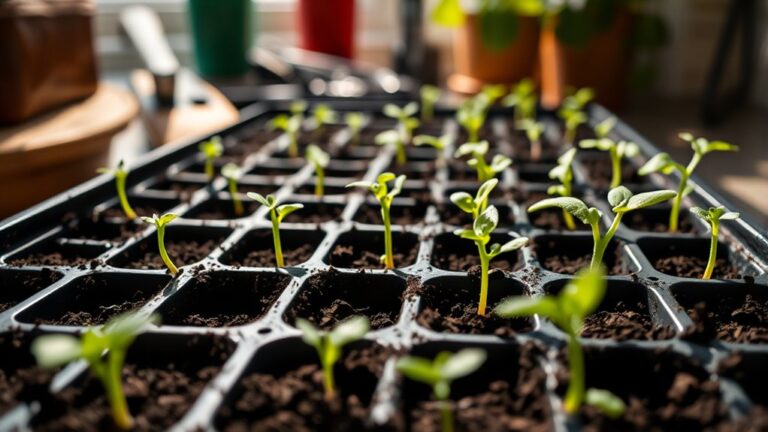
To give your pumpkin seeds the best start, plant them directly into prepared soil once the conditions are right. Choose a seed depth of about 1 to 2 inches to ensure proper germination.
Use planting patterns that give each vine enough space to grow. Typically, space seeds 36 to 48 inches apart in rows or mounds. This spacing helps prevent overcrowding and promotes healthy growth.
Plant your seeds with the pointed end down, covering them lightly with soil. Water thoroughly after planting to keep the soil moist but not waterlogged.
Keep an eye on soil temperature; pumpkins thrive when the ground is warm. Following these proper planting techniques will give your pumpkins a strong start and set the stage for a productive harvest.
How to Water, Fertilize, and Mulch Your Pumpkin Plants
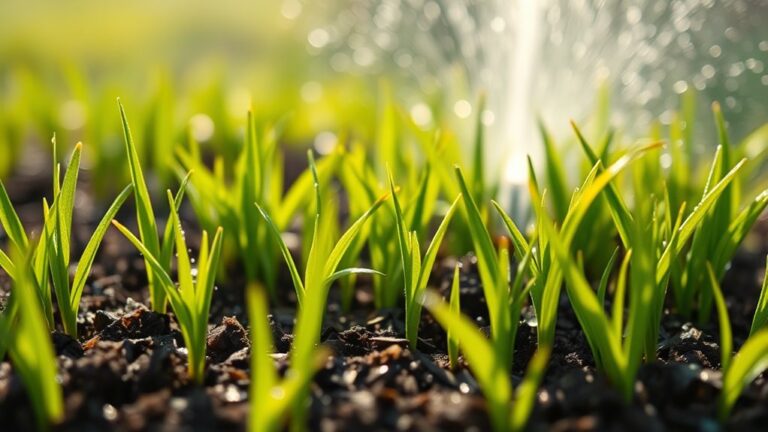
Watering, fertilizing, and mulching are key to keeping your pumpkin plants healthy and productive. Keep the soil evenly moist but not waterlogged to promote steady growth and retain moisture.
Use the right fertilizers—start with nitrogen-rich ones early on, then switch to phosphorus for better fruit development. Mulching helps suppress weeds, conserve soil moisture, and keep soil temperature steady, which is especially helpful seasonally.
Start with nitrogen-rich fertilizers early, then switch to phosphorus to boost fruit growth and health.
Proper spacing between plants improves air flow, reducing pest problems and disease risk. Keep an eye on your plants regularly to catch any signs of stress or nutrient deficiencies early.
During peak season, adjust how often you water and fertilize based on the weather, especially during dry spells or heavy rain. Combining these practices will help your pumpkin plants stay vigorous, healthy, and ready for a big harvest.
Supporting Your Pumpkins for Bigger Fruits
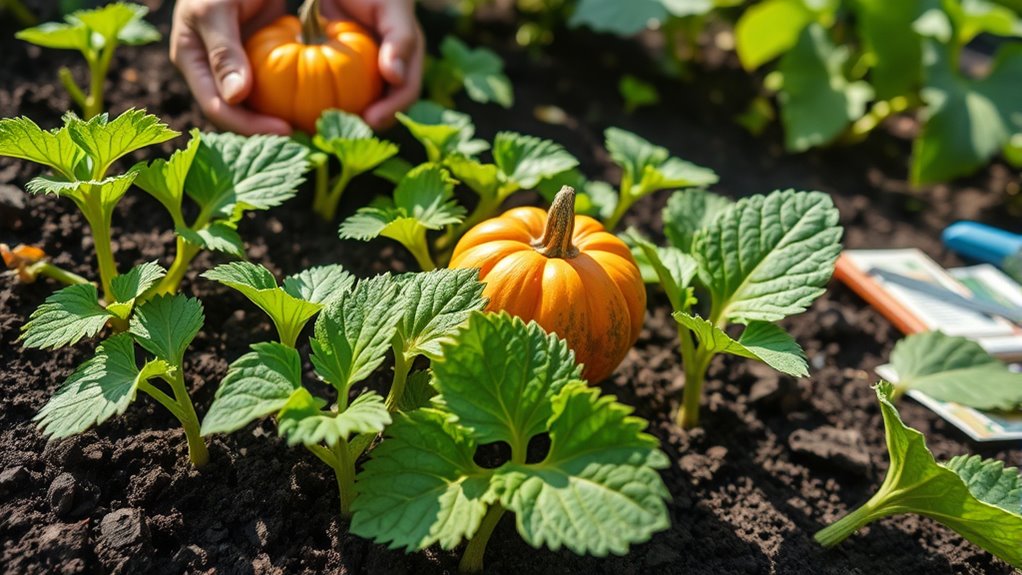
As your pumpkin plants grow and start to develop their first fruits, providing proper support becomes essential for larger, healthier pumpkins. Using pumpkin trellising techniques helps keep fruits off the ground, which reduces rot and pest damage.
You can create a simple trellis using sturdy stakes and strong netting or wire, guiding the vines upward as they grow. For heavier pumpkins, consider fruit support methods like slings made from old cloth or mesh bags, which gently cradle the fruit and prevent strain on the vine.
Securing these supports with soft ties guarantees the pumpkins stay stable without damaging the stems. Proper support not only improves air circulation and sunlight exposure but also encourages bigger, more uniform pumpkins.
Regularly check your trellising and fruit supports, adjusting as needed to accommodate growth. Implementing these pumpkin trellising techniques and fruit support methods guarantees your pumpkins reach their full size and health potential.
Troubleshooting Common Pumpkin Growing Problems
Growing pumpkins can sometimes come with unexpected challenges, like pests, diseases, or poor fruit development. To handle pest control, regularly inspect your plants for bugs such as squash bugs or vine borers, and remove them early. Use organic insecticides or introduce beneficial insects like ladybugs for natural pest management.
Regularly inspect for pests and use natural methods like ladybugs for healthy pumpkin growth.
Disease management is just as crucial. Prevent common issues like powdery mildew by ensuring good air circulation and avoiding overhead watering. If you notice spots or mold, treat affected areas with fungicide and remove infected leaves promptly.
Poor fruit development might be caused by inconsistent watering or nutrient deficiencies. Make sure your plants receive consistent moisture and fertilize with a balanced, slow-release fertilizer. Proper spacing and pruning can also improve airflow and reduce disease risk.
Addressing these problems early keeps your pumpkins healthy and productive, making your gardening efforts more successful.
When and How to Harvest and Store Your Pumpkins
Knowing the right time to harvest your pumpkins is key to making sure they taste great and last long. You’ll want to look at the pumpkin’s color and the condition of the vine. Wait until the skin is a deep, uniform color and feels tough enough to resist puncture.
The vine will start to die back when the pumpkin is ripe. Use pruning shears to cut the pumpkin from the vine, leaving a few inches of stem attached. This helps prevent damage and extends storage life.
After harvesting, proper storage is important to keep your pumpkins fresh. Cure them in a warm, dry place for about 10 days to strengthen the skin further.
Once cured, store pumpkins in a cool, dark, and well-ventilated spot at 50-55°F (10-13°C). Avoid stacking them directly on each other to prevent rotting.
Following these tips will help your pumpkins stay fresh, flavorful, and ready for months of enjoyment.
Frequently Asked Questions
What Are Some Common Pests That Target Pumpkin Plants?
You’ll want to watch for common pests like squash bugs, cucumber beetles, and aphids that target pumpkin plants. Recognizing these pests early makes a big difference.
Proper pest identification helps you catch problems before they get worse. Use integrated pest management techniques, like removing affected leaves and encouraging beneficial insects.
If needed, apply organic insecticides to keep pests under control. Regular monitoring is key to preventing infestations and keeping your pumpkins healthy and thriving throughout the growing season.
How Can I Naturally Deter Pests From My Pumpkins?
To naturally deter pests from your pumpkins, try planting marigolds or nasturtiums nearby. These flowers help repel many insects and can be a colorful addition to your garden.
You can also set up pest traps around your garden to catch unwanted visitors early. These traps help keep pests at bay before they cause too much damage.
Using these methods together creates an environment that’s less inviting for pests, reducing the need for chemicals. Regularly check your plants and remove any pests or damaged leaves as soon as you see them.
This simple routine will help keep your pumpkins healthy and thriving throughout the season.
Can Pumpkins Be Grown in Containers or Only in Ground?
Did you know you can grow pumpkins in containers? If you’re short on space or want easy access, container gardening is a great option.
Just make sure your container is large enough—at least 5 gallons—and has good drainage. Use rich, well-draining soil with the right nutrients.
With proper soil and a sunny spot, your pumpkins will thrive. You don’t need a huge garden to enjoy these vibrant fruits.
How Long Does It Take for Pumpkins to Mature After Planting?
Pumpkins typically take about 75 to 100 days to mature after planting. During this time, you’ll see seed germination within a week or two, followed by growth stages like vine development and flowering.
Keep in mind, environmental factors can affect this timing. Providing consistent watering, plenty of sunlight, and proper nutrients helps everything go smoothly.
This way, your pumpkins will grow healthy and be ready for harvest when they’re mature.
What Are Some Organic Fertilizers Suitable for Pumpkin Plants?
Think of your pumpkin plants like a well-orchestrated symphony, needing the right compost options and nutrient timing. Organic fertilizers such as composted manure, fish emulsion, and seaweed extract work beautifully, providing essential nutrients naturally.
Apply them at key growth stages to boost healthy development and fruit production. Regular feeding guarantees your pumpkins thrive, much like a maestro guiding a harmonious performance, leading to a bountiful harvest.
Conclusion
Now that you’ve mastered the art of pumpkin growing, you’re all set to impress your neighbors and maybe even host a fall festival. Remember, patience, good soil, and proper support are your allies. Think of it as your own personal gardening quest, like a seasoned squire in a medieval tale.
With a little effort, you’ll soon be harvesting big, beautiful pumpkins just in time for the harvest moon. Growing pumpkins from seeds can be rewarding and fun. Happy growing!