How to Identify Seeds in Carrots: Do Carrots Have Seeds?
Many gardeners and home growers often wonder about the secrets of saving their own carrot seeds. You’re not alone—figuring out if those tiny seeds are ready to harvest can be tricky.
Carrots do produce seeds, but you usually see the roots, not the seeds. When plants flower, they develop umbrella-shaped seed heads after about 3 to 4 months.
The tiny, elongated seeds are about 1 to 2 mm long, with a smooth surface and pointed tip.
To identify them, look for the dry, brown seed heads in late summer or fall.
If you want to know more about how to spot and harvest these tiny seeds, keep exploring.
Key Takeaways
- Carrots produce tiny, oval-shaped seeds that develop in umbrella-like seed heads after flowering.
- Seeds look like small, smooth, elongated grains, usually 1-2 mm long, on the seed head.
- When seeds mature, they turn brown and dry out before harvest. Look for these signs to know they’re ready.
- You’ll need to look closely because carrot seeds are very small and can be mistaken for debris.
- Usually, you’ll find seeds in the seed head that forms after the flowering stalks develop.
Do Carrots Produce Seeds?
Do carrots actually produce seeds? Yes, but not in the way you might think. Most carrots you see in stores are harvested for their roots, not for seed production.
However, if you let a carrot plant grow long enough, it will produce flowers and eventually seeds. Different carrot varieties, like Nantes or Danvers, may have slightly different seed traits, but all need the plant to fully mature before seeds form.
Let your carrot grow fully to see flowers and seeds, with variety-specific traits requiring full maturity.
When a carrot flowers, it develops a flowering stalk that produces tiny, umbrella-shaped seed heads. These seed heads hold the actual seeds, which you can collect and plant for next season.
Keep in mind, seed production takes patience because it takes several months for the plant to reach this stage. If you’re interested in growing your own carrot seeds, understanding how different varieties develop and produce seeds is key for a successful harvest.
When Do Carrots Flower and Seed?
Carrots typically flower and produce seeds after they’ve grown for about 3 to 4 months, depending on flowering conditions and variety. When the plant reaches maturity, it sends up a tall flowering stalk called a bolt, signaling seed development. The timing of flowering varies with temperature, sunlight, and soil moisture.
Warmer temperatures usually speed up flowering, while cooler conditions tend to delay it. You’ll notice small white or purple flowers forming in clusters as the plant blooms.
Here’s a quick overview:
| Stage | Time Frame | Key Indicators |
|---|---|---|
| Vegetative Growth | First 3 months | Foliage is lush and healthy |
| Flowering | 3-4 months | Bolt appears, flowers bloom |
| Seed Development | After flowering begins | Seeds mature and dry |
Understanding these stages helps you know when carrots are ready for seed collection and makes seed development stages easier to recognize.
What Do Carrot Seeds Look Like?
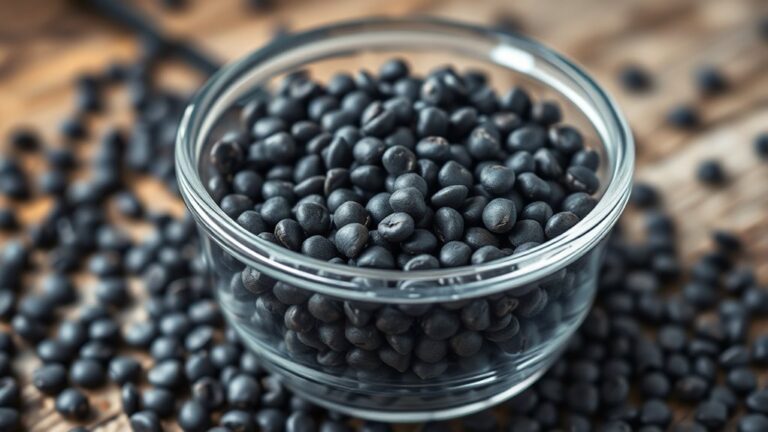
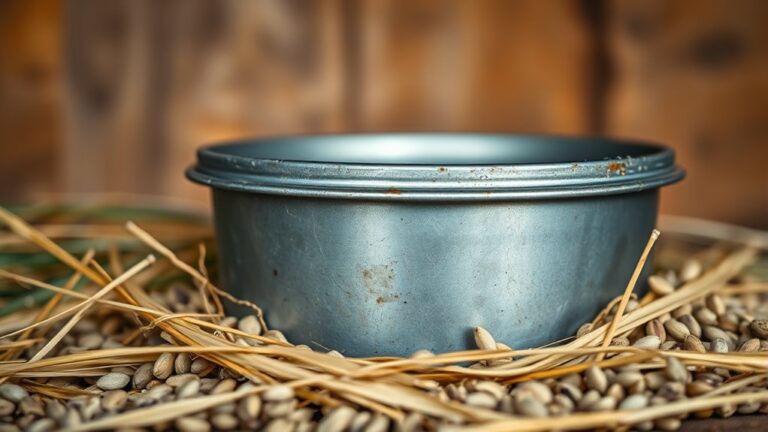
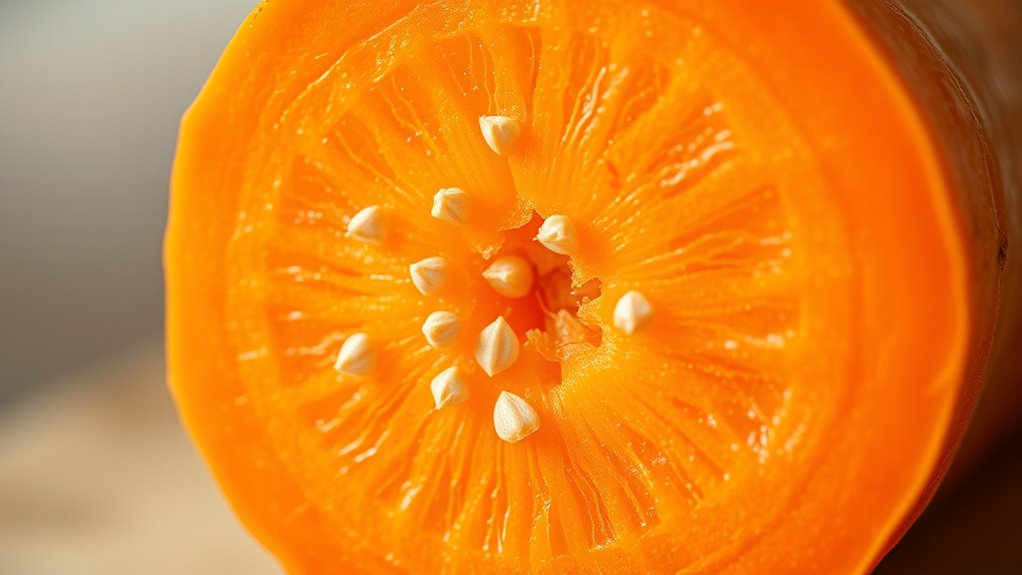
Carrot seeds are tiny, elongated, and often oval-shaped, making them quite different from the larger, crunchy root most people recognize. Their size is small—about 1 to 2 millimeters—so you might need a close look or a magnifier to see them clearly.
The carrot seed characteristics include a smooth surface and a pointed tip, which helps distinguish them from other seed types. Seed color variations are common; they can range from light brown to dark brown, and sometimes even have a slightly mottled appearance.
Sometimes, seeds may look almost black or have a grayish hue. Because of their small size and subtle color differences, identifying carrot seeds requires close inspection, especially when they’re still attached to the seed head. Recognizing these features will help you confidently identify carrot seeds in your garden or when harvesting seed pods.
How Can You Identify Carrot Seeds on the Plant?
How can you spot carrot seeds on the plant before they mature? To do this, get familiar with the structure of the carrot plant. The seeds grow in small, rounded seed pods that form after the plant flowers.
Look for the flowering stems, which are thin and stand above the leafy foliage. When the plant blooms, tiny white or yellow flowers show up, indicating seed development.
To identify seeds, closely examine the seed pods. They are usually elongated and cluster along the flowering stems. As they mature, the pods turn brown and dry out, making them easier to see.
Pay attention to seed clusters at the top of the plant—these are your clues that seed formation is happening. By watching the flowering stems and seed pods, you can tell when carrot seeds are forming before they fully ripen.
What Are the Differences Between Carrot Roots and Seeds?
Understanding the differences between carrot roots and seeds is key to growing them successfully. Carrot roots are the edible part you harvest; they’re thick, tapered, and have a firm, fleshy texture.
Their roots are usually a bright orange color, but some varieties can be purple, yellow, or white. Roots grow underground and store nutrients for the plant.
On the other hand, carrot seeds are tiny, dry, and lightweight. They have a small, hard shell that protects the embryo inside.
Seeds are produced after the plant flowers and develop in seed heads above ground. While roots are what you harvest, seeds are small and often overlooked.
But they’re important if you want to grow new plants. Recognizing these differences helps you handle them properly, whether you’re harvesting mature carrots or collecting seeds for planting.
How to Harvest and Save Carrot Seeds
When it’s time to harvest carrot seeds, you’ll want to wait until the seed heads turn brown and dry out. It’s a good sign that they’re ready! Once you see that, you can go ahead and collect them.
After you’ve gathered the seeds, let them dry completely in a well-ventilated area. This helps prevent any mold from forming and keeps the seeds healthy. Once they’re fully dry, store the seeds in an airtight container and keep it in a cool, dark spot. That way, they’ll stay viable and ready for planting next season.
Timing for Seed Collection
Timing is key when it comes to harvesting and saving carrot seeds because doing it at the wrong time can hurt seed viability and yield. Keep a close eye on the flowering stages since seed maturation happens after the flowers bloom.
Seeds are ready to harvest when the seed heads turn brown and dry, showing they’ve fully developed. During flowering, seeds develop inside these seed heads, so patience is important. Wait until the plants are in the late flowering or early seed maturation phase, usually a few weeks after flowering starts.
Avoid harvesting too early, which can mean the seeds are still immature, or too late, when the seeds might have already dispersed. Getting the timing right ensures you collect healthy, viable seeds for planting in the future.
Seed Drying Process
Once you’ve harvested the seed heads, it’s important to dry the seeds properly to keep them viable. Place the seed heads in a warm, dry, well-ventilated spot away from direct sunlight.
Let the seeds dry naturally for about one to two weeks, making sure they reach a moisture level of around 10-12%. If they’re too moist, mold or rot can develop, which reduces seed viability.
Gently shake or rub the seed heads to release the seeds, then spread them out on a clean cloth or paper towel. Check on them regularly and ensure they are fully dry before storing.
Proper drying helps maintain seed quality and makes sure your carrot seeds stay viable for future planting.
Storage Best Practices
To effectively store carrot seeds, start by selecting fully mature seeds that have dried thoroughly, reaching a moisture level of around 10-12%. Proper seed storage is key to keeping them viable and avoiding mold or rot.
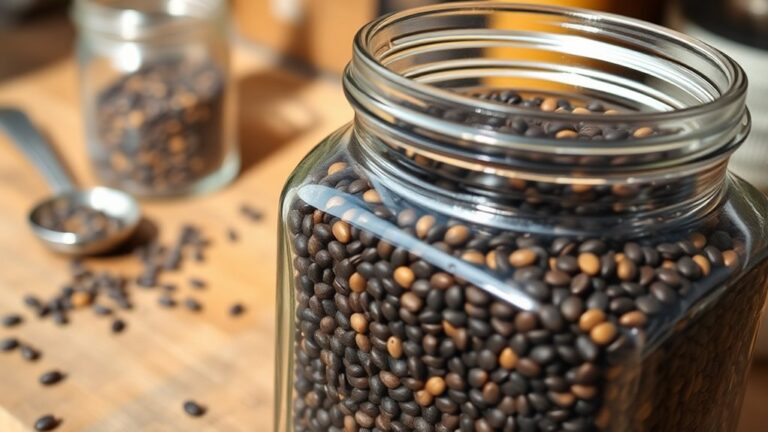
Keep the seeds in airtight containers like glass jars or sealed plastic bags to protect them from moisture and pests. Store these containers in a cool, dark, and dry place, such as a pantry or cellar, where temperatures stay steady.
Avoid exposing the seeds to direct sunlight or fluctuating temperatures, as these can reduce seed quality. Be sure to label your containers clearly with the collection date.
Why Do Some Carrots Fail to Seed?
Carrots may fail to seed for various reasons, often related to environmental conditions or improper care. One key factor is carrot genetics, which can influence seed production. If your carrots have weak or unfavorable genetics, they might not produce viable seeds.
Furthermore, environmental stressors like temperature extremes or inconsistent watering can hinder seed development.
Here are three common reasons your carrots might not seed:
- Incorrect planting time – Planting outside the ideal season disrupts flowering and seed production.
- Lack of pollination – Poor pollinator activity or absence can prevent flowers from fertilizing, stopping seed formation.
- Poor soil conditions – Nutrient-deficient or overly compacted soil can stress plants, reducing seed viability.
Understanding these factors helps you optimize conditions for successful seed production, ensuring your carrots can naturally produce seeds in future seasons.
Are Carrot Seeds Edible and Safe to Eat?
Are carrot seeds safe to eat? Yes, they are generally safe and can be enjoyed in small amounts. Carrot seeds contain some nutrients like protein, fiber, and minerals.
While they’re not usually eaten raw, you can use them in teas, tinctures, or grind them into powders for flavor. Some people like the slightly bitter, aromatic taste of carrot seed oil or crushed seeds in cooking.
Just keep in mind that carrot seeds are quite potent, so moderation is key. Always make sure you’re harvesting seeds from healthy, pesticide-free plants.
Although edible, carrot seeds aren’t common as a food ingredient. Most people use them for their aroma or medicinal qualities rather than snacking on them regularly.
If you want to add them to your diet, start with small amounts to see how your body reacts.
How to Grow Carrots From Seeds and Encourage Flowering
Growing carrots from seeds is a rewarding process that starts with choosing the right time to plant and preparing your soil properly. To encourage flowering, pick quality seeds that are pest-resistant and suited to your climate.
Make sure to prepare your soil well by loosening it to at least 12 inches deep, removing rocks and debris, and mixing in compost for better fertility and drainage. This creates ideal conditions for your carrots to grow strong.
Here’s what to do next:
Sow the seeds directly into the prepared soil, spacing them about 1 to 2 inches apart. Keep the soil moist but not waterlogged to help the seeds germinate healthily.
As your carrots grow, thin out the weaker seedlings so the stronger ones have room to develop fully. This also encourages flowering and a good harvest.
Troubleshooting: How to Get Your Carrots to Seed More Often
If you want your carrots to seed more often, the first thing to focus on is creating the right environment for them. Make sure the soil is just right—well-drained, rich, and loose—and keep the temperature in a comfortable range. This way, they’ll be happy and ready to produce seeds.
Another trick is to help with pollination. You can do this by attracting bees to your garden or even hand-pollinating the flowers yourself. That extra effort can really boost seed production. Finally, try to keep your plants stress-free by watering them properly and avoiding extreme weather conditions. When your carrots aren’t stressed, they’ll put more energy into flowering and seeding.
Optimize Growing Conditions
Guaranteeing ideal growing conditions is key to encouraging your carrots to produce seeds more often. Keeping the soil quality and moisture levels just right helps trigger seed production.
- Use well-draining, nutrient-rich soil to promote healthy growth and flowering.
- Keep moisture levels steady—avoid drought stress, which can prevent flowering.
- Provide plenty of sunlight—at least 6 hours daily—to boost flowering and seed development.
Balancing soil quality makes sure your carrots get the nutrients they need, while proper moisture prevents stress that can stop seed formation. Consistent watering creates a stable environment, encouraging your carrots to go through their flowering cycle. When conditions are just right, you’ll see your carrots producing seeds more easily, making them easier to spot and harvest later.
Improve Pollination Strategies
Even with ideal soil and moisture, poor pollination can still limit seed production in your carrots. To improve pollination strategies, focus on effective techniques like hand-pollinating or attracting natural pollinators such as bees.
Make sure your flower varieties are compatible, as some carrot types produce better seed sets when crossed with specific others. Plant multiple flower varieties close together to encourage cross-pollination.
Timing your planting so that flowers bloom at the same time helps maximize pollinator activity and increases seed production. Avoid overcrowding, which can block pollinator access.
Regularly observe your plants and attract pollinators by providing nearby flowering plants. Improving these techniques will boost seed set and lead to healthier, more productive carrots capable of producing viable seeds.
Manage Plant Stress
Stress can really cut down your carrots’ chances of producing seeds, so managing these stresses is key. When you reduce stress factors, your plants become stronger and more likely to flower and seed.
To help your carrots seed more often, try these steps:
- Keep watering consistent to avoid drought stress, which weakens the plants.
- Stay away from extreme temperatures; too hot or cold can stop flowering.
- Use nutrients wisely, especially phosphorus, to support healthy flowering and seed development.
Frequently Asked Questions
Can Carrots Cross-Pollinate With Other Root Vegetables?
Carrots generally can’t cross-pollinate with other root vegetables because of pollination barriers rooted in their genetics.
While they can exchange pollen within their species, root compatibility with vegetables like parsnips or radishes is minimal.
This prevents hybrid seed development. So, your carrot’s seed development stays true to its genetics, and cross-pollination with other root vegetables is unlikely, maintaining distinct varieties in your garden.
How Long Do Carrot Seeds Remain Viable?
Carrot seeds usually remain viable for about 2 to 3 years, but their lifespan can change based on how you store them.
To get the best germination rates, keep your seeds in a cool, dark, and dry place. Over time, their viability drops, so planting fresh seeds gives you a better chance of success.
Make sure to check your stored seeds regularly. It’s a good idea to use the older seeds first to grow healthy and vigorous carrot plants.
Are There Different Types of Carrot Seeds?
Imagine a garden of endless possibilities. Yes, there are different carrot seed types. Each variety has its own qualities, affecting how they germinate and the flavor of your future harvest.
From Nantes to Chantenay, these seeds vary in shape, size, and color. They help shape your gardening adventure and give you more options to explore.
Choosing the right carrot seed type is key. It guarantees successful germination and results in vibrant, tasty carrots that bring your garden dreams to life.
Do All Carrot Varieties Produce Seeds Equally?
Not all carrot varieties produce seeds equally. Seed production can vary quite a bit depending on the type, with some producing more seeds than others.
Hybrid and heirloom carrots might differ in how many seeds they give you, which can impact your harvest.
Environmental factors like soil, climate, and how you care for your plants also play a role in seed production.
What Environmental Factors Influence Seed Production?
Coincidences often shape seed production in carrots, influenced by pollination methods, temperature effects, soil conditions, and moisture levels.
Ideal pollination, with insects or wind, boosts seed formation, while moderate temperatures support healthy flowering.
Well-drained, nutrient-rich soil encourages growth, and consistent moisture levels prevent stress.
If these environmental factors line up well, your carrots are more likely to produce abundant, viable seeds.
This shows how nature’s subtle interactions impact seed development.
Conclusion
Now that you know how to spot carrot seeds and understand their lifecycle, the next step is to see if you can coax your carrots into flowering and seeding again.
Will your next harvest produce those tiny seeds, or will something hold them back? Keep experimenting, stay patient, and watch closely.
The secret to successful carrot seeding might just be within your reach — but only if you’re willing to explore a little closer.
Are you ready to uncover it and learn how to identify seeds in carrots?