Can You Eat Apple Seeds Safely?
Are you worried about whether eating apple seeds is safe? You’re not alone—many people wonder if those tiny seeds could be harmful when eaten in small amounts.
You can generally eat apple seeds safely in small amounts, as swallowing a few accidentally isn’t harmful. However, chewing or crushing many seeds releases cyanide, which can be dangerous if consumed in large quantities over time.
While small amounts usually get detoxified by your body, it’s best to avoid excessive intake and be cautious, especially with children.
To learn more about safe practices and potential risks, keep exploring the details below.
Key Takeaways
- Swallowing a few apple seeds accidentally is usually safe because your body can detoxify small amounts of cyanide.
- But if you chew or crush the seeds, they release cyanide, which can increase the risk of poisoning if you eat a lot of them.
- Eating many apple seeds over time can cause cyanide to build up and potentially lead to poisoning.
- Cooking or processing the seeds can lower the cyanide levels, making them safer to eat.
- For kids and sensitive people, it’s best to avoid intentionally eating seeds or risking choking hazards.
Are Apple Seeds Safe to Eat?
Many people wonder if apple seeds are safe to eat, and the answer depends on several factors. While apple seed benefits include potential nutrients like small amounts of fiber and antioxidants, their safety mainly depends on how they’re digested.
Apple seeds contain amygdalin, which can release cyanide when broken down in your digestive system. Usually, swallowing a few seeds accidentally won’t harm you because your body can detoxify small amounts of cyanide.
However, eating large quantities of seeds over time might pose health risks due to cyanide buildup. If you chew or crush the seeds, you release amygdalin and increase the chance of cyanide absorption.
So, in moderation, swallowing a few seeds isn’t dangerous, but intentionally eating a lot isn’t recommended. Understanding how seed digestion works helps explain why apple seeds aren’t necessarily toxic in small doses.
Still, it’s wise to be cautious about potential cyanide exposure from seeds.
What Are Apple Seeds Made Of and Are They Harmful?
Apple seeds are mainly made up of a hard outer shell, kind of like a tiny shell around the actual inside. Inside, they also have some small amounts of nutrients, but that’s not really what they’re known for. The interesting part is that they contain cyanogenic compounds, which can release toxins if the seeds are broken or chewed up enough.
Now, if you accidentally swallow a seed or two, there’s usually no need to worry—your body can handle small amounts of these toxins without any problem. But eating a large number of seeds over time could potentially be harmful, so it’s best not to make a habit of chewing or swallowing a bunch of them.
Composition of Apple Seeds
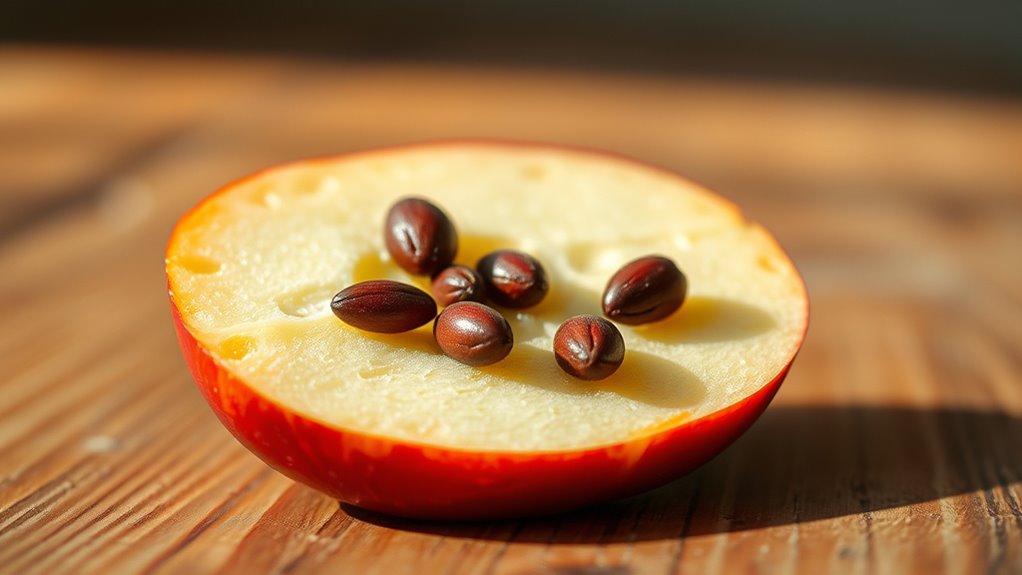
Apple seeds are mainly made up of a tough outer shell called a testa, which encases a small amount of valuable components inside. This seed structure helps protect the seed’s core, where nutrients are stored.
Inside, you’ll find a tiny embryo and some stored starches, giving the seed some nutritional value. While apple seeds aren’t a significant source of nutrition, they do contain trace minerals and compounds that add to their overall makeup.
The shell is designed to withstand harsh conditions and keep the seed’s inner contents safe. But keep in mind, the seed’s nutritional value is minimal, and its main purpose is protection, not nourishment.
Understanding what’s inside helps you know what you’re ingesting and whether it might pose any health concerns.
Cyanogenic Compounds Presence
Because apple seeds contain a natural compound called amygdalin, they can release cyanide when broken down in the digestive system. This cyanide release raises concerns about safety during seed consumption.
While small amounts of crushed or chewed seeds are unlikely to cause harm, eating large quantities could pose health risks. The amount of cyanide produced depends on how many seeds you eat and how thoroughly you chew them.
The body can detoxify small amounts of cyanide, but excessive seed consumption may overwhelm this process. Knowing about cyanogenic compounds in apple seeds helps you make informed decisions about their safety.
In general, eating seeds occasionally isn’t likely to be dangerous, but moderation is key to reducing potential risks.
Potential Toxicity Risks
While apple seeds are generally safe to eat in small amounts, they contain compounds that could pose health risks if you ingest a lot. These seeds have amygdalin, which can release cyanide when broken down.
Although small amounts of apple seeds provide fiber and antioxidants, eating large quantities might lead to cyanide poisoning. This can cause dizziness, nausea, or more serious health problems.
To stay safe, it’s best not to chew or swallow many seeds at once. Remember, moderation is key when eating apple seeds.
Key points to keep in mind include the cyanogenic compounds in apple seeds and the risk of cyanide toxicity. Processing can reduce these risks, but it’s safer to limit seed consumption overall.
Always be cautious when eating apple seeds, especially if you’re planning to consume a lot.
How Much Amygdalin Is in Apple Seeds and What Does It Do?
Apple seeds do contain a tiny amount of amygdalin, which is a compound that can turn into cyanide when you chew or swallow them. The amount of amygdalin varies from seed to seed, but generally, eating just a few seeds isn’t likely to cause any harm. Still, it’s good to know how much amygdalin is in there so you can better understand any potential risks if you happen to swallow a handful of seeds.
Amygdalin Content Levels
Apple seeds contain a compound called amygdalin, which can release cyanide when broken down during digestion. The amount of amygdalin in apple seeds varies, but usually, a single seed has about 0.6 milligrams of it. When you chew or swallow apple seeds, your body’s ability to break down amygdalin determines how much cyanide might be released.
The amygdalin content depends on the seed’s size and variety. Eating small amounts of apple seeds generally doesn’t cause harm. Most people would need to eat hundreds of seeds to reach dangerous cyanide levels.
Your body can detoxify small amounts of cyanide pretty efficiently. But the risk goes up if you eat seeds frequently or in large quantities.
Effects of Amygdalin Intake
The amount of amygdalin in apple seeds varies depending on the seed’s size and variety, but usually, each seed has about 0.6 milligrams. When you swallow apple seeds, your body breaks down amygdalin into hydrogen cyanide, which can be toxic in large amounts.
Consuming small quantities rarely causes harm because your body can detoxify cyanide efficiently. However, eating many seeds might pose health risks, including cyanide poisoning.
While amygdalin has been studied for potential health benefits, like antioxidant properties, these are unlikely from just small, accidental seed ingestion. Understanding how amygdalin affects your health helps you make safer choices when eating apple seeds.
How Many Apple Seeds Are Safe to Eat?
Ever wondered how many apple seeds you can safely eat without risking health issues? The truth is, small amounts of apple seeds are usually safe, but it’s good to be cautious.
Some people believe that apple seeds have benefits like antioxidants and fiber, but there are many myths suggesting they’re highly toxic.
Here’s what you should know: eating a few apple seeds now and then probably won’t harm you. The amount needed to cause toxicity is quite high—probably over a hundred seeds.
Your body can usually neutralize small amounts of cyanide that might be released from the seeds. While apple seed benefits are minimal, the potential risks are worth considering.
Moderation is key—avoid intentionally chewing or swallowing large quantities of seeds to stay safe.
What Are the Health Risks of Eating Large Quantities of Apple Seeds?
Eating a lot of apple seeds isn’t something you’d want to do regularly, mainly because they contain a compound called amygdalin, which can turn into cyanide in your body. Cyanide is pretty toxic, and consuming enough apple seeds could potentially lead to cyanide poisoning.
Now, it’s not like just a few seeds will cause harm — you’d have to eat a pretty large quantity. Still, it’s good to be aware and not to make a habit of crunching through big piles of apple seeds. It’s always better to enjoy the fruit itself and skip the seeds if you’re worried about health risks.
Cyanide Content in Seeds
Have you ever wondered if those small apple seeds could pose a health danger? Apple seeds contain amygdalin, which can release cyanide during seed digestion. Cyanide metabolism in your body is quick, but eating a lot of crushed or chewed seeds can overwhelm your system.
Cyanide is a powerful poison that messes with your cells’ ability to use oxygen. Small amounts of seed crushing release only tiny amounts of cyanide. Eating a handful of seeds usually won’t cause any harm.
Cooking or processing the seeds can reduce their cyanide levels. Your body can efficiently detoxify small doses of cyanide, so occasional seed consumption isn’t a big concern.
While a few seeds probably won’t cause issues, eating large quantities increases the risk. Always be mindful of how cyanide in seeds interacts with your body’s ability to handle it.
Potential Poisoning Risks
While small amounts of crushed apple seeds release only minimal cyanide, eating large quantities can significantly increase health risks. Cyanide blocks your body’s ability to use oxygen, which can cause dizziness, nausea, or more serious symptoms.
Eating many seeds might overwhelm your body’s natural detox processes, especially if the seeds aren’t thoroughly processed. Consuming a lot of apple seeds can lead to cyanide poisoning, which is dangerous and needs medical attention.
To reduce the risk, avoid eating seeds in bulk or cracking them open intentionally. If you’re worried about seed toxins, focus on natural detox methods like staying hydrated and eating a balanced diet.
Are Apple Seeds Safe for Children and Sensitive People?
Are apple seeds safe for children and sensitive individuals? Generally, small amounts won’t cause harm, but you should be cautious. Children’s safety is a top priority, and their smaller bodies can be more affected by any toxins.
Sensitive reactions, such as allergies or digestive issues, might increase risks. Here are some key points to think about:
- Children may accidentally swallow seeds, risking ingestion of small amounts of cyanogenic compounds.
- Sensitive individuals with allergies might experience adverse reactions, even from tiny amounts.
- Seeds can cause choking hazards for young children if not chewed properly.
- Some people have digestive sensitivities that make consuming seeds uncomfortable.
- It’s best to teach children not to eat too many seeds and supervise their fruit-eating habits.
While small quantities are usually safe, it’s wise to limit intake and stay aware of how your body reacts, especially for kids and those with sensitivities.
Are Apple Seeds Poisonous? Separating Myths From Facts
Many people wonder if apple seeds are truly poisonous, but the truth is more nuanced than common myths suggest. While apple seeds contain amygdalin, which can release cyanide when digested, small amounts usually aren’t harmful.
The body can typically detoxify minor cyanide exposure, so accidental ingestion is generally safe. However, eating large quantities might pose health risks, so it’s good to understand some safety tips.
Here’s a quick myth clarification table:
| Myth | Fact | Safety Tip |
|---|---|---|
| Apple seeds are deadly | Only dangerous in large quantities | Avoid eating large amounts |
| Cyanide is released upon eating | Cyanide release is minimal and safe | Moderate consumption is fine |
| It’s okay to swallow seeds | Seeds can pass through digestion | Chewing releases more cyanide |
How Can You Safely Eat Apple Seeds?
You can enjoy apple seeds safely by limiting your intake and practicing simple precautions. While they do have some nutritional benefits like fiber and antioxidants, eating a lot of them can be risky because they contain small amounts of cyanide.
To enjoy apple seeds safely, focus on safe preparation methods that reduce potential harm. For example, remove seeds before eating large quantities of apples. If you do eat seeds, chew them thoroughly and in small amounts.
Limit yourself to a handful of seeds per day. Avoid crushing or grinding seeds, as this releases more cyanide and increases the risk. If you’re unsure about eating apple seeds, it’s a good idea to talk to a healthcare professional.
What Are Alternatives to Eating Apple Seeds?
Instead of eating apple seeds, consider enjoying fresh apple flesh or trying other nutritious snacks like nuts, berries, or vegetable sticks. These options give you essential vitamins, fiber, and antioxidants without the risks linked to apple seeds.
Snacks like almonds, walnuts, or trail mix are easy to carry and keep you energized. Berries such as strawberries, blueberries, or raspberries are packed with antioxidants and add flavor to your diet.
Almonds, walnuts, and trail mix are convenient, energizing snacks rich in nutrients and flavor.
Crunchy vegetable sticks like carrots, celery, or cucumber are low-calorie, hydrating choices full of vitamins. These alternatives not only satisfy cravings but also support your health better than seeds with potential toxins.
Including a variety of seed alternatives ensures you get a wide range of nutrients. This makes your snacking both safe and nourishing. Always choose wholesome, natural snacks for a balanced and enjoyable diet.
Should You Avoid Apple Seeds Completely? Expert Recommendations and Precautions
Is it necessary to avoid apple seeds altogether? Not necessarily, but understanding apple seed myths is key.
Experts agree that small amounts of apple seeds are generally safe to eat because the cyanide released is minimal and unlikely to harm most people. However, eating a lot of seeds can pose risks, especially if you chew them extensively.
Keep these points in mind:
- Many apple seed myths overstate the danger; moderate intake usually isn’t harmful.
- Cyanide is released only when seeds are crushed or chewed thoroughly.
- Children and pregnant women should be more cautious with seed consumption.
- To be safe, avoid eating large quantities of crushed seeds regularly.
- When in doubt, remove the seeds before eating or juicing apples.
While eating seeds occasionally is unlikely to cause harm, it’s best to practice moderation and not rely on them as a regular snack.
Frequently Asked Questions
Can Apple Seeds Cause Cyanide Poisoning in Small Amounts?
Eating small amounts of apple seeds typically won’t cause cyanide poisoning because the seeds’ toxicity is limited by low cyanide levels. Your body can usually detoxify small quantities of cyanide from apple seed toxicity.
However, eating a large number of seeds might lead to health risks. It’s best to avoid consuming many seeds, especially in concentrated amounts, to prevent any potential cyanide-related issues.
Do All Apple Varieties Contain the Same Level of Amygdalin?
Not all apple varieties contain the same level of amygdalin. Some apples, like certain wild or heirloom types, can have higher amygdalin levels in their seeds, which can release cyanide when chewed.
Most common commercial apples tend to have lower levels, making them safer to eat in small amounts. Still, it’s best to avoid intentionally eating large quantities of seeds, no matter the apple variety, to prevent any risk of cyanide poisoning.
How Do Apple Seed Toxins Compare to Other Fruit Seeds?
Apple seed toxins, mainly amygdalin, are similar in toxicity to other fruit seeds like cherry or apricot pits. You’d need to eat a lot of seeds to feel any harmful effects since the amygdalin levels are pretty low.
That said, it’s still a good idea not to eat seeds regularly or in large amounts. Most fruit seeds aren’t risky unless you consume them excessively.
Can Roasting or Processing Apple Seeds Reduce Toxicity?
Roasting or processing apple seeds doesn’t effectively reduce their toxicity. Standard roasting methods, like baking at typical temperatures, won’t break down amygdalin, the compound that releases cyanide.
Processing techniques such as grinding or soaking also won’t eliminate the risk. If you want to enjoy apples safely, it’s best to avoid eating the seeds altogether, especially in large amounts.
No common processing method reliably neutralizes the toxins, so it’s safer to skip the seeds entirely.
Are There Any Health Benefits to Eating Apple Seeds?
While some believe eating apple seeds offers health benefits, you’re unlikely to gain much from them. They do contain limited nutritional value and antioxidant properties, but the small amount isn’t enough to make a significant difference.
Plus, the risk of cyanide release outweighs any potential benefits. Instead, enjoy the apple flesh for its vitamins and fiber, and keep apple seeds as a fun, yet cautious, curiosity.
Conclusion
While apple seeds contain compounds that can be harmful in large amounts, eating a few isn’t likely to turn you into a poison victim overnight. Think of it as a tiny bump in your apple adventure rather than an apocalyptic event.
Just stick to moderate amounts, and you’ll enjoy your fruit safely. When in doubt, skip the seeds or go for seedless apples—your health will thank you for it!
Can You Eat Apple Seeds Safely? Yes, in moderation, apple seeds are safe to eat, but it’s best to avoid consuming large quantities regularly.