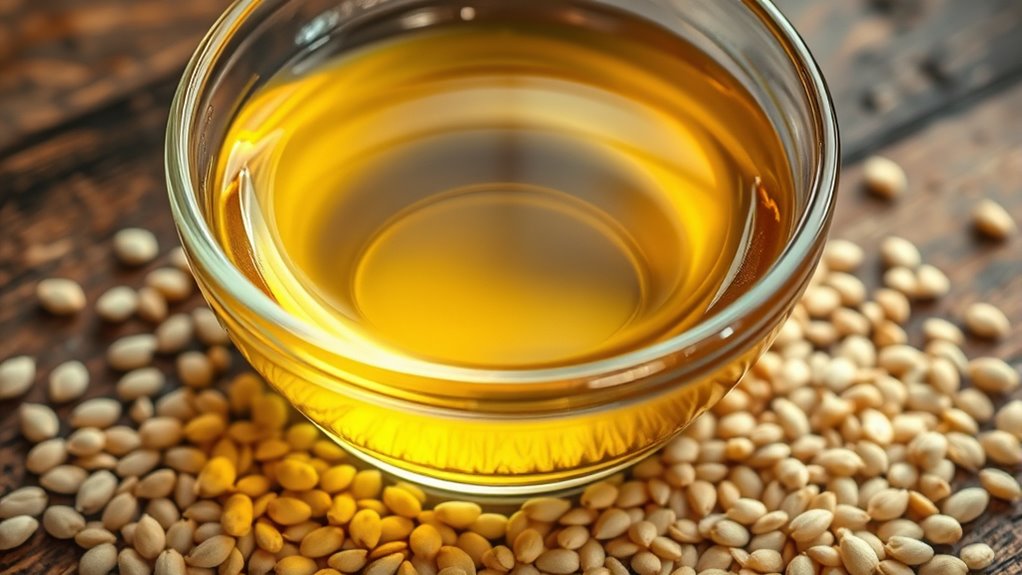
Is Sesame Oil a Seed Oil?
Are you trying to make healthier food choices but feel overwhelmed by all the different oils out there? You’re not alone—many people struggle with understanding what makes each oil special and how it impacts their health. Knowing the basics can make a big difference in your kitchen.
Yes, sesame oil is classified as a seed oil because it’s derived by pressing sesame seeds. This process extracts oil rich in healthy fats, antioxidants, and nutrients. Its classification impacts labeling and nutritional claims.
Knowing this helps you understand its unique flavor and health benefits.
If you want to investigate how sesame oil compares to other oils, including its uses and advantages, keep delving into further details.
Key Takeaways
- Sesame oil comes from sesame seeds, so it’s considered a seed oil for cooking and legal reasons.
- It’s extracted by pressing from sesame seeds, which are plant seeds, confirming its status as a seed oil.
- Nutritionally, sesame oil has healthy fats and antioxidants from the seed it comes from.
- Since it’s made from a plant seed, sesame oil fits the scientific definition of a seed oil.
- How it’s classified affects labeling, marketing, and health claims as a seed oil.
What Is Sesame Oil and How Is It Made?
Sesame oil is a popular cooking oil known for its rich flavor and nutritional benefits. Its production starts with harvesting and cleaning mature sesame seeds.
Next, the seeds are pressed using either traditional or mechanical methods to extract the oil. Cold pressing keeps more nutrients and results in a flavorful, unrefined oil.
Hot pressing, on the other hand, increases the yield but can reduce some nutrients. During extraction, the process separates the oil from the seed’s outer shell and inner parts.
Once the oil is extracted, it’s filtered to remove impurities, making it clear and fresh. Some producers refine the oil further to extend shelf life and tone down strong flavors.
However, unrefined sesame oil retains more of the seed’s natural aroma and nutrients. Overall, the seed extraction process is crucial in shaping the oil’s quality, flavor, and nutritional profile.
Are Sesame Seeds Really Seed Oils?
Have you ever wondered if sesame seeds really qualify as seed oils? The answer depends on how sesame seeds are classified and processed.
While sesame seeds are definitely seeds, not all of them are used to produce oil directly. Usually, the seeds are pressed to extract the oil, which involves specific methods.
Sesame seeds are pressed to extract oil through specific methods, making the oil a true seed oil used in cooking.
Here’s how it works: first, the seeds are harvested and cleaned. Then they’re pressed or cold-pressed to get the oil. The leftover seed material can be used in cooking or processed further.
The oil that’s produced is considered a seed oil and is commonly used in cooking and flavoring.
How Does Sesame Oil Compare to Other Seed Oils?
How does sesame oil compare to other seed oils? When you look at the benefits and how versatile it is in cooking, sesame oil really stands out. It’s packed with antioxidants and healthy fats, making it a nutritious addition to your diet.
Its nutty flavor enhances many dishes, from stir-fries to dressings. Unlike some seed oils that are more neutral, sesame oil adds depth and aroma without overpowering the flavors. It’s all about boosting your dishes with flavor and nutrition.
Here’s a quick comparison:
| Seed Oil | Key Benefits | Culinary Uses |
|---|---|---|
| Sesame Oil | Antioxidants, healthy fats | Dressings, stir-fries, marinades |
| Sunflower Oil | High in vitamin E | Baking, frying |
| Flaxseed Oil | Omega-3 fatty acids | Drizzled over salads, smoothies |
| Pumpkin Seed Oil | Nutrient-dense, antioxidants | Drizzled on soups, desserts |
This table shows how sesame oil’s unique benefits and flavor make it a standout among seed oils.
What’s the Nutritional Profile of Sesame Oil?
You’ll notice that sesame oil is packed with healthy fats, mainly polyunsaturated and monounsaturated fats. These good fats can really give your heart a boost when you include them as part of a balanced diet.
Plus, sesame oil contains antioxidants like sesamol and sesamin, which are known for their potential health benefits. But, like with anything, it’s best not to go overboard—too much might have some risks. Knowing what’s in sesame oil helps you make smarter choices about adding it to your meals.
Nutrient Composition Overview
Sesame oil boasts a rich nutritional profile, mainly made up of healthy fats, antioxidants, and essential nutrients. Its composition helps your body absorb nutrients better and offers antioxidant properties that protect your cells from damage.
You’ll find that sesame oil contains monounsaturated and polyunsaturated fats, which are good for your heart. It also has sesamol and sesamin, powerful antioxidants that boost cellular protection.
Vitamins E and K are present too, supporting your immune system and helping with blood clotting. Plus, there are minor minerals like calcium, magnesium, and zinc that contribute to your overall health.
All these components work together to provide essential nutrients and help your body fight oxidative stress. The nutrient absorption benefits of sesame oil make it a great addition to your diet, especially when you’re eating other nutrient-rich foods.
Health Benefits and Risks
The nutritional profile of sesame oil offers a range of health benefits, thanks to its rich content of healthy fats, antioxidants, and essential nutrients. Its antioxidant properties help combat oxidative stress, potentially reducing inflammation and lowering the risk of chronic diseases.
Sesame oil’s culinary versatility allows you to incorporate it into various dishes, enhancing flavor while boosting health benefits. However, it’s important to use it in moderation, as it’s calorie-dense and high in omega-6 fatty acids, which can promote inflammation if consumed excessively.
While generally safe, some individuals may experience allergic reactions. Overall, sesame oil can be a nutritious addition to your diet, providing healthy fats and antioxidants, but balancing its intake with other oils is key to maximizing its health benefits and minimizing risks.
How Does Sesame Oil Stack Up Against Other Cooking Oils?
When you compare sesame oil to other cooking oils, you’ll see it has some unique qualities. For starters, it’s packed with healthy fats and antioxidants, which is great for your overall health.
Its smoke point is good for stir-frying, but keep in mind, it’s different from oils like olive or canola. That means you might want to use it for specific dishes where its nutty flavor really shines. Speaking of flavor, sesame oil has this warm, nutty aroma that makes it perfect for finishing off dishes or giving them a nice aroma. So, it’s pretty versatile once you get the hang of how it stacks up against other oils.
Nutritional Content Comparison
Compared to other cooking oils, sesame oil has a unique nutritional profile that can benefit your diet. Its benefits come from the extraction process, which keeps healthy fats and antioxidants intact.
Sesame oil is packed with monounsaturated and polyunsaturated fats that support heart health. It also contains antioxidants like sesamol and sesamin that help fight free radicals.
Plus, it provides essential fatty acids that are important for cell functions. You’ll also get vitamin E, which supports your skin and immune system.
On top of that, sesame oil supplies minerals like calcium, magnesium, and zinc, which promote strong bones and metabolic health. These qualities make sesame oil a nutritious choice compared to many other oils that may lack these beneficial compounds.
Smoke Point Differences
Ever wonder how sesame oil compares to other cooking oils when it comes to heat stability? Well, the smoked point comparison shows that toasted sesame oil has a lower smoke point, around 350°F, making it best for medium-heat cooking.
On the other hand, light sesame oil has a higher smoke point, about 410°F, so it’s suitable for high-temperature methods like stir-frying and sautéing. Compared to oils like canola or avocado, sesame oil’s smoke points are moderate.
Avocado oil can handle even higher heats, up to 520°F. This difference influences your choice depending on what you’re cooking. If you’re doing high-heat cooking, light sesame oil works better than toasted.
Knowing these smoke point differences helps you pick the right oil for your culinary needs.
Flavor Profiles and Uses
Sesame oil stands out not only for its heat stability but also for its distinctive flavor, which can really influence your cooking. Its nutty, toasted aroma adds depth to many dishes, making it a popular choice for specific culinary applications.
When it comes to flavor pairing, sesame oil works well with ingredients like soy sauce, ginger, garlic, and leafy greens. You can use it to drizzle over salads for a nutty finish or stir-fry vegetables and meats.
It’s also great for marinating sushi or sashimi and enhancing Asian noodle dishes. Compared to other oils, sesame oil has a bold flavor that’s best used as a finishing touch or in low-heat cooking.
Its unique profile makes it perfect for adding complexity and richness to your dishes.
Is Sesame Oil Legally and Scientifically Considered a Seed Oil?
Is sesame oil legally and scientifically classified as a seed oil? Legality concerns often depend on regional food regulations, but generally, sesame oil is recognized as a seed oil because it’s extracted from sesame seeds.
Scientifically, a seed oil is defined as an oil derived from the seed of a plant, and sesame fits this criterion perfectly. The scientific definition emphasizes the plant part used for extraction, and sesame seeds are classified botanically as seeds, not nuts or fruits.
Scientifically, seed oils are derived from plant seeds, and sesame seeds are botanically classified as seeds.
Consequently, both legal standards and scientific definitions agree that sesame oil is a seed oil. This classification impacts labeling, marketing, and health claims in various countries.
While some might confuse seed oils with vegetable or nut oils, the distinction remains clear under scientific and legal frameworks. Overall, sesame oil is both legally and scientifically considered a seed oil, aligning with its plant source and extraction process.
What Makes Sesame Oil Unique?
You’ll notice that sesame oil really stands out, and it’s not just because of its flavor. It’s packed with a rich nutrient profile that brings some pretty impressive health benefits to the table, beyond just cooking.
And let’s talk about its flavor for a second. It has these really distinctive notes — sometimes nutty, sometimes with a hint of toast — that can add a special touch to almost any dish.
All in all, it’s this combination of good-for-you nutrients and its unique flavor that makes sesame oil truly one-of-a-kind.
Rich Nutrient Profile
A significant aspect of sesame oil is its impressive nutrient profile, which sets it apart from other cooking oils. Its high nutrient density provides essential vitamins and minerals that support your health. Plus, sesame oil is rich in antioxidant properties, helping to combat oxidative stress in your body. Here are four key points about its nutrients:
- Contains healthy fats, including polyunsaturated and monounsaturated fats.
- Provides vitamin E, supporting skin health and immune function.
- Offers minerals like magnesium, calcium, and zinc for overall wellness.
- Packed with phytochemicals that contribute to its antioxidant properties.
This unique combination makes sesame oil a nutritious choice that can improve your diet with beneficial compounds. Its nutrient density and antioxidants truly set it apart from many other oils.
Distinct Flavor Notes
The distinct flavor notes of sesame oil set it apart from other cooking oils, offering a rich, nutty aroma that enhances a wide variety of dishes. Its unique aroma adds depth and complexity, making it a favorite in Asian cuisine and beyond.
This flavor profile improves everything from stir-fries to marinades, showcasing its culinary versatility. The toasted variety delivers a deep, roasted taste, while the light, untoasted version offers a subtler, more delicate flavor.
Because of its strong, memorable aroma, you can use sesame oil sparingly yet still make a big impact. Its ability to bring out the best in both savory and sweet dishes makes it a versatile staple in your kitchen.
How Do You Use Sesame Oil in Cooking?
Sesame oil adds a rich, nutty flavor to a variety of dishes and can be used in multiple ways to elevate your cooking. Its versatility makes it perfect for amplifying flavor in many culinary contexts. Here are some common ways to use sesame oil:
- Stir-fries: Drizzle a small amount at the end for flavor without overpowering the dish. It gives a nice, nutty finish.
- Salad dressings: Mix it with soy sauce, vinegar, and honey for a savory, nutty dressing that’s easy to whip up.
- Marinades: Use it as a base for marinating meats or vegetables, adding depth to the flavors.
- Soups and broths: Add a few drops right before serving to enrich the taste and aroma.
Just keep in mind that sesame oil’s strong flavor means you should use it sparingly. It’s perfect for adding an authentic, nutty punch to your dishes.
What Are the Health Benefits and Risks of Sesame Oil?
Sesame oil offers a range of health benefits thanks to its rich supply of antioxidants, healthy fats, and essential nutrients. These benefits include reducing inflammation, supporting heart health, and providing anti-aging properties due to compounds like sesamol and sesamin.
Sesame oil boosts health with antioxidants, healthy fats, and anti-aging compounds like sesamol and sesamin.
It can also help improve skin health and boost your immune system. However, you should be aware of the risks. Some people may experience allergic reactions, which can range from mild irritation to severe responses.
Eating large amounts might lead to weight gain because of its high calorie content. If you have a sesame allergy or are sensitive to specific compounds in the oil, it’s best to use it cautiously.
Moderation is key to enjoying the benefits without exposing yourself to potential risks. Overall, sesame oil can be a healthy addition to your diet when used mindfully and in appropriate amounts.
Final Verdict: Is Sesame Oil Truly a Seed Oil?
While sesame oil offers notable health benefits, understanding its classification as a seed oil helps clarify its origins. Yes, sesame oil is indeed a seed oil, extracted from sesame seeds. Its culinary applications are diverse, from stir-fries to dressings, showcasing its versatility.
Its cultural significance is especially prominent in Asian cuisines, where it’s valued for flavor and tradition. To sum up:
- Sesame oil is derived from sesame seeds, confirming its seed oil status.
- It plays a key role in various culinary applications worldwide.
- Its rich flavor and aroma enhance dishes and contribute to cultural cuisine.
- Recognizing its seed oil classification helps consumers understand its nutritional profile.
Frequently Asked Questions
Can Sesame Oil Be Used for Skin or Hair Care?
Yes, you can use sesame oil for skin and hair care. It offers moisturizing benefits, helping to hydrate dry skin and scalp. Its antioxidant properties can protect your skin from damage caused by free radicals, reducing signs of aging.
You might use it as a massage oil or add it to your skincare routine. For hair, it promotes shine and strengthens strands, making it a versatile natural remedy.
Does Sesame Oil Have Any Allergenic Properties?
You should know that sesame oil can trigger allergic reactions in some people, with sesame allergies affecting about 0.2% of the population. If you have a sesame seed allergy, you’re at risk for sesame oil allergies too.
Symptoms like hives, swelling, or difficulty breathing can occur during allergic reactions. Always check labels carefully and consult your doctor if you suspect sesame oil may cause allergic reactions for you.
Is Cold-Pressed Sesame Oil Considered Healthier Than Refined?
Cold-pressed sesame oil is considered healthier than refined because it retains more nutritional benefits, like antioxidants and healthy fats. You get to enjoy its full nutritional value, which can support heart health and reduce inflammation.
Its rich flavor makes it great for various dishes, from dressings to stir-fries. By choosing cold-pressed, you’re getting a more natural, nutrient-dense oil that adds depth and health benefits to your meals.
How Long Does Sesame Oil Last Before It Goes Rancid?
Sesame oil usually stays fresh for about 6 months to a year if you store it properly.
To keep it from going rancid, store it in a cool, dark place and make sure the bottle is tightly sealed. Keep it away from heat and light.
Regularly check for signs of spoilage like a sour smell, off taste, or cloudy appearance.
Storing sesame oil correctly helps maintain its flavor and health benefits so you can enjoy its rich, nutty taste without worries.
Are There Any Cultural or Historical Uses of Sesame Oil?
Yes, sesame oil has rich cultural and historical uses. You’ll find it deeply rooted in Asian cooking traditions, where it adds flavor and aroma to dishes.
Historically, people used it for medicinal purposes, believing it improved skin health and boosted energy.
Throughout centuries, sesame oil has played a crucial role in spiritual rituals and traditional medicine, reflecting its significance across different cultures and time periods.
Conclusion
Imagine sesame oil as a golden treasure buried deep within tiny seeds, waiting to be revealed. It’s a seed oil, yes, but also a versatile gem that adds flavor and health benefits to your kitchen.
Just like a key opens a door, sesame oil opens up a world of culinary possibilities and wellness. It’s a perfect example of a seed oil that’s both flavorful and nutritious.
Welcome it as your trusted ally, and let it enrich your dishes with its unique, vibrant essence. Yes, sesame oil is a seed oil, and it’s ready to elevate your cooking and health.