How Long Do Chia Seeds Last – A Quick Storage Guide
Are you tired of buying chia seeds only to wonder how long they’ll stay fresh? You’re not alone—many people struggle with keeping them from going bad too quickly.
Proper storage can make all the difference in maintaining their health benefits and flavor.
Chia seeds can last from 2 to 4 years if stored properly, especially if kept in airtight containers in a cool, dark place. Whole seeds stay fresh longer than ground ones, which should be used within a year or two.
Check for signs of spoilage like mold or off smells before consuming. Freezing extends their shelf life, but proper storage is key.
Keep exploring for more tips to maximize freshness and storage methods.
Key Takeaways
- Whole chia seeds last 2 to 4 years if stored properly. Ground seeds tend to last only 1 to 2 years and spoil faster.
- Check for spoilage by looking for mold, discoloration, or strange smells. Fresh chia seeds have a mild, nutty aroma.
- Keep chia seeds in airtight containers in a cool, dry place at around 60-70°F to keep them fresh longer.
- Unopened seeds can last up to 2 years, but once opened, it’s best to use them within six months for optimal freshness.
- Freezing can extend their shelf life, just make sure seeds are dry and stored in airtight containers to avoid freezer burn.
How Long Do Chia Seeds Last in Your Pantry?
Chia seeds can stay fresh for quite a while if stored properly in your pantry. Usually, they last about 2 to 4 years when kept in an airtight container away from light, heat, and moisture.
This long shelf life helps preserve their benefits, like high fiber, omega-3 fatty acids, and antioxidants. Proper storage not only keeps them fresh but also maintains their flavor and nutritional quality.
If you use chia seeds often, try storing smaller batches to prevent exposure to air. When cooking, sprinkle them over salads, yogurt, or blend into smoothies—these won’t affect their freshness if stored correctly.
Keep in mind that ground chia seeds spoil faster than whole seeds. Store ground versions in an airtight container in the fridge for extra longevity. Regularly check for signs of spoilage, but with the right storage, they can serve you well for years.
How to Tell If Your Chia Seeds Are Still Fresh or Spoiled
Want to know if your chia seeds are still good? First, take a quick look at them. Check for any mold, discoloration, or anything unusual on the surface. If they look weird or have spots, it might be time to toss them out.
Then, give them a sniff. If they smell musty, sour, or just off in any way, it’s a good sign they’ve gone bad. When in doubt, trust your senses—these simple checks can help you keep your chia seeds fresh and safe to enjoy!
Visual Inspection for Mold
How can you tell if your chia seeds have gone bad just by looking at them? Start with mold identification. Check for any fuzzy, discolored patches—these are signs of mold growth.
Mold can appear as white, green, or black spots on the seeds’ surface. If you notice any slimy or fuzzy textures, it’s a clear indicator the seeds are spoiled.
Visual inspection is essential for mold prevention because it helps you catch spoilage early. Keep your chia seeds in a cool, dry place and regularly examine them to avoid mold developing.
Remember, even tiny mold spots can be harmful if ingested. It’s best to discard seeds that show any signs of mold.
Staying vigilant guarantees your chia seeds stay fresh and safe to eat.
Smell Test for Freshness
Ever wondered if your chia seeds are still good just by their smell? Freshness indicators are key to knowing if they’re safe to eat.
When you sniff your seeds, they should have a mild, nutty aroma. If they smell sour, musty, or off in any way, it’s a sign they’ve gone bad.
Spoiled chia seeds might also develop a rancid odor, which means they’ve oxidized and lost their freshness. To keep them fresh longer, store them in an airtight container in a cool, dark place.
Regularly checking the smell helps you catch spoilage early. This way, you get the most nutritional value from your chia seeds and keep your pantry safe.
Trust your senses to keep your chia seeds fresh and safe to consume.
Does Grinding Chia Seeds Affect Their Shelf Life?
Grinding chia seeds exposes more surface area, which can cause them to spoil faster and makes them more prone to oxidation. So, once you grind them, their shelf life is shorter compared to keeping them whole.
Just remember, storage times can vary, so it’s a good idea to use ground chia seeds more quickly to keep them fresh and flavorful.
Ground Seeds Spoil Faster
When you grind chia seeds, you increase their surface area, exposing more of the oils to air and moisture. This speeds up spoilage, so ground seeds don’t last as long as whole ones.
Grinding improves the nutritional benefits and makes them easier to add to your recipes. But it also makes them more vulnerable to oxidation and rancidity, which can reduce their quality over time.
To keep them fresh, store ground chia seeds in an airtight container in a cool, dark place. It’s best to use them within a few days since they can quickly lose their nutritional value.
Because of their increased exposure to air and moisture, ground seeds spoil faster and have a shorter shelf life overall. They may need to be refrigerated or used immediately to maintain quality.
Increased Oxidation Risk
Breaking down chia seeds increases their surface area, making them more vulnerable to exposure. This heightened exposure speeds up oxidation, which can cause nutrient loss and rancidity.
To keep them fresh, store ground chia seeds in airtight containers in a cool, dark place. This helps slow down the oxidation process and preserves their nutritional value longer.
Remember, once ground, chia seeds are more likely to go rancid. It’s best to grind only what you plan to use right away or store the ground seeds in the refrigerator.
Avoid exposing them to light, heat, or air, as these factors increase oxidation risk and shorten shelf life. Proper storage is key to maintaining their quality after grinding.
Storage Duration Differences
Ground chia seeds usually don’t last as long as whole seeds because their bigger surface area makes them more prone to oxidation and spoilage. When you grind chia seeds, their nutrients, like omega-3s and fiber, can break down faster.
Different varieties of chia seeds may also affect how long they stay good, with some being more likely to go rancid once ground. To keep them fresh, store ground seeds in airtight containers in a cool, dark place.
Just keep in mind that ground chia seeds spoil faster than whole ones. Whole chia seeds can last up to 2-3 years if stored properly. Grinding exposes more surface area, which increases the risk of oxidation.
The nutritional benefits of chia seeds also decline over time, especially in ground form. Using dark, airtight containers can really help extend their shelf life. Knowing these differences helps you keep them fresh and maintain their health benefits.
What Are the Best Storage Containers for Chia Seeds?
Choosing the right storage container for your chia seeds is essential to keep them fresh and prevent spoilage. The best containers are airtight, which helps keep out air, moisture, and pests.
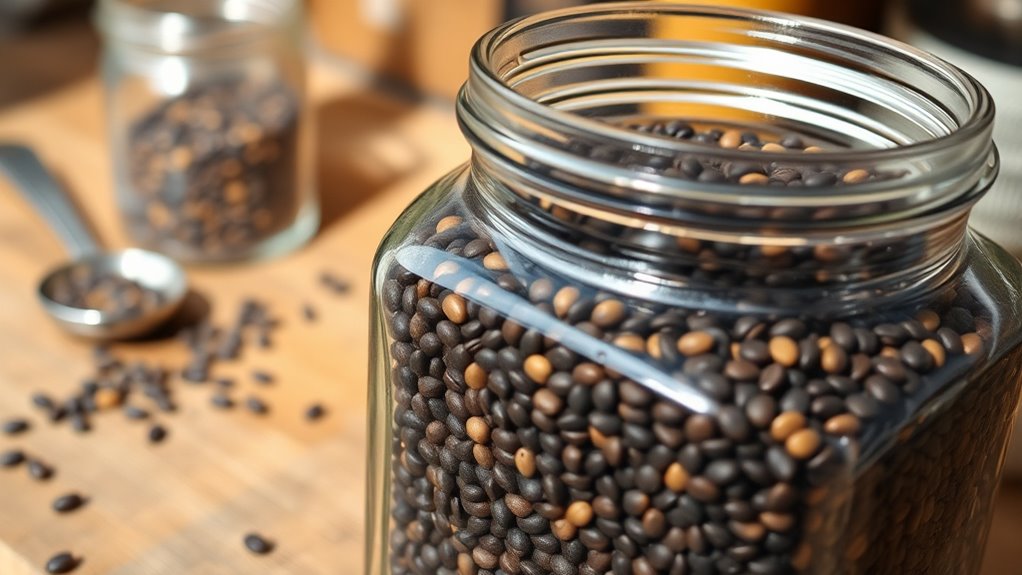
Look for containers made of glass or high-quality BPA-free plastic because these materials won’t react with the seeds. Clear containers are great since they let you see what’s inside without opening them.
| Material | Airtight Seal | Visibility | Durability |
|---|---|---|---|
| Glass | Yes | Yes | High |
| Plastic | Yes | Yes | Moderate |
| Metal | No | No | High |
| Silicone | Yes | Yes | Moderate |
Using the right containers will keep your chia seeds fresh longer, preserving their nutritional value and flavor. Always choose airtight options for the best storage.
How Temperature and Humidity Impact Chia Seed Freshness
Sure! Here’s a more conversational version of the text:
High humidity can really speed up the spoilage process, so it’s super important to keep your chia seeds dry if you want them to stay fresh. When there’s too much moisture in the air, those tiny seeds can clump together and spoil faster.
Also, warm temperatures don’t do any favors for chia seeds. When it’s hot, they tend to go rancid more quickly, which means they lose their freshness and flavor sooner. To keep your chia seeds in top shape, try to store them in a cool, dry place. That way, they’ll stay fresh and tasty for longer!
Humidity Accelerates Spoilage
Humidity plays a big role in how quickly chia seeds spoil. Too much moisture can lead to mold growth and cause the seeds to clump together, which reduces their freshness and nutritional value.
To keep your chia seeds fresh, controlling moisture is key. Store them in airtight containers and keep them away from humid places.
Make sure to store them in a cool, dry spot, away from direct sunlight. Also, avoid areas near sinks or stoves where humidity is higher.
It’s a good idea to check your seeds regularly for any signs of spoilage to catch issues early.
Temperature Affects Shelf Life
Temperature plays an essential role in how long chia seeds stay fresh. Keeping them at the right temperature helps preserve their quality and nutritional value.
Proper storage involves maintaining ideal temperatures to prevent spoilage and rancidity. Chia seeds are best kept in a cool, dark place, ideally between 60-70°F (15-21°C).
Temperatures above this range can speed up degradation, while colder temperatures help extend their shelf life. Avoid storing chia seeds near heat sources or in warm, humid environments, as heat and humidity together reduce freshness.
Using airtight containers in a pantry or cupboard is recommended to keep temperatures steady and protect against fluctuations. By controlling storage temperatures, you can ensure your chia seeds stay fresh, nutritious, and ready to use longer.
Can Freezing Chia Seeds Help Extend Their Shelf Life?
Wondering if freezing chia seeds can help them last longer? The benefits are pretty clear for long-term storage, especially if you don’t plan to use them quickly. Freezing can slow down natural spoilage and keep moisture or pests at bay.
It’s a smart move if you buy in bulk or want to extend their shelf life beyond regular storage options. Just be sure your seeds are completely dry before freezing and store them in an airtight container to avoid freezer burn and odors.
When stored properly, frozen chia seeds can last for several years while keeping their nutritional value intact. Just remember to thaw them at room temperature before using to prevent clumping.
Here are some key points to keep in mind:
- Freezing helps preserve chia seeds longer than storing at room temperature.
- Use airtight containers to prevent moisture and odors.
- Freezing is perfect for bulk purchases or infrequent use.
- Make sure seeds are dry before freezing.
- Thaw frozen seeds at room temperature before using to avoid clumping.
How to Properly Store Opened vs. Unopened Chia Seeds
In regard to storing chia seeds, whether they’re opened or unopened, proper handling can greatly extend their freshness and nutritional value.
For unopened storage, keep the seeds in their original packaging if sealed tightly, stored in a cool, dark place like your pantry. This prevents exposure to light, heat, and moisture, which can degrade quality.
Once opened, transfer the seeds to an airtight container to maintain freshness and prevent moisture or pests from getting in. Store this container in the same cool, dark location, avoiding areas with fluctuating temperatures.
Avoid leaving opened chia seeds exposed to air for extended periods, as this accelerates spoilage. Always reseal or repackage after use.
Properly stored, both unopened and opened chia seeds can last longer while retaining their nutritional benefits. Following these storage tips guarantees your chia seeds stay fresh and nutritious for as long as possible.
Tips for Organizing Your Pantry to Keep Chia Seeds Fresh
Organizing your pantry effectively is key to keeping chia seeds fresh and easy to access. Good pantry organization helps you use the freshest seeds first and prevents spoilage. Use airtight containers to keep chia seeds fresh and avoid moisture.
Organize your pantry with airtight containers to keep chia seeds fresh and easily accessible.
Keep chia seeds away from strong-smelling foods, which can transfer odors. Designate a specific spot for them, ideally in a cool, dark place, to slow down their degradation. Regularly check your stock so older seeds don’t get forgotten or expire.
To make your pantry even better, try these tips: Use clear, labeled containers for quick identification. Store chia seeds in a consistent, cool spot away from sunlight. Keep similar items grouped together for easy access.
Maximize space by installing shelf risers or baskets. Remember to rotate your stock regularly and use the older seeds first. Following these tips will help keep your chia seeds fresh and your pantry tidy.
Shelf Life of Chia Seeds by Form: Whole, Ground, and Packaged
The shelf life of chia seeds depends on their form—whole, ground, or packaged—and knowing these differences helps keep them fresh. Whole chia seeds usually last longer, around 2 to 4 years, because their tough outer shell protects their nutrients and health benefits.
Ground chia seeds have a shorter shelf life—about 1 to 2 years—since their increased surface area makes them more prone to oxidation and spoilage. Packaged chia seeds, if unopened and stored correctly, can stay fresh for up to 2 years.
Once opened, packaged chia seeds should be used within six months to preserve their nutrients. Proper storage is key to extending their shelf life, no matter the form. Always check for signs of spoilage before using your chia seeds.
Fresh chia seeds retain the maximum nutritional value, so you get the most health benefits from each serving.
Simple Ways to Maximize the Freshness of Your Chia Seeds
Proper storage practices can really help keep your chia seeds fresh and packed with nutrients. The key is to keep moisture and air out, so they stay good longer.
Keeping chia seeds in airtight containers in a cool, dark place preserves freshness and nutrients.
Store your chia seeds in an airtight container to prevent exposure to air, which can cause them to go rancid. Keep them in a cool, dark spot away from sunlight, heat, and humidity, as these speed up spoilage.
Using a glass jar or sealed plastic container works best. Also, try to avoid temperature fluctuations by placing your seeds in a stable environment. Label your containers with purchase dates so you can use the oldest seeds first.
For ground chia seeds, it’s especially important to store them in the fridge or freezer. Following these simple tips will help your chia seeds stay fresh longer, keeping their flavor and nutritional benefits intact.
Frequently Asked Questions
Can Chia Seeds Lose Their Nutrients Over Time?
Yes, chia seeds can lose their nutrients over time, especially if not stored properly. Exposure to heat, light, or moisture speeds up this process, making them less nutritious.
To keep your chia seeds packed with nutrients, store them in an airtight container in a cool, dark place. Proper storage helps them retain their benefits like omega-3s, fiber, and antioxidants for longer.
Are Organic Chia Seeds More Shelf-Stable Than Non-Organic?
Think of organic chia seeds as guardians of purity, often more resilient because they have fewer additives. They tend to be slightly more shelf-stable than non-organic varieties, but proper storage tips—like keeping them in an airtight container in a cool, dark place—are essential.
Organic benefits include fewer chemicals, but to maximize shelf life, always check for signs of spoilage. Store them away from heat and moisture to keep them fresh longer.
How Can I Tell if My Chia Seeds Have Developed Mold?
You can tell if your chia seeds have developed mold by looking for certain signs like a musty smell, discoloration, or fuzzy patches on the seeds.
If you notice any of these, it’s best to toss them out to stay safe. To keep your chia seeds fresh and mold-free, store them in an airtight container in a cool, dark, and dry place.
Proper storage tips are key to extending their freshness and preventing mold from forming.
Do Different Brands of Chia Seeds Have Varying Shelf Lives?
Did you know some brands of chia seeds last up to five years, while others only last two? Brand quality and packaging type really affect their shelf life.
Better-quality brands often use airtight containers that keep moisture out, helping them stay fresh longer. If you buy chia seeds in resealable bags or opaque jars, they usually stay good for longer than flimsy packaging.
Is It Safe to Consume Chia Seeds After Their Expiration Date?
You shouldn’t consume chia seeds past their expiration date because their nutritional value and freshness can decrease.
While they might not be harmful right after the date, the seeds could develop a stale taste or lose some of their health benefits.
Always check for off smells, mold, or discoloration before using old seeds to stay safe.
If you’re unsure, it’s better to replace expired chia seeds with fresh ones.
Conclusion
To keep your chia seeds fresh longer, store them in an airtight container in a cool, dark place. This simple step helps preserve their quality and extends their shelf life.
Grinding them doesn’t shorten their shelf life if stored properly. However, once exposed to air, ground chia seeds can go rancid faster. So, keep them airtight and sealed tight.
Trust your senses—if they smell off or taste bitter, it’s time to toss them. This is the best way to know if your chia seeds have gone bad.
With proper storage, you can enjoy your chia seeds for months. This way, every spoonful remains nutritious and delicious, making the most of their health benefits.